
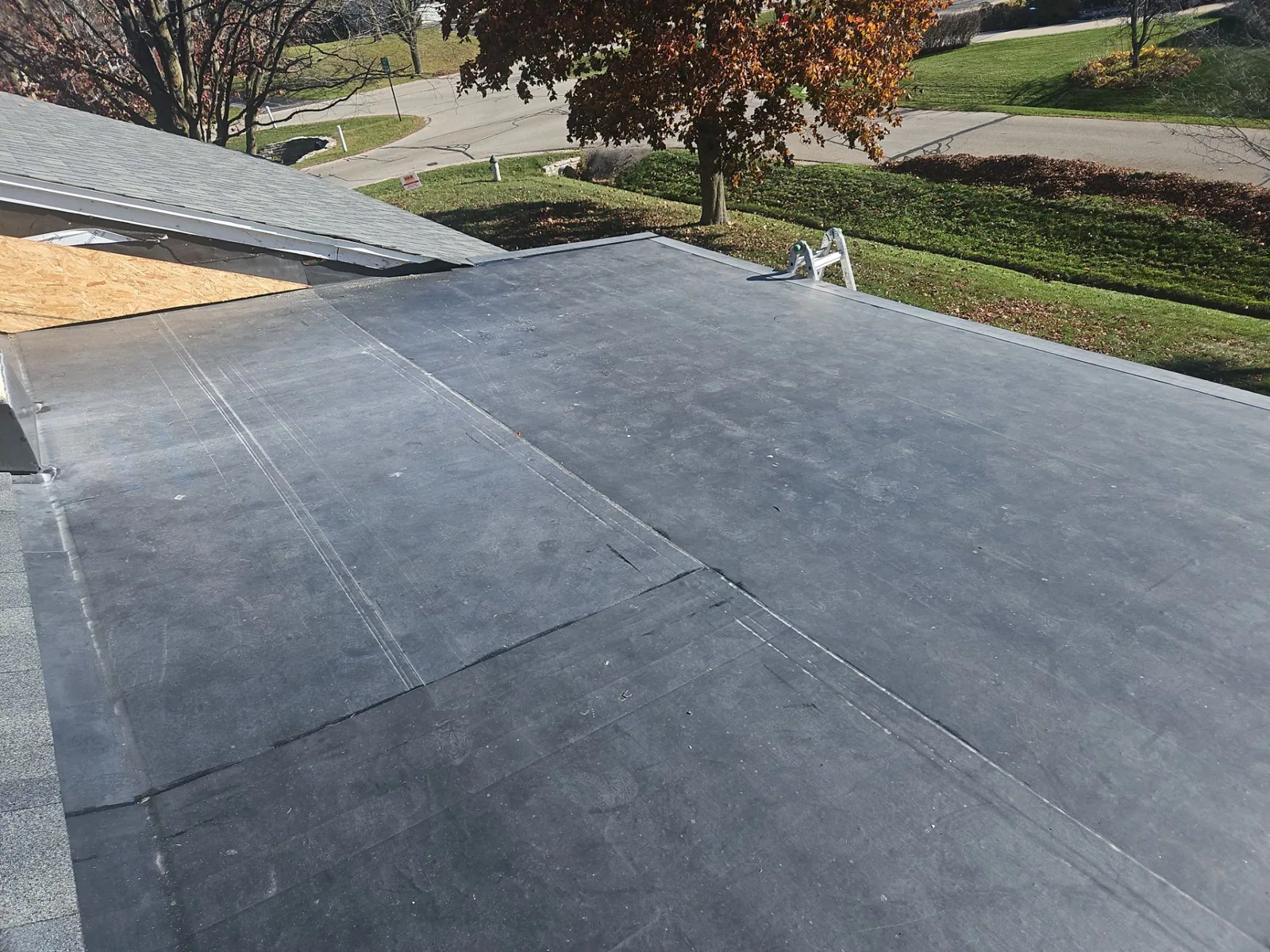
Label audit, field of a roof with mixed repairs: three membranes from three makers, patched over each other across ten or more years of leaks. An entry like that explains why owners ask which manufacturer made the sheet before they ask anything else. The brand sets the repair method, the compatible adhesives and flashings, and the paperwork a future buyer will want to see. Roofs in Thousand Oaks, CA take a steady beating from summer UV and dry Santa Ana wind, and each maker's system responds to that exposure a little differently.
Single-ply makers: sheets that weld or bond
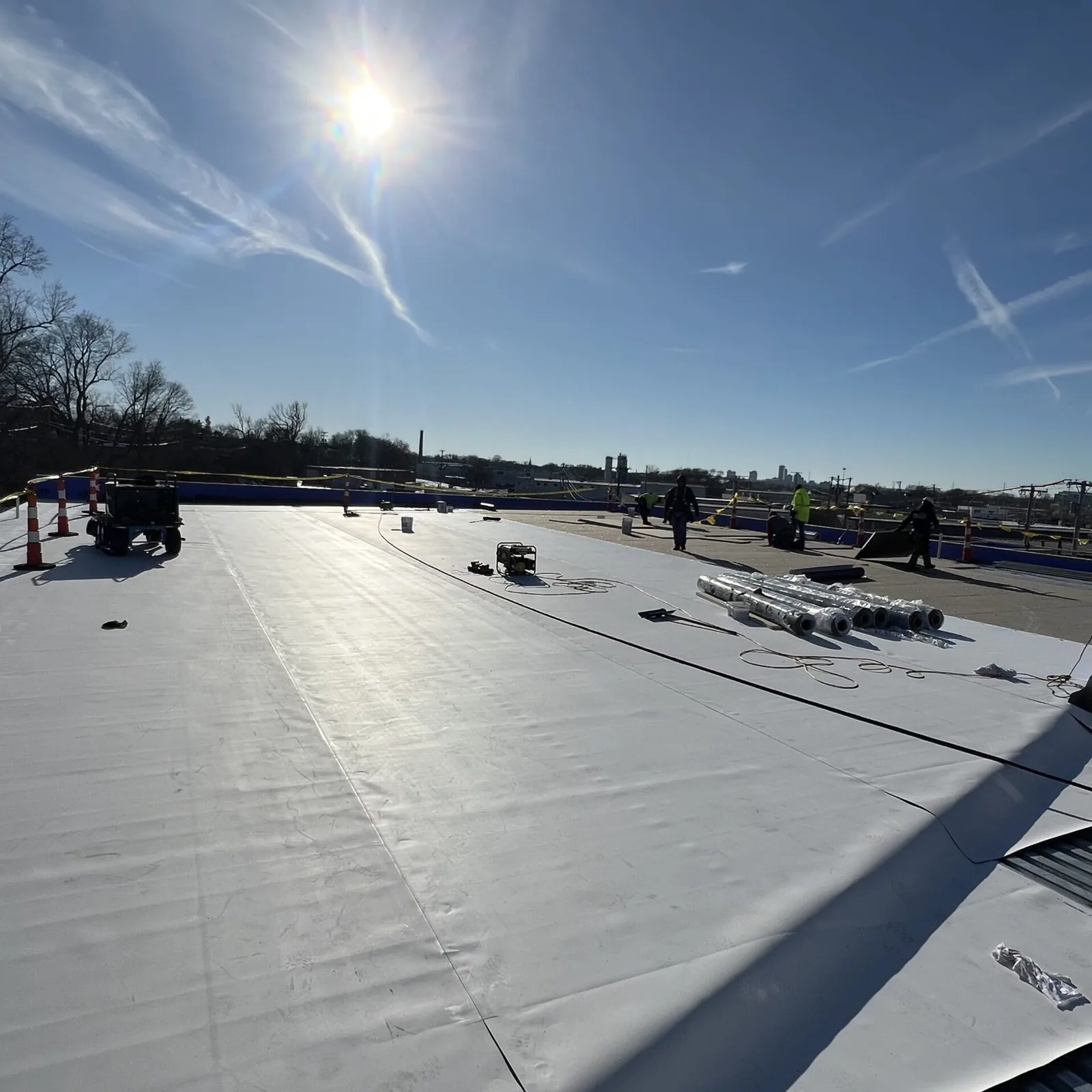
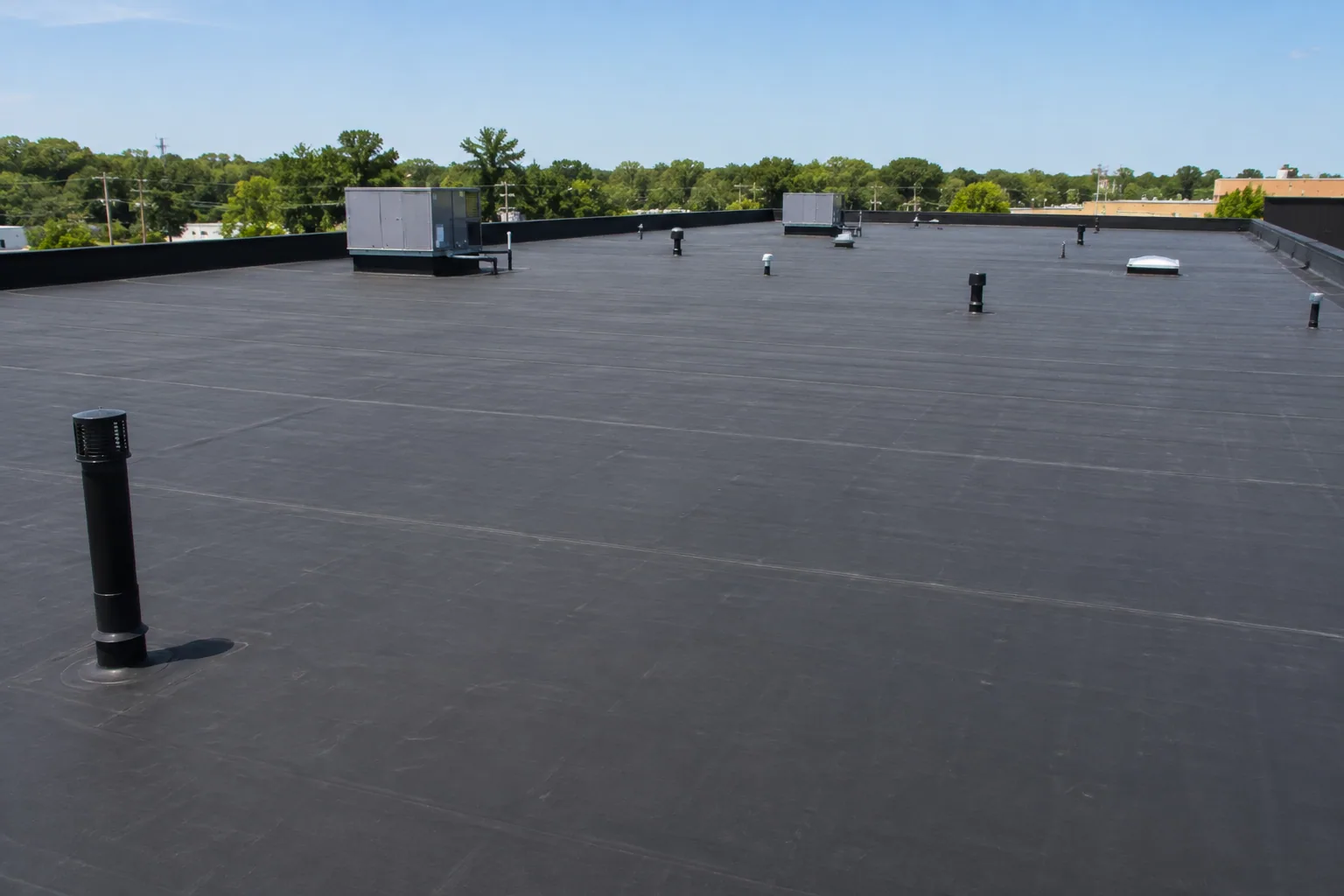
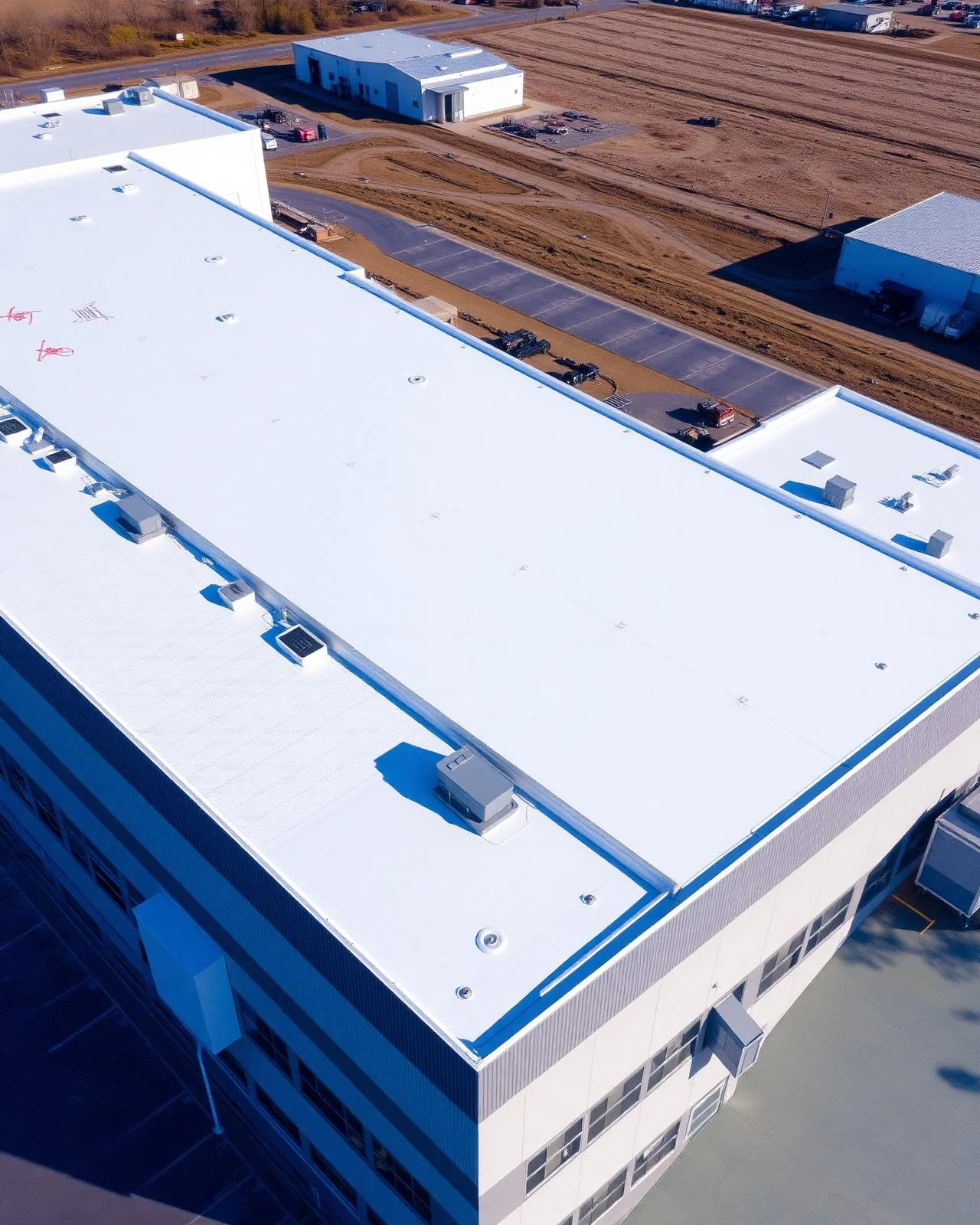
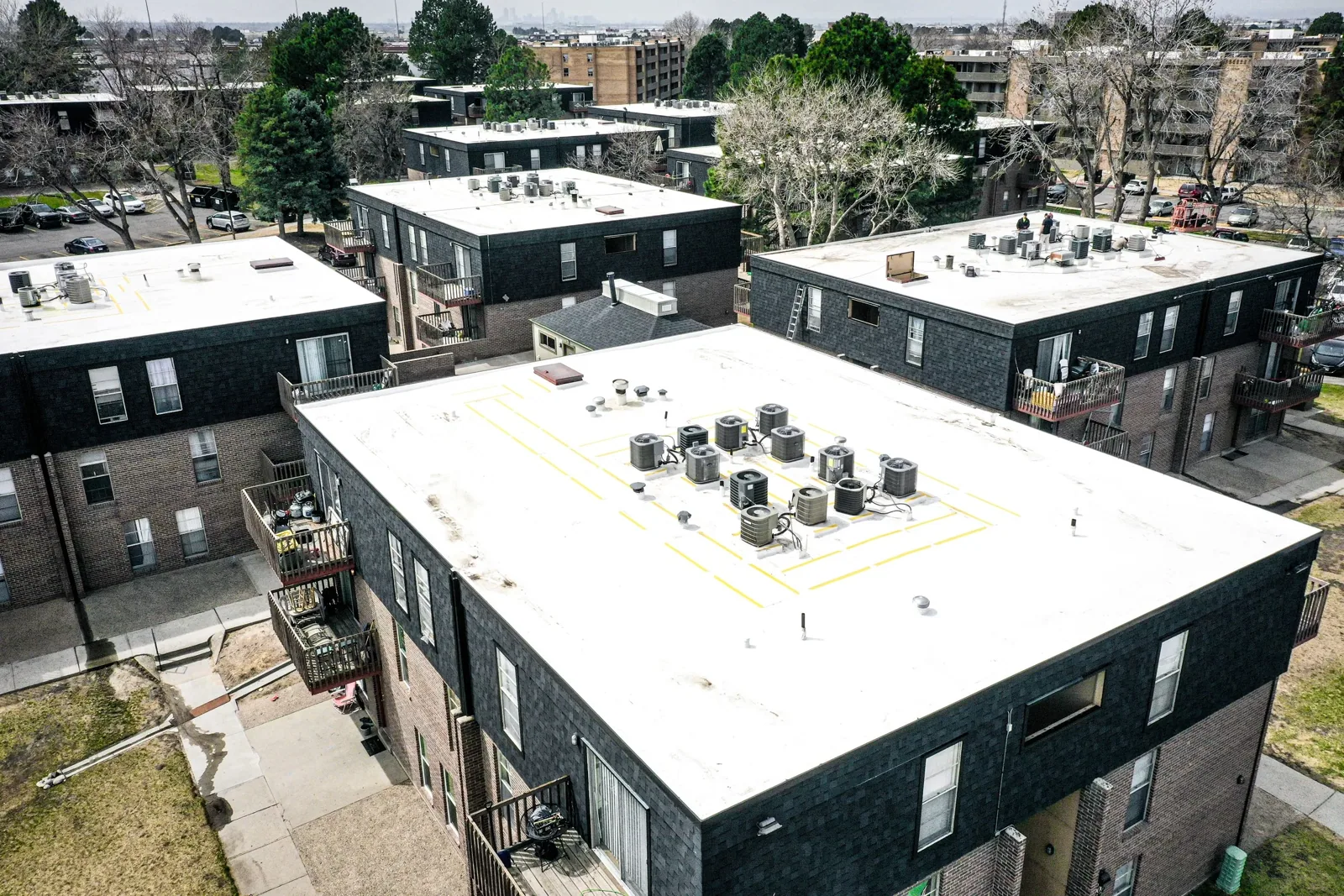
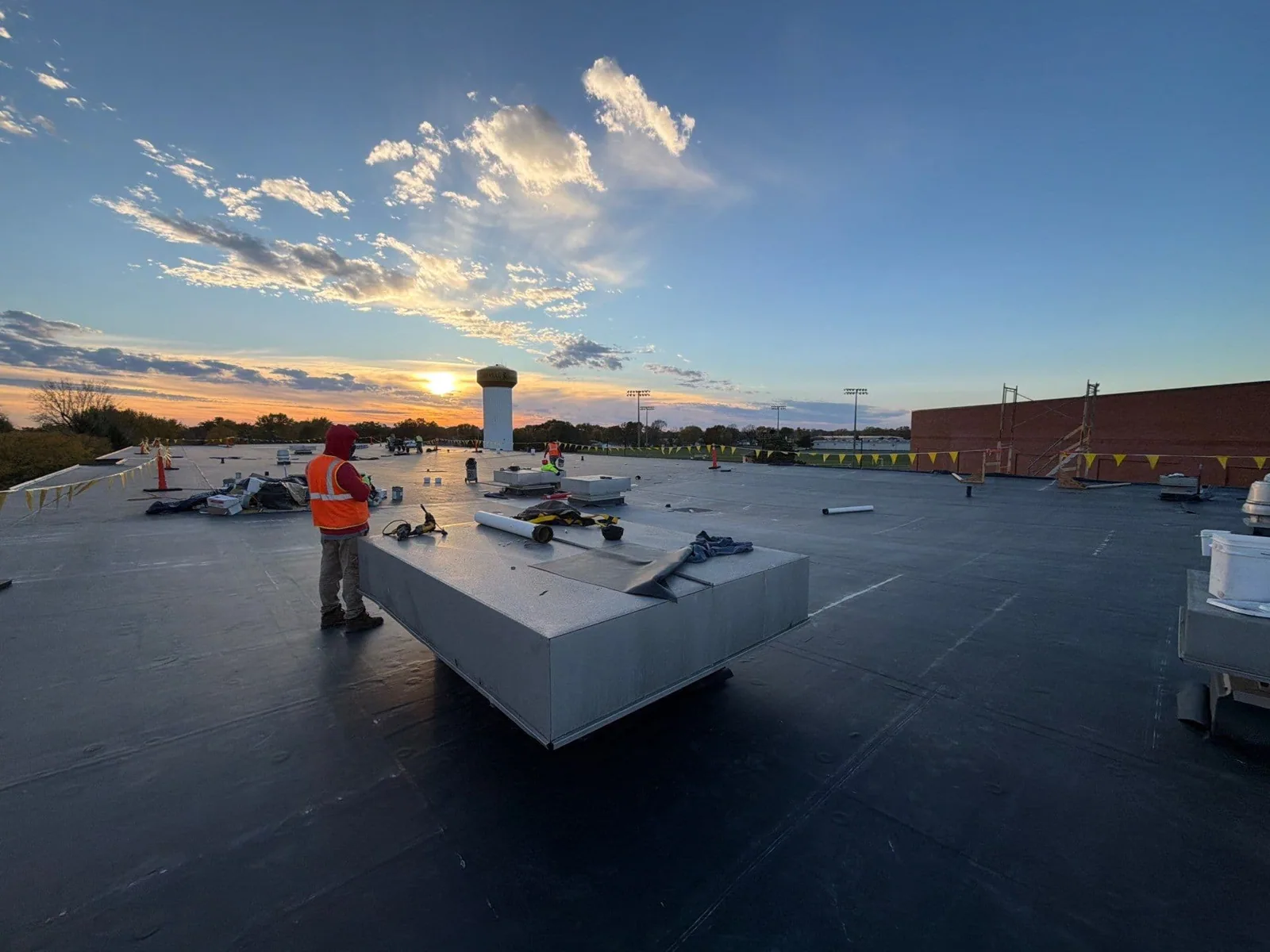
Carlisle Syntec is best known for its EPDM and TPO lines, and Versico is its single-ply brand for TPO, EPDM and PVC. Holcim Elevate makes EPDM, TPO and PVC membranes with matching insulation, and Sika Sarnafil is a long-running name in PVC. Each has its own seam rules, lap widths and flashing details, and we install and repair to the maker's published details.
Multi-line makers: membranes, bitumen and insulation
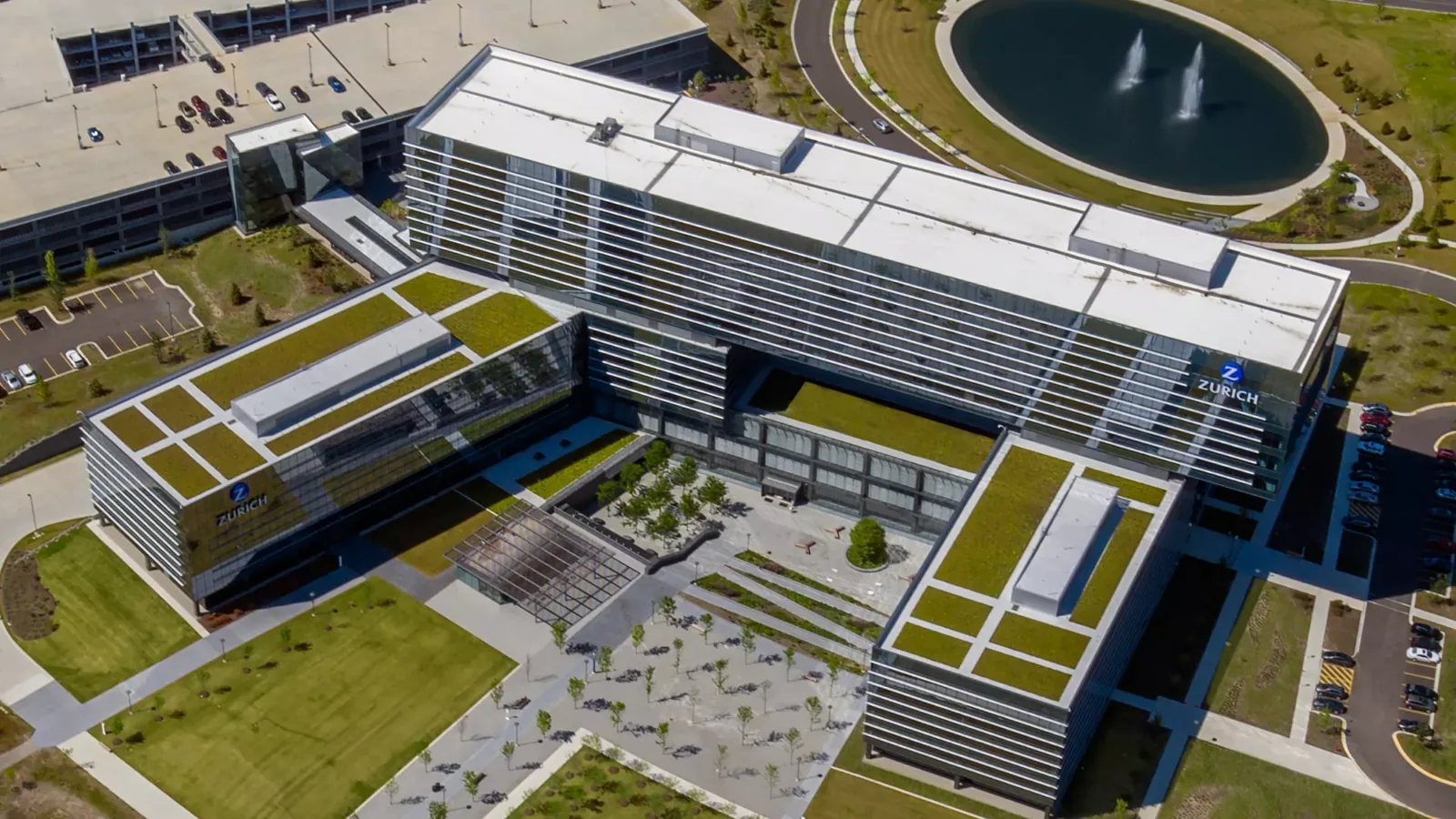
GAF and Johns Manville both sell commercial single-ply and bitumen systems with polyiso insulation to go under them. Soprema works in modified bitumen and liquid-applied membranes, which suit complicated details and rooftop equipment. These roofs often mix a membrane, an insulation and a cover board from one maker, so repairs have to respect the assembly rather than the surface alone.
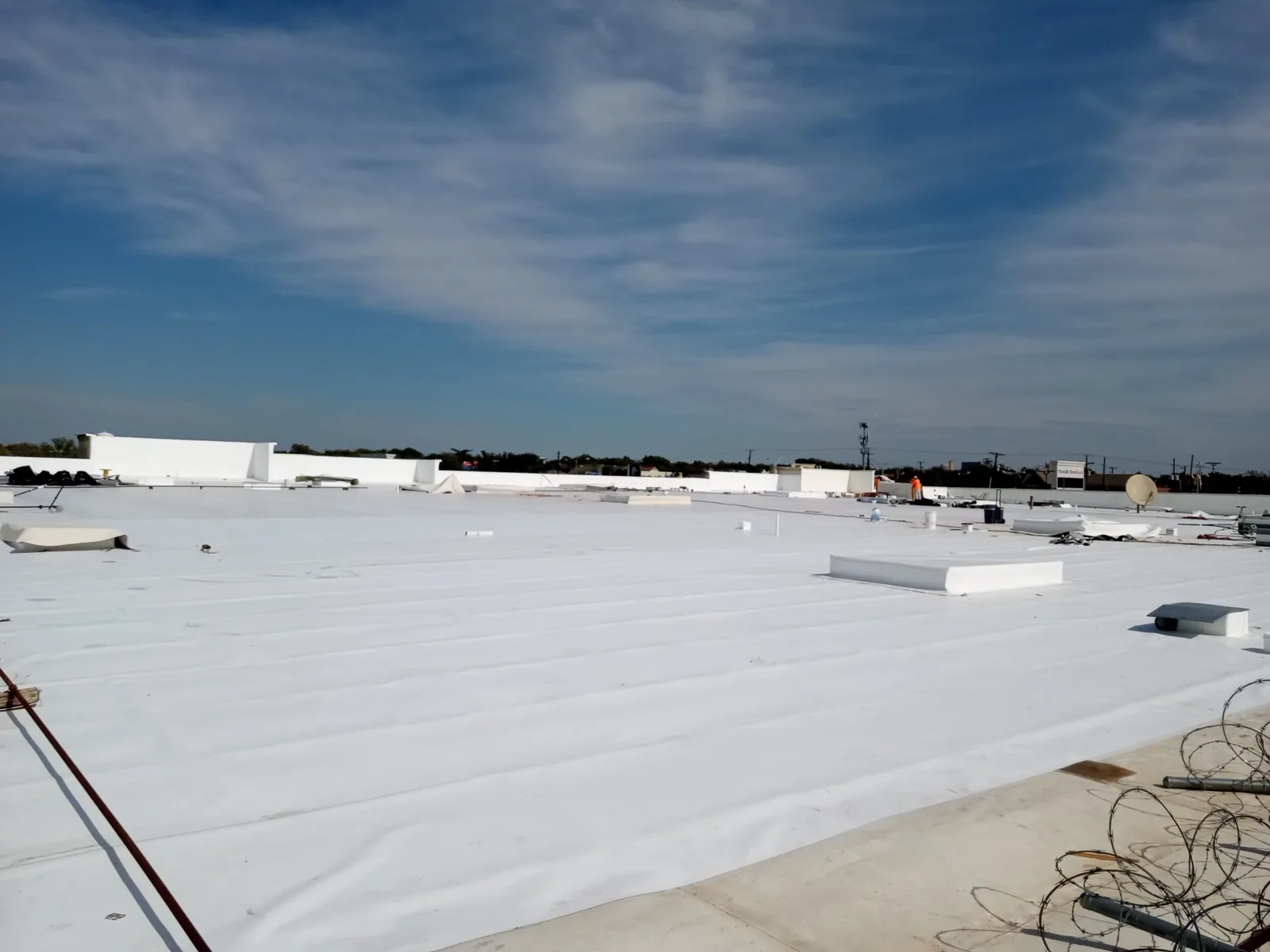
Prefabricated PVC: panels made to fit
Duro-Last fabricates PVC membrane sections to measure off a roof survey, which reduces field seaming on complicated rooftops. For an occupied building with many penetrations, that cuts exposure time and keeps the rest of the work compact.
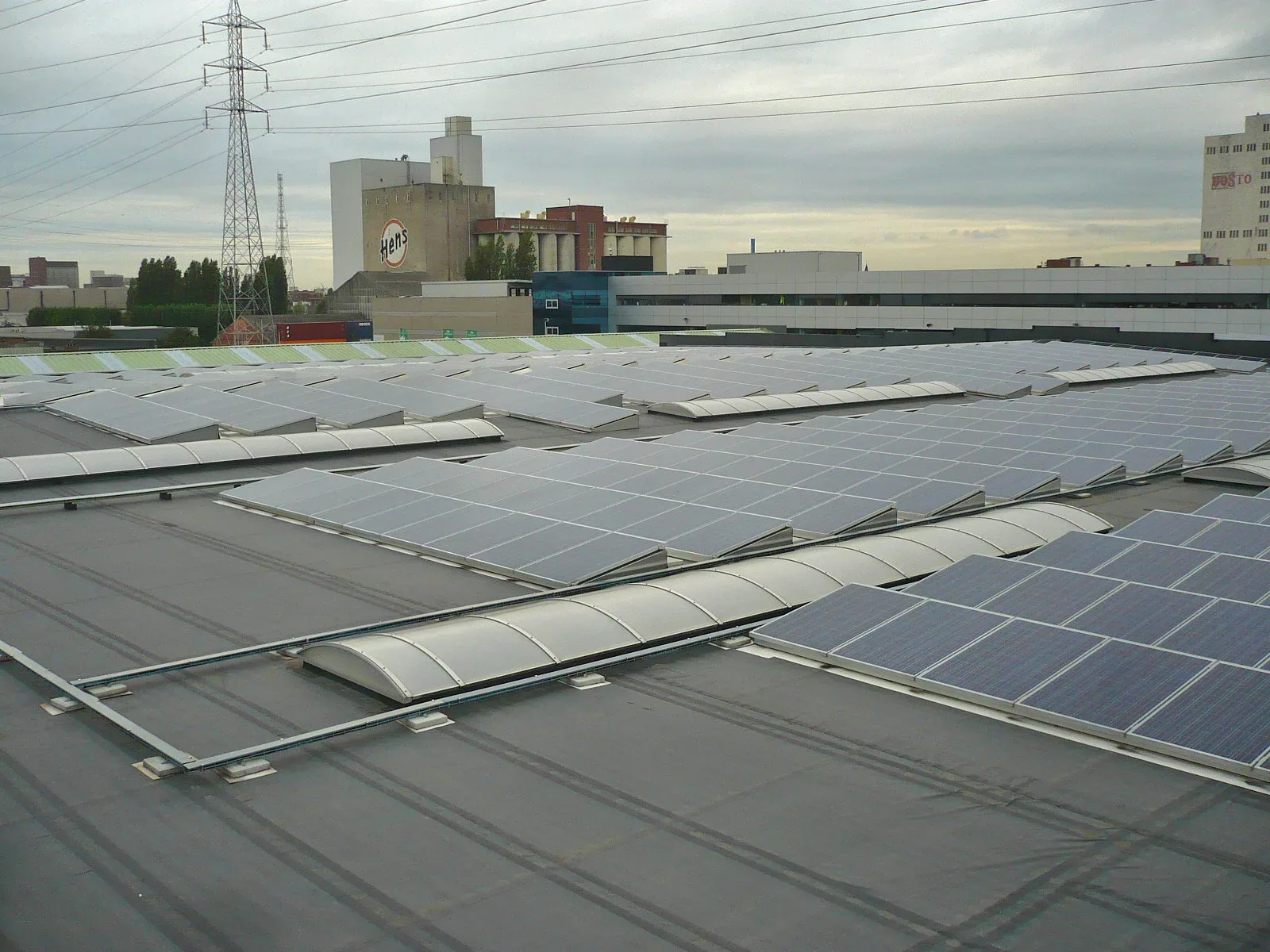
Records: keeping the product file with the roof
Each maker publishes its own installation details, and each system ages in its own way, so the product record belongs in the roof file. We log the membrane type, the seam method and any prior repairs, which lets a facilities manager see at a glance whether a repair stays within the original assembly. On a TPO sheet or a PVC sheet alike, that log is what lets a repair stay compatible years after the original install.
Match: system, exposure and building
Choosing among makers starts with the roof, not the logo. A tilt-up building in the Rancho Conejo Industrial Park with heavy rooftop equipment asks different things of a membrane than a hospital roof near Janss Road. Our survey records current system, substrate moisture and likely failure points, then narrows the choice to systems that suit the deck and the local climate. The finished plan lists compatible repair materials for each roof so that the next patch stays inside the original assembly.
Commercial Roofing Questions
Can a repair use another maker's materials?
Sometimes, but compatibility has to be checked first. Adhesives, primers and flashing materials differ between systems, and an incompatible patch can fail at the seam.
Does the manufacturer affect how soon a roof needs replacing?
Indirectly. Installation quality, drainage and maintenance history usually move the replacement horizon more than the brand, which is why the survey records all three.
What if the roof label is missing?
A field survey checks seams, sheet texture, flashing materials and repair history before a compatible method is selected. A partial label alone is not enough to specify adhesive or membrane.
Can a warranty file replace a condition survey?
No. The file helps identify the system and its recorded requirements, while the survey documents its present condition, drainage and repair needs.