Commercial Roof Leak Repair in Thousand Oaks, CA
Commercial Roofing Services · Thousand Oaks, CA
Stain location: a ceiling tile in the second bay of a flex building, well away from any visible defect on the roof above it. That distance is the central fact of leak repair. Water on a commercial roof does not drop straight down. It enters at one point, runs along the top of the insulation or the flutes of a metal deck, follows a fastener line or a wall, and shows itself wherever the path finally breaks through the ceiling. The tile is a symptom, and treating the area above the tile is the most common way an owner pays for the same leak twice. Leak repair in Thousand Oaks, CA starts with locating the entry point and proving it, then stopping the water at that point and recording what was done.
Commercial Roof Leak Repair
Commercial Roofing Services
Call our team
Written findings and options
Thousand Oaks, CA
Ventura and Los Angeles counties
Path: why the stain is rarely under the leak
The geometry of the roof decides where water travels. Under a single-ply membrane, water can move laterally between the membrane and the insulation, or between insulation boards, until it finds a gap. On a metal deck, it follows the profile and drips from the first seam or fastener hole it reaches. On a built-up or modified bitumen roof, it moves within and between plies. Interior finishes add their own path, with water running along ductwork, conduit and wall cavities before it becomes visible.
This is why a leak log is more useful than a single photograph. We record when the leak appears, whether it follows rain, wind-driven rain or an irrigation or equipment cycle, how many locations are involved and how they relate to one another on the roof plan. A leak that appears only in a certain wind direction points to an edge or wall detail, while a leak that appears after every rain points to a failure of the field or a drain.
Tracing: how the entry point is proven
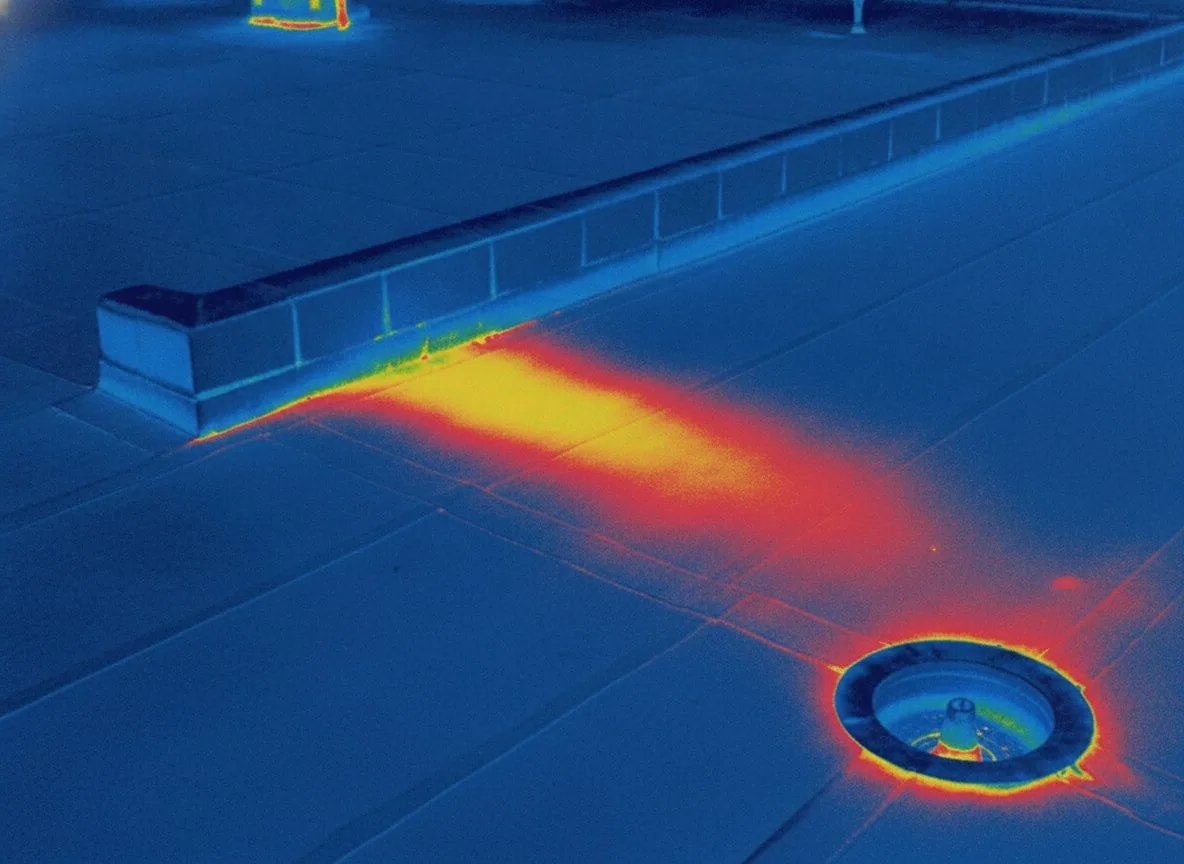
Tracing is a process of elimination that starts at the interior and moves outward. We map every stain, then walk the roof above the area and inspect each penetration, curb, flashing, seam, drain and edge within the plausible path. Moisture meters and infrared imaging reveal where insulation holds water, and an infrared moisture survey can show how far the wet area extends beyond the stain. When the evidence is still ambiguous, we isolate suspected sections and apply controlled water to one section at a time, from the lowest point of the roof upward, while someone watches the interior.
The point of the discipline is that a repair is not accepted until the entry is demonstrated. If a roof is old or has multiple leaks, the same method becomes a full commercial roof inspection, which finds the other defects that are about to leak before they stain a ceiling.
The result for the owner is a short written finding: where the water entered, why it entered there, what the surrounding roof looks like, and whether the same condition exists elsewhere on the building. That last point is the one that saves money later, because a flashing detail that failed over one rooftop unit has usually been built the same way over the next three.
Causes: the usual entry points
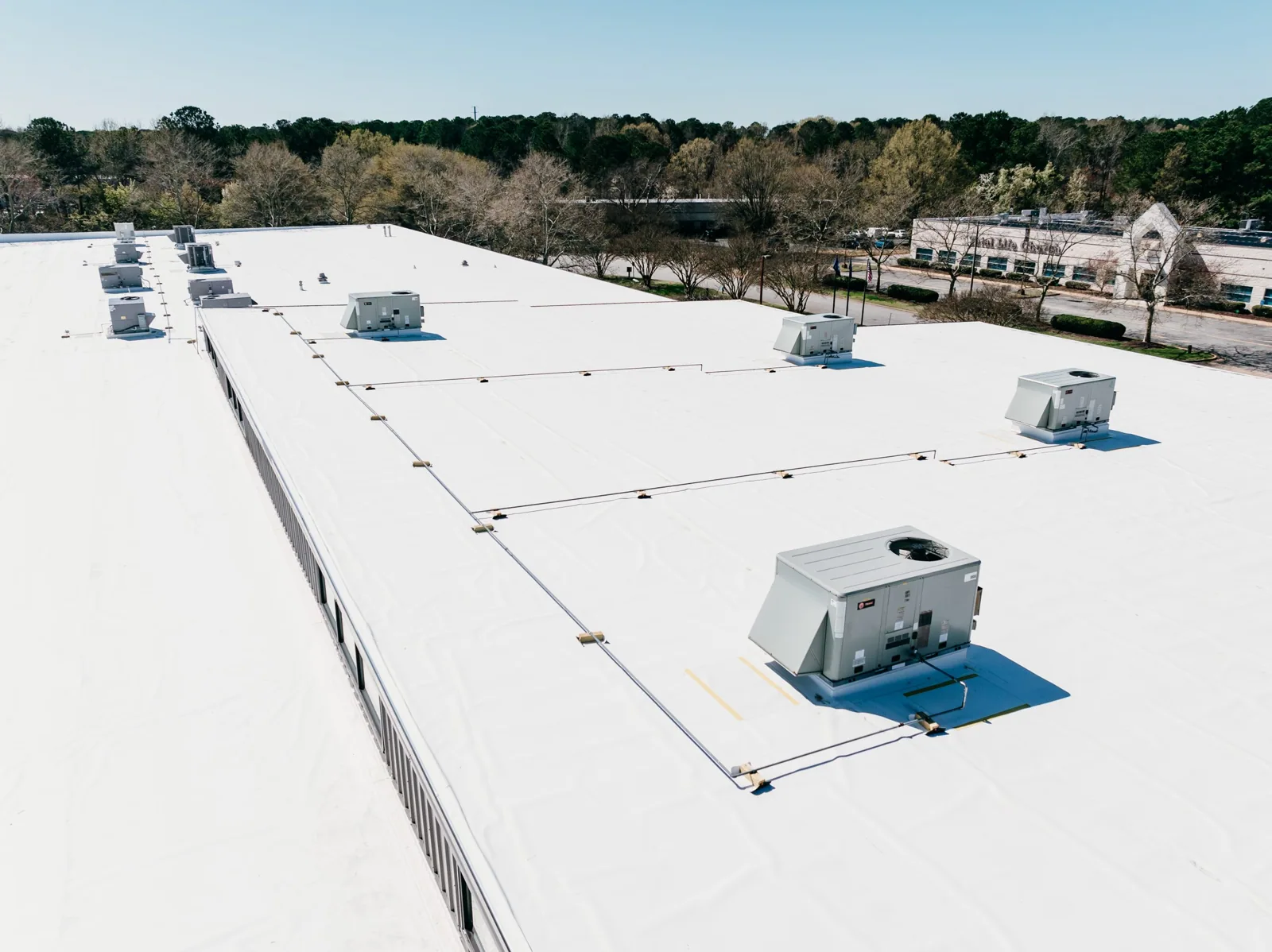
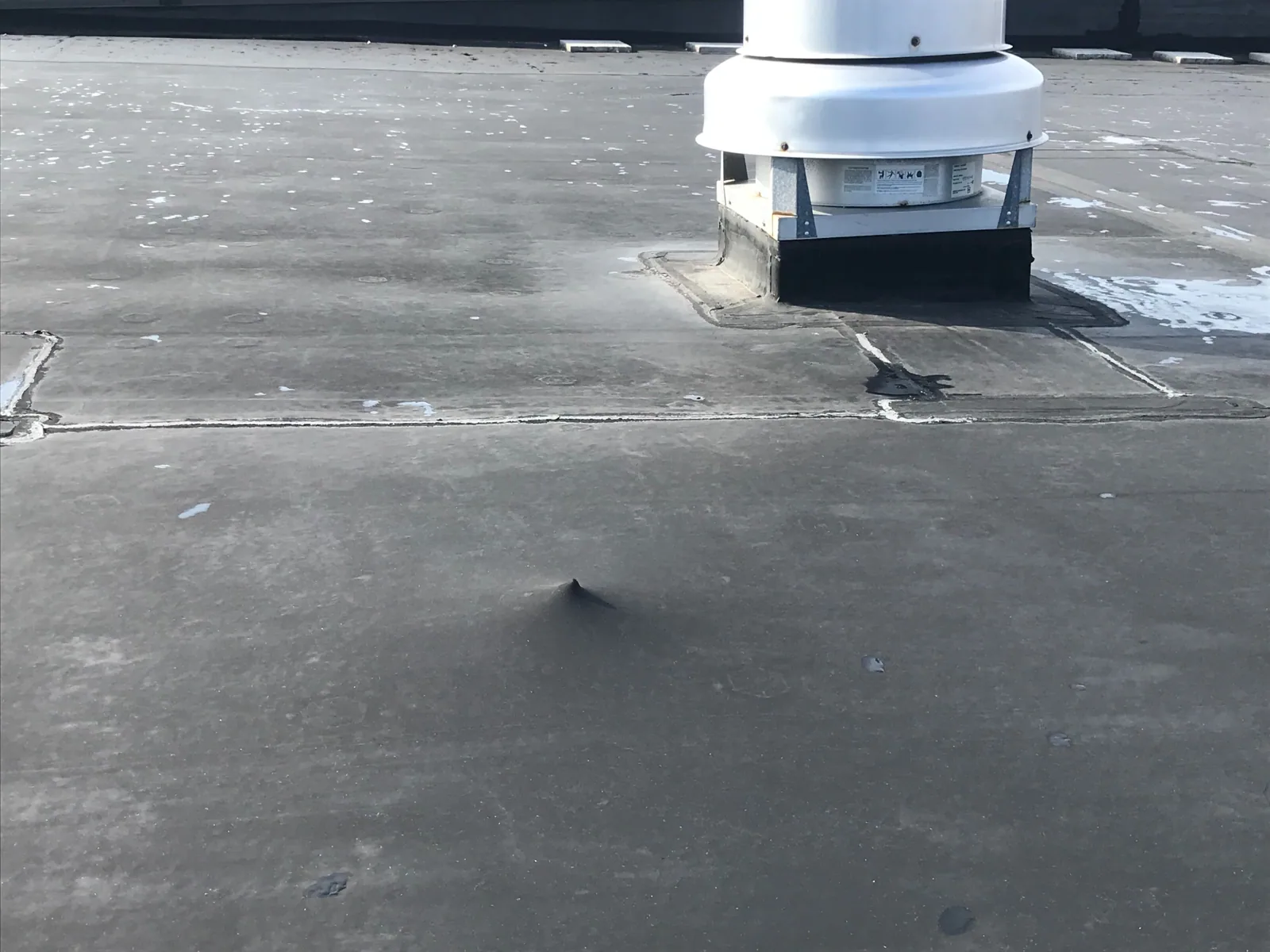
Most commercial leaks come from a short list. Penetrations top it: pipe boots, conduit, vent stacks and the flashing around rooftop equipment, where sealant has aged and the membrane has pulled away. Next come flashings at walls, parapets and curbs, then seams and splices, then drains, sumps and scuppers whose seals have loosened or whose clamping rings have corroded. Punctures from foot traffic and dropped tools are common near equipment that technicians service. Standing water adds to all of them, because water that sits at a seam for days tests it relentlessly.
Two causes call for more than a patch. Standing water is a slope and drainage problem that accelerates membrane failure, which makes ponding water roof repair a drainage fix as much as a seal. A membrane puncture is easy to patch but important to trace back to the traffic that caused it.
Season: the first storm after the dry months
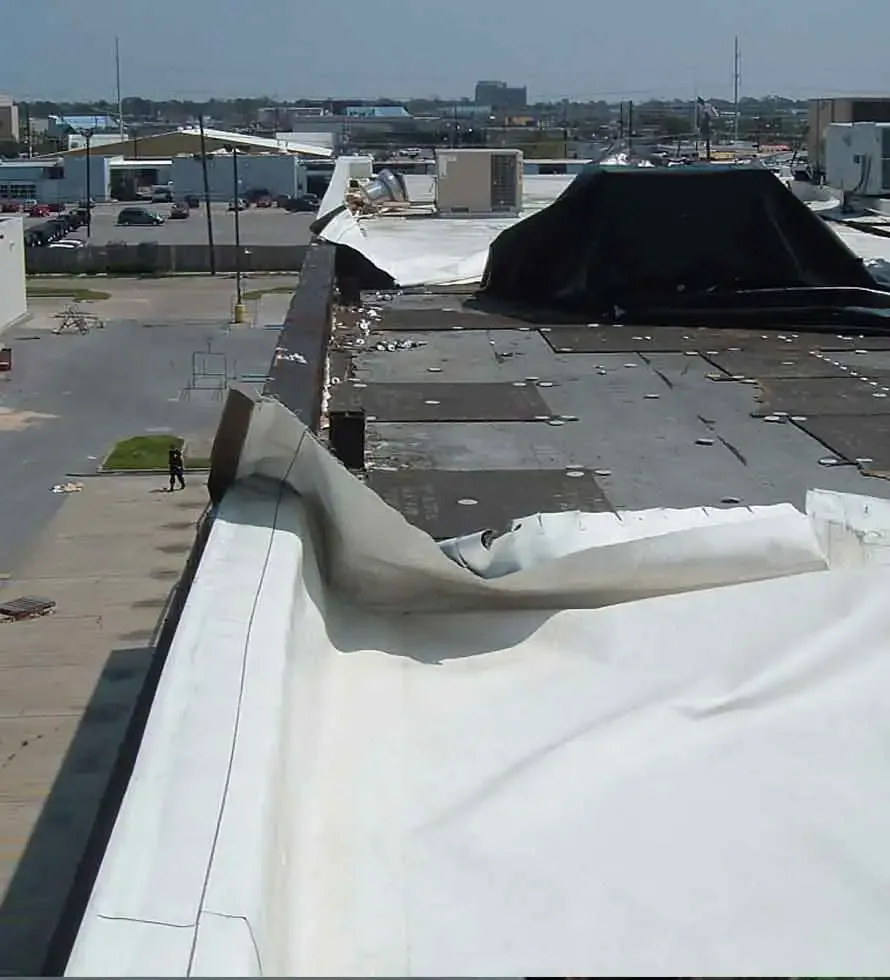
The Conejo Valley rain calendar creates a leak calendar. Newbury Park averages about ten inches of rain a year, and most of it falls in a short winter season, so roofs stay dry through the summer and then meet a few heavy storms in quick succession. Defects that were opened by summer heat and thermal movement, or by Santa Ana winds that lifted a flashing, stay silent until the first real rain. Wildfire seasons add a second pattern: ash and debris that collect in drains, scuppers and valleys after a fire like the Woolsey Fire of 2018, which affected Thousand Oaks, and then back water onto the roof.
The practical lesson is to clear drains and verify details before the rain starts, and to treat the first storm as an inspection event. When a leak does appear, a prompt record of its location and timing shortens the trace. Facilities that cannot tolerate water at all, such as the patient-care areas of Los Robles Hospital and Medical Center in the Los Robles Hospital District, need that response measured in hours, not days.
Stopping: temporary control and permanent repair
Stopping a leak happens in two stages. Temporary control protects the interior: a membrane patch, sealant, a localized dry-in, or a tarp when the roof cannot be repaired immediately. Permanent repair removes the cause: replacing the failed flashing and the substrate beneath it, rewelding a seam, rebuilding a drain connection, or cutting out wet insulation and replacing it. Where water is actively entering the building after hours, emergency roof repair is the first step, and the permanent scope follows once the roof is dry.
We document each leak with photographs, the entry point and the repair, which is also the evidence an insurer will ask for after a storm or fire event. When a claim follows, the same photographs and entry-point findings become the core of roof insurance claim assistance.
For a building on the Thousand Oaks Boulevard corridor, connect the interior stain to a confirmed roof entry, then attach the test result and completed repair to its roof-zone record.
A reliable leak repair closes with a verification step. Once the new detail is installed, inspect the tie-in, remove temporary materials and test the area only when conditions and system instructions allow. Record the result and keep the interior symptom connected to the roof location, especially when water traveled away from its entry point. If insulation was opened or replaced, show the boundary and any material that remains unverified. The owner then has a factual answer to three questions: what failed, what was repaired and what follow-up remains. If the same area leaks again, that record helps determine whether the original diagnosis was incomplete or a separate condition developed.
Commercial Roofing Questions
Why does my roof leak in a different spot than the stain?
Water travels along the deck, insulation and interior framing before it appears. The stain marks where the path ends, not where water enters, so tracing from the roof side is necessary.
Can a leak be fixed while it is raining?
We can control it temporarily with a patch, sealant or tarp to protect the interior. A permanent repair needs a dry surface, so it follows once the weather clears.
What if the roof has several leaks at once?
Multiple leaks often mean the roof is aging as a whole. We trace each one, then recommend either a set of planned repairs or a larger scope if the moisture survey shows widespread wet insulation.
Will you tell me if the insulation is wet?
Yes. Wet insulation is a central finding. We report where it is, how far it extends and whether it can be cut out and replaced locally or whether the roof assembly should be replaced.
Is leak repair covered by insurance?
Coverage depends on the policy and on whether the cause was a sudden event or gradual wear. We provide the documentation, photographs and scope your adjuster will need to evaluate the claim.