Membrane Puncture Repair in Thousand Oaks, CA
Roof Damage Repair · Thousand Oaks, CA
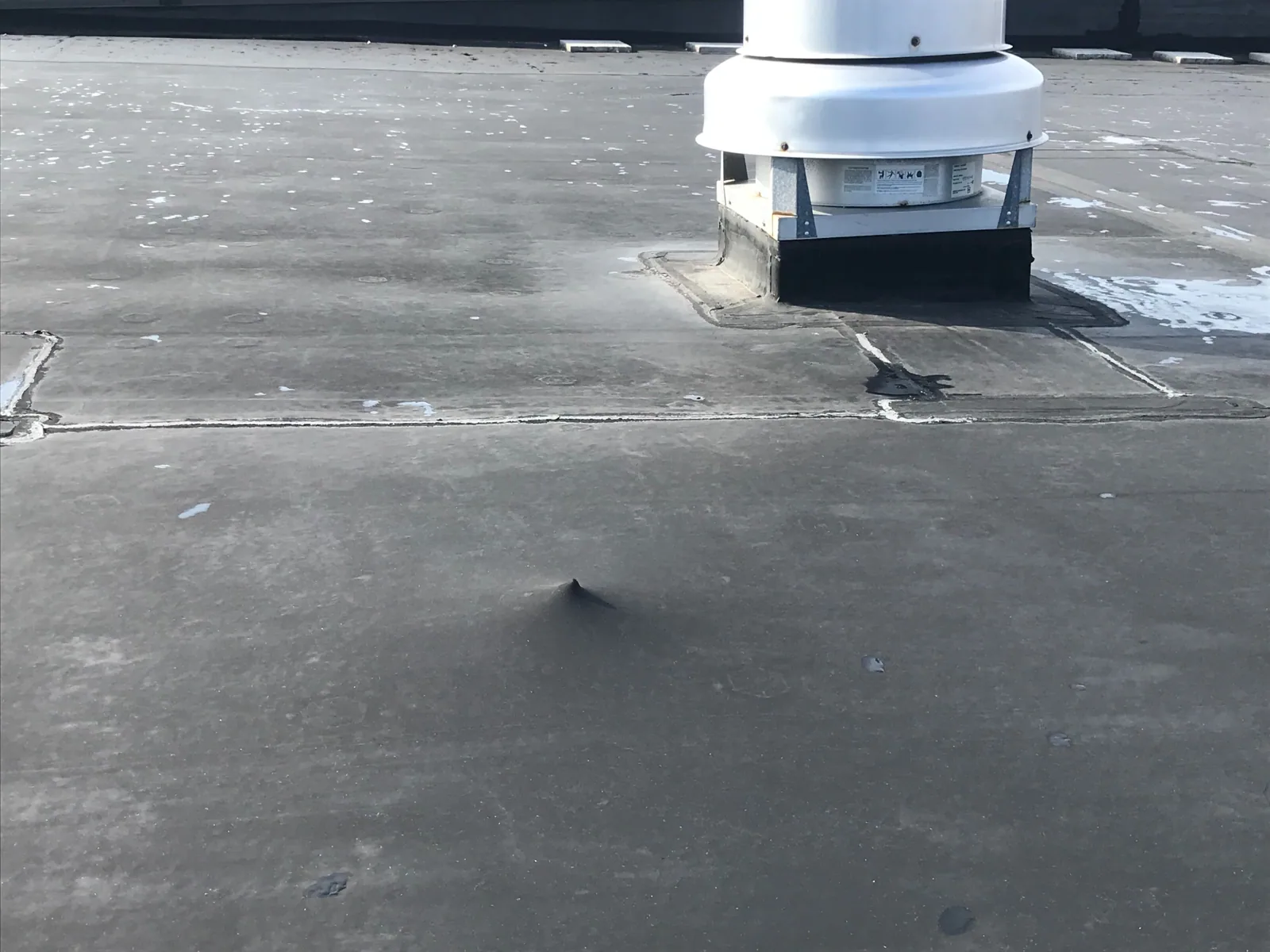
Roof-plan overlay, service path: a faint line of scuffed, polished sheet runs from the access hatch to the rooftop units, and along it sit three pinhole punctures, a gouge the width of a screwdriver tip and a patch applied with the wrong tape. None of these defects would stop a tenant from signing a lease. All of them are open to water, and on a roof in Thousand Oaks, CA that sees a service technician every quarter, the count grows with each visit. Membrane puncture repair is, in practice, a record of who goes onto the roof and why, and the owner who keeps that record can both fix the damage and stop adding to it.
Membrane Puncture Repair
Roof Damage Repair
Call our team
Written findings and options
Thousand Oaks, CA
Ventura and Los Angeles counties
Paths: where the traffic actually goes
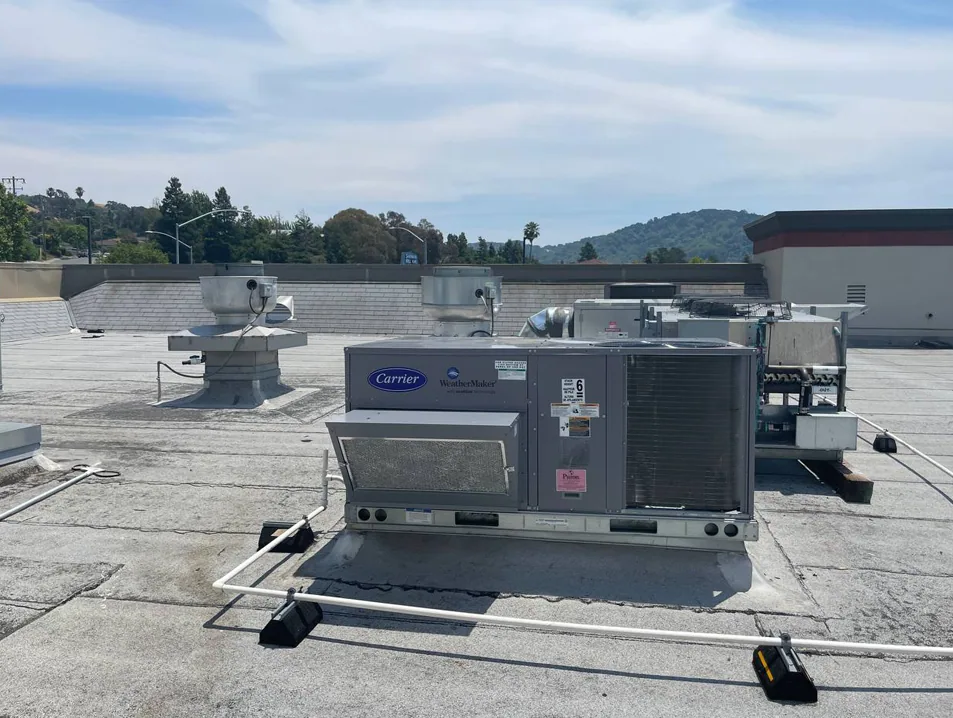
Foot traffic is not random. It follows the shortest line between the access point and whatever needs service, and within a season that line becomes a worn corridor with a visible sheen where the surface has been scuffed and its protective layer rubbed thin. Rooftop mechanical for critical areas, as at Los Robles Hospital and Medical Center, gives technicians a standing reason to be on the roof, and a roof under constant service is the one most likely to be punctured. A repositioning brings new equipment and new trades onto the roof, as the buyer of the Conejo Corporate Campus plans for its two office buildings, and each added trade is another chance for a punctured sheet.
We trace those paths during a survey, sketch them on the roof plan and compare them with the locations of defects. When punctures cluster along a path, the answer is protection and not repair. When they scatter across the field, the cause is more likely debris, dropped objects or work done by a trade that was never told where to step.
Sources: tools, trades and what the wind drops
The usual list is dropped tools and screw tips left behind by mechanical contractors, cable and conduit installers drilling for a run, antenna and signage crews setting a ladder foot or a mount, window cleaners hanging rigs from parapets, and solar crews working across the field. Santa Ana gusts add their own deliveries, since dry offshore wind moves branches, loose sheet metal and light equipment over a roof and drops them wherever the surface is thinnest. The mix at Camarillo Airport, where flight schools, charter operators and aircraft maintenance providers share an airfield with county fire and sheriff support facilities, shows how many different parties can have a reason to go up on a hangar or shop roof.
Age matters too. A sheet that has weathered under years of Conejo Valley sun loses surface toughness and flexibility, and what a new membrane would shrug off, a worn one punctures. That is why punctures and heat damage so often turn up together, and why a survey that finds one should look closely for the other.
Hidden damage: what a small hole does below the sheet
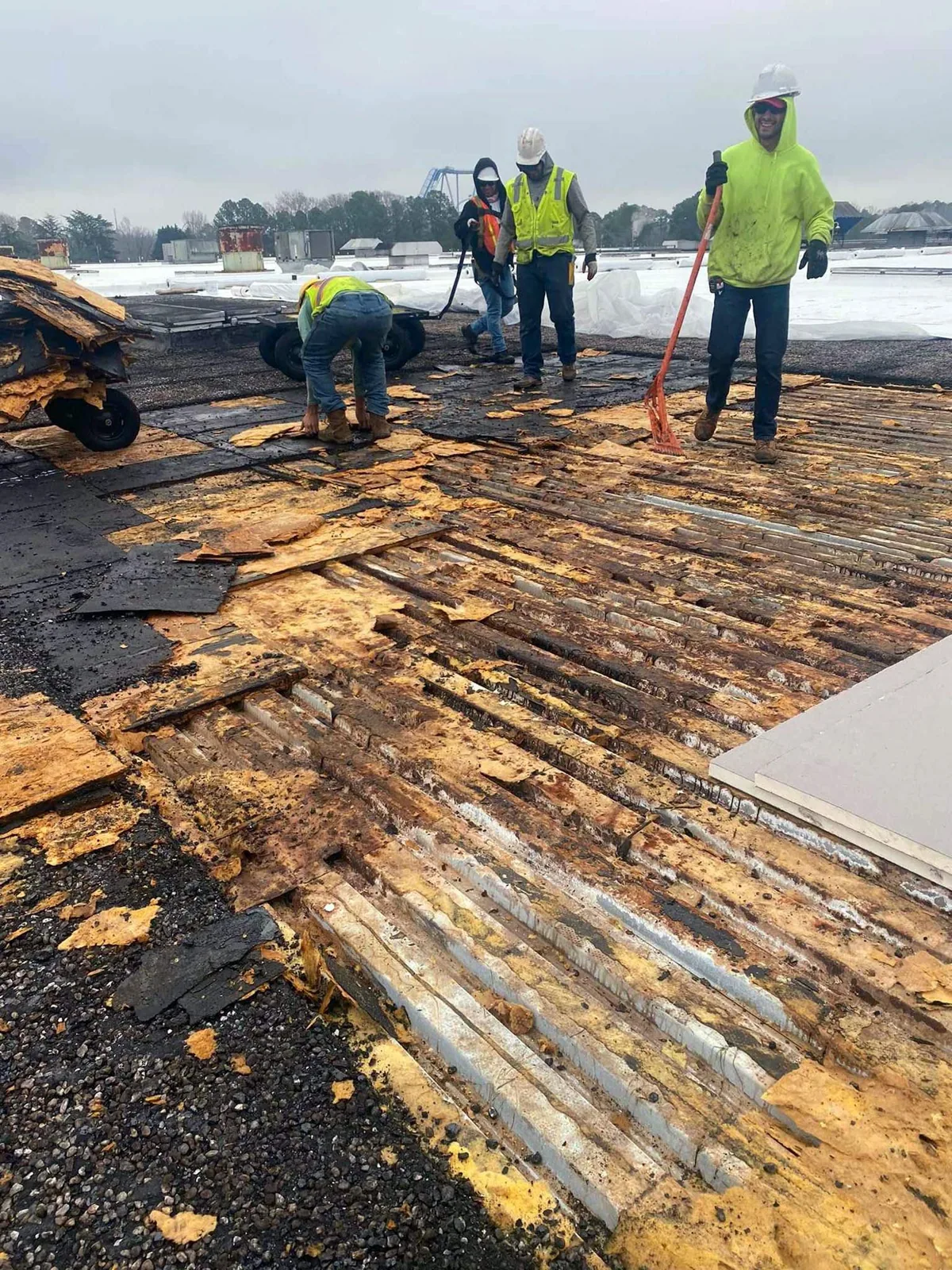
A hole is a small defect, but what it does under the sheet is not. Water running through a pinhole spreads sideways along the top of the insulation, wets the board and finds the nearest deck joint or flute, so the stain on the ceiling can be far from the cut. Wet insulation loses much of its thermal value, compresses under later foot traffic and holds moisture against the deck. A cheap puncture left through a winter can become a section replacement by spring.
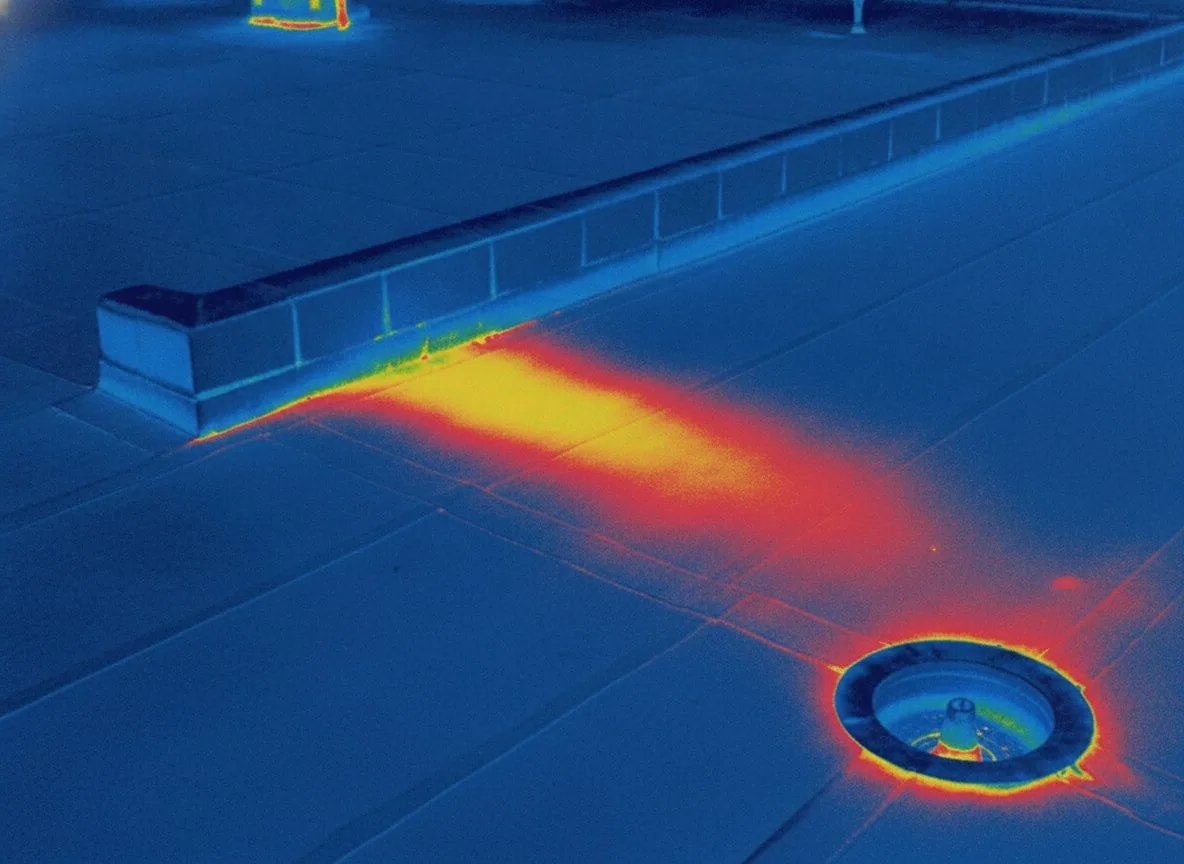
A soft, footprint-shaped spot underfoot is a sign that the board beneath has already been compromised. We mark every soft area, take moisture readings, and schedule an evening infrared moisture survey for suspect zones, since wet insulation holds its heat after sunset and shows up as a warm patch. If moisture is found, the wet board is cut out, replaced and the sheet closed over it. Sealing a hole without drying what lies beneath simply seals the wet in.
Repair: patch geometry, compatible material and a test
The patch has to match the sheet. A TPO or PVC membrane takes a heat-welded patch of the same polymer, cut with rounded corners and large enough to extend well past the damage on every side, because square corners are where patches begin to peel. EPDM takes a cleaned, primed patch or a cover of splice tape, and modified bitumen or built-up roofs are patched with compatible bituminous material, topped with a surfacing that matches the cap. Metal panels are fastened and sealed at the damaged lap or fastener. An incompatible patch, such as PVC over TPO, will not bond, however it looks.
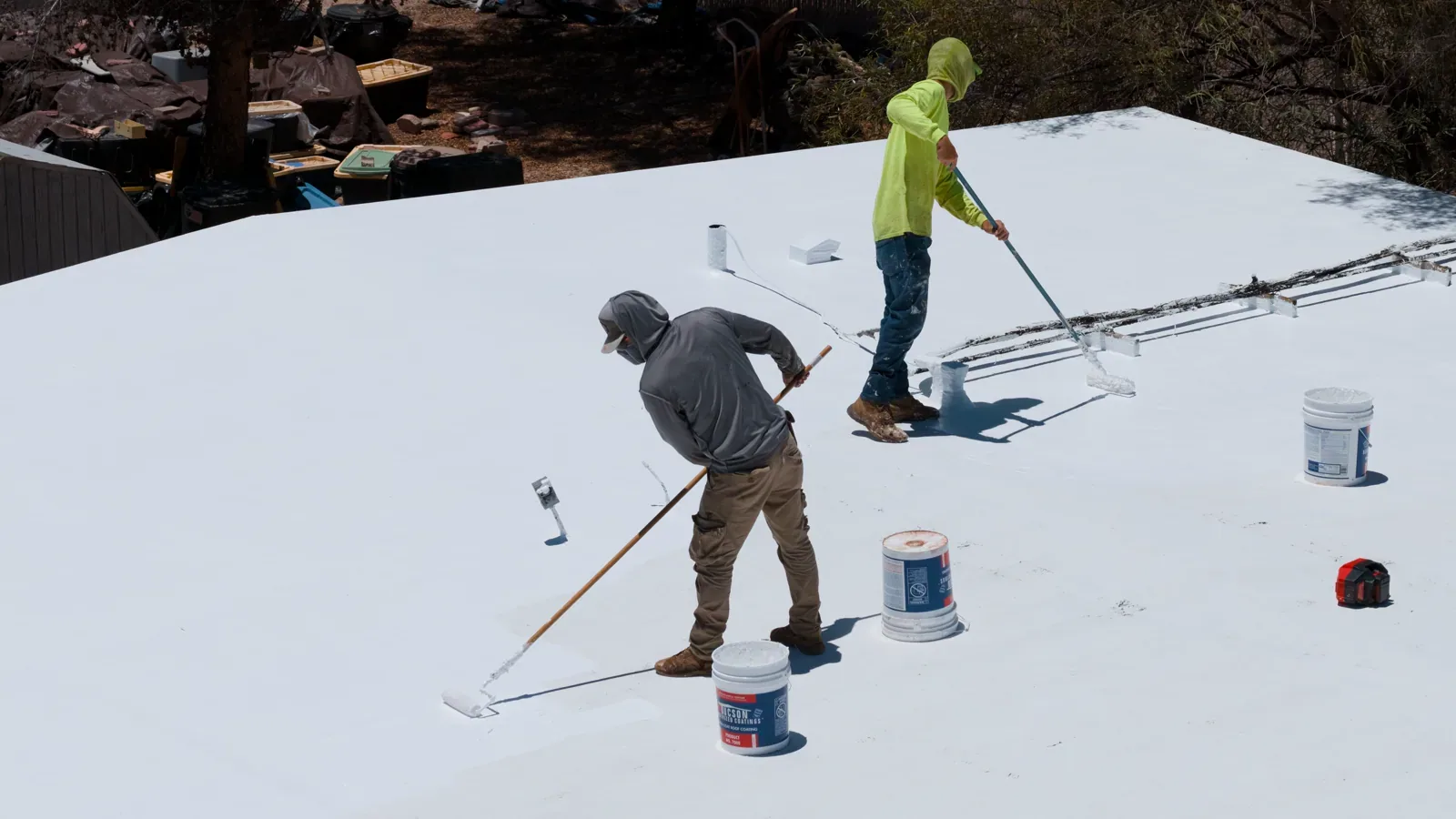
Scuffs and gouges that have not gone through the sheet are not left alone. They are cleaned and covered with a protective layer so the next footfall does not finish the job. Each completed repair is probed, photographed and logged by location on the plan. If the same section of roof needs repeated patching, that log is what justifies a more durable seam and membrane repair scope or a decision about the next system.
Control: walk pads and a rule for who goes up
Repair without control is a subscription. Walk pads, a sacrificial layer set along the route from the hatch to each unit, take the wear that would otherwise land on the sheet, and a defined route keeps technicians on it. Pads should be placed at the access point, in front of every serviced unit, and wherever traffic turns a corner. A short sign-in rule, with the date, company and purpose of each visit, lets us match every new puncture to the visit that caused it. This is the kind of record that a scheduled preventive roof maintenance program builds on.
New rooftop equipment deserves a plan before it arrives, not a patch afterward. A tenant improvement, a unit replacement or a solar array each brings a crew that has never seen the roof. Coordinating with the work on rooftop equipment curbs and supports and with a solar-ready roof design means the traffic route, the protection and the repair standard are agreed before the first boot hits the membrane. Wind-driven debris belongs in the same plan, since the way a wind-damaged roof collects branches and loose metal shows where it tends to land.
At a Thousand Oaks Boulevard corridor property, mark foot-traffic routes and contractor access separately. The repair should address the puncture and the pathway that caused it.
Commercial Roofing Questions
Should every contractor who goes onto the roof be logged?
Yes, or at least every trade that works outside the walk pads. A short log with date, company and purpose lets us match each new puncture to a visit, and the pattern usually becomes obvious within a season.
Is a pinhole puncture worth a service call?
Treat it as urgent in the rainy months. A pinhole is a path for water into the insulation, and the interior stain appears only after the damage has spread. Closing it early costs far less than replacing wet board later.
How do walk pads help, and where should they go?
They add a sacrificial layer where feet land. Place them on the line from the hatch to each unit, at the access door, and beside any equipment that is serviced often. Pads protect the sheet but do not replace controlling who goes up.
Can a membrane with several old patches still be saved?
Often. The question is whether the patches are holding and whether the insulation under them is dry. A roof with a dozen sound, compatible patches and clean moisture readings is a repair candidate, while one with failing patches and wet board is not.
What if the damage came from a tenant's contractor?
The lease and the access record decide who bears the cost. We document the damage, the date and the trade on the roof at that time, so the landlord has what it needs to raise the claim. Repair should not wait for the argument.