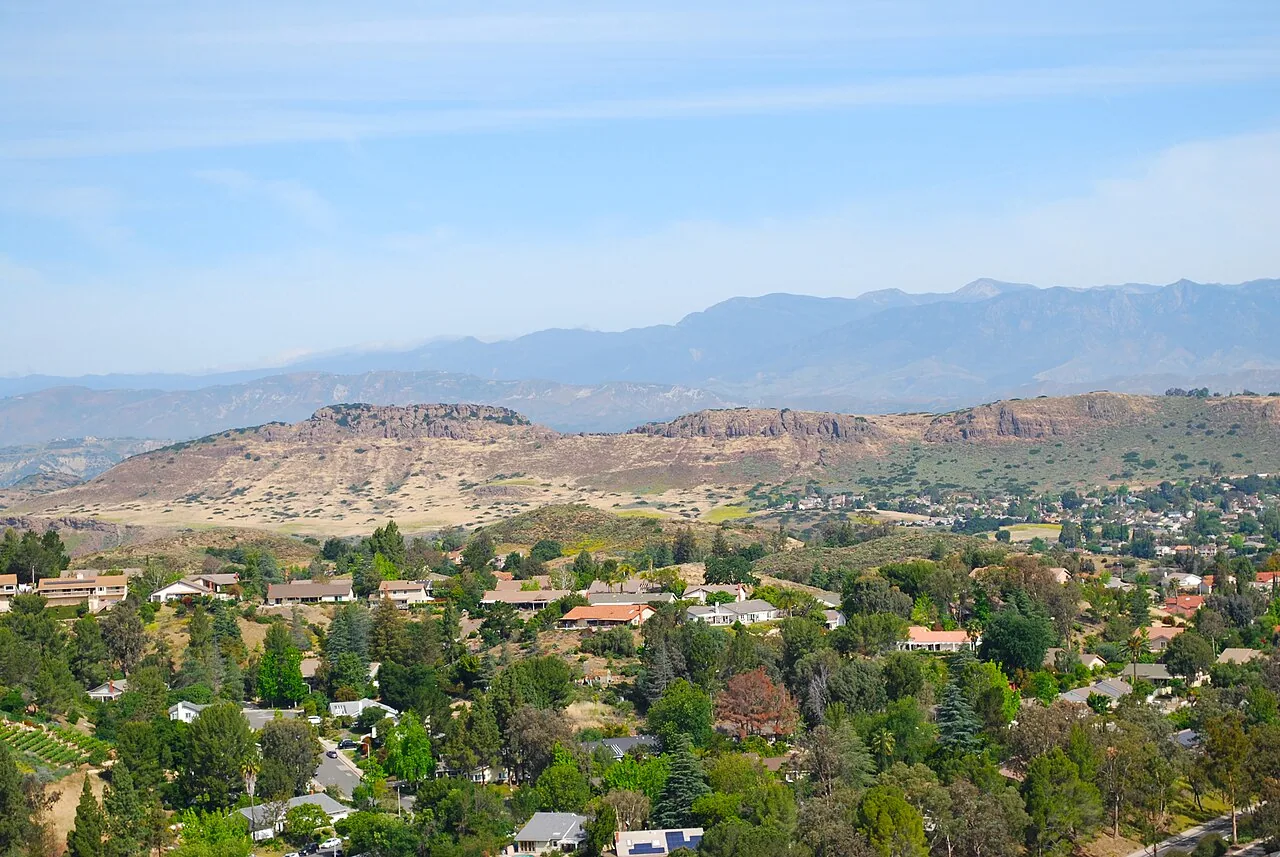
Commercial Roofing in Downtown Thousand Oaks, CA
Service Areas · Thousand Oaks, CA
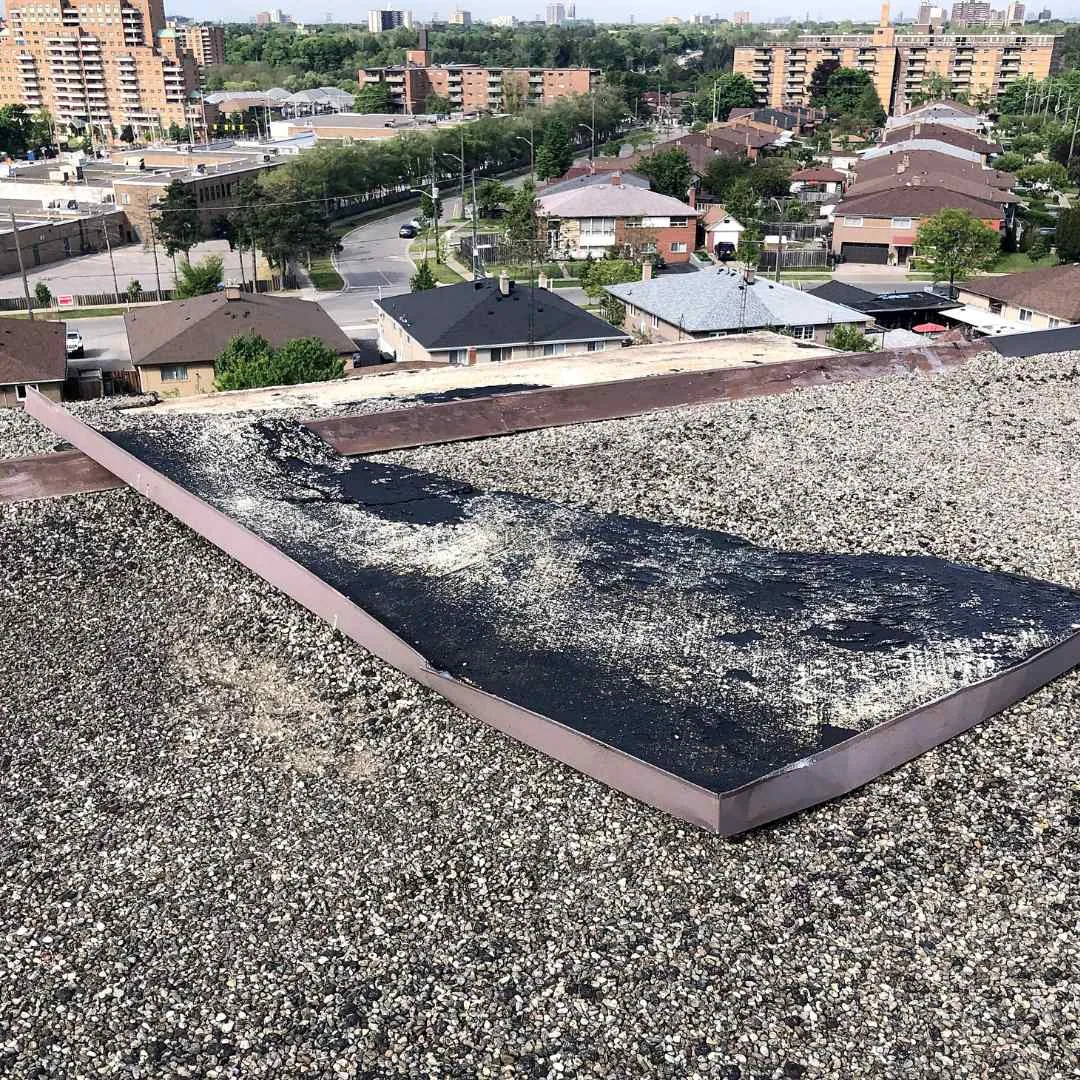
Finding: base flashing resealed with mastic at three points along the line where a lower roof meets a taller wall, and a hairline gap reopening at the oldest repair. On a building that steps up in height, that is the pattern a condition report exists to catch, because every change in height adds a wall-to-roof joint, and every joint collects movement, runoff from the higher roof and sealant age at once. The gap is not yet a leak. It is a measurable reason to move that joint out of the maintenance line and into the repair schedule before the first heavy winter storm. In downtown Thousand Oaks, CA, the building that raises this question most plainly is the Civic Arts Plaza, a city hall and performing arts complex of 210,000 square feet that climbs to ten stories at its highest point, together with the commercial buildings that line Thousand Oaks Boulevard around it. Inspection, repair, restoration and replacement of low-slope roofs on buildings of that kind is our work, and we hand ownership a ranked scope in place of a list of complaints.
Downtown Thousand Oaks
Service Areas
Call our team
Written findings and options
Thousand Oaks, CA
Ventura and Los Angeles counties
Complex: one address, offices below and a theatre beside them
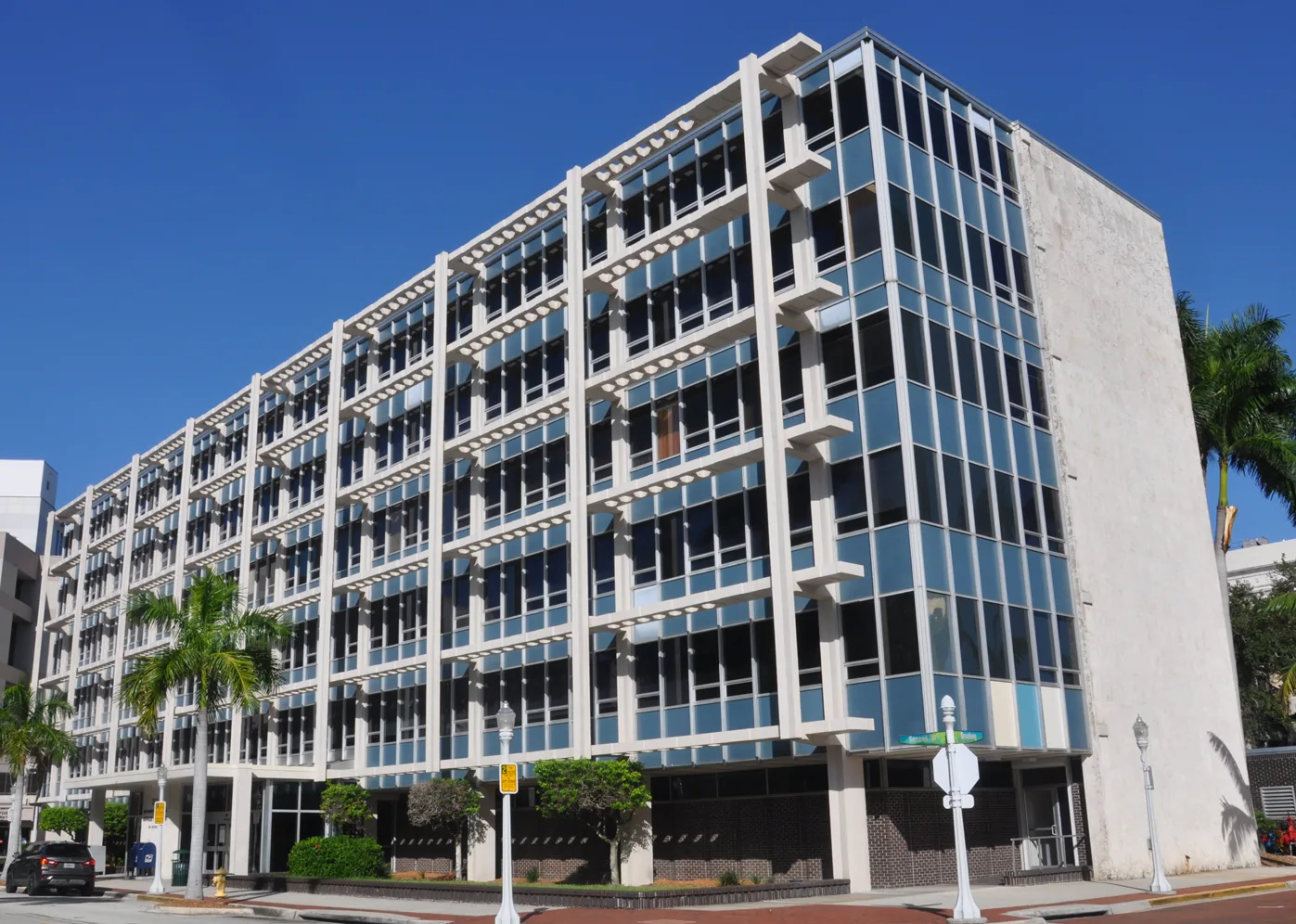
The Civic Arts Plaza replaced the former Jungleland USA theme park site, opened in 1994 and joins city hall functions to the 1,800-seat Fred Kavli Theatre. Two uses under one address put two different tests to the same roofing. The administrative floors are judged by occupants who notice a stained ceiling tile within a day, while the theatre is judged by its calendar, because water over an assembly space of that size moves or cancels an event instead of merely annoying one desk. A building that reaches ten stories at its highest point also carries roof areas at more than one height, and the upper ones take the wind first while the lower ones receive the runoff, debris and ash that fall from everything above. The 1994 opening date does not establish the age of any roof section, so the survey first checks drawings, permits and the roof itself to establish which areas have since been replaced, recovered or only patched. That answer sorts the complex into roofs that need a replacement horizon and roofs that need maintenance, and it becomes the baseline every later decision refers back to.
Calendar: roof work beside a performance schedule
Noise and fumes matter differently over a performance hall than over an office floor. Tear-off, power tools and hoisting are placed on the dark days between productions and kept away from rehearsal and load-in hours, and adhesives and heat-based work stay clear of the air intakes that serve the house. A public complex adds a further constraint, because people cross the plaza on foot, so staging, hoisting zones and debris chutes are drawn on a site plan before the first panel is lifted and walking routes are closed below any active edge. The method is part of the answer too. A cold-applied or mechanically attached system goes down with less odor and no open flame, and a phased plan opens only the area that can be closed and tested by the end of each day. That sequence is standard for occupied building reroofing, and for a civic owner the plan names which areas close on which dates so the facilities office can publish them. A theatre calendar is set months ahead.
Corridor: Thousand Oaks Boulevard and the freeway edge
Thousand Oaks covers 55.4 square miles, and about a third of that is designated open space, so commercial roofs do not spread evenly across the map. They gather beside US 101 and along Thousand Oaks Boulevard, and downtown Thousand Oaks Boulevard is the city's central commercial street, with State Route 23 meeting the freeway in the same city. For an owner with several buildings along that street, the concentration is useful: one visit can survey them all and rank them on one scale. Buildings of different uses share the same sun and wind but wear differently, because exhaust fans, air handlers and condensers each add penetrations and foot traffic in their own pattern. We walk the paths between equipment first, since a worn lane to a rooftop unit is the clearest record of how often a roof is visited. The same freeway carries commercial roofs through Newbury Park, the mall roofs of The Oaks and Janss Marketplace sit in the same Thousand Oaks Boulevard area, and an office building roof downtown is surveyed on the same scale.
Exposure: Santa Ana days and ash on the lower roofs
Offshore Santa Ana winds arrive dry and gusty, with speeds that can pass 40 mph, and the Ventura County record includes damage to structures where they funnel through gaps in the hills. Wind load on a roof rises with height, and the corners and parapets of a tall roof see the highest uplift, so the upper levels of a multi-story building deserve a harder look at coping, fastener condition and equipment tie-downs than a low roof does. The November 2018 Woolsey Fire affected Thousand Oaks under Santa Ana winds of 50 to 60 mph, and gusts forecast above 65 mph accompanied the November 2024 Mountain Fire near Somis and Camarillo, reminders that wind and ember exposure arrive together in this region. After such an event the survey looks for scorch and melt at penetrations, ash packed into drains and scuppers, and lifted edge metal, and it records them promptly because an insurance file is stronger when roof condition was documented on both sides of the event. The low roofs of a stepped building collect what falls from the high ones, so strainers are cleared before the first rain of the season, and a lifted edge becomes wind damage roof repair the same day.
Horizon: repair, restore or replace, and what moves the cost
Options sort by remaining service life, and the cost of each follows the same short list of conditions: how much insulation is wet, how many penetrations and wall joints need detailing, how much hoisting the height requires, and how many days the building can tolerate an open area. Sections with sound membrane and failing joints are repaired. Sections with chalked, crazed surfaces over dry insulation are candidates for roof coating restoration, which extends service life without tear-off or the disposal that comes with it. Sections with saturated insulation are replaced, and a replacement whose permit application is filed on or after January 1, 2026 is designed against the 2025 California codes, including the energy code provisions for roofing and cool roofs, as the City of Thousand Oaks amended them in 2025. For a municipal building, that code timing and the fiscal budget cycle together set the replacement horizon, and we price each option separately so the choice follows the ranked list instead of the loudest leak. Where commercial roof replacement is the answer, the same survey becomes its scope of work.
The City also identifies the Moorpark Road / Janss Marketplace Area as a distinct subarea.
Commercial Roofing Questions
Can a theatre roof be replaced without losing a performance?
Work is phased so the area over the house is opened only on dark days, then closed and tested before the next production. The schedule is built backward from the published calendar.
Which joints on a stepped roof fail first?
Wall-to-roof junctions at each change in height, followed by penetrations and drain bodies. Those are the places where movement, runoff and aged sealant meet, and they are checked before the field of the membrane.
How does a 1994 opening date change a roof survey?
It sets the first question: is any section original. Roofing past thirty years is graded harder, and replaced sections are graded on their own record, so the building receives more than one remaining service life figure.
Do the 2025 codes apply to a small repair?
A replacement permit filed on or after January 1, 2026 is reviewed against the 2025 energy code and the city's 2025 amendments. A small repair is a separate question, and the permit office should be asked before the work starts.
What happens on the roof when a Santa Ana warning is posted?
Drain strainers are cleared, loose items come off the roof and exposed edges are inspected. Our emergency line is staffed through nights, weekends and holidays, and a lifted sheet or loose coping is dry-in work for that day.