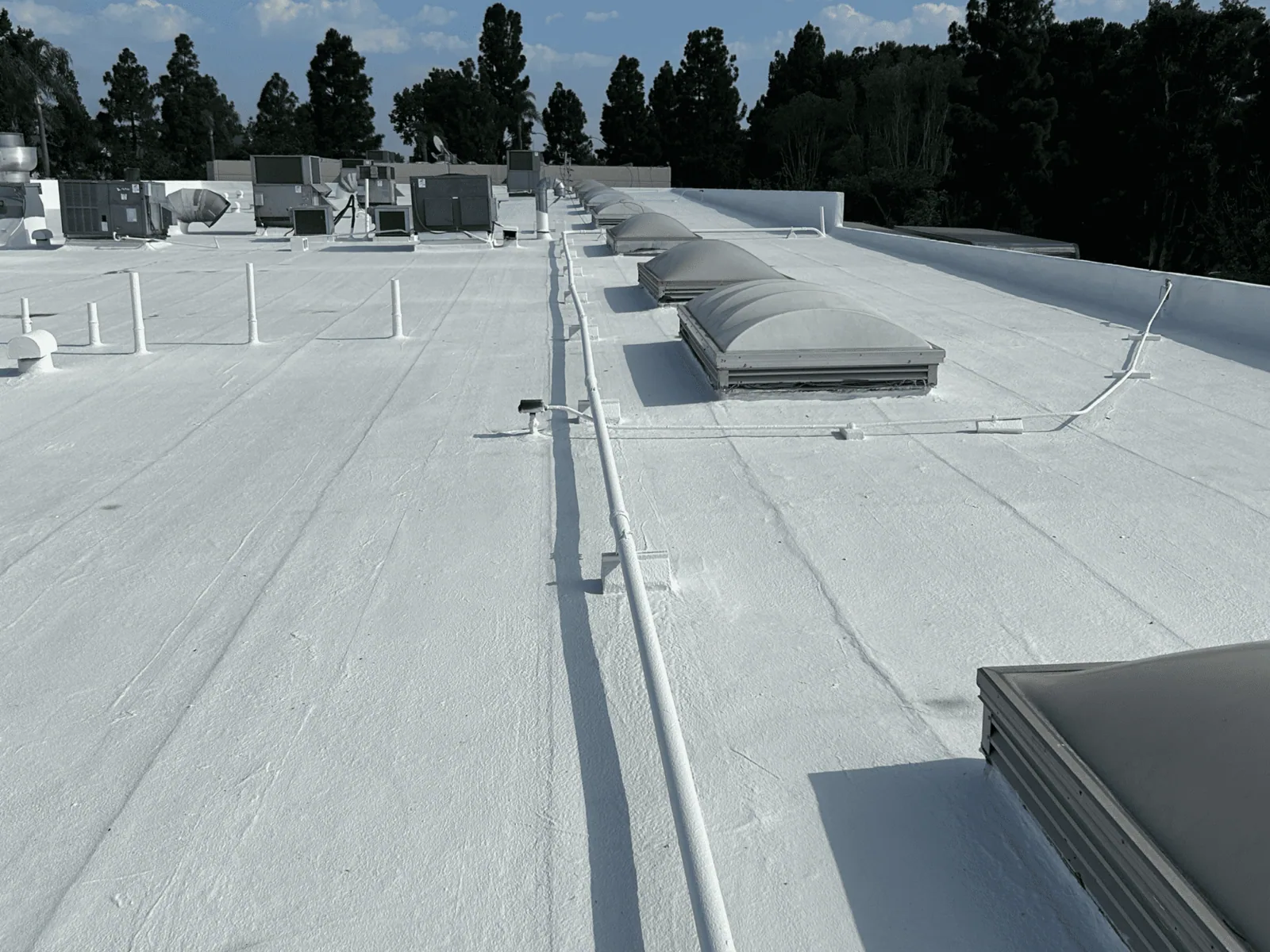
Commercial Roof Repair in Thousand Oaks, CA
Commercial Roofing Services · Thousand Oaks, CA
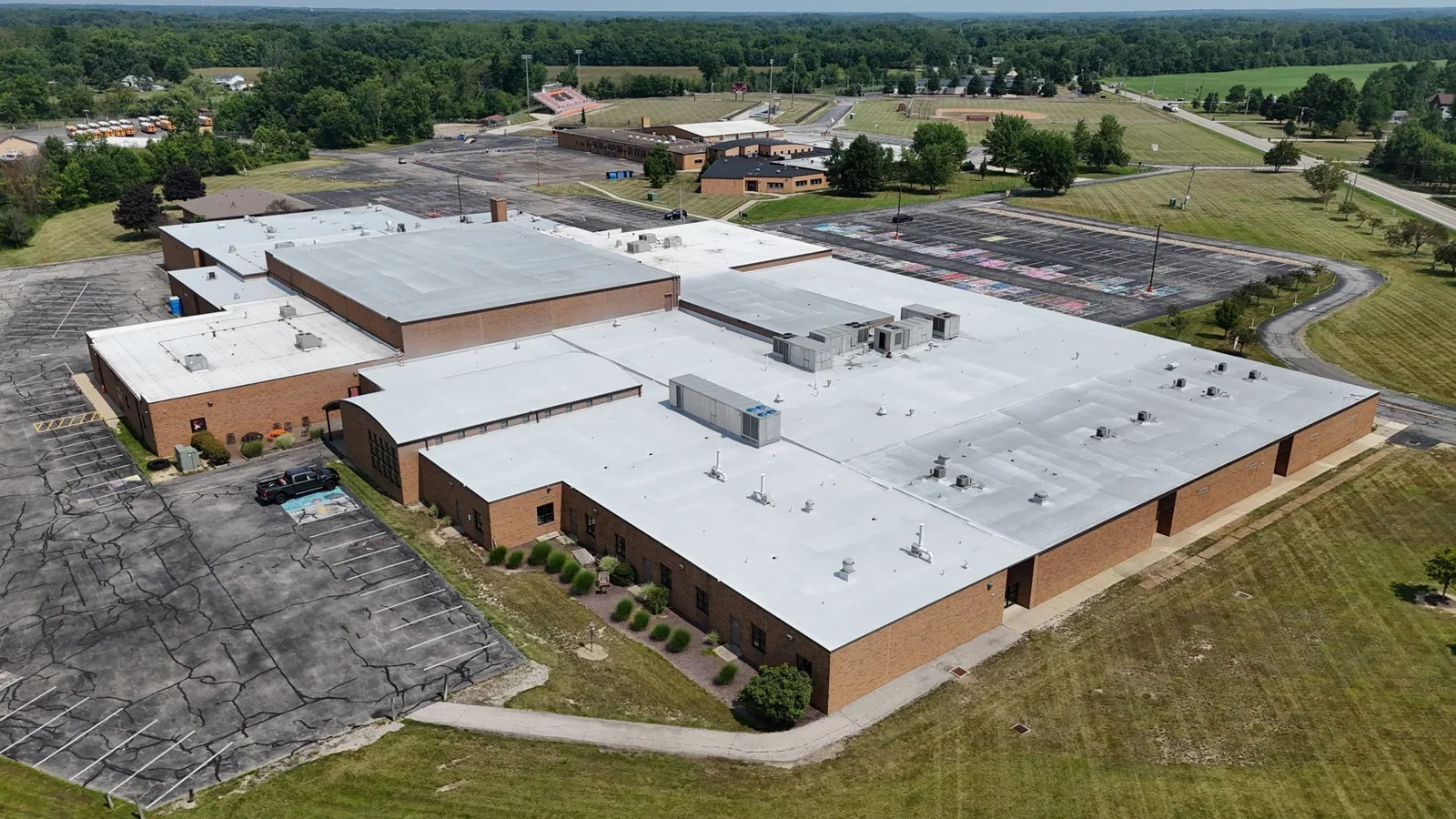
Condition index: fair, with defects clustered at the details instead of spread across the field. A seam open at a rooftop unit curb, a flashing termination that has lifted along a parapet, a split at an old penetration, a drain collar that no longer seals. This is the profile of a roof where planned repair is the right tool, because the membrane in the field still has useful service life and the money belongs in the places that are actually failing. Commercial roof repair in Thousand Oaks, CA is most valuable when it is scheduled from a written survey instead of ordered one leak at a time, since a prioritized scope lets an owner fix the cause, in the correct order, once.
Commercial Roof Repair
Commercial Roofing Services
Call our team
Written findings and options
Thousand Oaks, CA
Ventura and Los Angeles counties
Defects: where membrane roofs actually fail
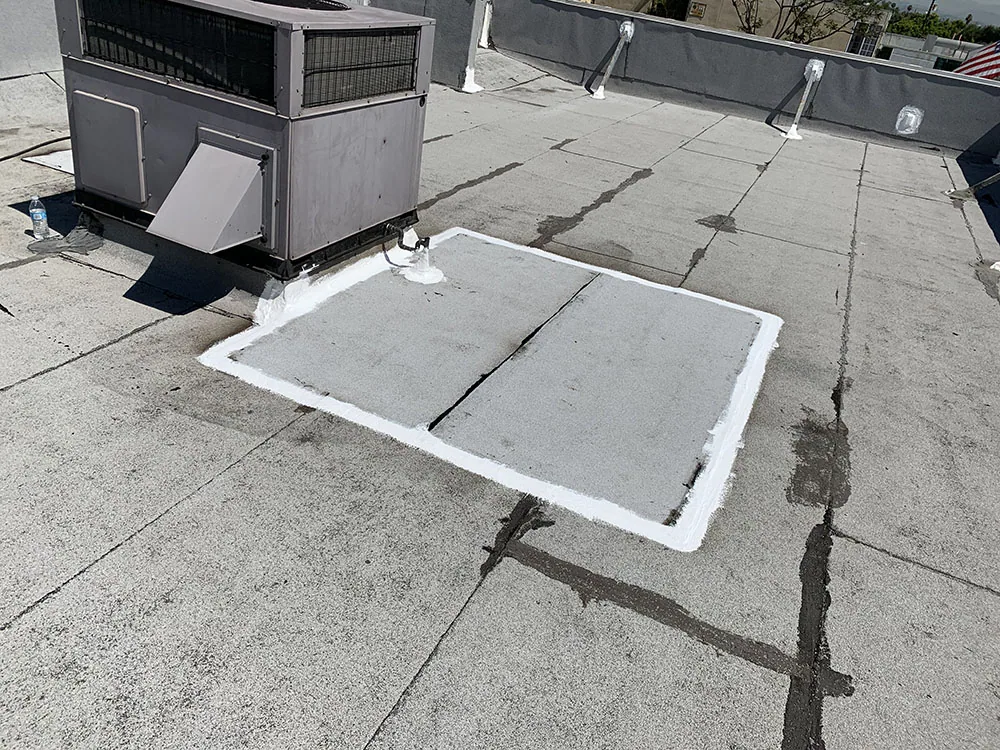
Field membrane rarely fails first. The weak points are the places where one material meets another or where the roof is interrupted: lap seams, base flashings at walls and curbs, pipe and conduit penetrations, drain bodies and sumps, edge metal, and the terminations where the membrane is fastened at the top of a wall. Movement concentrates at all of them. The roof expands in afternoon heat and contracts overnight, equipment vibrates, foot traffic wears a path to the units, and sealants dry out and shrink away from the surfaces they were meant to join.
On a survey we probe seams with a tool, press on flashing terminations, look for open laps and fishmouths, check fastener backout and mark every location on a roof plan. The pattern matters as much as the individual defect. Repeated failure along one side of the building points to wind or movement, repeated failure at one type of detail points to a workmanship or material problem, and scattered failures across the field point to age.
Method: repair matched to the membrane
A repair has to be compatible with what it is repairing. Thermoplastic membranes such as TPO and PVC are repaired with heat-welded patches and welded flashing, and the two cannot be mixed, because a PVC patch will not bond to TPO. Cured rubber such as EPDM takes primed splice tape or liquid-applied flashing, with the surface cleaned thoroughly because aged rubber carries a layer of dust and oxidation that stops adhesive. Modified bitumen and built-up roofs are patched with compatible bituminous materials, and metal roofs are repaired at fasteners, laps, clips and penetrations.
Membrane that has aged in the sun often needs cleaning or surface preparation before a repair will hold, and we test adhesion on a small area first when the condition is uncertain. Two defects that recur on large roofs have their own detail work: seam failure repair, which depends on finding why the seam opened, and flashing failure repair, which depends on replacing the substrate and fastening beneath the flashing and not just sealing its edge.
Triage: repair, restore or replace
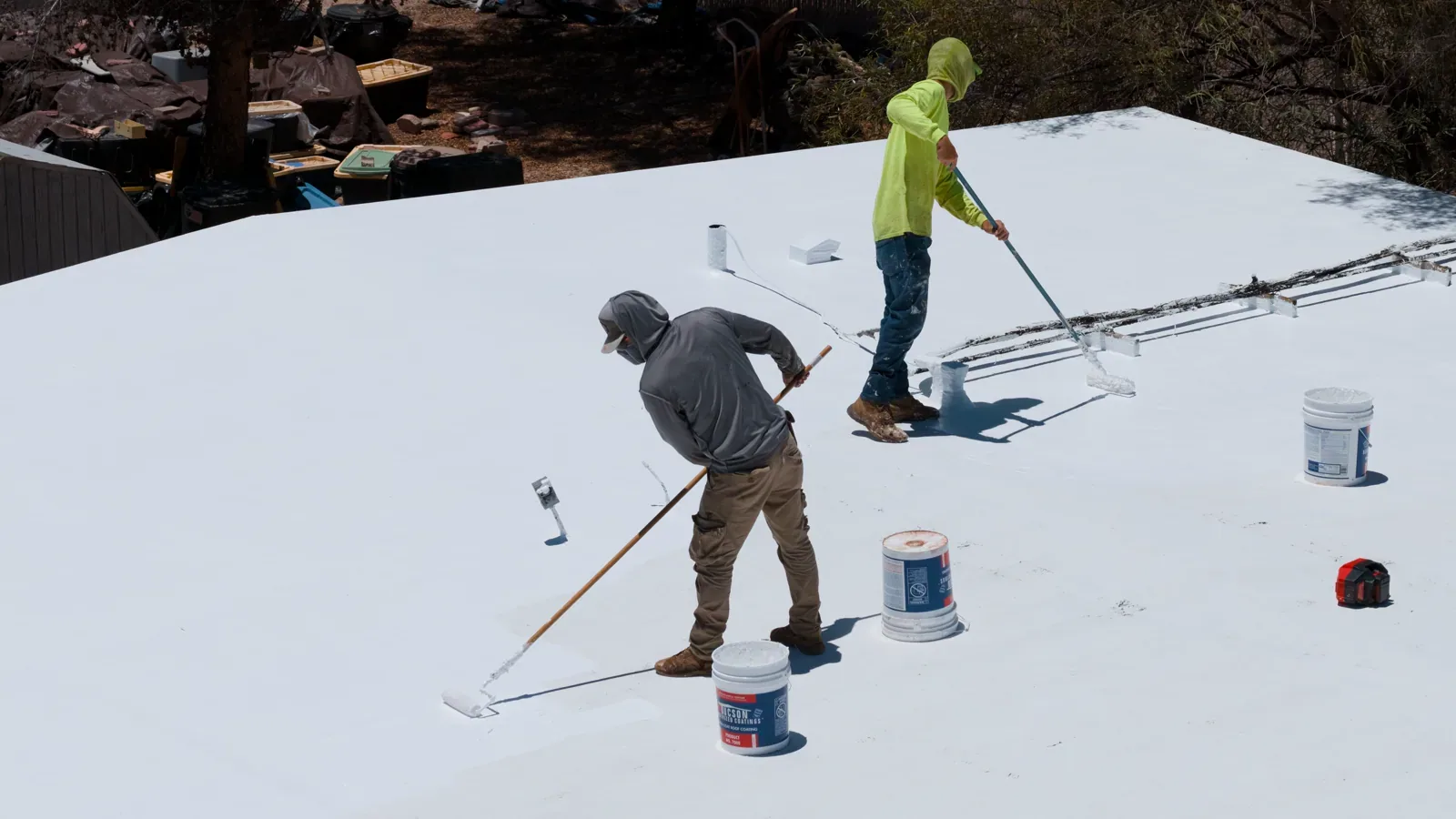
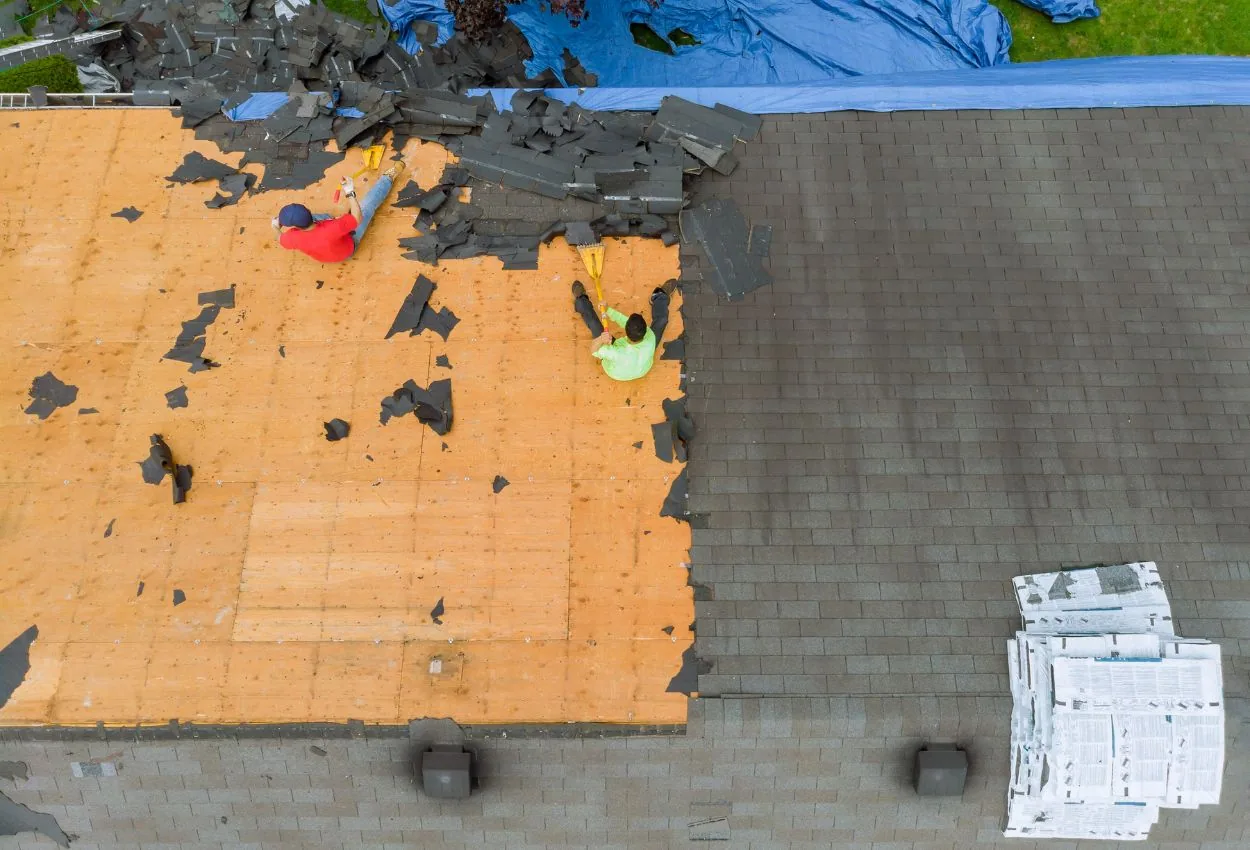
Every repair proposal should answer a larger question: how much roof life remains, and is the repair spending toward it or against it? We frame the choice in three levels. A repair addresses defects and leaves the roof as it is. A restoration, usually a coating system applied over a sound membrane, extends the life of the surface and adds reflectivity. A replacement resets the clock, and it is the right answer when moisture is in the insulation or the deck.
The test is cumulative cost against remaining service life. When annual repair spending is climbing, when the same details fail again, or when infrared findings show moisture spreading, we say so and show the owner the point at which commercial roof replacement becomes cheaper than continued repair. When the findings show that the roof is basically sound, we say that too, and the scope stays small. The goal is a decision that holds up in a reserve study, not a sale.
Climate: UV, thermal movement and the few big storms
Conejo Valley roofs age under steady sun. Summer days are warm, and extreme heat events have pushed temperatures well above the norm, which drives membrane surface temperatures and the thermal movement at every seam and flashing. That is the mechanism behind heat and UV roof damage repair: the surface chalks, plasticizers leave, laps stiffen and details crack long before the field membrane fails outright.
The water side of the climate is just as specific. Newbury Park averages only about ten inches of rain in a normal year, nearly all of it in a short winter season, so a roof can sit dry for months and then be tested by a few heavy storms. Defects that were invisible all summer show up as stains in the first week of rain. We schedule repair surveys for the end of the dry season and clear drains and sumps, which in the weeks after a wildfire or a Santa Ana event can be choked with ash, leaves and wind-driven debris.
Delivery: access, tenants and records
Repair work on an occupied building needs coordination more than it needs size. We plan access routes, protect interior finishes below the work area, schedule hot work and noisy work around operating hours, and leave the roof clean and tied off at the end of each day. Westlake Village is dominated by office parks along US 101, and wherever one firm manages several buildings, the communication with the property manager is as important as the repair itself.
Each repair is photographed before and after and logged against the roof plan, so the next inspection can see what was done and where. Over time that record shows which details are chronic, which buildings are drifting toward replacement, and whether a program of preventive roof maintenance is saving money. It is also the file an insurer or an incoming owner will ask to see.
A repair schedule should group work by compatible material and access, then protect occupied areas below each active zone. Before opening the roof, confirm the system, substrate and repair limits with the owner; a patch that crosses an incompatible seam can create a second failure point. If moisture is present, establish whether the insulation can remain or must be removed, and show that boundary in the estimate. The closeout record includes the product used, photographs of the tie-in and any follow-up inspection date. Where repair would only defer a broader failure, state the remaining risk and compare the cost of waiting with restoration or replacement. That gives the owner a clear choice and prevents an isolated work order from being mistaken for a full roof rehabilitation.
Commercial Roofing Questions
How do I decide between repairing and replacing?
Compare the cost of the repairs to the remaining service life. If the insulation is dry and the field membrane is sound, repair is usually justified. If moisture is spreading or repairs keep recurring at new locations, replacement is the better path.
Can any contractor patch any membrane?
No. The patch material and the method have to match the existing membrane, and a mismatch will fail. We identify the membrane type first and use compatible materials for the repair.
Will repairs void my existing manufacturer warranty?
They can, if the repair is made with unapproved materials or methods. Send us the warranty and we will review its terms before we scope work, so the repair does not put coverage at risk.
How long should a repair last?
It depends on the cause of the defect and the age of the surrounding roof. A repair that fixes the cause, such as a failed substrate under a flashing, lasts far longer than one that only seals a symptom.
Do you repair roofs that other contractors installed?
Yes. We repair existing roofs regardless of who installed them, and we begin with a survey of the membrane, the details and the drainage so the scope fits the roof as it stands.