Preventive Roof Maintenance in Thousand Oaks, CA
Commercial Roofing Services · Thousand Oaks, CA
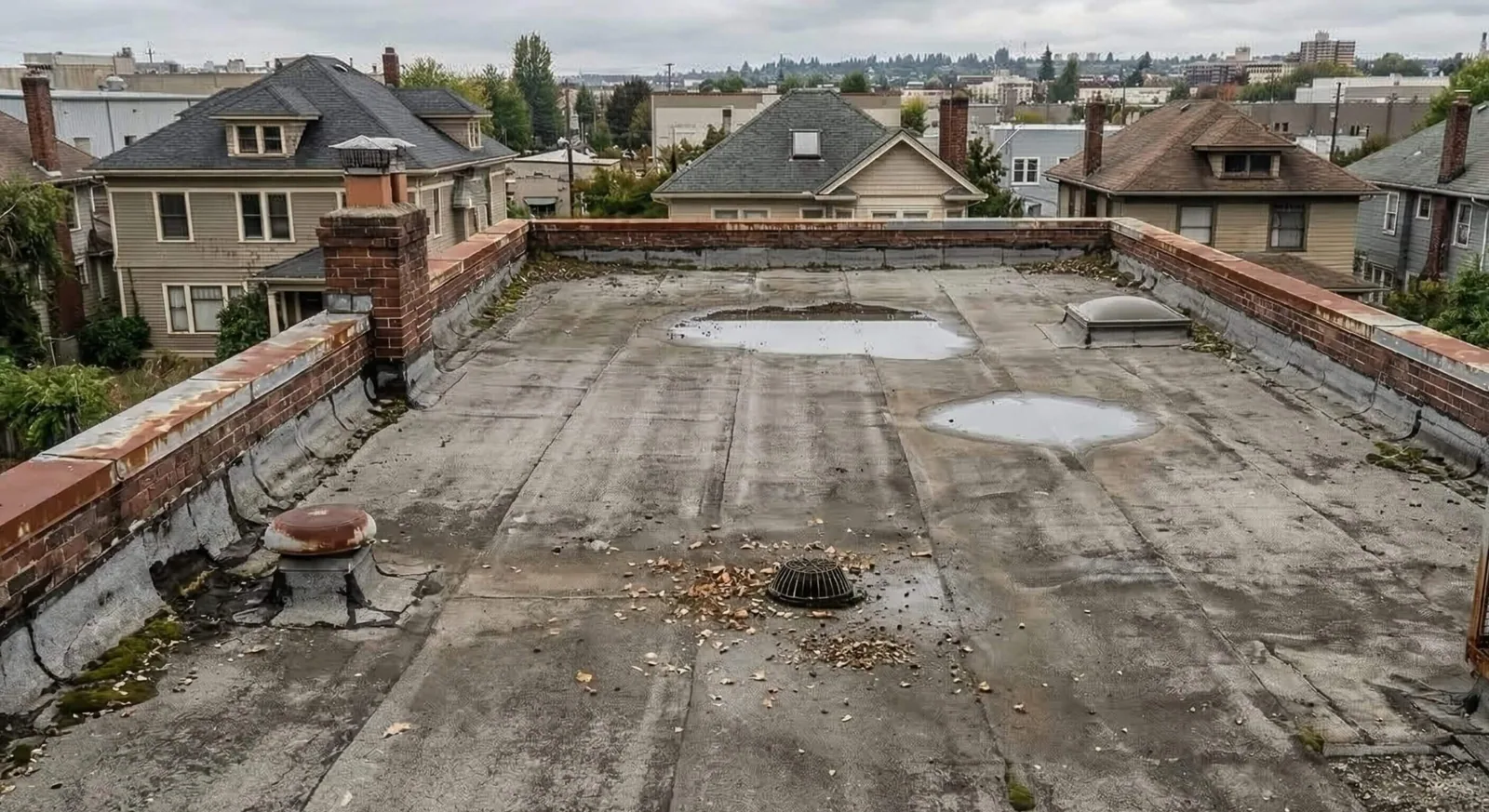
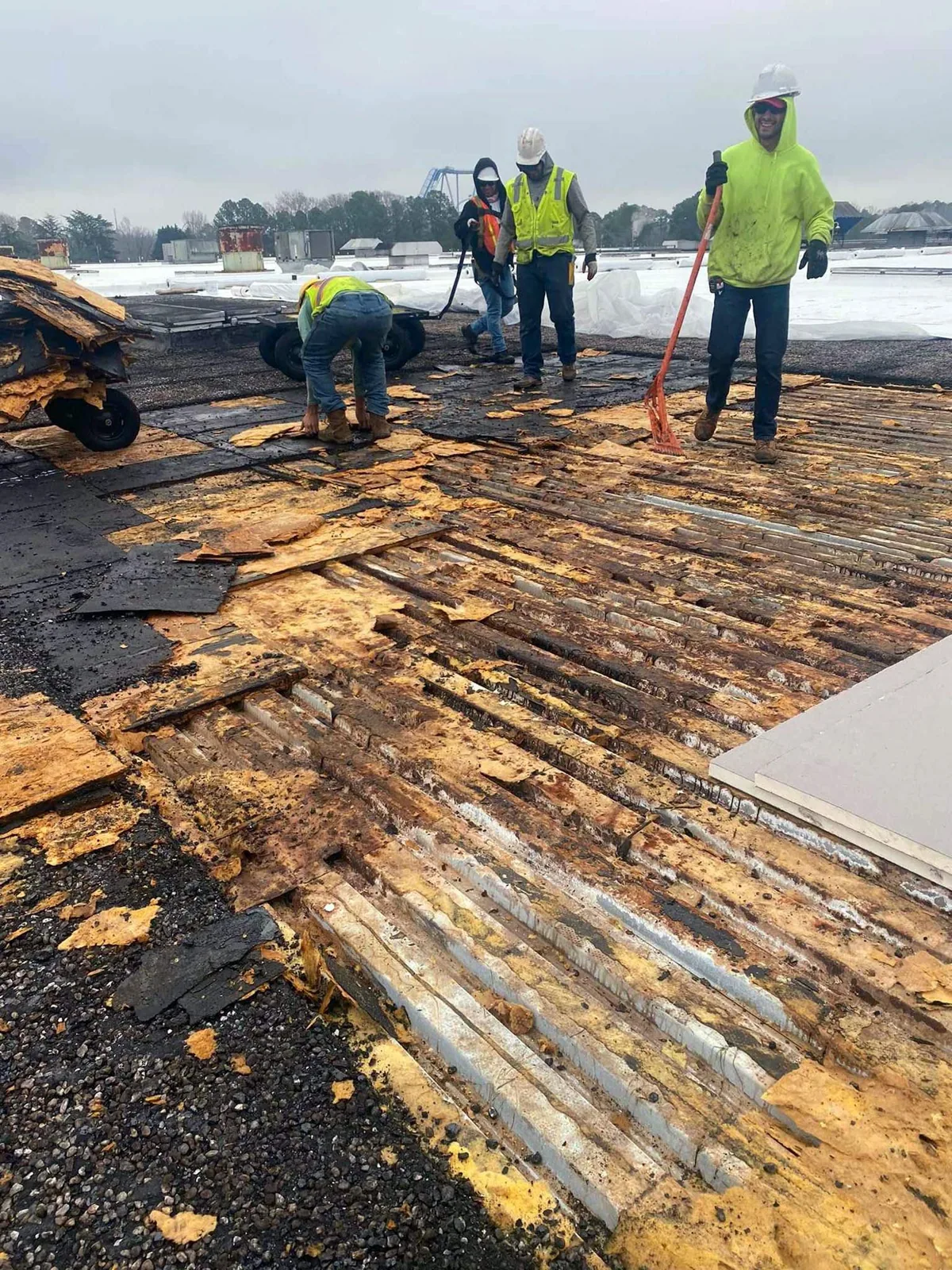
Visit entry, second quarter: two drain sumps holding a hand's depth of leaf litter, a membrane seam lifting at the base of a rooftop unit, and a coil of abandoned conduit lying across the field where a tenant's contractor left it. None of these is a leak, and none would appear on an annual walk-through that happens to fall in a clean month. Together they explain why preventive roof maintenance in Thousand Oaks, CA is run as a schedule and not as a favor owed after something goes wrong. A roof that is visited, cleared and logged on a set cadence reaches its replacement horizon on the date the reserve study predicted. A roof that is left alone arrives there early, and usually in the middle of a lease negotiation or a budget freeze.
Preventive Roof Maintenance
Commercial Roofing Services
Call our team
Written findings and options
Thousand Oaks, CA
Ventura and Los Angeles counties
Program: what a scheduled visit covers
A maintenance visit is a short, repeatable inspection with hands-on correction built into it. The crew walks the full roof, clears drains, sumps, scuppers and gutters, pulls debris from behind curbs and out of the corners against parapets, and checks every seam, flashing termination, pitch pocket and sealant joint within reach. Small defects are corrected on the spot: a re-sealed pipe boot, a re-fastened termination bar, a patch over a puncture left by a service technician. Anything larger is photographed, located on the roof plan and carried into the findings for the next prioritized scope. The visit ends with a written entry even when nothing was found, because a clean entry is itself a data point showing that the roof is holding its condition.
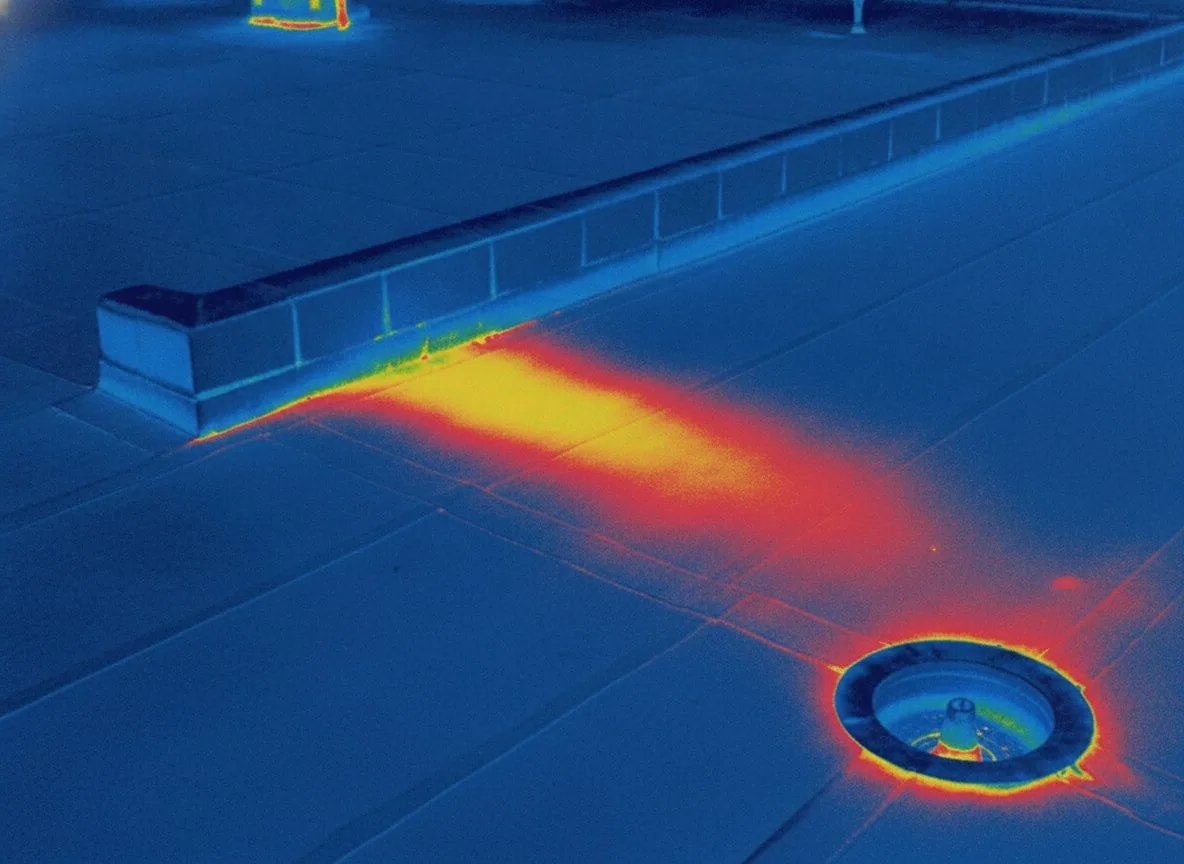
What a visit does not do is replace a full condition survey. Maintenance keeps a known baseline from slipping; it does not discover that the insulation under the north slope has been wet since some forgotten storm. For that reason a program begins with a baseline survey, including an infrared moisture survey where the roof type justifies one, and every later visit measures change against that starting point.
Cadence: how often, and when in the year
Frequency follows exposure, not a calendar habit. A low-traffic office roof with clean drainage may need two scheduled visits a year, one at the end of the dry season and one after the first winter storms have passed. A roof under mature trees, a roof crowded with equipment, or a roof above a tenant who services machinery every week may justify quarterly visits. After any event that puts debris or load on the roof, an unscheduled visit belongs in the program as a standing term, so the owner is not renegotiating it each time.
In the Conejo Valley the timing has a local logic. Newbury Park gets only about ten inches of rain in a year, most of it inside a short winter window, so drains that went untested for eight months are asked to carry a full storm with no warm-up. The visit that matters most is the one in late fall, before that first heavy rain, when sumps are cleared and the summer's heat damage is caught while it is still cheap to repair.
Debris: ash, wind-driven litter and drain capacity
Fire years change what lands on a roof. The Woolsey Fire of November 2018 affected Thousand Oaks, Newbury Park, Oak Park, Agoura Hills and Westlake Village, so ember exposure and ash on roofs are a real local issue. Ash is more than a housekeeping problem. Wet ash holds moisture against the membrane, it can plug strainers within a single storm, and it covers small ember scars that deserve a closer look. The Mountain Fire of November 2024, which burned near Somis and Camarillo, raised the same question for roofs there, and so does any Santa Ana event strong enough to throw landscaping debris onto flat roofs.
A maintenance program prepares for this by treating post-event visits as part of the contract: a rapid walk to clear drains, check edge metal and look for ember burns, followed by a written entry the owner can hand to an insurer if the damage proves claimable. Where the walk finds real damage, the work moves into storm damage roof repair, and the earlier entries show what the roof looked like before the event.
Log: the record that becomes a service-life curve
Every visit produces three things: a dated findings entry, before-and-after photographs of each correction, and an updated roof plan. After a few cycles those entries describe a service-life curve for each roof. A roof whose repairs stay small and scattered is tracking toward its expected horizon. A roof whose entries show the same flashing re-sealed three visits running, or moisture readings creeping outward from a drain, is moving faster than its age suggests, and the log shows it a year before a ceiling stain does.
That is the evidence an asset manager uses to move a roof between categories in the capital plan: stay on maintenance, schedule for coating restoration, or program for replacement. It is also the working core of roof warranty management, because membrane warranties generally expect the owner to keep the roof clear and to record repairs, and a dated log is the simplest proof that the owner did.
Portfolios: many roofs, many tenants, one report
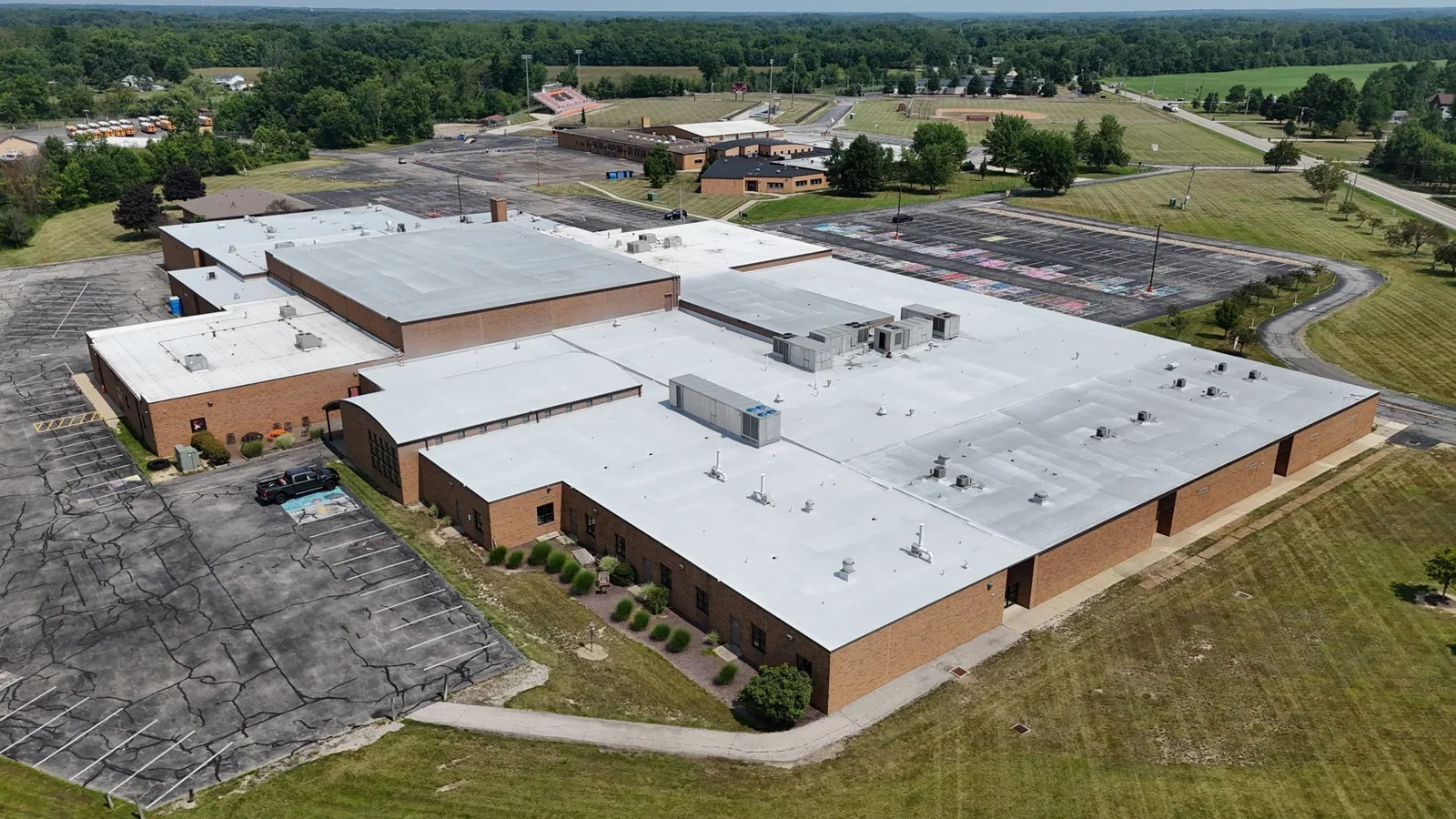
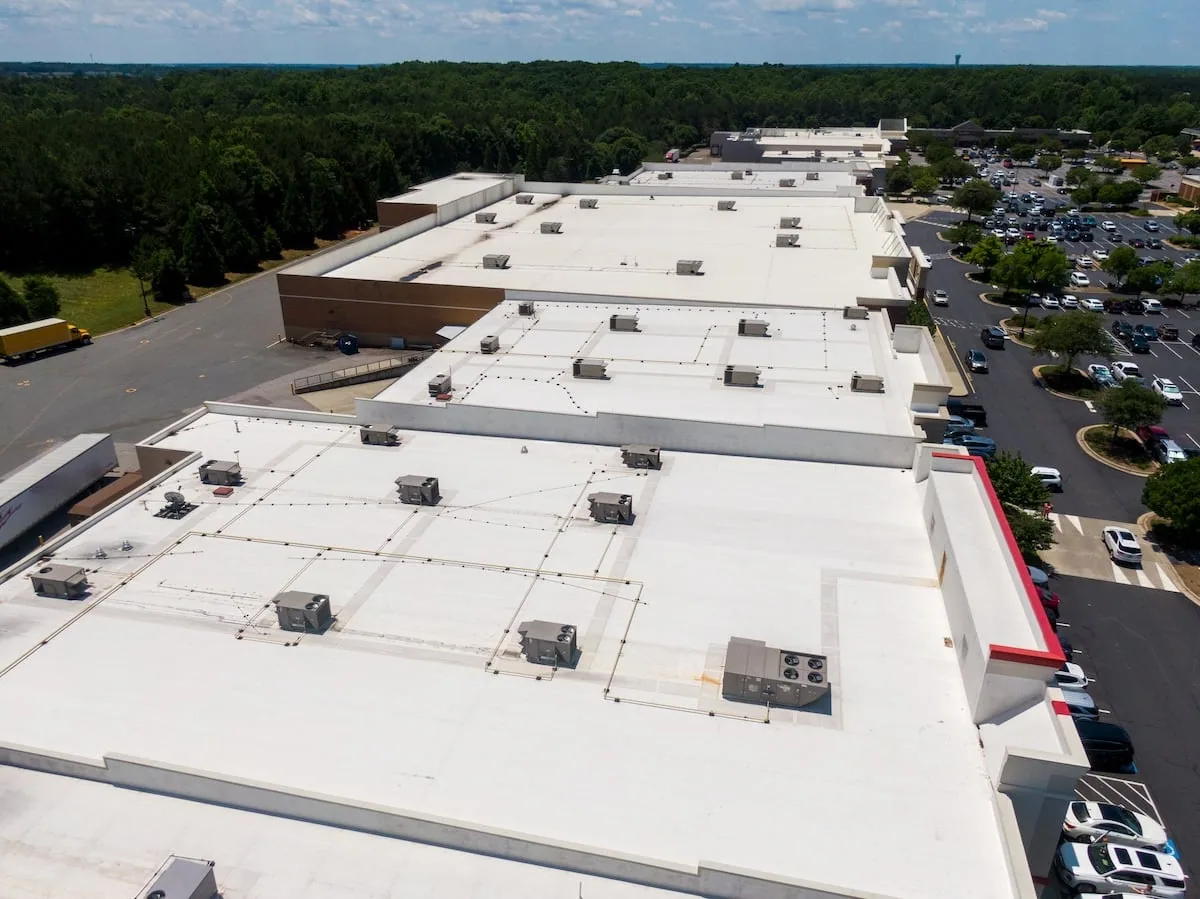
Rancho Conejo Industrial Park held more than 120 properties by a 2017 count, and Amazon's 2018 warehouse added a distribution-scale roof to a park of tilt-up and R&D buildings. Owners with several buildings in a park like that gain the most from a program, because visits can be routed, priced and reported as one scope. The large lab, manufacturing and office campuses that Amgen's employment base implies around Newbury Park are better surveyed by building and by roof section, so each section carries its own condition index and its own entry in the log.
Occupied buildings add their own rules. Visits are scheduled around tenant hours, roof access is coordinated with the property manager, and equipment contractors are asked to report any work that touches the roof so that traffic and damage are recorded instead of discovered. For an owner with buildings in several places, a multi-site roof program rolls those entries into one summary tied to the budget cycle, which gives the asset manager a single document in place of a dozen, and the Rancho Conejo Industrial Park roofs can be grouped in one route.
Commercial Roofing Questions
What does a maintenance visit cost compared with a repair call?
A visit is priced as a small, defined scope, while a repair call is priced against whatever has already failed. The gap widens fast once water reaches the insulation, because wet insulation is replacement scope and not repair scope.
Can my own staff clear the drains between visits?
Staff can watch for ponding and stains from below and report them. Going onto the roof is a different matter, since it needs fall protection, a plan for the membrane surface and a record of what was touched, so we recommend that access stay with the crew.
Does a maintenance log help with a manufacturer warranty claim?
Usually, because most warranties ask the owner to keep up the roof and to record repairs. A dated log with photographs shows that obligation was met, though the written warranty terms always control.
Can maintenance extend a roof that is already past its expected horizon?
Only while the insulation is still dry and the problems sit at the details. Once moisture has spread through the field, visits slow the damage without reversing it, and the program should carry a replacement date alongside.
What happens to the program when a building is sold?
The log travels with the building. A new owner inherits the baseline, the entries and the corrections, which is the roof record a buyer's lender will ask for during due diligence.