Emergency Roof Repair in Thousand Oaks, CA
Commercial Roofing Services · Thousand Oaks, CA
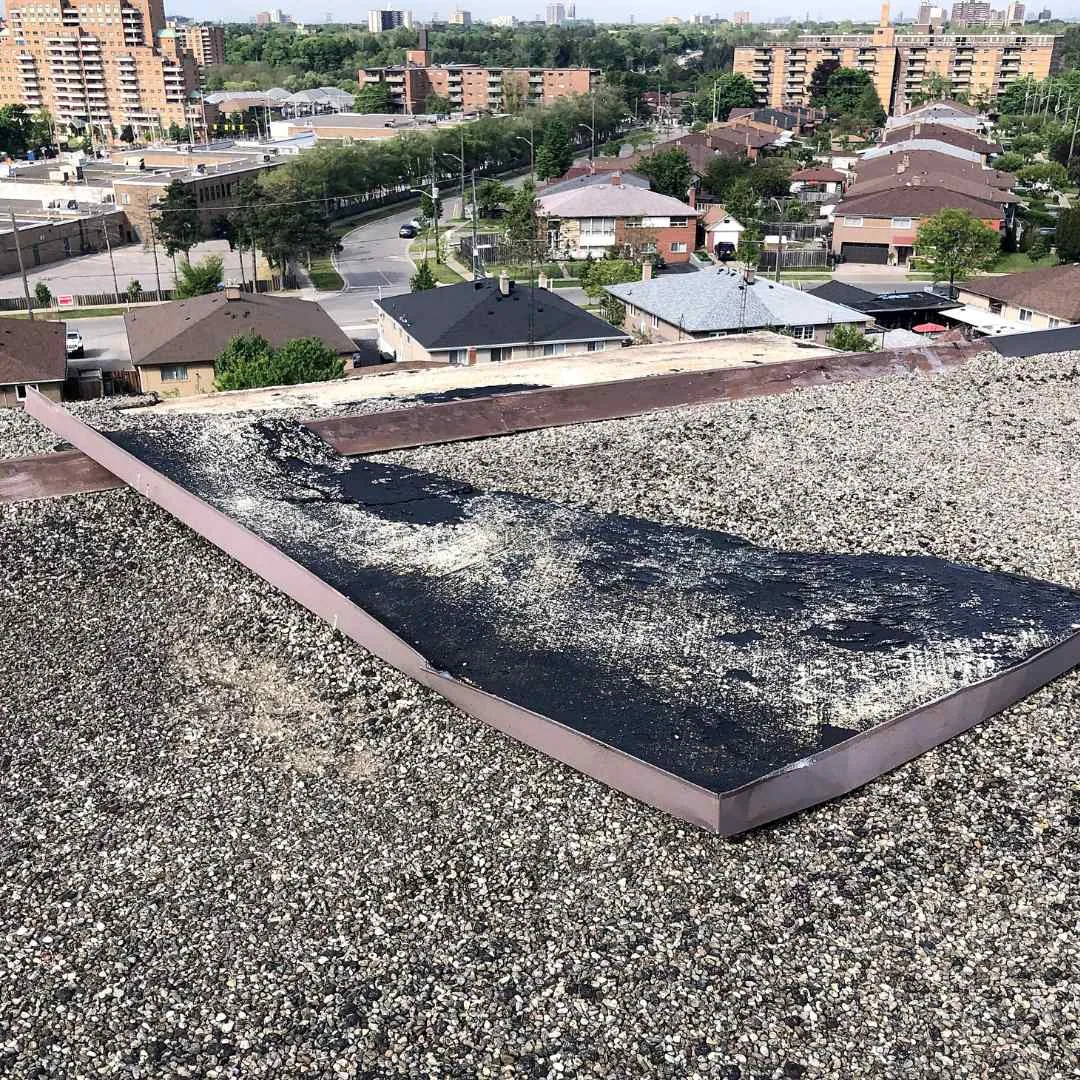
Dispatch record: edge metal peeled back along a west parapet after an offshore wind event, membrane lifting behind it, water entering above an occupied space. The owner needs three things in a fixed order. The building must be made safe, the water must be stopped, and the loss must be recorded before conditions change. Emergency roof repair in Thousand Oaks, CA is a response service available every hour of every day, including weekends and holidays, and it is deliberately limited to those three jobs. The aim at 2 a.m. is not to produce a final roof. It is to hold the building dry and the occupants working until a permanent scope can be written from daylight findings.
Emergency Roof Repair
Commercial Roofing Services
Call our team
Written findings and options
Thousand Oaks, CA
Ventura and Los Angeles counties
Response: the first hours on site
On arrival, the first task is a safety walk. We check access, the condition of the deck underfoot, loose metal, unsecured equipment and electrical hazards near the damage, and we mark off any area that cannot be worked safely. Only then does work on the roof begin. The second task is to find where water is entering, which is usually near the visible damage but not always, and the third is to decide how much of the repair can be completed that night and how much has to wait for daylight and dry conditions.
While the crew works, we keep the property manager informed in plain terms: what was found, what has been done, what remains open and what the next step costs in time. Photographs are taken at each stage. Those images are the record of the roof as it stood when the event ended, and they are the first document an adjuster or an owner will ask for.
Dry-in: tarps, temporary membranes and board-up
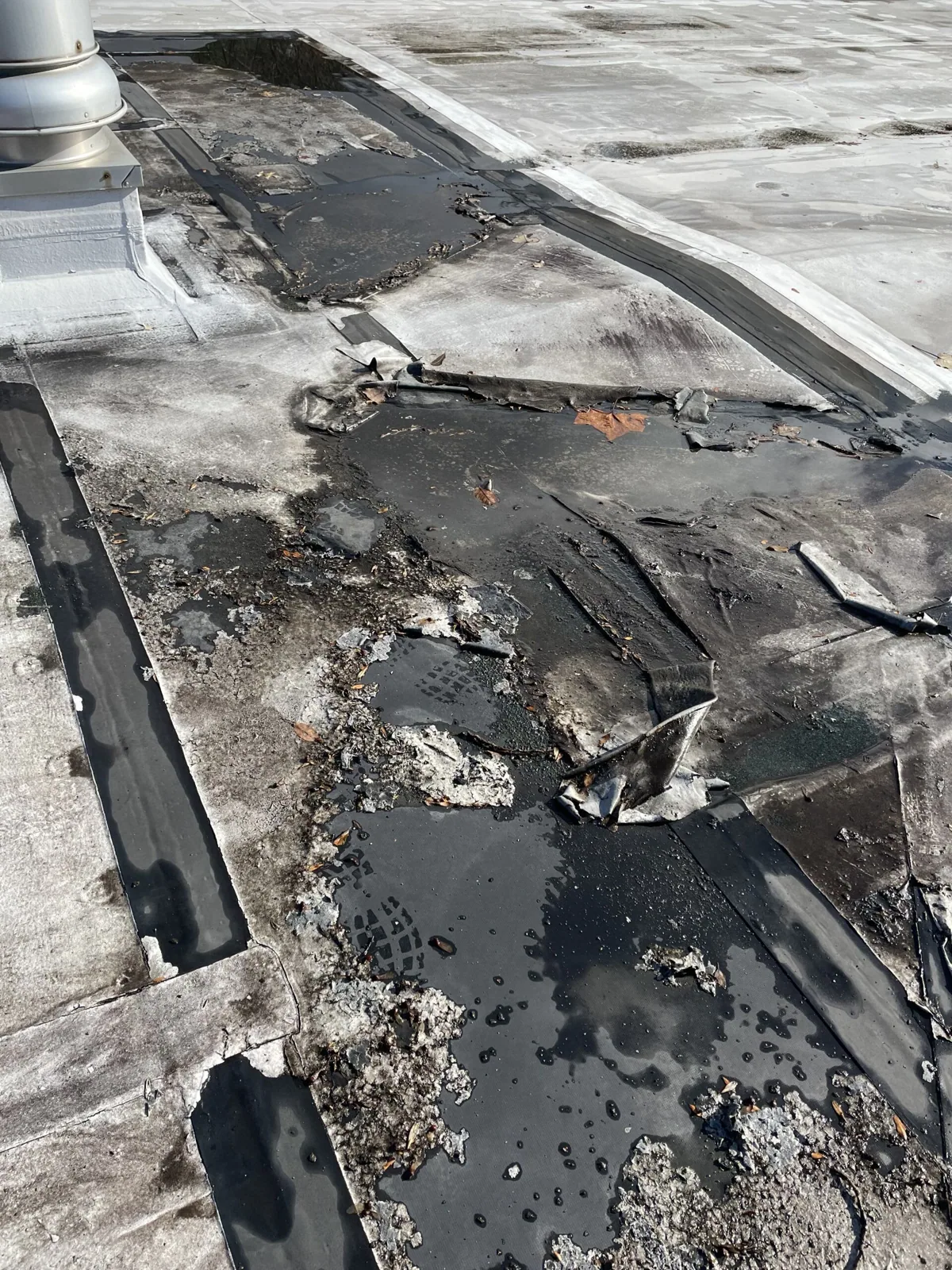
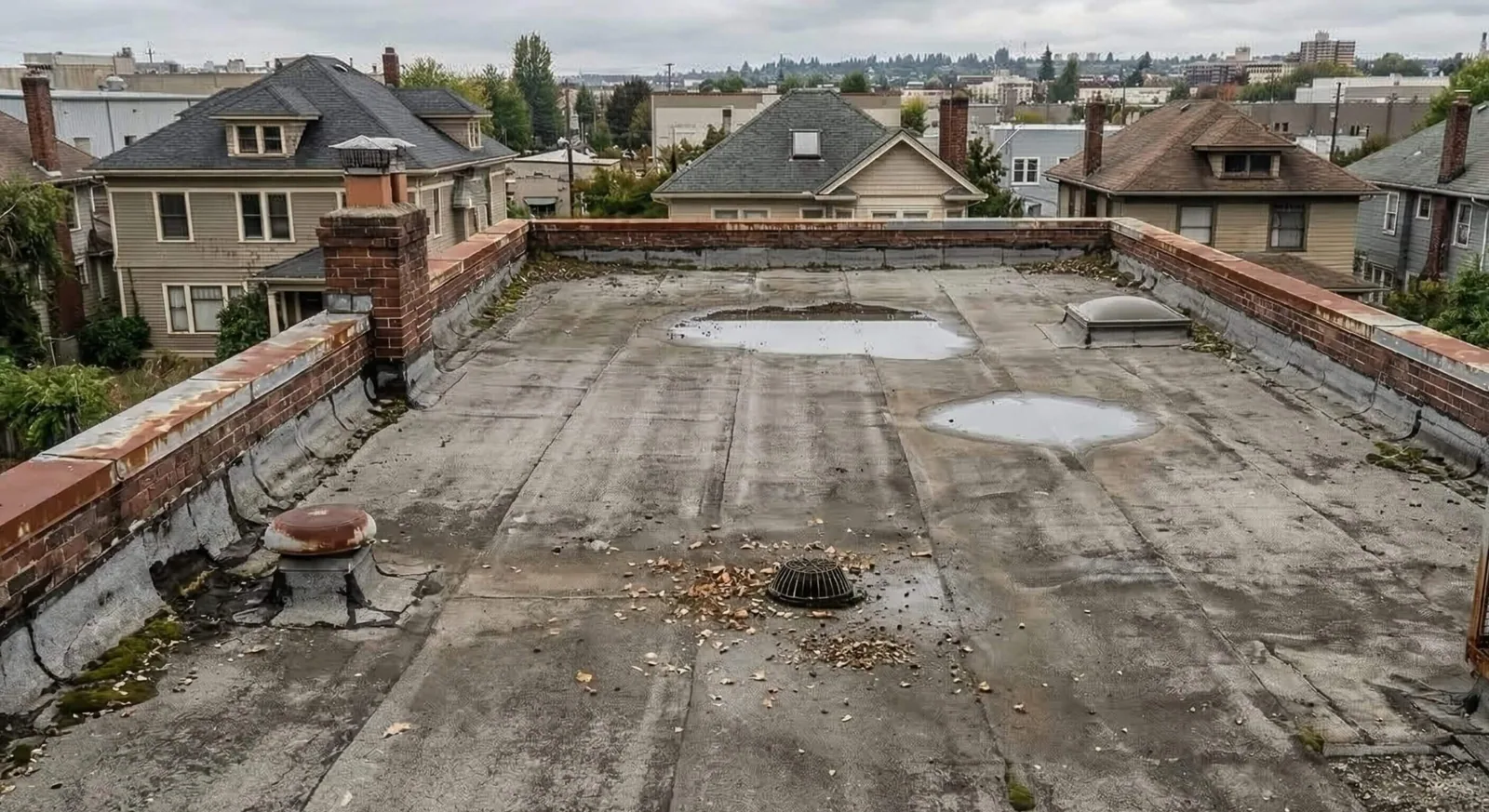
A temporary dry-in is chosen for the damage, not from habit. A torn single-ply membrane may be covered with a temporary patch that is fastened and sealed at its edges. An opened section of deck or a hole from a fallen tree limb or equipment may need board-up and a tarp secured with battens, ballasted so that wind cannot get under it. Displaced edge metal, flashing and coping can be reattached or removed and stored so that it does not become a projectile. Open drains are cleared so that water leaves the roof.
A tarp is not a roof. It is a short-term barrier that must be inspected, because wind loosens fasteners and sun degrades the material, and in this region a tarp installed during a Santa Ana event faces the same winds that caused the damage. We tell owners how long a given dry-in can be expected to hold and when it should be inspected, so that the temporary measure does not become the permanent condition by neglect. A tarp left in place through a season also hides what is happening beneath it, and wet insulation under a cover can spread damage quietly across a large area.
Events: Santa Ana wind and wildfire aftermath
Two kinds of event produce most emergency calls here. The first is offshore wind. Santa Ana winds can exceed 40 mph, and the November 2024 Mountain Fire occurred during gusts forecast above 65 mph. Wind attacks roof edges, corners and equipment first, which leads to wind damage roof repair at the perimeter and at any flashing that had begun to loosen. The second is wildfire. Embers can burn through membrane and open penetrations, and even where a building survives, ash, debris and heat can damage the surface and clog drains, which is the territory of fire damage roof repair.
The Woolsey Fire in 2018 burned nearly 97,000 acres and affected Thousand Oaks, Newbury Park, Oak Park and Agoura Hills, and in January 2025 the Kenneth Fire sent evacuation warnings to Agoura Hills and Oak Park. After such an event, roofs should be checked even when no leak is visible, since damage that does not leak in a dry week will leak in the next storm. Our broader storm damage roof repair work picks up where emergency dry-in leaves off.
Occupants: keeping the building operating
The measure of an emergency response is how little the building has to stop. For a retail center, that may mean protecting merchandise and keeping a major tenant open while the roof above a sales floor is secured, and a multi-tenant roof can affect several occupied spaces at once. The response plan marks each affected area and coordinates temporary protection with the property contact before permanent work begins. For a clinic or a laboratory, it means preventing water from reaching equipment and records. For an office, it means protecting workstations and keeping egress clear.
We work with the facility manager to place interior protection where water is falling, to coordinate with the building's own maintenance staff and to schedule the next visit. When a building has to be partly closed, we say so quickly and specify which areas, so that the tenant impact is a managed decision and not a surprise discovered at opening time.
Records: from dry-in to permanent scope
Once the water is stopped, the work changes character. We return in daylight for a full assessment of the damage, the surrounding roof and the drainage, and we write a permanent scope that separates the emergency measures from the repairs required. A small event may lead to planned commercial roof repair. A larger one may reveal wet insulation or a damaged deck and move the discussion toward replacement. Water that persists after the dry-in is traced the way any commercial roof leak repair begins: find the entry point, then work back from the stain.
For owners with insurance, the field record is the foundation of the claim: dated photographs, a description of the event, a list of temporary measures and their cost, and a permanent scope. We organize that material through roof insurance claim assistance so the adjuster can read it quickly.
Emergency stabilization on the Thousand Oaks Boulevard corridor still begins with an approved access route, a defined dry-in limit and a written handoff for permanent repair.
A clear handoff closes the emergency phase. The owner receives the area stabilized, a written list of remaining exposure, photographs of temporary measures and the conditions that require a permanent roofer or another trade. If a tarp or patch is used, record its attachment and the date it should be revisited; temporary protection is not a substitute for a tested repair. The property contact can then assign follow-up, protect contents below and avoid treating an emergency invoice as the final scope. Once access is safe, the permanent assessment checks adjacent seams, drainage and attachments that may have been stressed along with the visible opening.
Commercial Roofing Questions
Do you really respond at night and on holidays?
Yes. A crew can be reached at 2 a.m. on a Sunday or on a holiday morning. Call us and describe what you see, and the crew will begin planning the response while you are still on the line.
What can I do while I wait for the crew?
Keep people out of the affected area, move equipment and records away from the water if it is safe, and photograph the damage. Do not go onto a damaged roof yourself.
Will the tarp be the final repair?
No. A tarp or temporary patch is a short-term barrier. We schedule a daylight assessment, write a permanent scope and tell you how long the temporary measure should be expected to hold.
Can you work during a windy Santa Ana event?
Safety sets the limit. We can stabilize a roof in moderate wind, but strong gusts can make roof work unsafe. In that case we protect the interior from below and return as soon as conditions allow.
What does an emergency call cost?
The cost depends on the damage, access, materials and hours involved. We state the scope of the temporary work before we begin whenever conditions allow, and we itemize the permanent repair separately.