Roof Insurance Claim Assistance in Thousand Oaks, CA
Commercial Roofing Services · Thousand Oaks, CA
Claim file, item one: a dated photograph set of a roof section taken the week before a wind event, paired with a second set taken the morning after. That pairing is the strongest single exhibit a roof claim can contain, because it shows an adjuster what changed and removes the guesswork about what was already there. Most owners do not have the first set. Roof insurance claim assistance in Thousand Oaks, CA is therefore partly about rebuilding the missing evidence from what the roof itself still shows, and partly about writing the repair scope in a form a carrier can price line by line, without turning a clear loss into an argument over age.
Roof Insurance Claim Assistance
Commercial Roofing Services
Call our team
Written findings and options
Thousand Oaks, CA
Ventura and Los Angeles counties
Evidence: what an adjuster needs to see
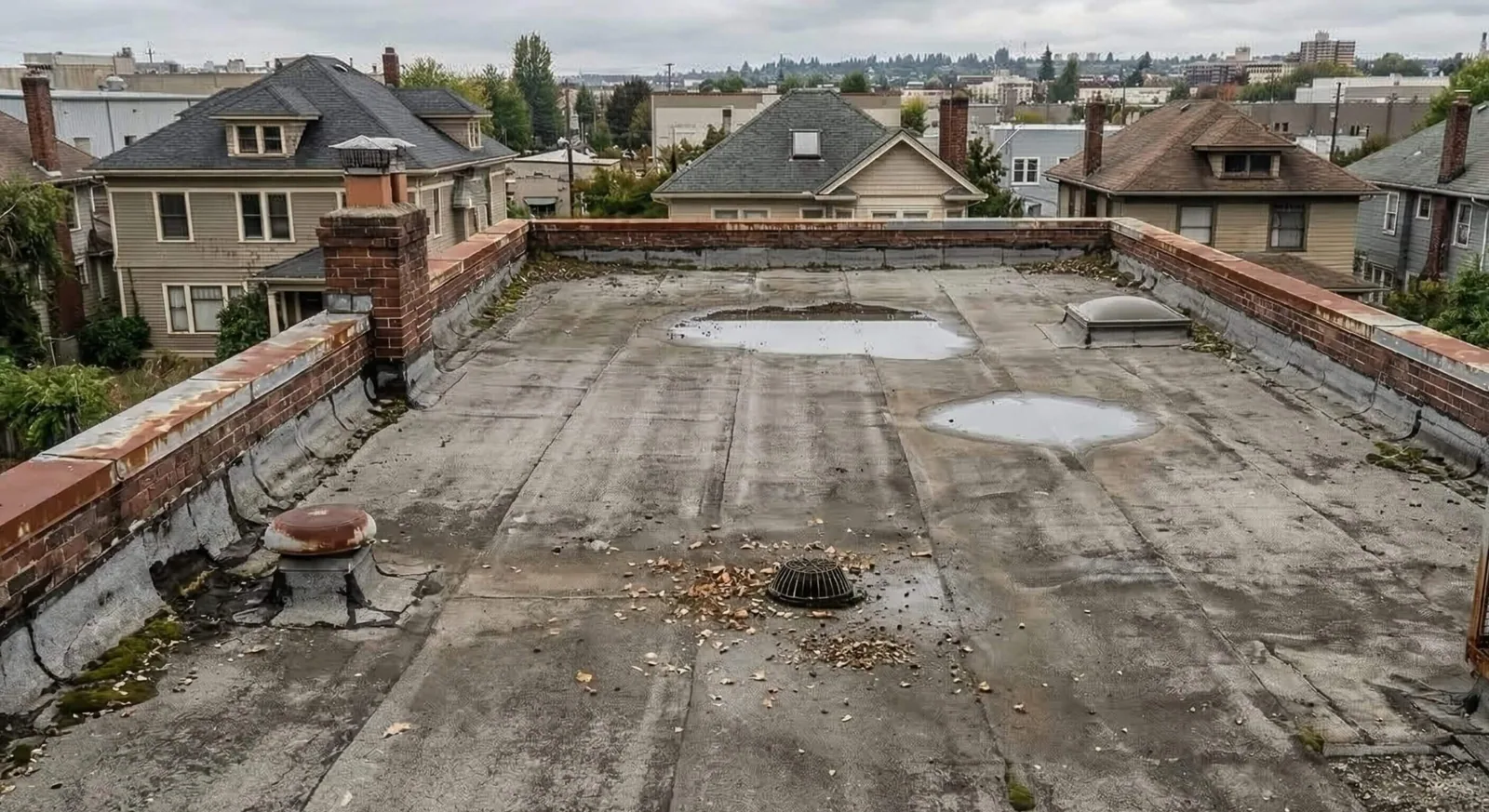
A strong file has four parts. The first is a condition baseline from before the loss, such as an inspection report, a maintenance log or an earlier moisture survey. The second is a record of the event itself: the date, the weather and the first observations. The third is dated photographs of the damage in place, taken before any temporary work moves anything. The fourth is a moisture map, since water that has entered the insulation is damage even when no ceiling stain has appeared.
Where no baseline exists, a survey after the event can still separate fresh damage from older wear by reading the roof: clean, bright edges on a tear, freshly displaced debris, scorch marks without weathering. A written roof condition report turns those observations into a document that holds up when it is read by someone who has never been on the roof.
Scope: separating covered loss from wear
Policies commonly distinguish between sudden damage from a covered event and gradual deterioration, and roofs carry both. A membrane that was already chalking when the wind arrived still has a tear that the wind made. The scope should show that distinction clearly, with each repair item tied to a location on the roof plan and a stated cause, so that the carrier can respond to specific lines and not to a single lump sum.
Coverage decisions belong to the carrier and the policy language. What a roofing contractor supplies is the physical record and a repair scope written with quantities, materials and methods that match the existing system. That scope should describe the roof as it stands, neither inflated nor trimmed, because a scope that survives scrutiny is the one that gets paid without delay.
Coordination: owner, adjuster and contractor on the same roof
Claims move faster when everyone looks at the same roof on the same day. We attend the adjuster's inspection when the owner asks, walk the damage with them, and show the moisture readings and cores that support each item. Temporary protection continues while the claim is pending, and the cost of dry-in, tarping and debris removal is itemized and photographed, since carriers generally expect an owner to prevent further loss and to show what it cost to do so.
Communication runs through the owner or property manager, and we send updates in writing: what was found, what was agreed, what is still open. When an engineer or a consultant is retained by either side, we provide measurements, photographs and core results without delay. The immediate work on a storm-damaged roof runs from the same assessment as the claim file, so nothing is documented twice.
Fire years: claims that arrive all at once
Losses in this market can arrive in waves. The Woolsey Fire of November 2018 affected Thousand Oaks, Newbury Park, Agoura Hills, Oak Park and Westlake Village, and the Mountain Fire of November 2024 destroyed 243 structures near Somis and Camarillo. After events of that scale, the claims with complete records are the ones that are simple to evaluate.
Ember damage and ash are easy to under-document. A burn pit the size of a coin on a thermoplastic roof is a real defect, and so is a drain plugged with ash that has already caused ponding. Photographing the pattern across the whole roof, instead of one dramatic spot, shows the carrier the true extent and avoids the later discovery of damage nobody recorded.
Large properties: tenants, ownership changes and critical areas
Big assets complicate claims in specific ways. The Oaks, a 1.3 million-square-foot regional mall, changed hands in late 2024. A new owner needs a baseline before any loss occurs so a future claim starts from a known condition. At Los Robles Hospital, which opened in 1968 and has expanded since, roofs from several construction eras sit over critical areas, and repairs have to be sequenced so that operations are not interrupted.
For retail centers such as The Oaks and Janss Marketplace, damage often touches many tenant spaces, each with its own lease obligations. We map the roof by tenant bay when asked, so that the owner can see which portions of the loss fall on which leases and plan the repair accordingly.
Approval: repairs, hidden damage and supplements
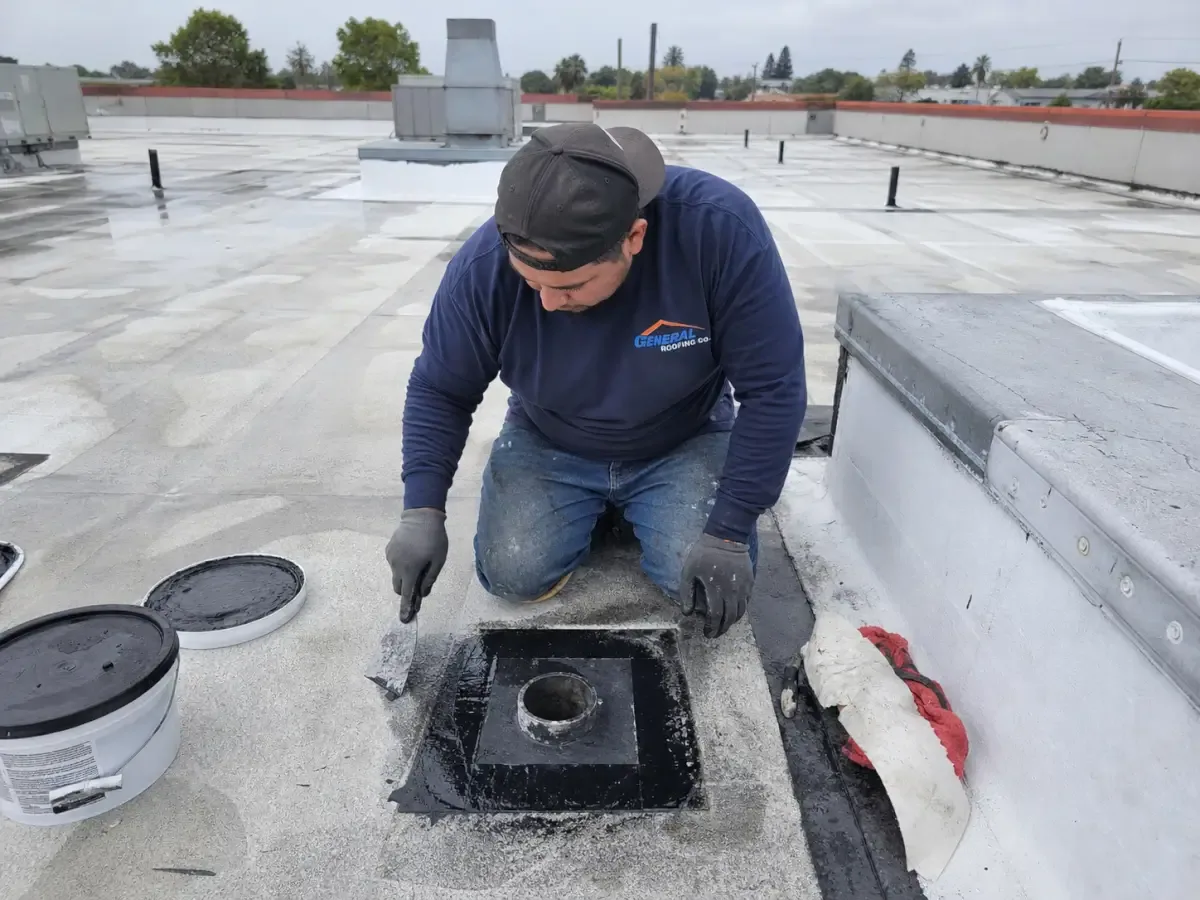
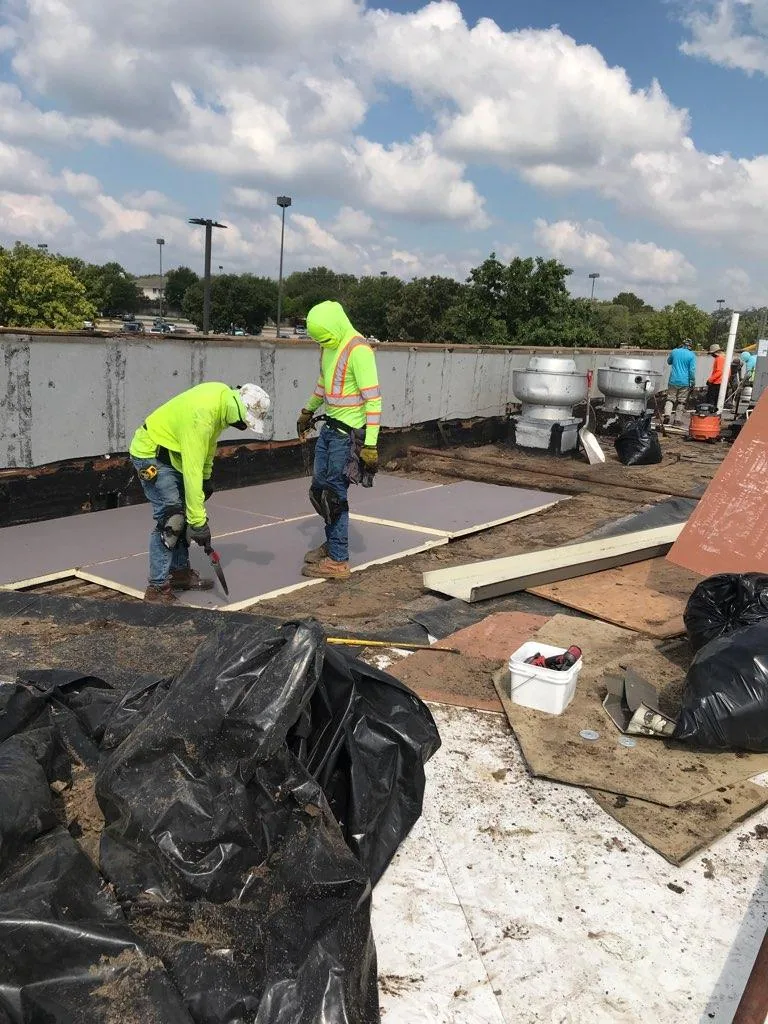
After the carrier approves the scope, the work begins and the roof often shows more than the survey could. A tear-off exposes wet insulation, a corroded deck or a failed flashing substrate that no one could see from above. These findings are documented as they appear, with photographs and measurements, and submitted as a supplement tied to the original scope. Insurance restoration work succeeds when the supplement is supported by evidence collected at the moment of discovery and not reconstructed later.
Closeout includes the final photographs, the completed scope with any changes noted and the material information the owner needs for future maintenance. That file becomes the new baseline for the repaired roof and the first entry in its maintenance history. For water that cannot wait for claim review, emergency roof repair starts with safe access, temporary dry-in and dated photographs.
Property managers can also compare work in the Camarillo Old Town commercial area, with the same emphasis on dated conditions and defined repair limits.
Claim documentation is strongest when the roof record distinguishes observation from interpretation. Date each photograph, mark the location on a roof plan and describe the material and condition before temporary work changes the evidence. Preserve invoices and identify which measures were emergency protection, testing or permanent repair. If a pre-loss inspection exists, compare the affected zone against it and state any differences without assigning cause beyond what the inspection supports. The resulting file helps the owner and adjuster discuss the same scope, but coverage and causation remain decisions for the insurer and its designated professionals. Keep unresolved questions visible, such as concealed insulation or deck condition that could not be confirmed without opening the assembly. That makes the submitted estimate easier to review and the post-repair history more useful for future maintenance.
Commercial Roofing Questions
Is it worth surveying a roof before any claim has been filed?
A dated baseline is the most useful claim document an owner can hold. It shows the roof's condition before a loss, and it often turns an argument about age into a short conversation about what changed.
What if the adjuster's estimate comes in lower than the repair scope?
Ask for the line-by-line difference. Most gaps trace to hidden damage, a different repair method or a measurement dispute, and each can be addressed with photographs, cores or a supplement.
Can you tell me whether my policy covers this damage?
Coverage belongs to the carrier and the policy language. We document the condition and the likely cause as the roof shows them, and we write the scope in a form the carrier can evaluate.
How does a deductible change the decision to file?
Compare the written repair scope with the deductible before filing. When the scope is only slightly larger, an owner may prefer to handle the repair directly, and a survey gives the numbers needed to decide.
The roof is not leaking inside. Is there still a claim?
Water in the insulation counts as damage even without a stain. A moisture survey can find it, and a claim that includes mapped wet areas is stronger than one based on interior symptoms.