Commercial Roofing in Camarillo Old Town, CA
Service Areas · Thousand Oaks, CA
A leaking roof above an occupied storefront can put merchandise, staff, and a tenant relationship at risk before the source is clear. In Camarillo Old Town, the building may sit within a compact commercial setting where entrances, sidewalks, neighboring businesses, and customer access all matter during roof work. The City describes Old Town as its original commercial district along Ventura Boulevard just south of US 101, and its zoning recognizes the area separately from newer commercial zones. For owners and managers, the practical task is to understand each roof’s assembly and condition, then schedule repairs or replacement around the property’s operations. Commercial Roofing of Thousand Oaks documents findings and options so the next decision rests on observed conditions rather than an unexplained allowance.
Camarillo Old Town
Service Areas
Call our team
Written findings and options
Thousand Oaks, CA
Ventura and Los Angeles counties
Survey: connect the interior report to the roof
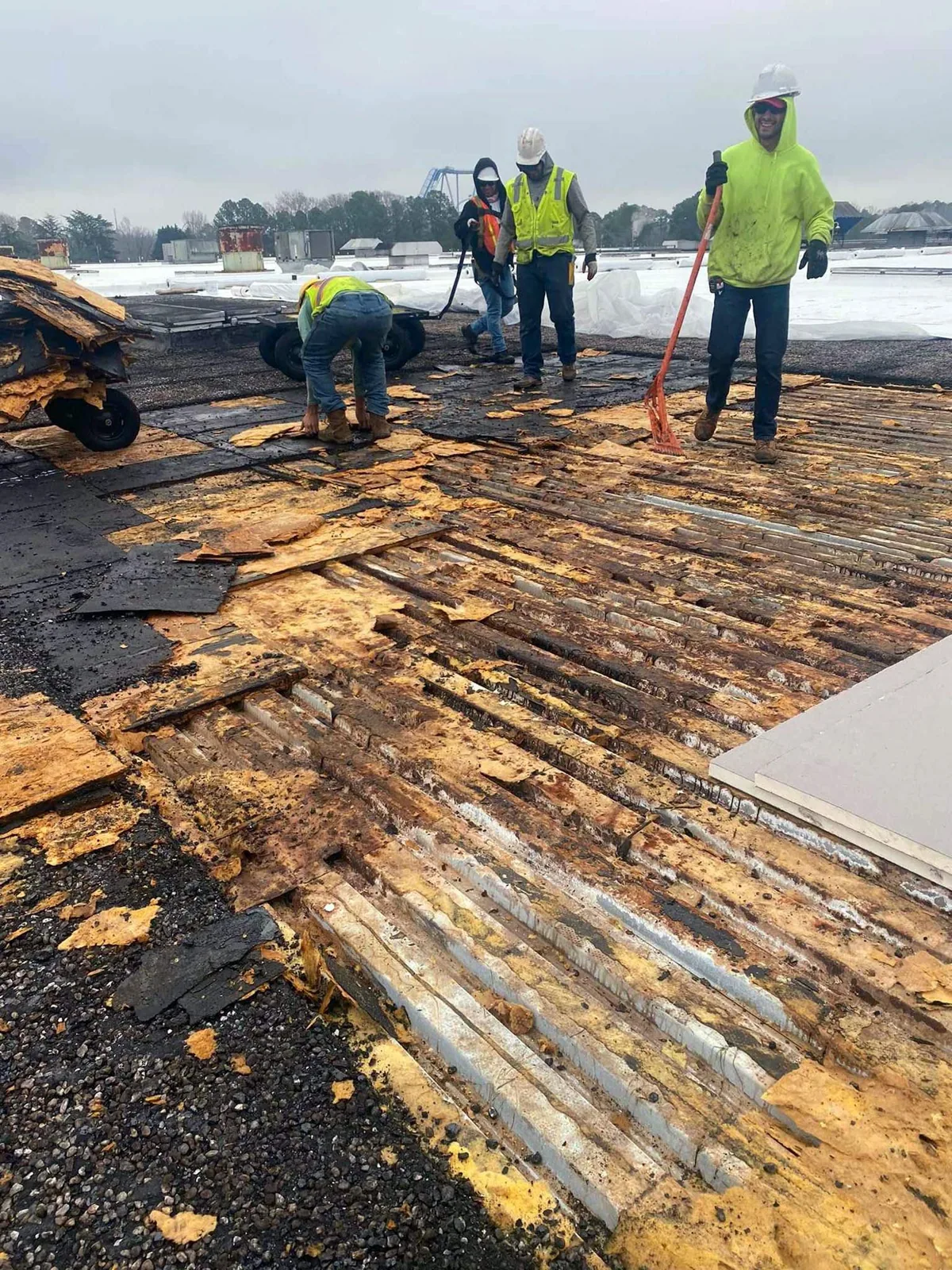
A ceiling stain is useful evidence, but it rarely marks the precise point where water crossed the roof. A survey starts with the reported location and follows the drainage path, checking nearby seams, curbs, penetrations, wall transitions, and low points. On a flat or low-slope commercial assembly, water may travel under a membrane or insulation before appearing indoors. We record what was visible, what could not be reached, and which observations support the proposed repair. If moisture may extend beyond the apparent opening, the next step may include a measured test cut or additional diagnostic work rather than an oversized patch based on guesswork.
Old Town’s commercial context makes communication part of that investigation. A manager may need to coordinate with a tenant before moving stock, closing a door, or entering a back-of-house area. The survey record can identify the building zone, access point, observed defect, and any temporary protection already in place. Photographs with orientation notes help the owner compare later visits and distinguish a repaired detail from a new report. The outcome is a practical baseline for deciding whether to make a local repair, investigate a broader area, or plan a capital project.
Access: protect storefront operations
Before a crew arrives, confirm who can authorize roof access, where ladders or lifts may be staged, and when deliveries or customer traffic peak. A small commercial roof can still sit above a busy frontage. Marked work zones, a clear pedestrian path, and advance notice to affected tenants reduce avoidable conflict. Interior protection should be discussed before opening a ceiling or tracing a leak through finished space. If the building has several occupants, identify who controls shared areas and who will receive updates if weather changes the sequence.
Ventura Boulevard is a defining route through Old Town, but the roof plan should use the property’s actual access conditions rather than presume a standard setup. Verify roof hatch or ladder locations, gate procedures, power availability, and restrictions on staging. Lifts may require a separate path and additional coordination; rooftop equipment can limit safe walk lines. A written access plan also records whether the tenant or manager must move vehicles, signage, or movable inventory. These details affect the schedule and should be settled before materials are ordered, especially when a repair depends on a dry-weather window.
Options: compare repair, restoration, and replacement
A useful proposal explains why the selected scope fits the observed roof condition. A localized seam or flashing defect may support a targeted repair if surrounding materials remain sound. Widespread wet insulation, repeated patch failure, or extensive deterioration can point toward a larger restoration or replacement study. Coatings are not a universal answer: substrate condition, drainage, adhesion, and existing layers need review first. The scope should state what is included, where work stops, and what condition would require a change order or a separate recommendation.
For an occupied shop or office, compare not just the total but the disruption, expected service life, maintenance needs, and areas that remain outside the work. Ask whether the proposed repair addresses the source or only the interior symptom. For larger projects, separate urgent leak control from planned capital work so the owner can authorize protection while reviewing a permanent solution. If inspections uncover hidden conditions, document them with photographs and measurements before expanding the scope. That keeps the next decision tied to evidence and gives the owner a clear record of why the recommendation changed.
Weather: plan around heat and seasonal rain
Ventura County’s long dry periods can make roofing work easier to schedule, but they do not eliminate weather risk. Heat affects crew pacing and can influence membrane handling or adhesive application, depending on the system and product instructions. The first meaningful rain after a dry spell can expose weak drains, neglected seams, and temporary repairs. Before a forecast window, clear debris from drainage points where authorized and verify that temporary protection is secure. Permanent work should follow the manufacturer’s temperature, surface-moisture, and cure requirements rather than a calendar assumption.
Records: make each roof decision traceable
Commercial roofs change through repairs, equipment additions, tenant improvements, and replacement work. Without a simple record, the next manager may not know which areas were opened or what warranty applies. Keep the survey, photographs, repair limits, product information, and closeout notes together by roof zone. Record the date, weather conditions, access limitations, and any areas that could not be inspected. If the property has multiple suites, map the report to a roof plan or a clear orientation reference so a future technician can return to the same place.
For an owner managing several buildings, a consistent record makes comparison easier without treating every roof as identical. A register can show open leaks, recurring repairs, upcoming inspections, and budget timing. Note who accepted the work and what maintenance remains the owner’s responsibility. If a tenant reports a new stain, compare it with the prior condition report before assuming it is the same defect. This simple discipline reduces repeated diagnosis and makes contractor handoffs clearer.
Nearby coverage includes Camarillo and the verified Airport North business area. Related project planning may include commercial roof inspection, preventive roof maintenance, shopping center roofing, and occupied-building reroofing. These pages describe broader scopes; they do not treat a single storefront or facility as a service-area target.
Next steps: define the decision before the work starts
Share the building use, the location of any interior symptoms, prior repair records, and known access limits when requesting an assessment. If the roof plan is unavailable, photographs from the ground and a simple description of the affected tenant or suite can help organize the first visit. Do not ask staff to walk a roof or disturb a membrane. The contractor can confirm safe access and the right inspection method.
After the survey, review the evidence, repair limits, exclusions, and schedule together. Ask what would trigger a broader investigation and how the crew will protect occupied space during the work. A clear answer should distinguish temporary stabilization from permanent repair and identify the person who will receive daily updates. The goal is a roof decision the owner can explain, a work area tenants can move through, and a record useful for the next maintenance cycle.
Commercial Roofing Questions
Does every roof leak in Old Town require a full replacement?
An inspection can show whether a localized repair is appropriate or whether moisture and deterioration extend farther. The recommendation should explain its evidence and limits.
Can roof work proceed while a storefront remains open?
Work can often be scheduled while businesses remain open. The access route, noise limits, weather, and staging space determine the sequence and tenant notices.
What should an owner provide before an assessment?
Share the building use, leak history, prior repairs, available roof plans, and access rules. Interior photos can help locate symptoms, but staff should not climb onto the roof.
How should a manager compare two proposals?
Compare the observed condition, repair limits, materials, exclusions, access plan, schedule, closeout records, and the assumptions behind each price. Similar totals may cover different work.
Is a coating always less disruptive than replacement?
No. A coating depends on substrate condition, drainage, adhesion, and system compatibility. The roof needs evaluation before a coating can be recommended.