Commercial Roof Inspections in Thousand Oaks, CA
Commercial Roofing Services · Thousand Oaks, CA
Baseline entry: roof section C, single-ply membrane in fair condition, two open laps at the south curb line, drain sump holding water past the next day, edge metal secure. Entries like this one, repeated across every section of every building, are what a commercial roof inspection produces, and they are worth more than a general statement that a roof is old or acceptable. An inspection converts a roof into a set of findings that can be compared against last year, against the next building and against a budget. Our inspections in Thousand Oaks, CA are hands-on, written and photographed, and they end in a prioritized scope with a realistic remaining service life for each roof area.
Commercial Roof Inspections
Commercial Roofing Services
Call our team
Written findings and options
Thousand Oaks, CA
Ventura and Los Angeles counties
Scope: what a hands-on inspection covers
The inspection follows the roof from the surface down to the details that decide whether it leaks. We walk the entire accessible roof, and we examine each of the following:
- Membrane surface: blisters, splits, punctures, crazing, chalking, ponding stains and signs of shrinkage.
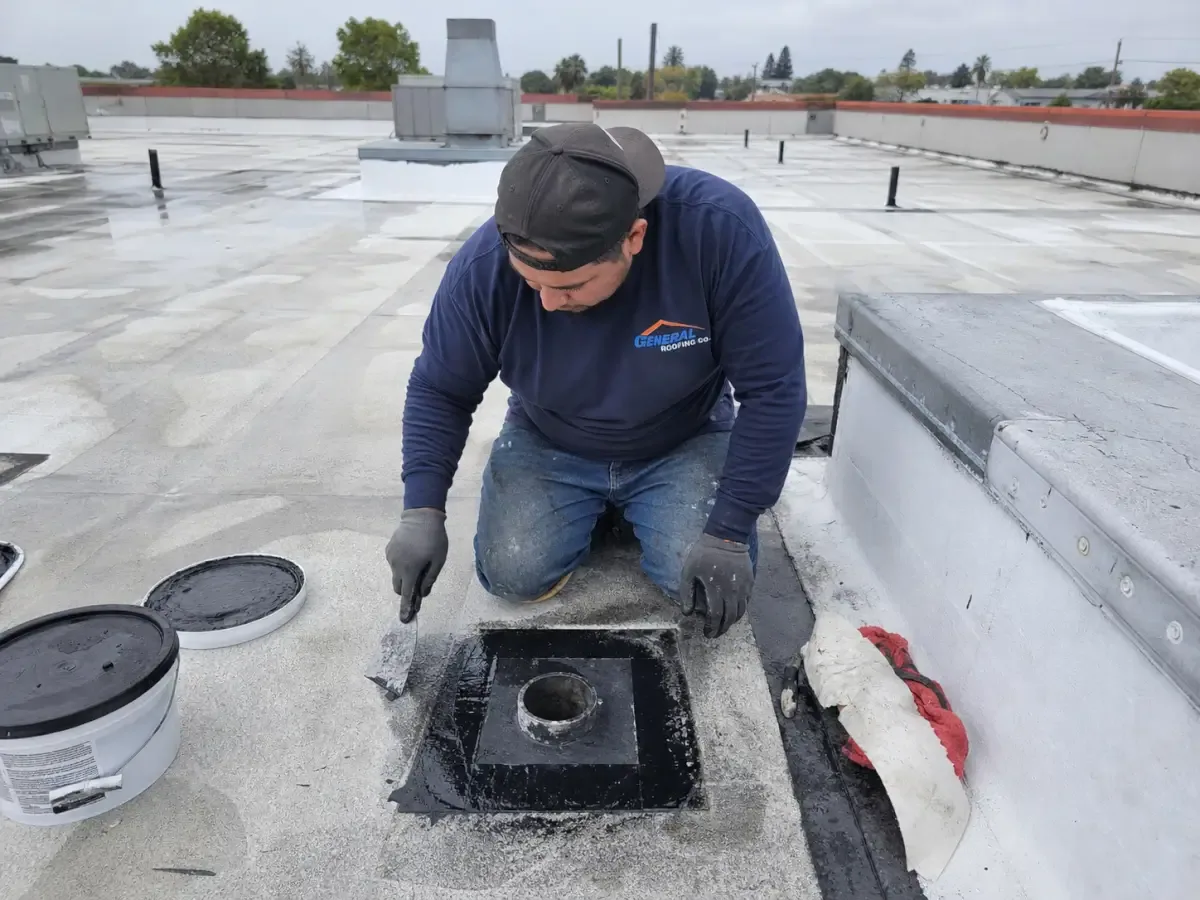
- Seams and laps: probed by hand for open or weak bonds along the full length.
- Flashings and terminations: walls, parapets, curbs, expansion joints and counterflashing.
- Penetrations: pipes, conduit, vents and the supports for rooftop equipment.
- Drainage: drains, sumps, scuppers, gutters, downspouts and the slope of the surface toward them.
- Edge metal and coping: fastening, laps, sealant and wind resistance.
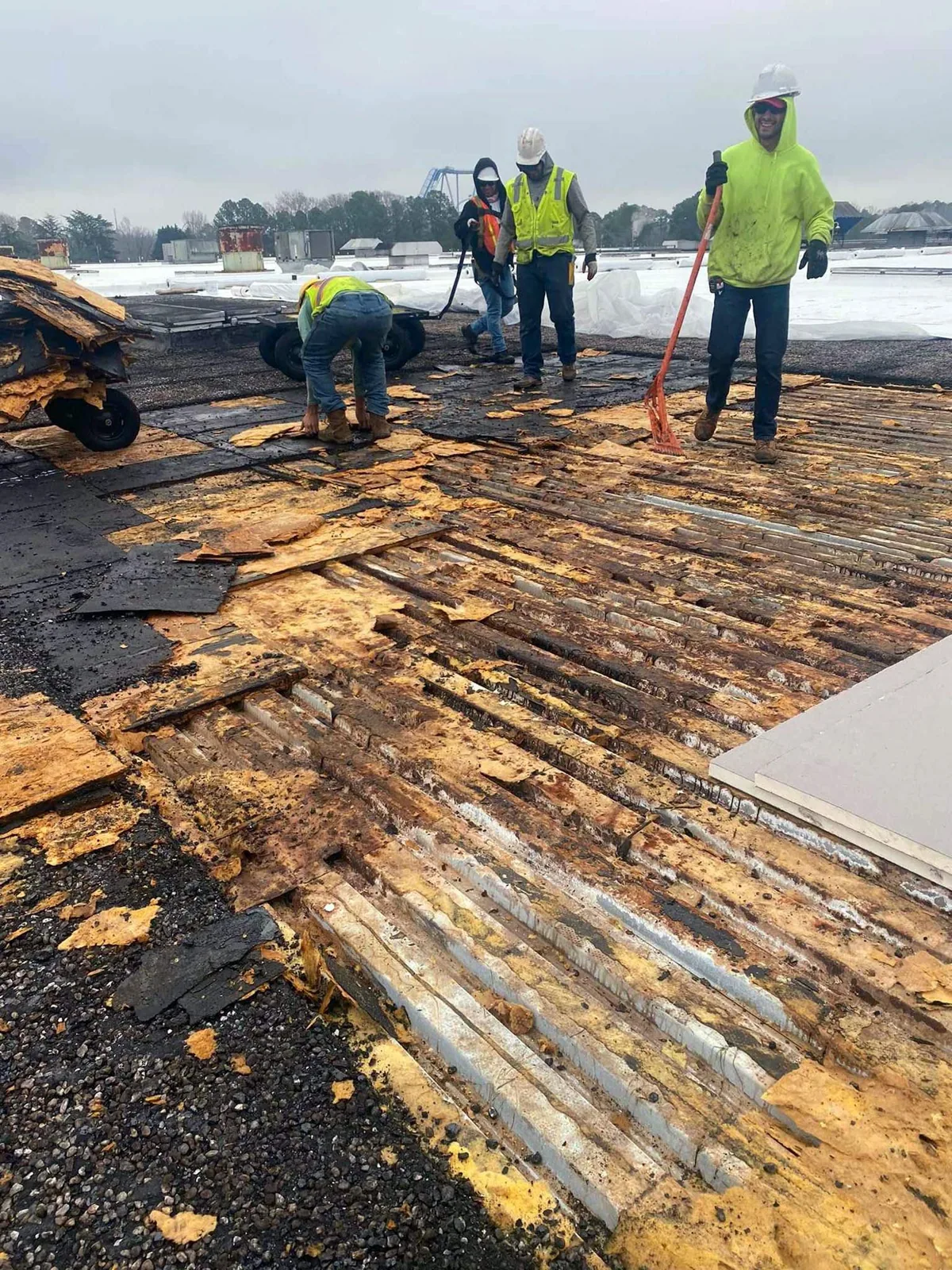
We also look at the interior side where it is accessible, since stains, corrosion on the underside of the deck and moisture in the ceiling plenum say a great deal about the roof above.
Method: probing, photographing and mapping
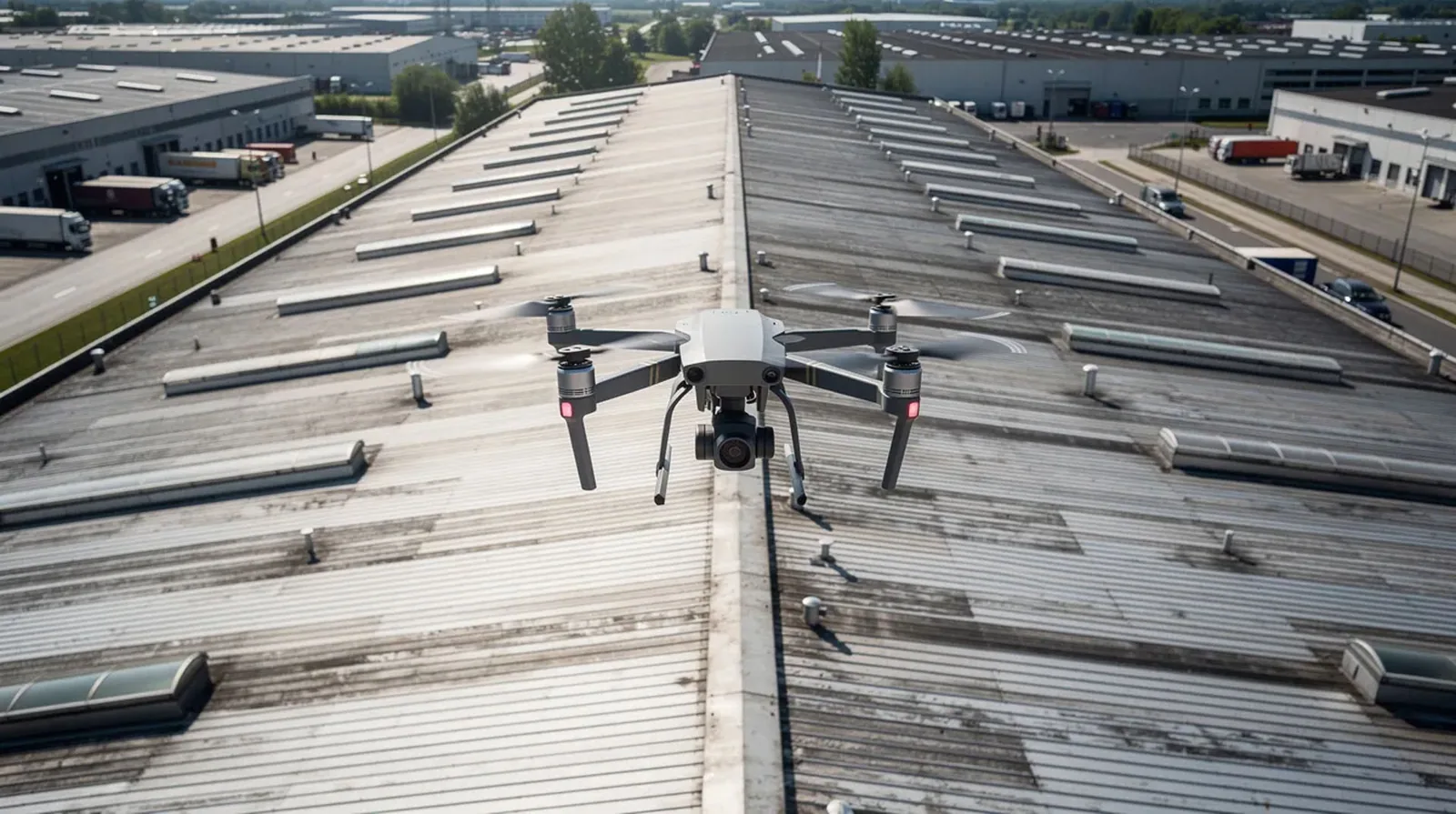
A finding that cannot be located cannot be repaired or priced. Each defect is photographed, tagged with a reference number and marked on a roof plan, so the report can be read by someone who has never been on the roof. We use hand tools to probe seams and flashing terminations, moisture meters where we suspect wet insulation, and thermal imaging when a larger moisture picture is needed. Where a roof is too large or too hazardous for a full walk, we combine a hands-on survey of the representative areas with drone roof inspection of the remainder.
The result is a record that stands on its own: the roof type and approximate age, the layers we can identify, the condition of each section, and every defect with its location and photograph. That record is the first page of the building's documentation file, and it is the baseline against which every later inspection is measured.
Grading: turning findings into a condition index
A list of defects is not yet a decision. We grade each roof section on a simple, repeatable scale that combines the condition of the membrane, the extent of the details that have failed, evidence of moisture and the likely remaining service life. Sections graded good need only routine care. Sections graded fair receive planned repair and monitoring. Sections graded poor are candidates for restoration, a recover or replacement, and the report states which and why.
The same index lets an owner compare roofs across a portfolio on the same terms, and it supplies the inputs for a reserve study: what needs work this year, what can wait until the next budget cycle, and what is approaching the replacement horizon. The material feeds directly into roof condition reports and into longer-range roof asset management for owners who manage many buildings.
Timing: before the fire season and before the rains
The best inspection calendar follows the weather. A survey in the late dry season, after months of sun and thermal movement, finds the details that opened over the summer and clears the drains before the winter storms. Newbury Park averages about ten inches of rain a year, mostly in a short season, so a roof with a hidden defect can look fine until the first heavy storm. A second inspection after a major Santa Ana wind event, or after a wildfire that put ash and embers on the roof, checks for lifted edge metal, damaged flashing and clogged drainage.
Inspection is also the front end of a maintenance program. Findings from a survey set the schedule for preventive roof maintenance, which keeps small defects from becoming leaks. Where inspection reveals a moisture concern that cannot be settled by walking, the next step is an infrared moisture survey with core confirmation.
Buildings: the roofs that get surveyed here
The Conejo Valley has a distinct mix of roofs. Rancho Conejo Industrial Park, in northern Newbury Park, holds the majority of the city's industrial businesses, with more than 120 properties as of 2017, and tilt-up and R&D buildings plus a distribution-scale roof among them. Biotech and office campuses add more, among them Amgen's multi-building lab, manufacturing and office campuses and the Teledyne Scientific complex on the former Rockwell Science Center campus. Retail centers, a regional hospital, school and university campuses and the office parks along US 101 round out the stock.
These buildings share an exposure: year-round UV, summer heat, dry offshore wind and wildfire embers. We inspect with that in mind, watching for surface crazing, edge metal that has begun to lift and penetrations that would admit embers. A university campus such as California Lutheran University, with 41 buildings across 290 acres, is a good example of how a single baseline survey can sort the roofs by priority.
The order in which findings are presented matters to the person reading them. We lead with anything that threatens the building in the coming rain season, follow with items that affect tenant operations or energy cost, and close with the long-horizon items that belong in a capital plan. An owner with ten minutes should be able to read the first page and know what has to happen this quarter, and an owner with an afternoon should be able to read the rest and know what the next three budget cycles look like.
Across the wider city, work in the Thousand Oaks Boulevard corridor also benefits from a documented baseline, clear access limits, and phased scopes.
The report should close with a short action list that separates maintenance, repair and capital planning. Each line names the roof zone, the observed condition, the supporting evidence and a sensible next step. If a recommendation depends on a core, test cut or access to the interior, say so and identify the decision that remains open. Owners can then route maintenance items to their facilities team, send defined repairs for pricing and reserve larger work for budget review. At the next visit, compare the same locations and record what changed. That repeatable method makes an inspection useful beyond the day it was written and helps the owner distinguish a recurring defect from a condition that has been resolved.
Commercial Roofing Questions
How frequently does a commercial roof need a walk-through?
At least once a year, and after any major wind, fire or storm event. A roof in poor condition or one with an open warranty obligation benefits from twice a year, timed before the dry season ends and again after the winter storms.
What do I receive after the inspection?
A written report with photographs, a roof plan marking each defect, a condition grade for every section, a prioritized scope and an estimate of remaining service life for each area.
Do you walk every roof or use a drone?
We walk accessible roofs because seams and flashing need to be probed by hand. On large or hazardous roofs we add drone imaging for coverage and safety.
Can an inspection support a purchase or a lender?
Yes. The report documents roof condition, remaining service life and near-term capital needs in terms an investor, lender or insurer can read, and a survey ordered for a purchase, as in due diligence roof surveys, is timed to the transaction schedule.
Does inspecting a roof void the warranty?
No. A careful inspection that does not damage the membrane does not affect a warranty, and many warranties require periodic inspection records to remain in force.