Roof Asset Management in Thousand Oaks, CA
Roofing Capabilities · Thousand Oaks, CA
Register entry: Building 3, roof section B, single-ply membrane graded poor, installation date unknown, last survey undated, two seam repairs logged by two different vendors, no photographs on file. Read as a line in a condition report, it says less about the membrane than about the owner's position, because nobody can price the next decision without knowing how old the roof is, how much service life is left and what has already been spent keeping it dry. Roof asset management is the practice of closing that gap. For a Thousand Oaks portfolio, the register gives owners, managers and lenders one view of each roof’s grade, estimated remaining service life, repair history and capital priority.
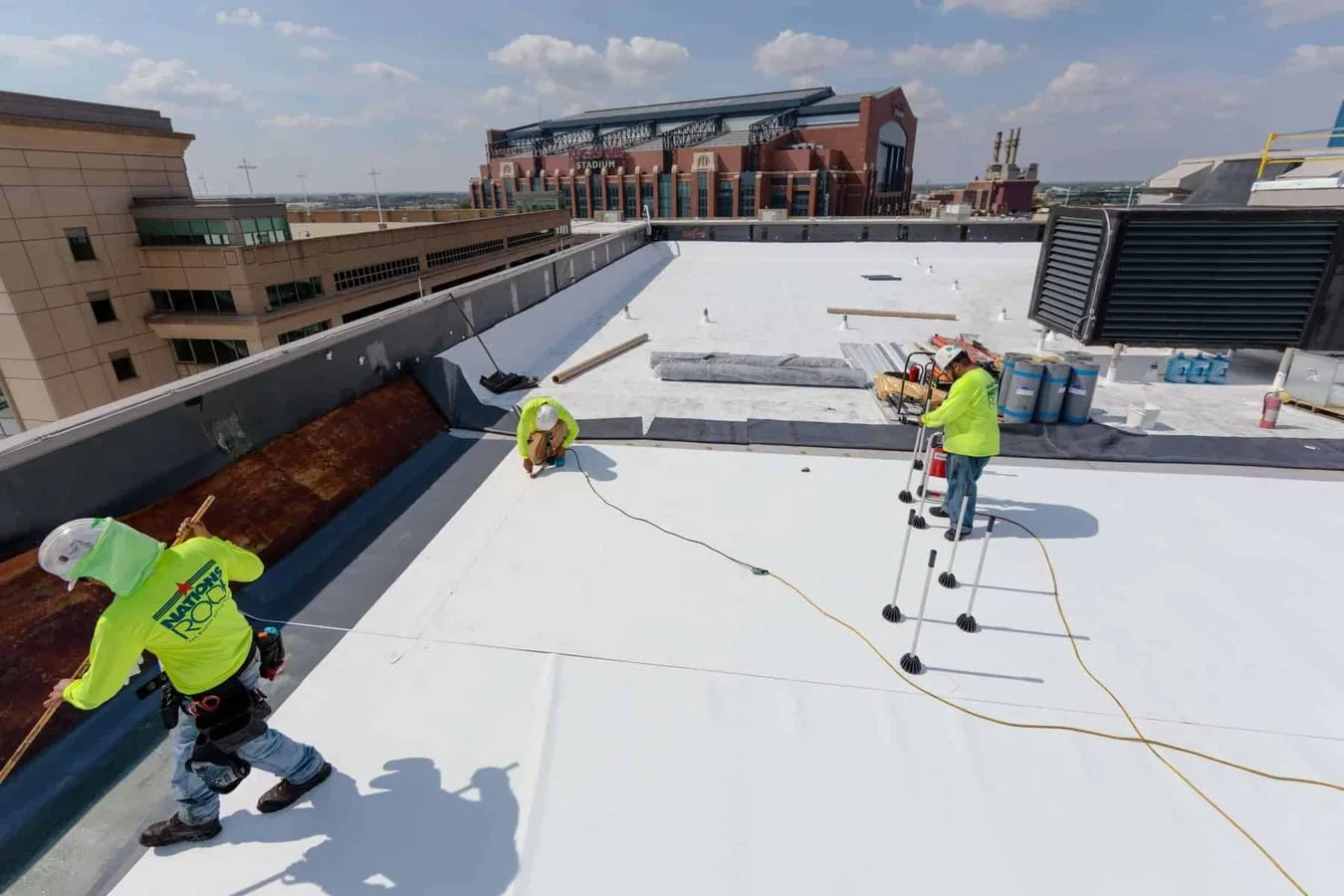
We build that register from the roof outward. A crew walks every section, probes the suspect areas, photographs what it finds and enters the results against a stable section number, so that next year's survey can be compared line by line with this year's. The value does not sit in the first survey alone. It grows as entries accumulate and a pattern of deterioration shows up while there is still time to plan around it.
Roof Asset Management
Roofing Capabilities
Call our team
Written findings and options
Thousand Oaks, CA
Ventura and Los Angeles counties
Register: the fields every roof section carries
A useful register is narrow and strict. Each roof section gets the same fields, filled in the same way, so that a flat roof over a lab wing and a flat roof over a storage bay can be ranked against one another without an argument about method. We record the membrane or coating type, the age where it can be established, the condition grade, the visible defects with photographs, the state of flashings, edge metal and drains, and the equipment and penetrations that interrupt the field. Where age cannot be established from drawings or invoices, the entry says so and estimates from the wear pattern, because a blank that later reads as certainty is worse than an honest estimate.
- Condition grade for each section, set against a written scale that stays the same from year to year.
- Estimated remaining service life, stated as a range and revised at every visit.
- Exposure flags for sun-baked slopes, edge metal under uplift, ember-sensitive details and ponding areas.
- Open items, each with a photograph, a location on the roof plan and a recommended action.
Grades: turning observations into a condition index
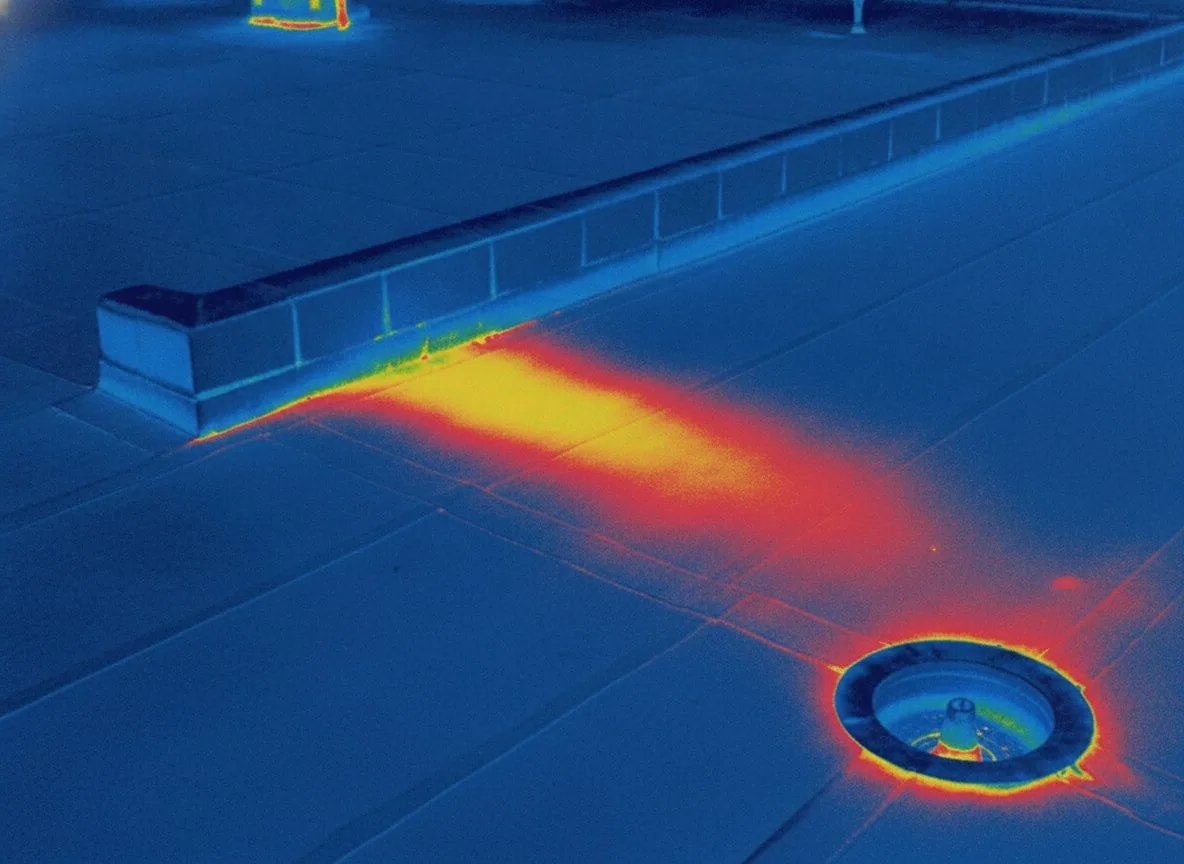
A grade is only useful if two different people reading the same photographs would arrive at the same one. We keep the scale short, define each step in terms of what is visible on the roof and what it implies for the next two budget cycles, and attach the supporting images to the entry. A section graded fair with isolated laps open and sound insulation is a maintenance item. A section graded fair with wet insulation under a clean-looking surface is a different asset, and an infrared moisture survey is how that difference gets into the register before it gets into a leak claim.
The condition index across a portfolio then answers questions that a stack of inspection reports cannot. Which buildings hold the most roof area in the weakest grades, which roofs are young enough that repair is the rational spend, and which are old enough that each additional patch is money moved away from a replacement the building will need anyway. That ranking is the working document the capital committee uses, and it gets better every time a section is revisited.
Horizons: what each grade means for spending
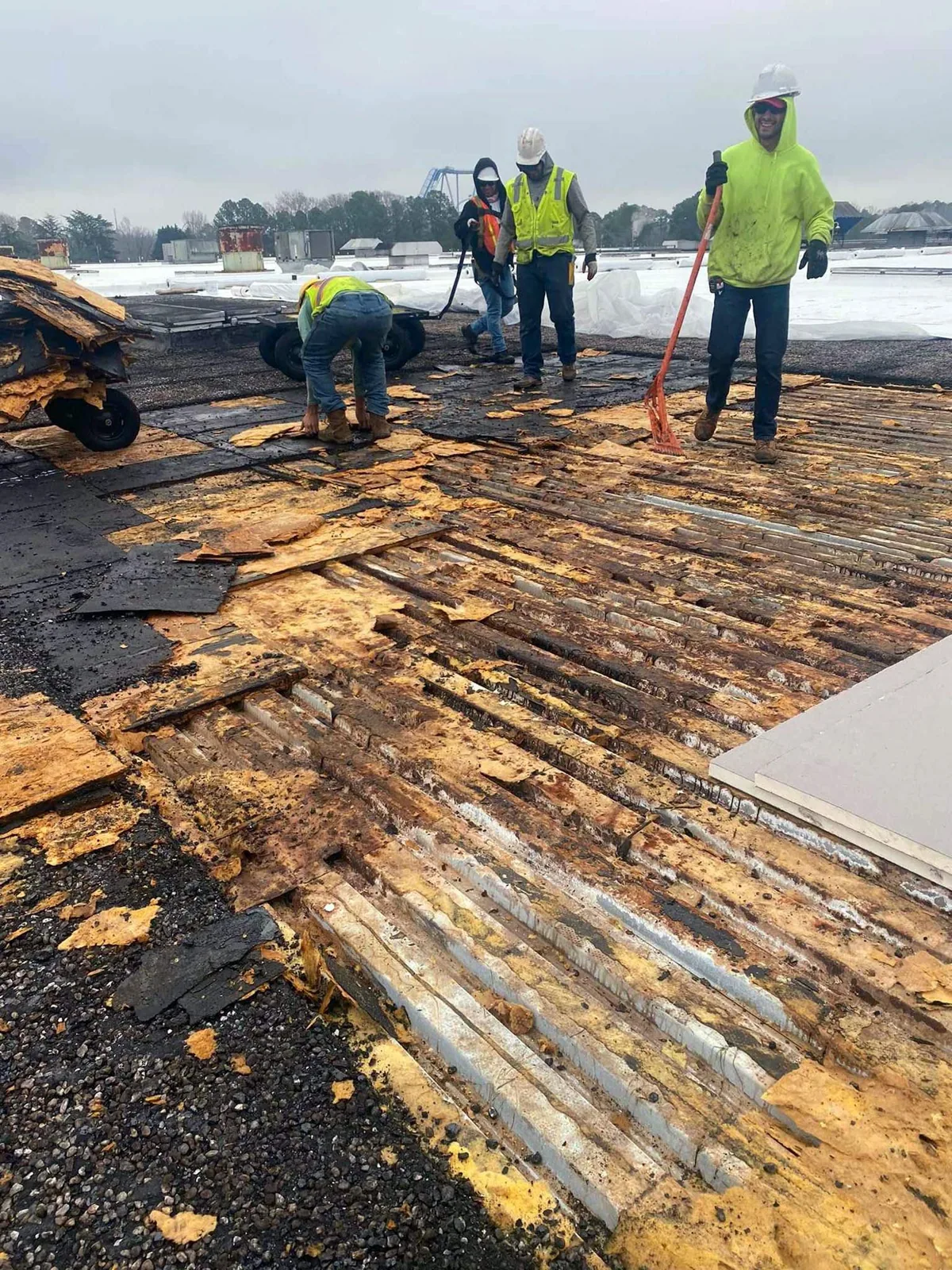
Roofs graded good need little beyond scheduled visits and clearing of drains, and the register simply carries them forward with a date for the next look. Roofs graded fair are where the decisions concentrate. A fair single-ply roof with sound insulation is often a candidate for coating restoration, which can move the replacement date out by a measurable amount if it is applied before the membrane has failed. Once the substrate is saturated or the seams are opening across the field, a restoration no longer holds, and the register should say so before the contractor's proposal does.
Roofs graded poor move to the capital plan with a target year and a defined scope, and the interim work narrows to preventive maintenance that keeps the building dry until that year arrives. Across a portfolio, the horizons convert a list of leaks into a spending sequence with tenant impact noted for each building. That sequence is what capital planning for roofs turns into reserve entries.
Local exposure: heat, Santa Ana wind and ember fall
The register carries local exposure because the Conejo Valley wears roofs in a particular way. Summer sun bakes south-facing slopes and rooftop equipment pads year after year, which shows up as crazing, chalking and shrinking at the seams. Santa Ana winds, which can exceed 40 mph with humidity falling below 10 percent, load the perimeter of every roof, so edge metal, coping and parapet flashing get their own line in the entry. Wildfire history sits in the same entry. The November 2018 Woolsey Fire burned through a stretch of the valley under Santa Ana winds of 50 to 60 mph, and the November 2024 Mountain Fire near Somis and Camarillo came during a wind event the press called the most extreme in years. Each fire leaves the register a standing question: where did ash settle, which details are exposed to embers, and has a drain been left carrying debris.
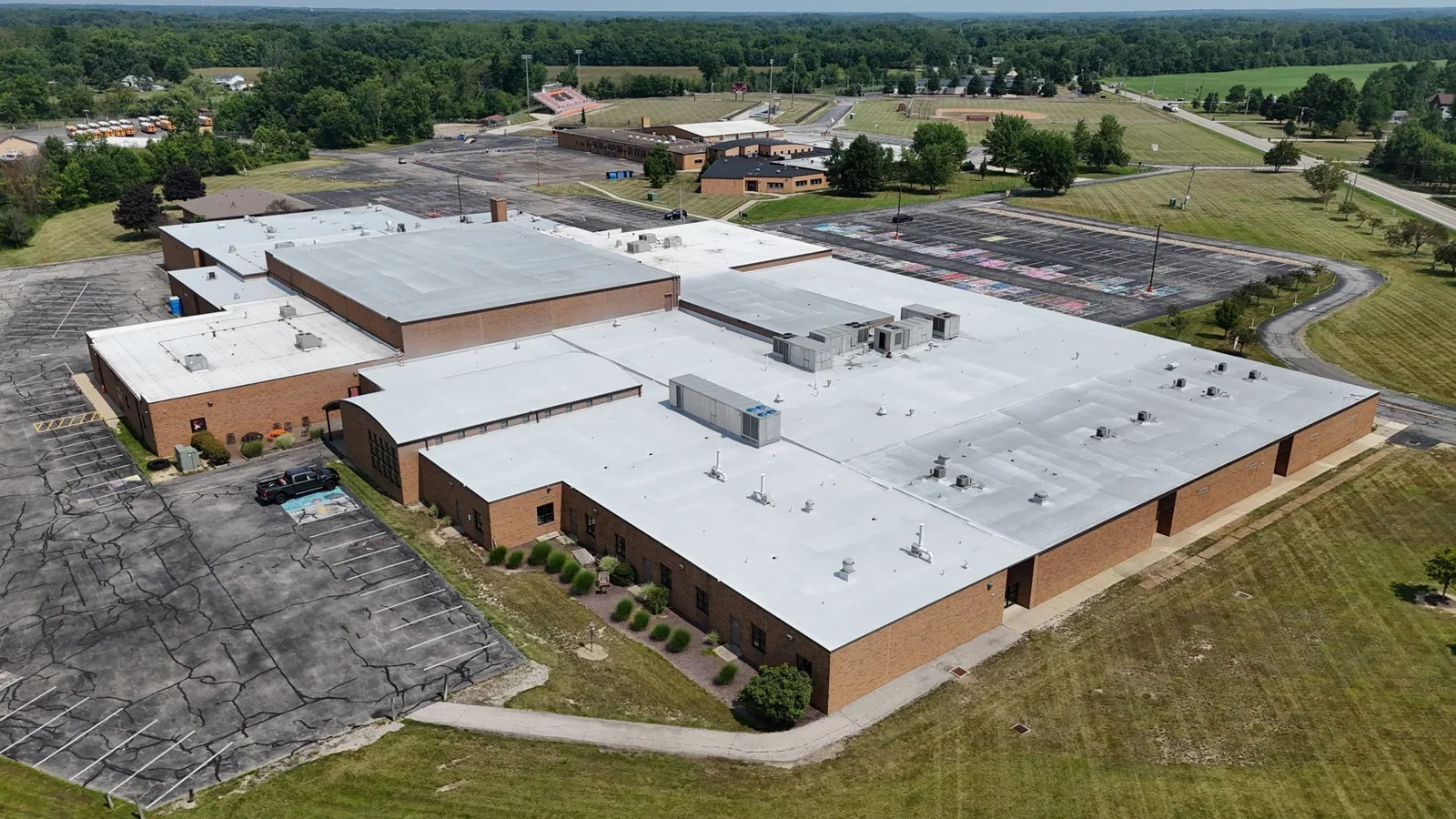
The same exposures play out differently across the building stock. Rancho Conejo Industrial Park holds more than 120 properties, so an owner with more than one building in the park can grade them side by side against the same scale. Los Robles Hospital and Medical Center opened in 1968 and has expanded since, which means its roofs belong to several construction eras and cannot be graded as one. A portfolio in Rancho Conejo and a campus with phased construction need registers built differently, even if the fields are the same.
Documentation: what the owner holds afterward
The deliverable is a register the owner controls, not a service that has to be renewed to be read. It contains the roof plan for each building with sections numbered, the photographs tied to those numbers, the grades with the reasoning behind them, the remaining service life ranges and the open items with recommended actions. We also hand over the repair history we can reconstruct, since a seam fixed three times in one spot is a finding in itself. When a section is later repaired or replaced, the entry is closed with before and after photographs, and the new work starts its own history. Written condition reports are the periodic snapshots of the register, and the register is the thread that connects them.
For property managers, the register also settles a recurring friction: which party decides when a repair stops being the right answer. With grades and service life estimates written down in advance, a management company and the ownership group can agree on thresholds before a storm forces the conversation.
Commercial Roofing Questions
Do I need original drawings to start a register?
No. Drawings and invoices help us date the roof, but the first survey stands on its own. We measure the sections on site, number them and estimate age from the wear pattern where paperwork is missing.
Which buildings should go into the register first?
Start with the roofs where a failure costs the most: tenants with sensitive operations, buildings with rooftop equipment, and anything already showing repeated repairs. The rest follow in the same survey cycle.
Can the register include roofs another contractor installed?
It can, and most do. The register records what is on the roof and how it is performing, regardless of who installed it, and we flag any warranty paperwork we find so it can be checked.
How is a register different from a maintenance log?
A maintenance log lists what was done. A register grades what is there, estimates how long it will last and ranks it against every other roof you own, which is what a budget needs.
Who updates it after a wildfire or a wind event?
We do, within a survey visit after the event. Ash, debris in drains, lifted edge metal and impact marks go into the entry with photographs, which also helps if an insurance claim follows.