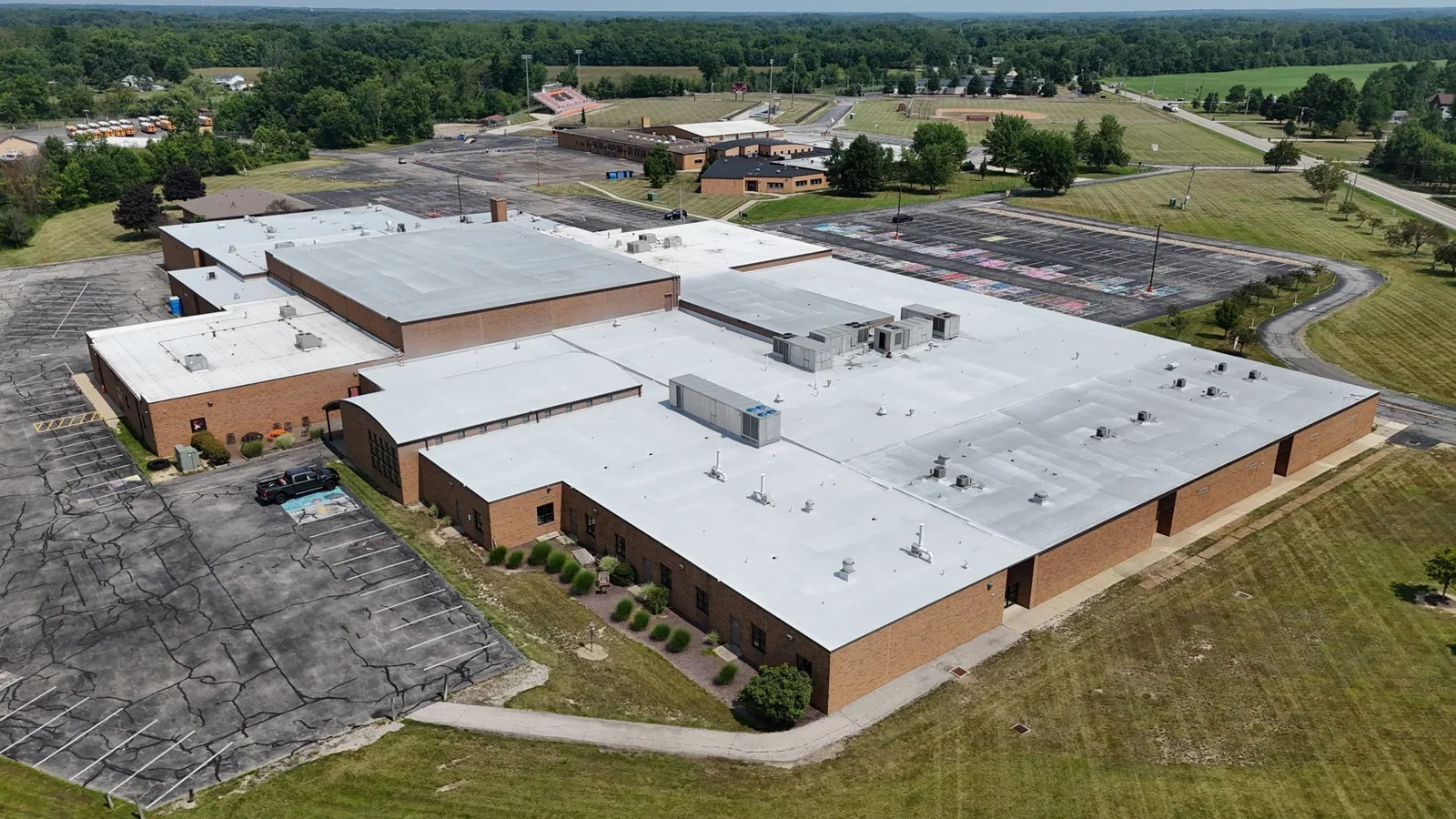
Roof Coating Restoration in Thousand Oaks, CA
Commercial Roofing Services · Thousand Oaks, CA
Surface reading: chalking across the full south exposure of a single-ply roof, hairline crazing along the seams, and a field that still passes the probe test at every lap. That combination describes a roof that has used up its surface and not its structure, and it is the case that roof coating restoration in Thousand Oaks, CA exists to serve. A coating system rebuilds the weathering layer, restores reflectivity and seals minor defects with far less disruption than a tear-off, but only when the assembly underneath is dry and attached. The work therefore starts with a moisture survey and ends with a documented service-life estimate, so the owner can tell whether the coating is a true restoration or only a delay with a nicer color.
Roof Coating Restoration
Commercial Roofing Services
Call our team
Written findings and options
Thousand Oaks, CA
Ventura and Los Angeles counties
Candidates: roofs a coating can restore
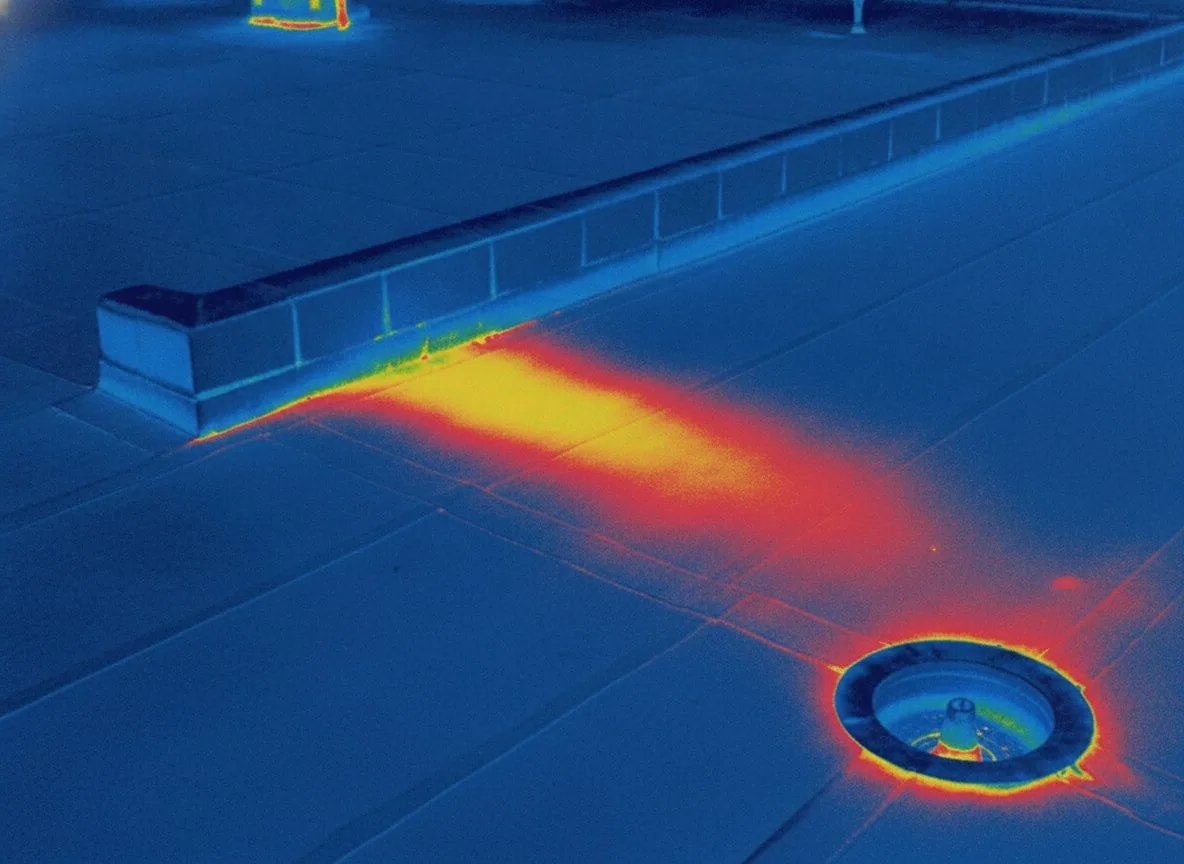
A coating is a skin. It cannot hold a roof together that is coming apart beneath it, so candidacy is decided by what lies under the surface. The roofs that qualify have dry insulation at every core location, a deck that is attached and sound, seams that are tight or can be repaired, and a membrane that still bonds to a cleaned test patch. The roofs that do not qualify have saturated insulation, large areas of blistering or delamination, membrane shrinkage that has pulled flashings loose, or structural ponding that has softened the substrate.
We establish candidacy with a hands-on survey, usually paired with an infrared moisture survey and a small number of confirming core cuts. When the findings split, with one slope qualifying and another not, the recommendation can split too: coat the dry areas, replace the wet ones, and price the two scopes separately so the owner sees what each decision costs.
Chemistry: silicone, acrylic and where each belongs
The two systems used most on low-slope commercial roofs behave very differently. Silicone coatings tolerate standing water, resist ultraviolet breakdown for a long time and remain flexible, which makes them the usual choice where the roof holds water after rain. Their weakness is dirt pickup, because the surface stays slightly tacky and dust adheres, and a silicone surface is difficult to recoat with anything else.
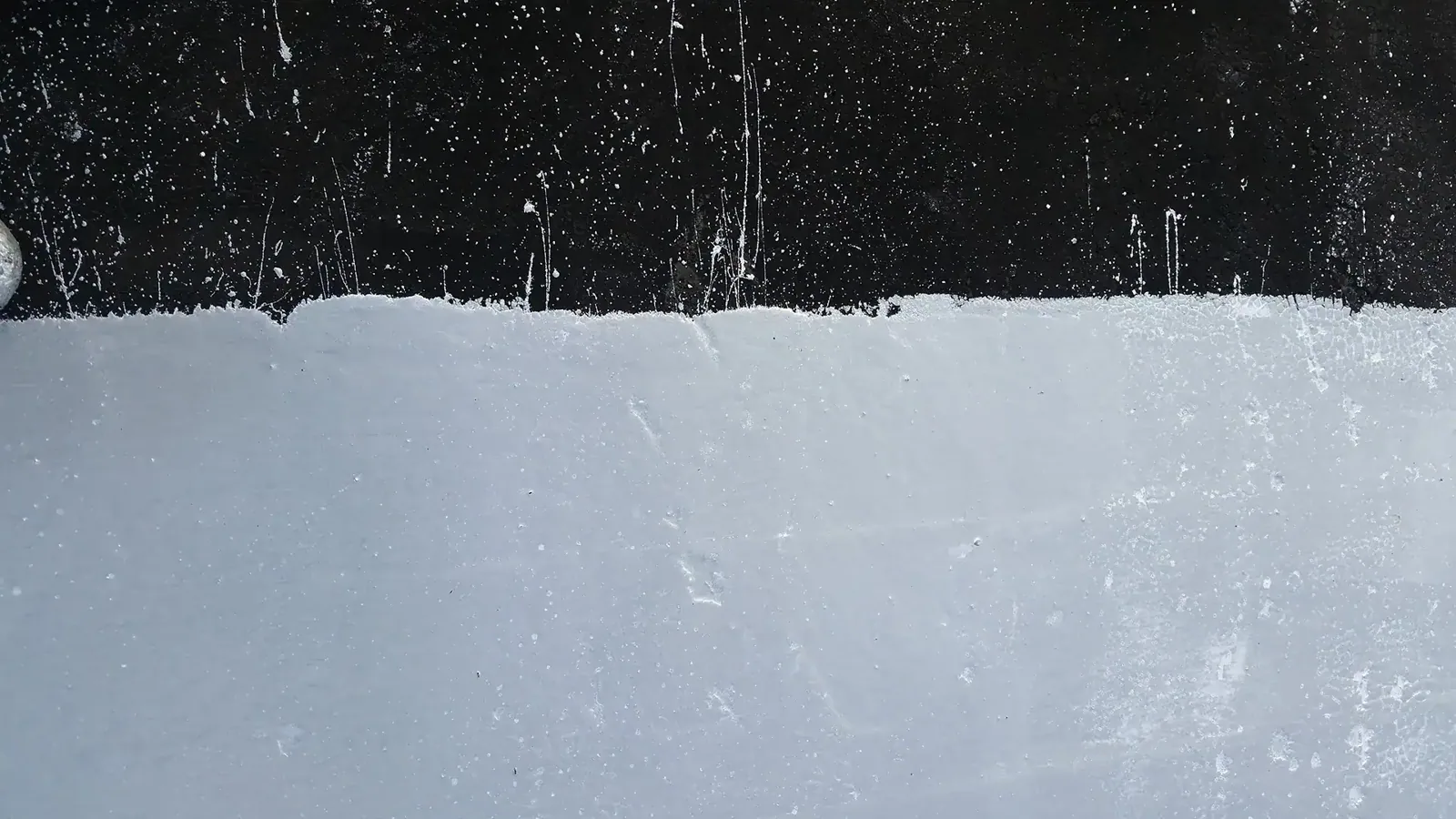
Acrylic coatings are water-based, easier to apply and highly reflective, but they do not belong on a roof that ponds, because prolonged immersion softens the film. Both systems are installed over a cleaned and primed surface, reinforced with fabric at seams and penetrations, and built up in coats to a measured thickness. Thickness, not color, is what delivers the service life, so we check it on the roof and record it.
Preparation: cleaning, detail repair and weather windows
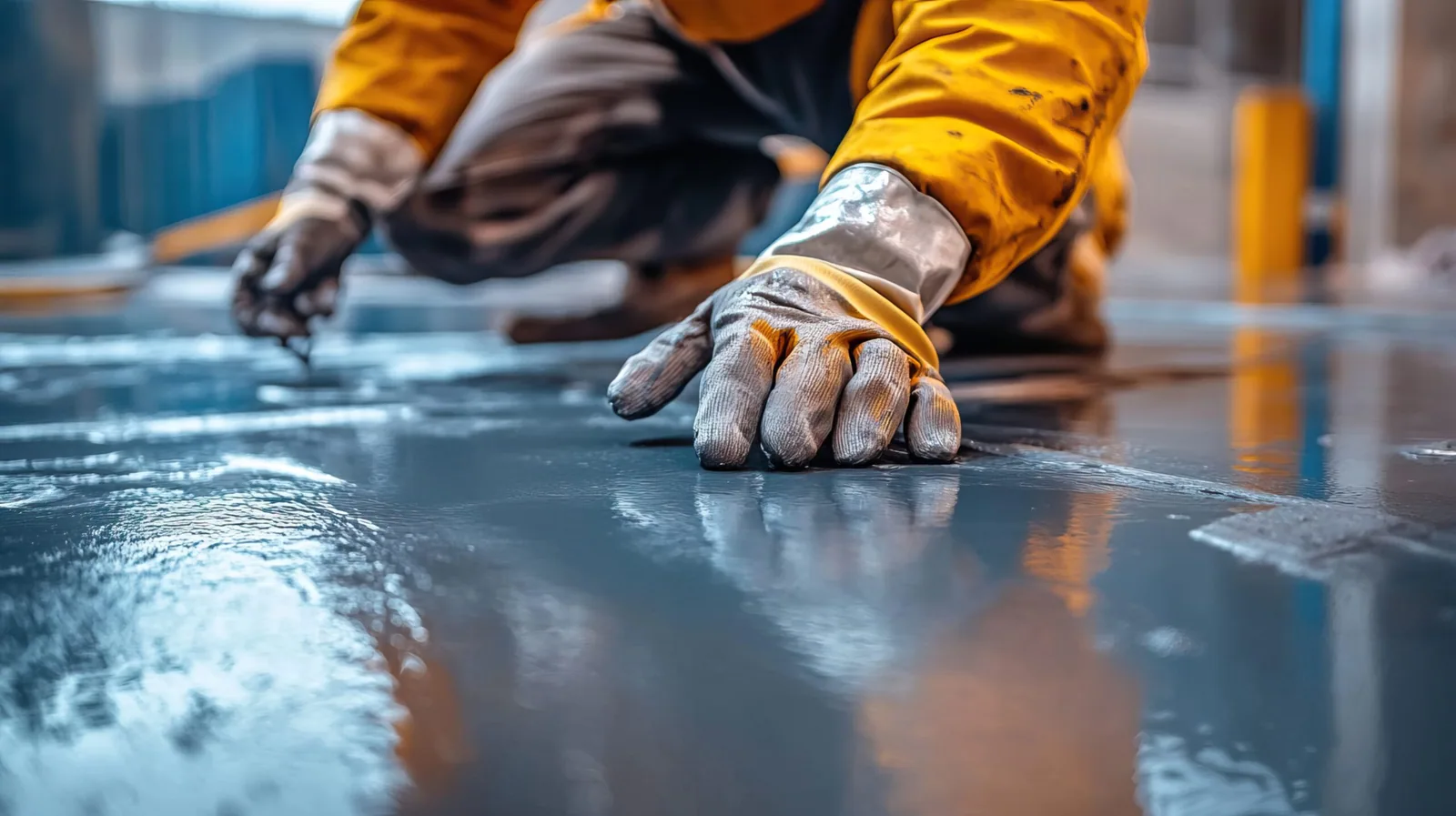
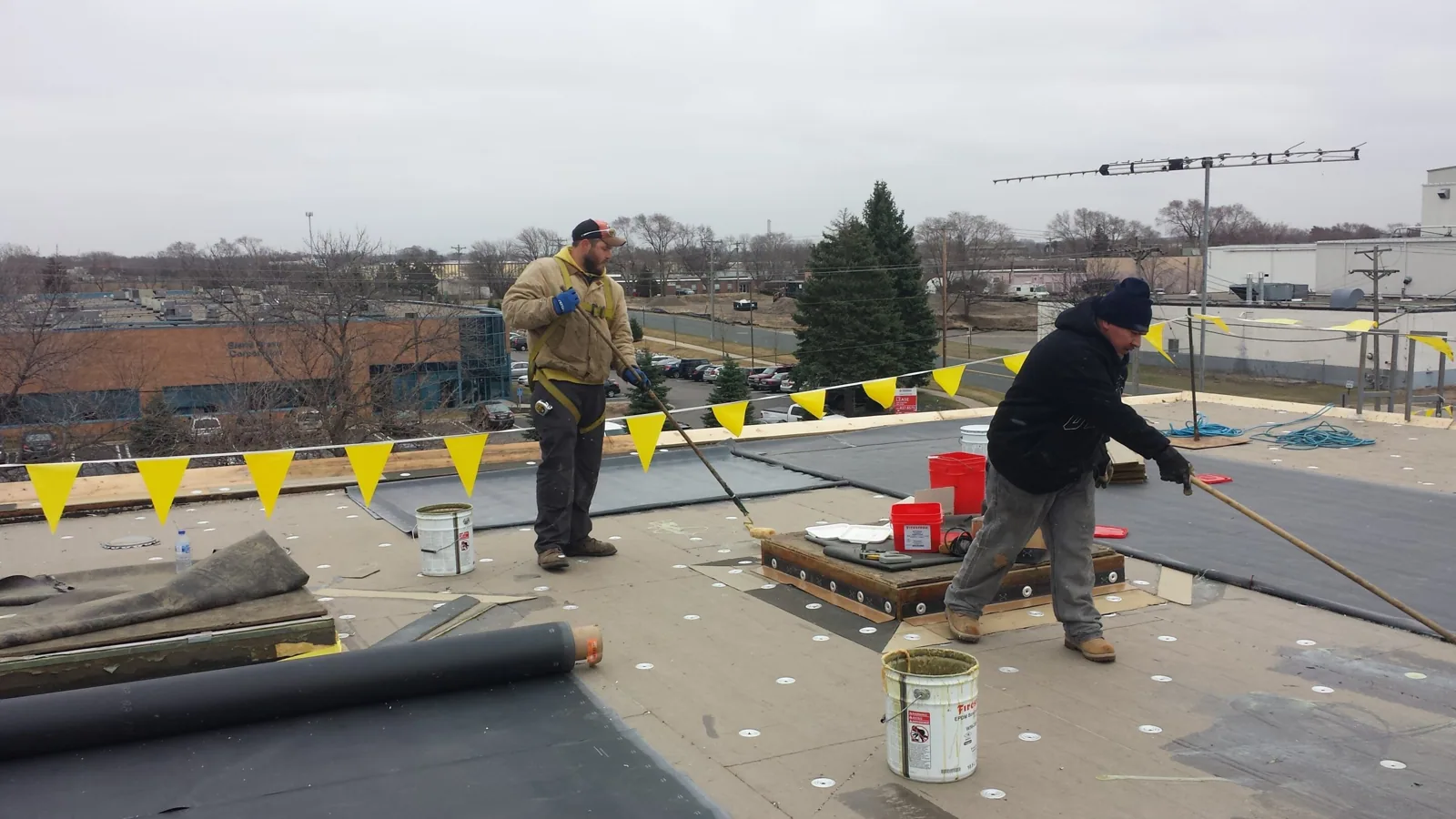
Most coating failures trace back to preparation. The surface is washed to remove chalk, oxidation and the film of dust that builds on a roof through a long dry season. Open seams, cracked flashings, failed sealant and loose terminations are repaired before any coating is rolled or sprayed, since a coating bridges a hairline gap but not a split. Adhesion is tested on a small area, and the primer is chosen to suit the existing membrane, which may be TPO, EPDM, modified bitumen or an older coating.
The Conejo Valley summer gives long, dry application windows, but not trouble-free ones. Evening dew, a shift in wind and the fine dust that Santa Ana winds carry can each ruin a coat that has not cured, so the schedule watches the forecast for the week and not just the day. Overspray is controlled near parked cars, rooftop air intakes and neighboring buildings, and intakes are protected or shut off for the working hours.
Heat: reflectivity, energy code and summer load
Sustained heat is the local reason owners look at coatings first. Woodland Hills reached 121 degrees Fahrenheit on September 6, 2020, the highest reading ever recorded in Los Angeles County, and the National Weather Service Los Angeles/Oxnard office has issued extreme heat warnings for the valleys of both counties. A reflective surface keeps the membrane cooler, slows the thermal cycling that cracks seams and flashings, and trims the load on rooftop HVAC units sitting in that heat. Roofs that were not coated in time show it as heat and UV damage that needs repair.
The 2025 California Energy Code applies to permit applications filed on or after January 1, 2026, and its nonresidential provisions touch roofing and cool roof standards. Whether a given coating counts toward compliance depends on its rated reflectance and on the permit path, so we confirm the product data and the local requirements before the scope is priced. Where a full cool-surface package is the goal, cool roof installation may be the better route.
Campuses: where restoration earns its place in a capital plan
Restoration is most valuable when the roof has years of structural life left and a business event is coming. The 198,478 square foot, two-building Conejo Corporate Campus, which a buyer plans to reposition as Class A multi-tenant space, is the kind of asset where a roof decision lands before leasing begins, because a restoration can be completed ahead of tenant move-ins. Owners holding research and office campuses across Thousand Oaks face the same sequence of survey, restore, then lease.
Age sets the limit. The Warner Center Business Park and Warner Center Plaza were developed from the 1970s through the early 1990s, and many of the roofs there are thirty to fifty years old, so in Warner Center the first question is whether a coating is still viable or a recover is already due. A candid survey answers it before money is committed.
Closeout: what the owner receives
The coating manufacturer sets the warranty terms, and those terms depend on substrate, thickness and preparation, so the closeout file records each of those items. It lists the product and lot numbers, the measured thickness by roof section, the weather during application, photographs of the repairs made before coating and a roof plan showing what was coated and what was left alone. That file is what a reserve study needs, and what a lender or buyer will ask for later.
Restoration also resets the maintenance plan. A coated roof is inspected on a schedule, and the first preventive roof maintenance visit after application establishes a new baseline, since any tear or puncture in a coating needs to be repaired before water finds the layer beneath.
Commercial Roofing Questions
How do I know my roof is a coating candidate and not a replacement?
A moisture survey and core cuts settle it. Dry insulation, a sound deck and a membrane that bonds to a test patch point toward coating, while saturated insulation points toward replacement.
Which system suits a roof that holds water after rain?
Silicone, in most cases, since it tolerates standing water that would soften an acrylic film. The ponding itself should still be assessed, because a coating does not correct the low spot that holds the water.
How many times can a roof be recoated?
Each recoat adds weight and one more layer to test for adhesion, so the number is limited by the substrate and by the first coating chemistry. A roof that has been coated before needs an adhesion check and a record of what is already there.
Will a coating stop an active leak?
A coating seals small defects that it covers, but it is not a leak repair. Active leaks are located and repaired first, and the coating goes over a roof that has already been made watertight.
What happens to the fresh air intakes while the coating goes on?
Intakes near the work are covered or shut down for the working hours, and the schedule is agreed with the building engineer. Odor from some products is a legitimate concern in medical and office buildings, and it is planned for in advance.