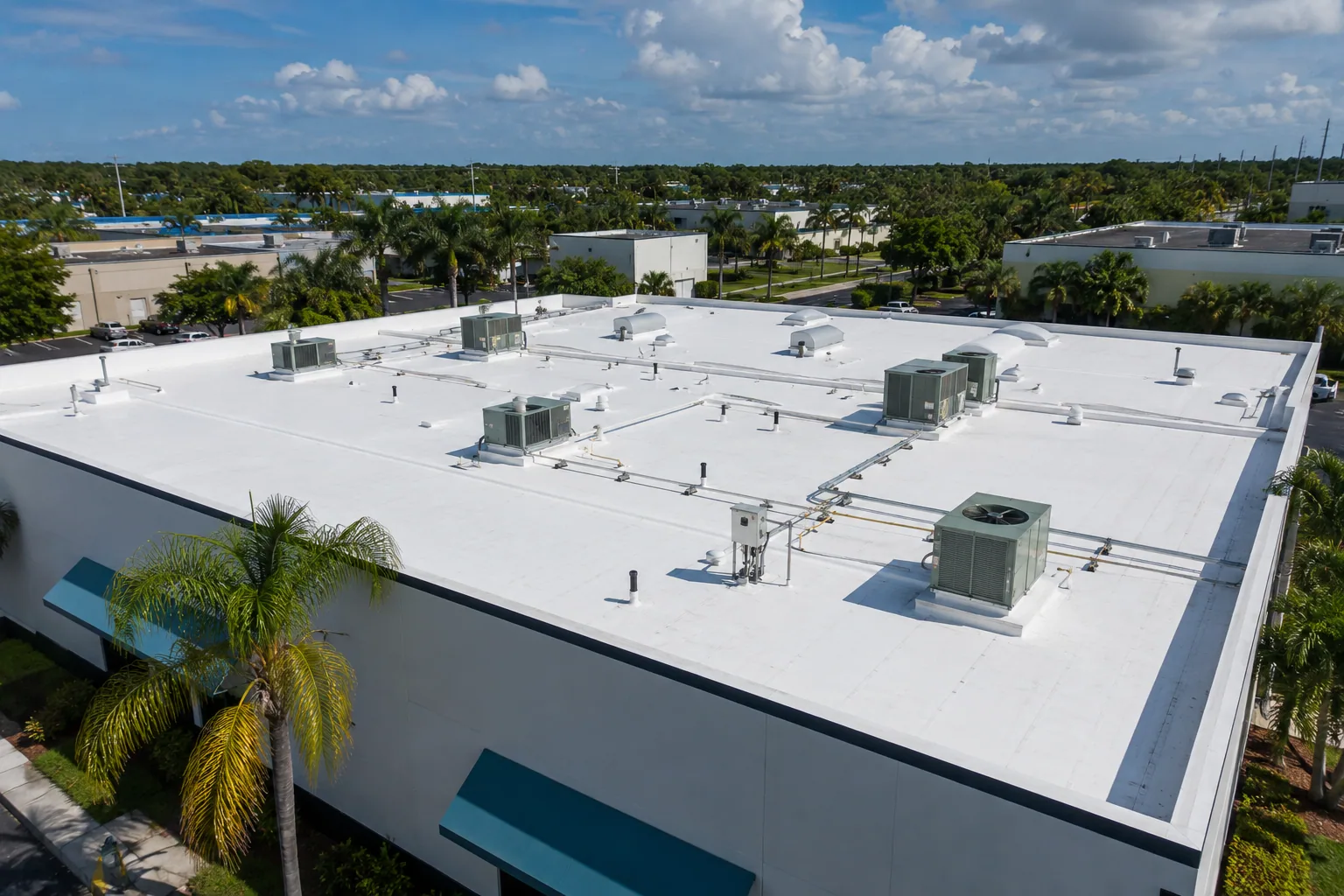
Cool Roof Installation in Thousand Oaks, CA
Commercial Roofing Services · Thousand Oaks, CA
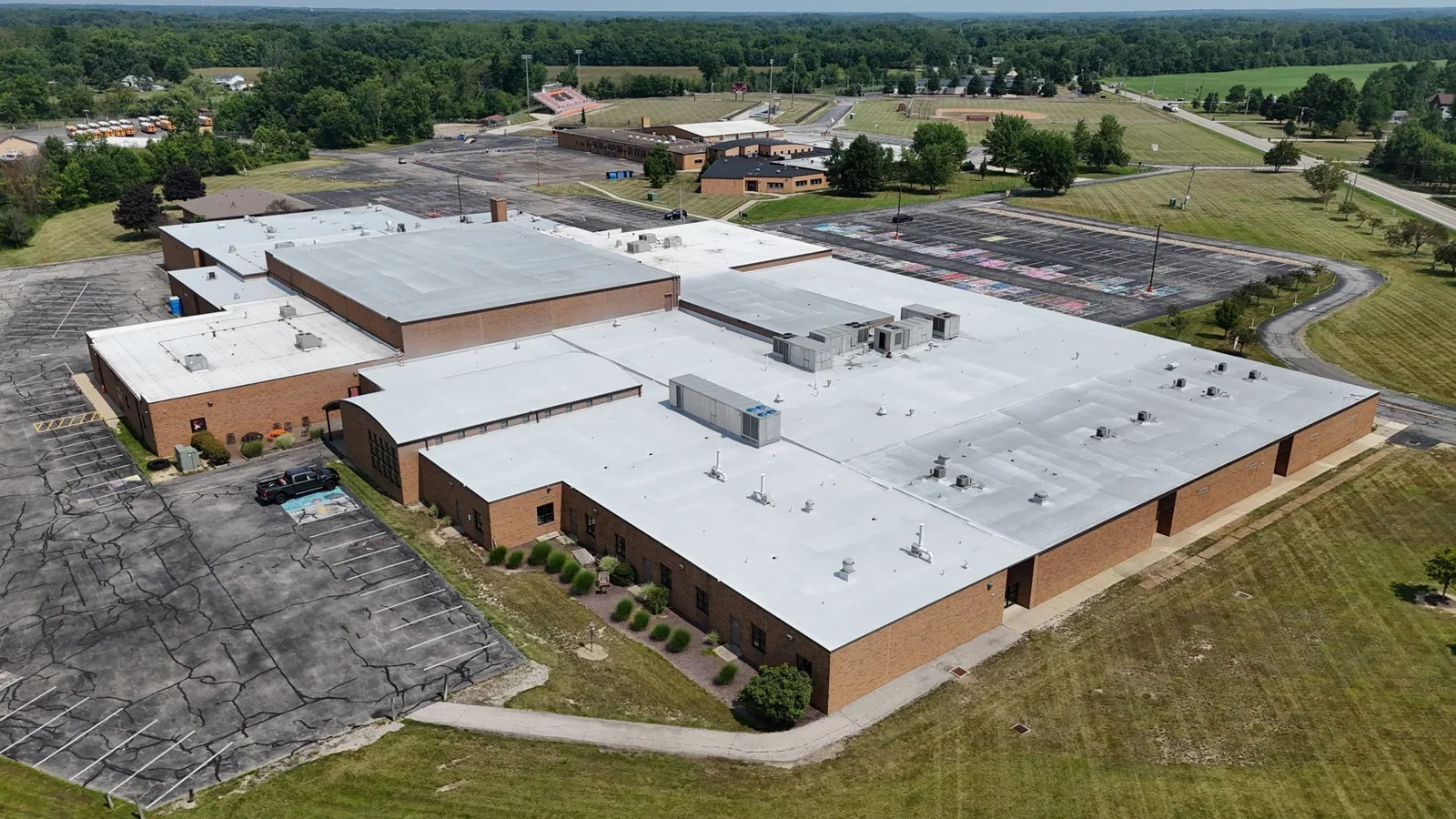
Reflectance reading: a gray-white single-ply field, streaked along the drainage lines, chalking at the laps and visibly darker than the day it was installed. On a warehouse in Rancho Conejo that reading is the practical meaning of a cool roof that has aged. The membrane was specified white, it is now doing less of the job it was chosen for, and the rooftop units beneath it work harder through each Conejo Valley summer than the energy model assumed. The finding does not mean failure. It means the owner has a decision about whether to restore the surface, replace it, or specify something better when the roof is next opened.
Cool roof installation in Thousand Oaks, CA is a surface question and a code question as much as a roofing one. A reflective membrane or coating sends solar heat back out before it reaches the deck, which lowers peak surface temperature, eases the cooling load and slows the thermal movement that wears seams. The benefit only lasts if the product is chosen for the building and applied to a substrate that is dry and sound.
Cool Roof Installation
Commercial Roofing Services
Call our team
Written findings and options
Thousand Oaks, CA
Ventura and Los Angeles counties
Standard: what the energy code expects of a new roof
Title 24 Part 6, the 2025 California Energy Code, governs any permit application filed from January 1, 2026 forward, and the nonresidential changes in it reach cool roof requirements as well as solar and battery storage. Thousand Oaks adopted that code through a 2025 revision of its municipal building chapter, with local amendments, so the city version of the rules is part of the picture. A reroof or major recover therefore has to be checked against the provisions in force on the date the permit application is filed, and the product has to carry a rated reflectance that can be shown to the plan reviewer.
Thresholds and exceptions turn on roof area, slope and the extent of work, so we confirm the requirement with the building department for each address instead of quoting a rule of thumb. The check comes before the product is specified, since a membrane found short of the rating costs more to correct than it saved.
Surfaces: white membranes, coatings and factory finishes
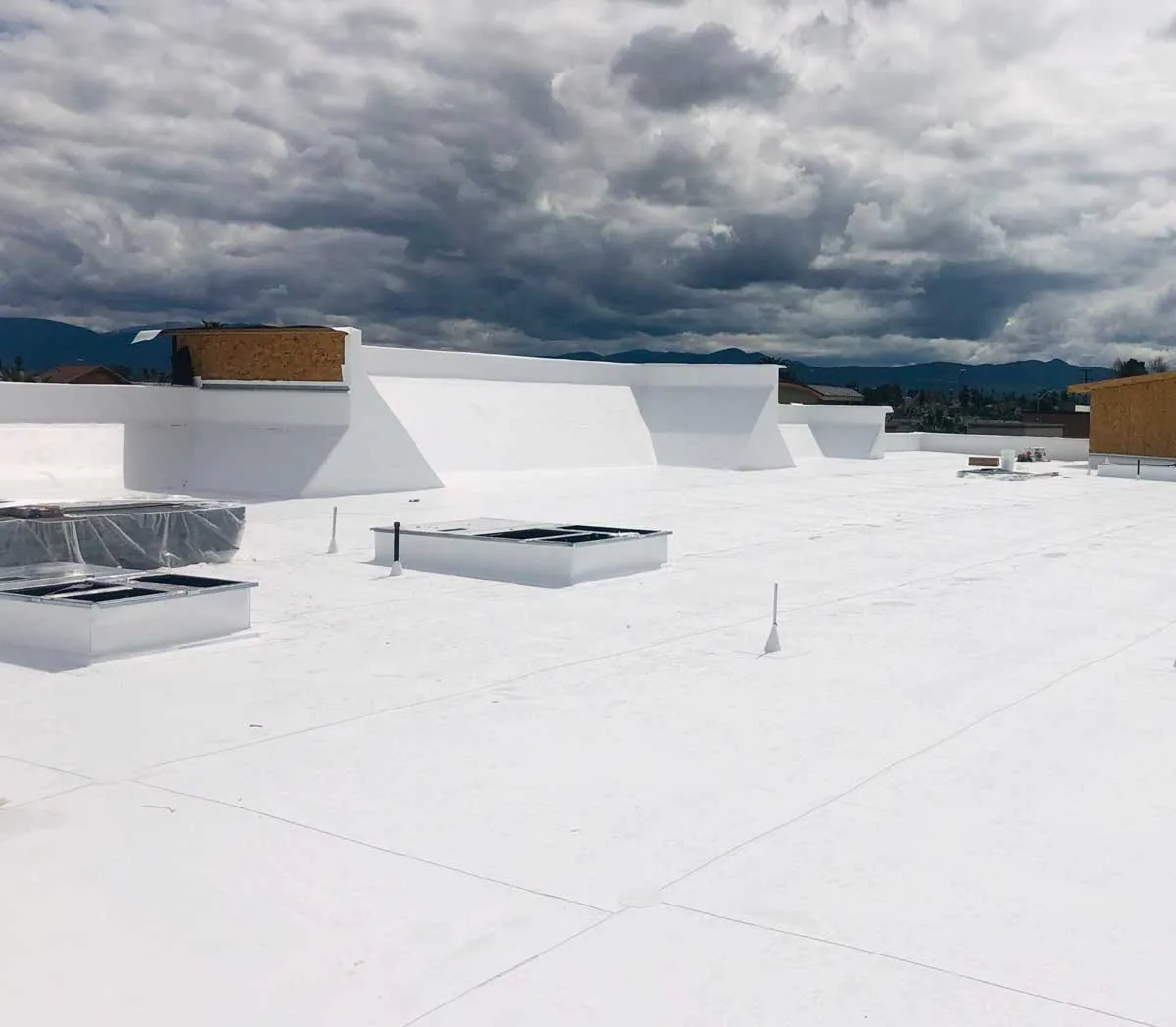
There are four routes to a reflective roof. White TPO roofing, along with white PVC and EPDM, is reflective from the factory, which suits a full replacement. Fluid-applied coatings, either acrylic or silicone, add reflectance to a sound existing membrane or metal roof, which is roof coating restoration. Factory-finished metal panels carry a reflective paint system. Modified bitumen and built-up roofs reach the same goal with a reflective cap sheet or a field coating.
Each route has a different relationship to the substrate. A new membrane replaces whatever failed beneath it. A coating inherits every defect in the roof it covers, so seams, flashings and wet insulation have to be dealt with first. The choice is therefore made from the survey findings and the remaining service life, not from the reflectance number alone.
Aging: why reflectance falls and what it costs
A new white surface does not stay new. Dust, airborne soot and organic growth collect in the first seasons, ponded water leaves residue in low spots, and UV degradation chalks the top layer of the membrane. The 2018 Woolsey Fire affected Newbury Park and Westlake Village, and ash on roofs became one more local factor. Some of that loss can be recovered with washing. Chalked laps and residue from standing water cannot.
For an asset manager the useful figure is aged reflectance, the value after the surface has weathered, and not the number printed on the product when it ships. The difference governs how much of the projected cooling saving appears in the utility bills three or four years later. We photograph the surface condition on every survey and, where reflectance has dropped far enough to matter, price a cleaning or recoat against the energy it would recover.
Heat load: what changes under the roof
Typical summer afternoons in the Conejo Valley run in the 70s and 80s Fahrenheit, but the extremes are the ones that stress equipment. Extreme Heat Warnings from the weather service have covered the valleys of both Ventura and Los Angeles Counties, and Woodland Hills touched 121 degrees in September 2020, a countywide record for Los Angeles County. A dark roof under those conditions radiates heat into the top floor for hours, and rooftop units run at full capacity to answer it.
Reflectance works best alongside insulation. A reflective surface over thin or wet insulation delivers less than the same surface over a dry, thick board, so the insulation and cover board beneath it belong in the same decision. The benefit also varies with location: coastal breezes keep summer temperatures in Westlake Village up to about ten degrees cooler than nearby inland areas, so a roof there has less heat to reject than a comparable roof farther inland.
Fit: where a reflective surface pays and where it does not
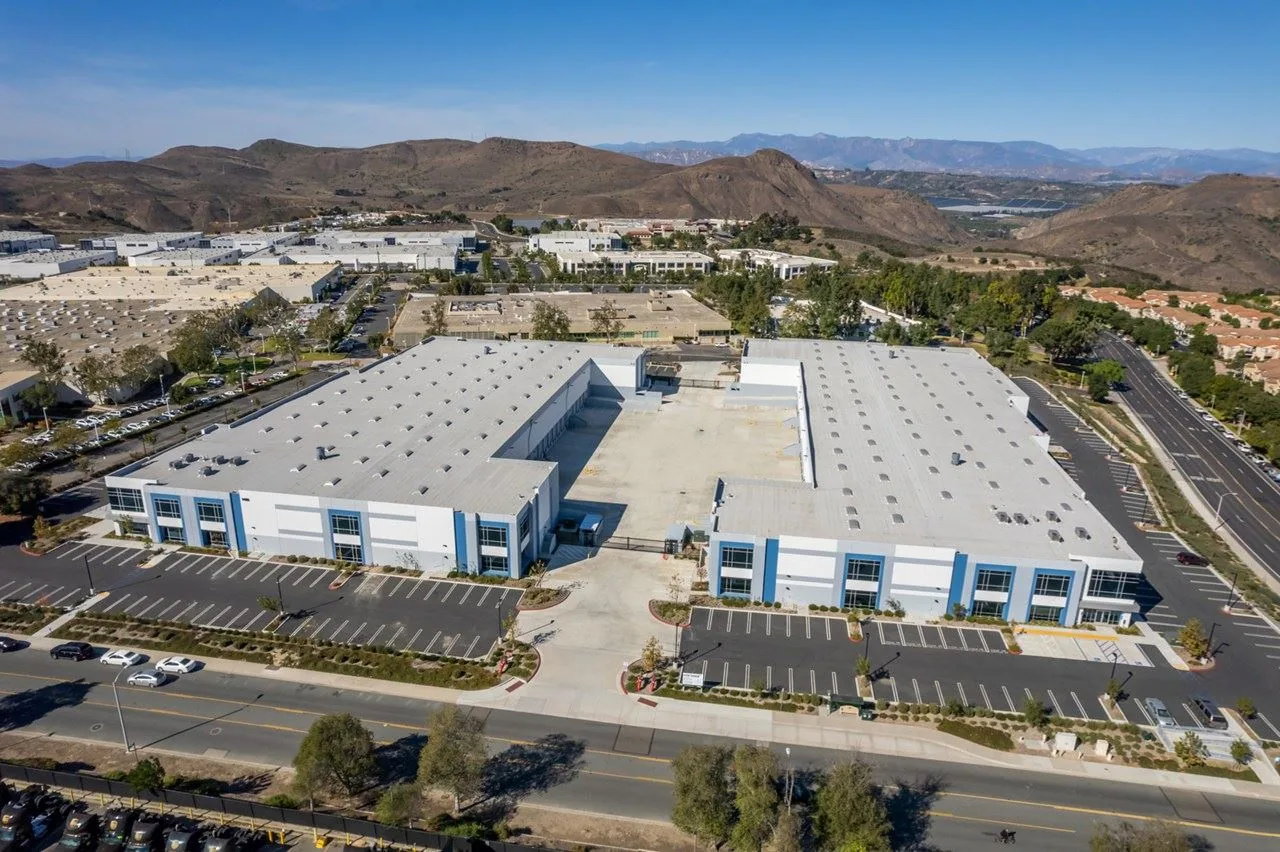
The strongest cases are large, mostly flat roofs over conditioned space: distribution and light-industrial warehouse roofs, the multi-building laboratory and office campuses of the Newbury Park area, and regional retail such as The Oaks, the largest shopping center in Ventura County. Mild winters limit the heating penalty a reflective roof can carry, which is why the trade tends to favor reflectance here.
The weaker cases are shaded roofs, roofs over unconditioned storage, and roofs whose insulation is already saturated. In those situations the money is better spent on moisture repair or replacement first, with the reflective surface specified as part of the new assembly. Where solar arrays are planned, the arrays will shade part of the field, so the layout belongs with the solar-ready roofing decisions from the start.
Installation: substrate, sequence and fire rating
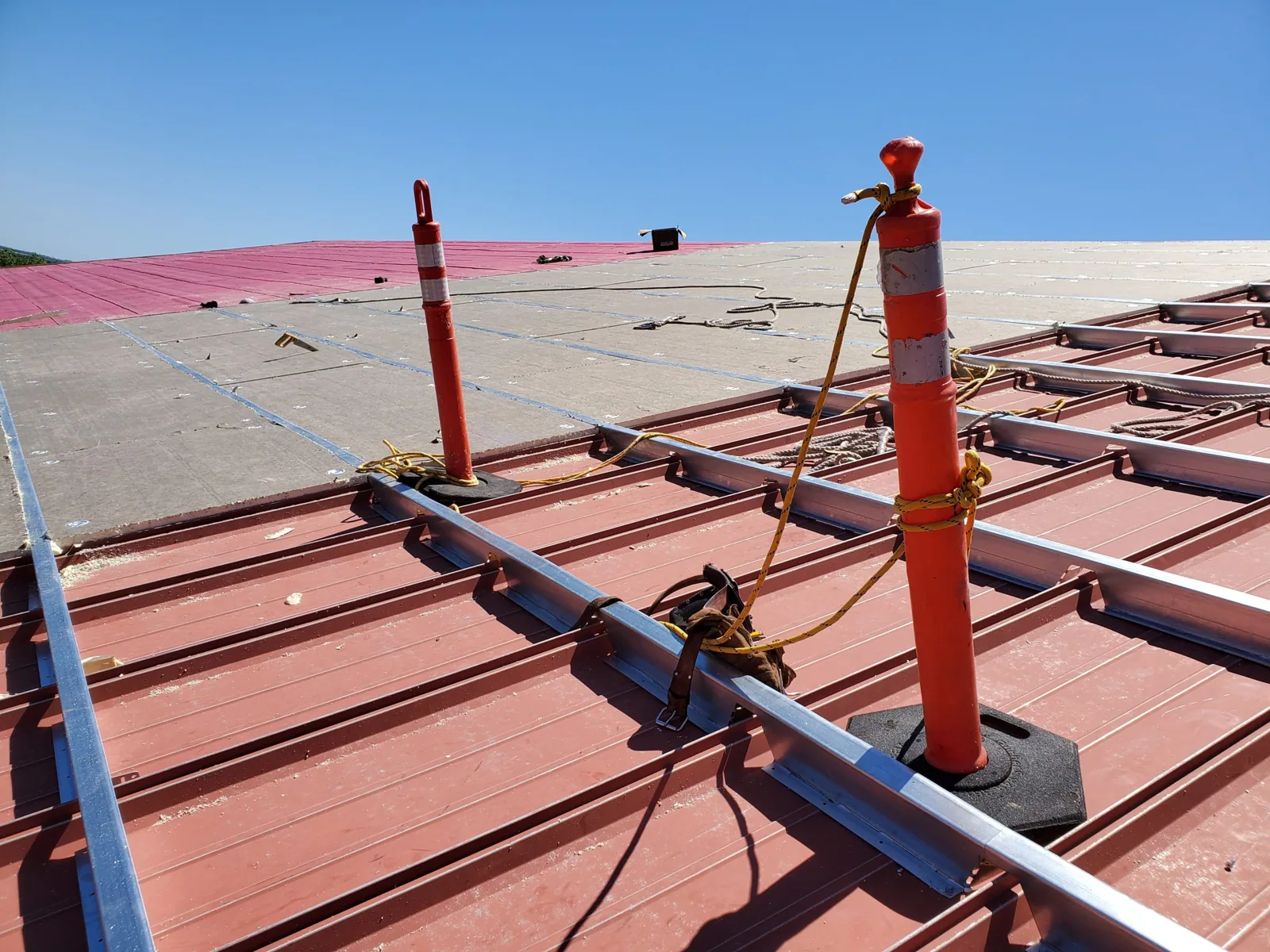
A coating or membrane is applied only to a substrate that has been tested and found dry. We run infrared or core checks, repair seams and flashings, clean and prime, and then apply the system in the thickness the manufacturer's data sheet requires, because a thin coat loses reflectance and protection faster than the spec implies. Coatings are applied in weather that allows them to cure, and spraying is postponed on windy days, which in this valley means keeping a close eye on the Santa Ana forecast.
Fire exposure is the other constraint. The Thousand Oaks codes include the Wildland-Urban Interface provisions, so a reflective membrane or coating has to be part of an assembly that carries the fire classification the location requires. Ember resistance is a requirement of the assembly, not just a property of the top surface, and we confirm it before the product is ordered. Roofs already weathered by sun are often candidates for heat and UV damage repair first.
Commercial Roofing Questions
Does a white roof cost me in winter?
Less here than in colder markets. Winters in the valley are mild, so the heating penalty is small next to the cooling load carried through the long dry summer. A building with unusual heating demand is worth modeling separately.
Can an existing roof be coated to become a cool roof?
Often, provided the membrane is dry, adhered and sound. A moisture survey comes first, then seam and flashing repair, then cleaning and the coating. If the insulation is wet or the membrane has reached the end of its life, replacement is the sounder use of the budget.
How do I confirm that a product meets the code?
Ask for the rated initial and aged reflectance and emittance values published for the product, then compare them with the Energy Code provisions in force on the permit date. We put those values into the submittal so the plan reviewer sees them.
Will ash and dust after a fire event ruin the reflectivity?
Ash sits on the surface and most of it washes off. What lasts is residue where water pooled, so drainage matters as much as the product. After a fire event we recommend a cleaning and a check of the drains.
What does aged reflectance on a spec sheet mean?
It is the value measured after the sample has weathered, which is a more honest picture of the roof in its third or fourth summer than the initial figure. Use it when comparing bids and when forecasting energy savings.