Roof Insulation, Tapered Systems and Cover Board in Thousand Oaks, CA
Commercial Roofing Services · Thousand Oaks, CA
Core sample, location four: four inches of polyisocyanurate, dry and intact, with no cover board between it and a membrane that has been mechanically fastened through it for years. The insulation is healthy and the assembly is thin. That mismatch is a familiar one on older low-slope roofs, and it shapes the next decision, because the same layers that were adequate when the building was permitted may fall short of the current energy code and may leave the membrane exposed to every footstep and ember. Roof insulation, tapered systems and cover board in Thousand Oaks, CA are specified together, and what an owner chooses controls drainage, energy use and the life of the membrane above.
Roof Insulation, Tapered Systems and Cover Board
Commercial Roofing Services
Call our team
Written findings and options
Thousand Oaks, CA
Ventura and Los Angeles counties
Layers: what sits between the deck and the membrane
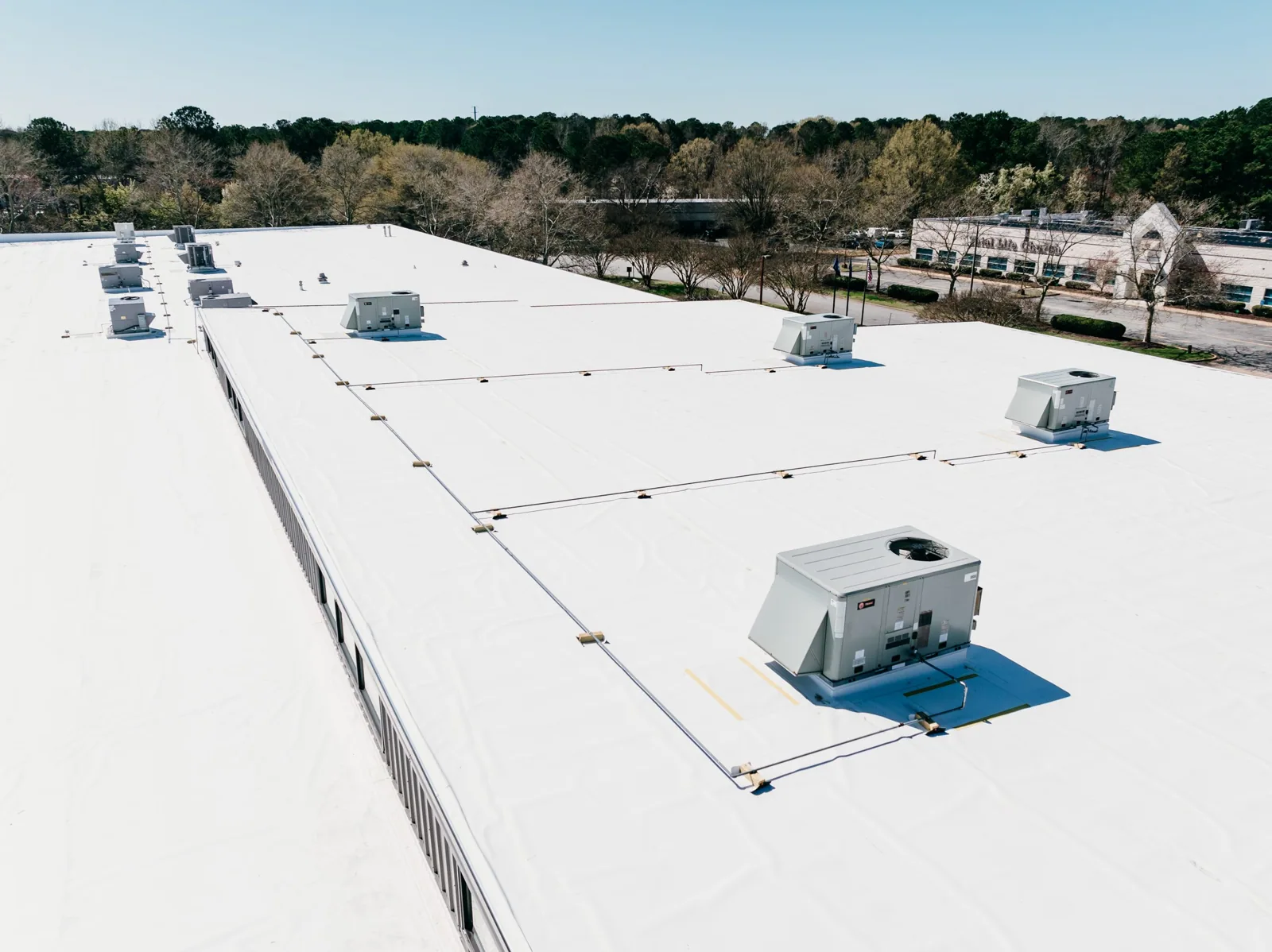
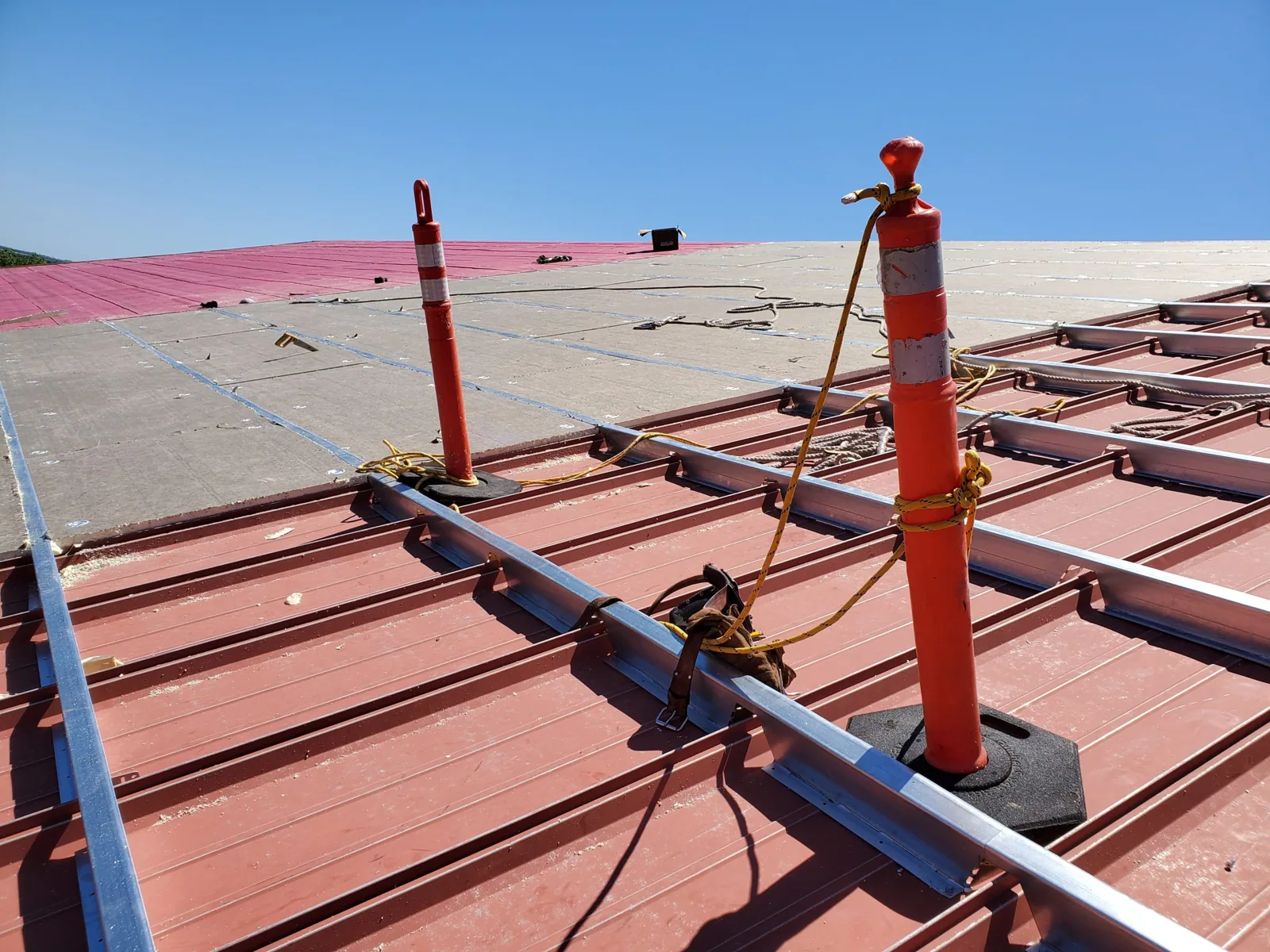
A commercial low-slope assembly is a stack. A vapor retarder or air barrier may sit directly on the deck. Rigid insulation comes next, usually polyisocyanurate, though expanded polystyrene, extruded polystyrene and mineral wool are used when the project calls for them. A cover board, made from gypsum, high-density polyisocyanurate or perlite, goes over the insulation. The membrane is last, adhered, ballasted or mechanically fastened through the layers below.
Each layer does one job. The insulation limits heat flow. The cover board spreads loads, protects the insulation from traffic and gives the membrane a firm, smooth surface to bond to. The deck carries it all. When we open a roof for survey, we record every layer, thickness and fastener pattern, because the assembly on paper and the assembly on the roof are rarely identical after years of patching.
Thermal: energy code and the thickness question
California's 2025 Energy Code applies to permit applications submitted on or after January 1, 2026, and its nonresidential updates touch roofing, cool roof standards, solar and battery storage. For an owner replacing a roof, that means insulation levels and reflectance will be checked at plan review, and a reroof that keeps the old thickness may not pass. The requirements turn on the scope of work and the building, so we confirm them with plan check before pricing.
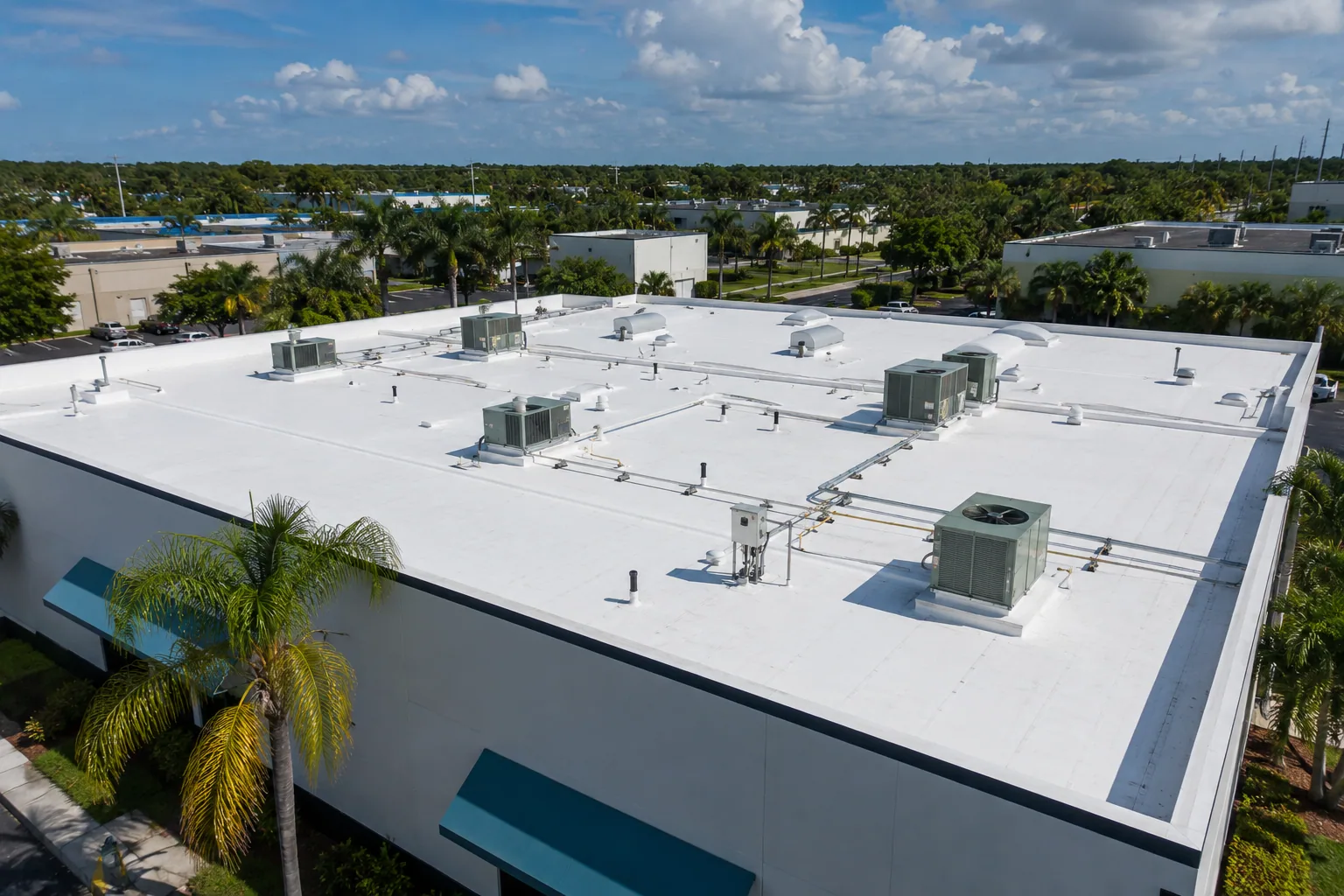
Thickness has consequences beyond energy. Added insulation raises the roof surface, and every curb, parapet, door threshold and flashing must be extended to match. That cost is easy to overlook when comparing bids. A commercial roof replacement resets the assembly entirely and can absorb the added height, while a recover must stay within the height the building can accept. Where reflectance is part of the compliance path, cool roof installation is considered together with the insulation.
Slope: tapered systems that move water
Tapered insulation creates slope where the structure has none. Boards are cut to a drawing at factory-set slopes, laid in a pattern that sends water toward drains, and combined with crickets that steer flow around curbs and equipment. A good layout reduces the number of low points and shortens the distance water has to travel, which cuts ponding and limits the load on each drain.
The layout comes from a drawing that starts with the deck heights, the drain locations and the roof geometry. If the drains are in the wrong place, no taper will rescue the roof, and the plan may call for new drains as well. A layout often starts with the roof drains and scuppers, since their location sets the low points, and ponding on an existing roof is corrected by adding taper where it was never installed, as in a ponding water roof repair.
Board: protection, fire resistance and attachment
A cover board earns its place in three ways. It protects the insulation and the membrane from foot traffic and dropped tools, which matters on roofs where mechanical contractors visit often. It improves the adhesion of adhered systems and reduces the telegraphing of insulation joints through the membrane. And it contributes to the fire performance of the assembly, because the right board over combustible foam helps a roof achieve its fire classification.
That last point carries local weight. The Woolsey Fire of 2018, which affected Thousand Oaks and Newbury Park, and the Mountain Fire of 2024, near Somis and Camarillo, made ember exposure a real local issue, and Thousand Oaks amended its building regulations in 2025 to adopt and amend the Wildland-Urban Interface Code. The assembly chosen for a reroof should be rated for the exposure, and the cover board is one of the components that makes that rating possible. Fasteners and adhesive patterns are set for the wind zone, since the layers have to resist uplift as one unit.
Moisture: deciding what comes out
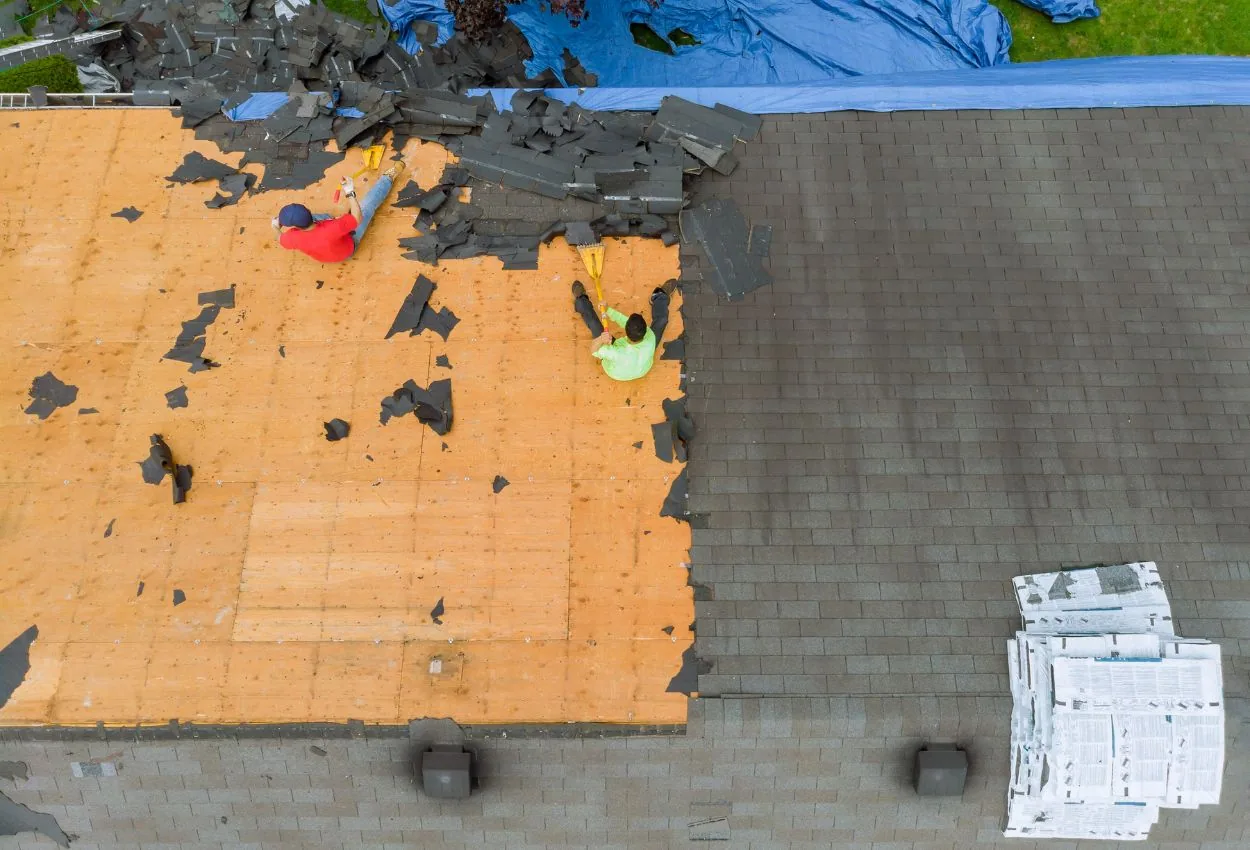
Wet insulation is the most costly finding in a roof survey, because it does not dry out under a membrane. It loses most of its thermal value, adds weight, and spreads corrosion to the deck and fasteners. We find it with an infrared moisture survey and confirm it with core cuts and meter readings, and the result is a map that separates salvageable insulation from material that must be removed.
Not all insulation in a failing roof is wet. In a dry climate, large sections may be sound beneath a membrane that has simply aged out. The scope that holds up replaces only the saturated sections, restores the slope where it was lost and covers everything with a new cover board and membrane. That targeted approach lowers cost without cutting corners that the next survey would expose.
Buildings: tilt-up, flex and hangar roofs
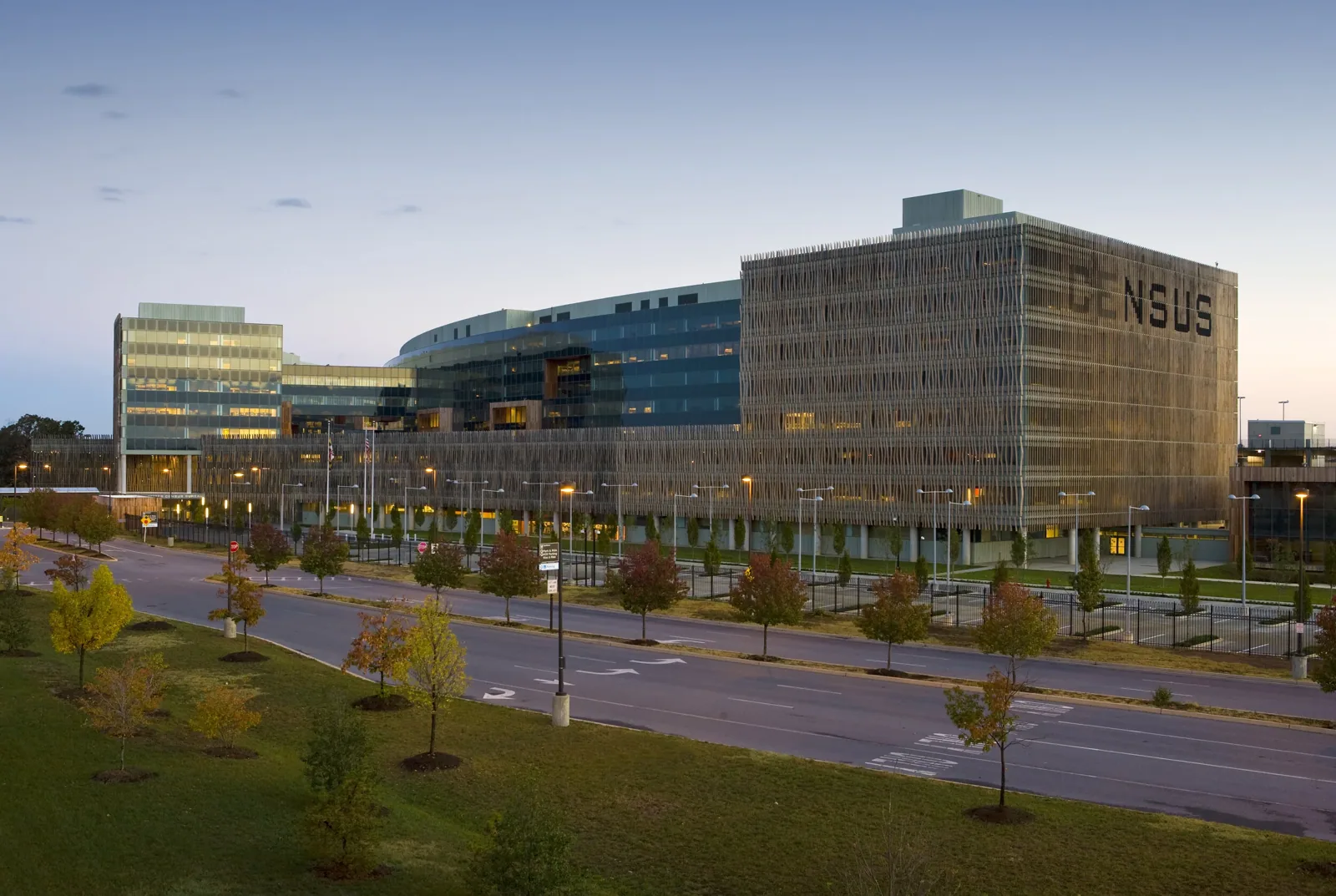
Different building types call for different assemblies. Rancho Conejo Industrial Park combines tilt-up and research buildings with Amazon's 2018 warehouse, and the larger the roof, the more a tapered layout and a firm cover board matter for drainage and traffic. The 160,771 square foot Think Here office and R&D campus belongs to the same buyer that plans a Class A multi-tenant repositioning of Conejo Corporate Campus, and a repositioning of that kind is the moment when owners review roof insulation levels, before the new leases and the new energy-code review arrive together.
At the Camarillo Airport, a county-owned general aviation field with maintenance providers, flight schools and support facilities for the county fire department and sheriff, hangar and shop roofs are common, and the use inside sets the thickness and attachment the assembly needs. The same reasoning drives warehouse roofing and aircraft hangar roofing, where the open interior makes uplift and thermal movement the governing concerns.
Commercial Roofing Questions
Is a cover board worth the added layer?
It usually is, when the roof sees service traffic, ember exposure or an adhered membrane. The board protects the insulation, firms the surface and improves the fire rating of the assembly.
Can insulation be added without replacing the membrane?
Only by lifting the membrane, which makes it a recover or replacement decision and not an add-on. The new layers, flashings and heights all have to be built together.
Does thicker insulation change flashing heights?
Yes, and owners often miss it. Every curb, parapet and door threshold must be raised to keep the same height above the new roof surface, which adds labor and material to the scope.
How can I tell whether insulation is wet without opening the roof?
An infrared survey after sunset shows warm anomalies where wet insulation holds heat, and core cuts then confirm what the scan found. The two together define the area to remove.
Who draws the tapered layout?
The insulation supplier produces the layout drawing from the deck and drain information we send. We check it against the field conditions, so drains, curbs and edges line up with the slope.