Roof Drains, Scuppers and Ponding Correction in Thousand Oaks, CA
Commercial Roofing Services · Thousand Oaks, CA
Sump check, southeast corner: standing water at the drain body thirty hours after the last rain, a ring of dried silt marking where it stood the week before, and a membrane under it that has gone dull and slightly soft. The roof is not leaking, so the finding rarely reaches a work order. It should. Drainage is the part of a low-slope roof that decides how hard every other part has to work, and roof drains and scuppers in Thousand Oaks, CA are asked to do their job in a few concentrated storms, after months of collecting dust, leaf litter and, in fire years, ash. Correcting drainage is often the cheapest way to buy years of membrane life.
Roof Drains, Scuppers and Ponding Correction
Commercial Roofing Services
Call our team
Written findings and options
Thousand Oaks, CA
Ventura and Los Angeles counties
Design: how a flat roof is meant to shed water
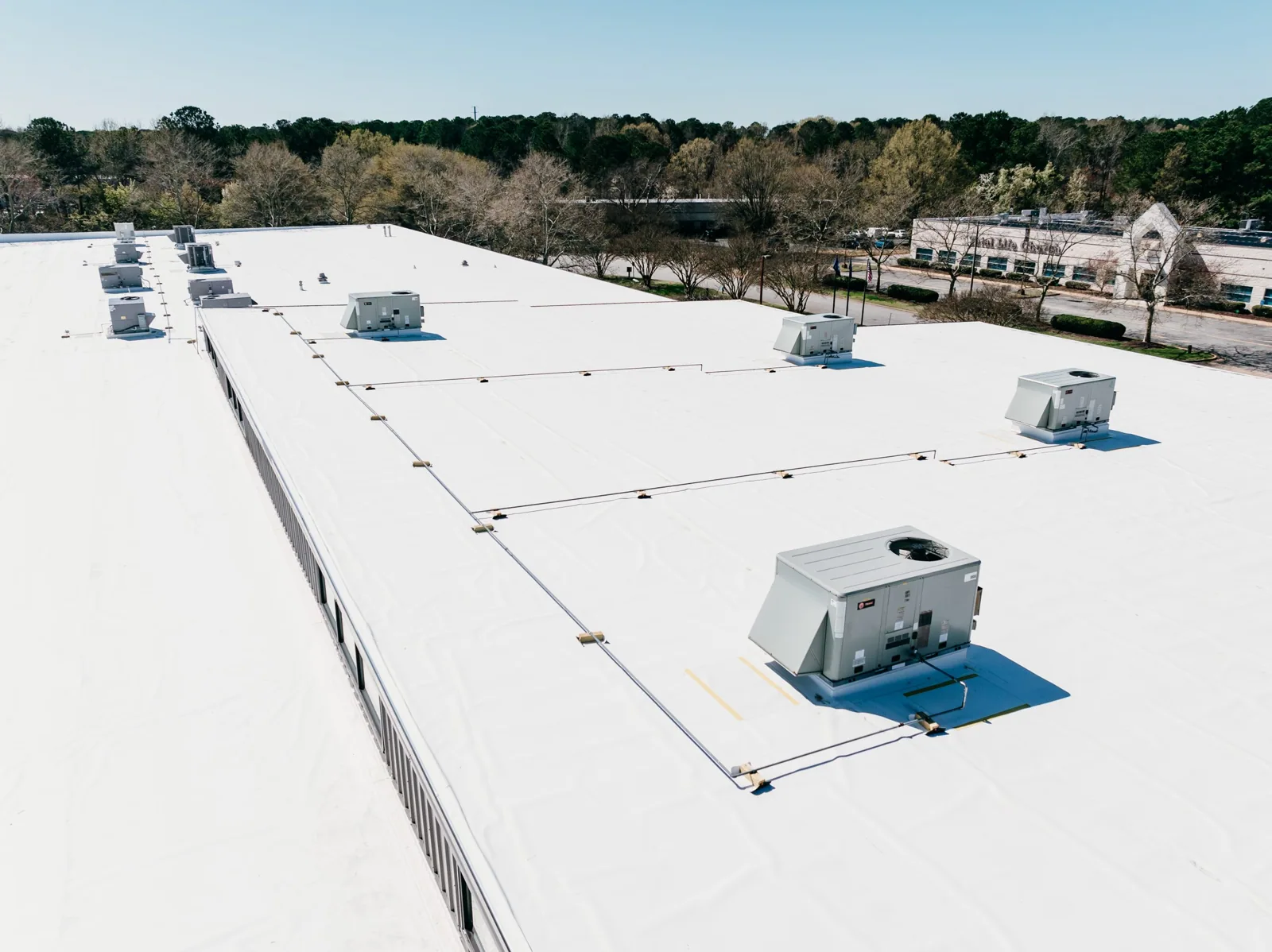
A low-slope roof is not flat. It is built with a slight fall, created by the structure or by tapered insulation, that carries water toward drains or toward scuppers cut through the parapet. Internal drains lead water down through the building, scuppers throw it out through the wall to a conductor head or downspout, and an overflow system provides a second path if the primary one clogs. Each element depends on the others, and a roof whose slope has been altered by deck deflection, added equipment or an earlier recover can hold water even though the original design was sound.
The first step in any drainage correction is to read the roof as it drains today. We mark low areas after rain, measure how long water stays, sketch the drainage pattern on the plan and note which drains and scuppers carry the load. That drawing shows whether the problem is a blocked outlet, a missing slope or a roof that was never given enough drains.
Ponding: what it does and why it lingers
Water that is still standing two days after a rain is generally treated as ponding. It adds weight to a deck, encourages algae and dirt buildup, accelerates the breakdown of the membrane surface, and puts constant stress on seams that were meant to shed water and not hold it. Some manufacturer warranties limit or exclude coverage for ponded areas, so an owner who ignores the condition may also be giving up protection.
Causes fall into four groups: clogged or undersized drains, deflection in the deck, slope lost at the transition between old and new roof sections, and equipment or curbs that act as dams. The repair has to match the cause. Cleaning solves the first, tapered insulation or saddles solve the third, and when the cause is deck deflection, ponding water roof repair may need a structural engineer's review before any slope is rebuilt.
Bodies: drain hardware, strainers and sumps
A drain is more than a hole. The body is bolted through the deck, the membrane is clamped to it with a ring, and a strainer keeps debris out of the pipe. Failures include a loose clamping ring that lets water track under the membrane, a cracked body, a strainer that has been crushed or removed, and a sump that is too shallow to collect water from a wide area. The leak that appears below such a drain is easy to blame on the roof field when the real source is the hardware.
Repairs range from cleaning and re-clamping to removing the old flashing and rebuilding the sump with new membrane, and where a drain is damaged beyond repair we install a retrofit body that fits inside the existing pipe. Added drains are an option where the survey shows too much roof is served by too few outlets, and a leak that starts at one of them is traced the way any commercial roof leak is, from the hardware outward.
Scuppers: through-wall outlets and the overflow path
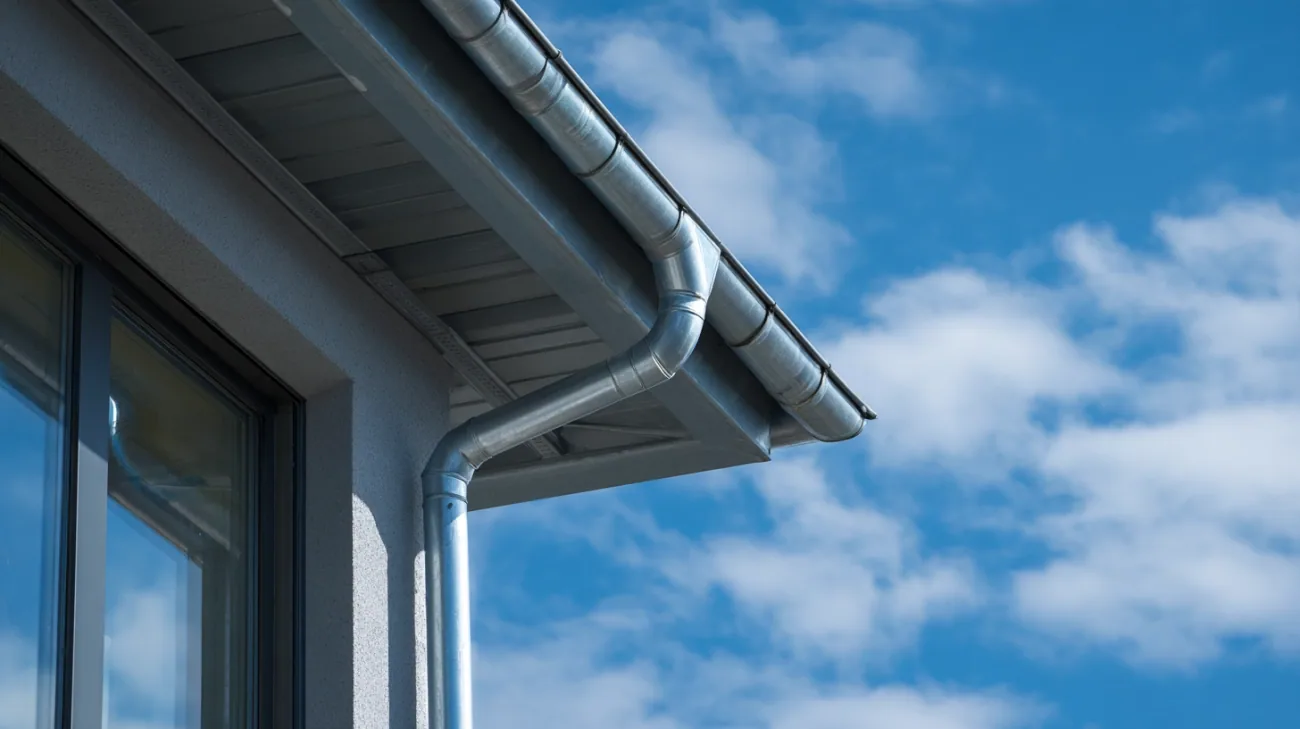
Scuppers fail in a different way than drains. They are openings through a parapet, lined with metal, flashed into the membrane and often fitted with a conductor head and downspout. The liner can rust, the flashing can lose its seal, the opening can sit higher than the roof surface so water pools behind it, and the downspout can be blocked at the bottom. The scupper is also part of the perimeter system that edge metal, coping and gutters make up, so the two are inspected together.
Building codes call for a secondary drainage path on low-slope roofs with parapets, so that water has somewhere to go if the primary outlets clog. Overflow scuppers are set above the main drains and discharge in a place that is noticed, which is a feature: when water runs from one, someone should check the roof.
Crickets: steering water around what is in the way
A cricket, or saddle, is a small tapered section built behind a curb, a chimney, an equipment platform or a parapet corner to divert water that would otherwise stop at the obstruction. Without one, a rooftop unit becomes a dam, and the upslope side collects silt and standing water. Crickets are built from tapered insulation or lightweight fill, covered with the same membrane as the field, and sized to the roof geometry so the slope is continuous. The same tapered products shape the slope of a whole roof, and insulation, tapered systems and cover board decide how well it drains.
Load: few storms, large roofs, heavy debris
Newbury Park receives about ten inches of rain in a year, most of it in a short winter, and Oxnard on the coastal plain receives about 15.6 inches, so the wetter coastal side of the service area carries a larger annual load. A drain that has been dry since spring faces much of its annual duty in a few storms. After a wildfire the problem grows, because ash and burned plant matter pack into strainers faster than ordinary leaves.
Large roofs raise the stakes. A tenant change is a useful point to survey long drainage runs on a large retail roof. Debris, blocked strainers and separated drain flashing can be hidden beneath equipment or stored materials, so access and safe staging need to be part of the survey. For the same reason, big-box retail roofing programs include a drain survey before any membrane work, and a standing preventive roof maintenance visit before the first heavy rain.
On properties along the Thousand Oaks Boulevard corridor, drain layout, roof access and overflow routing vary by building. A pre-rain walk should identify each outlet, clear debris and verify that the overflow path is open before crews leave the roof.
Commercial Roofing Questions
How long can water stand before the roof is considered to be ponding?
Water still present two days after rain, in ordinary weather, is generally treated as ponding. A shorter wet period can be normal for the first hours but not for a full day or more.
Is an overflow scupper required if the main drains are working?
Code calls for a secondary path on low-slope roofs with parapets, because a primary drain can clog at any time. The overflow is there for the day the main system fails.
Do tapered saddles fix ponding between drains?
Often, when the low area is a defined bay and the slope can be rebuilt without hitting a flashing height limit. A wide, shallow deflection may call for added drains instead.
Who clears the drains in a multi-tenant building?
The lease assigns the duty, but the roof bears the consequence either way. Putting drain clearing into a scheduled program removes the ambiguity and leaves a dated record.
Why does the same drain clog every autumn?
Overhanging trees, a strainer with openings too small for the debris, or a sump that sits below the surrounding roof are the usual reasons. Fixing the cause is more effective than clearing the symptom each year.