Edge Metal, Coping and Gutters in Thousand Oaks, CA
Commercial Roofing Services · Thousand Oaks, CA
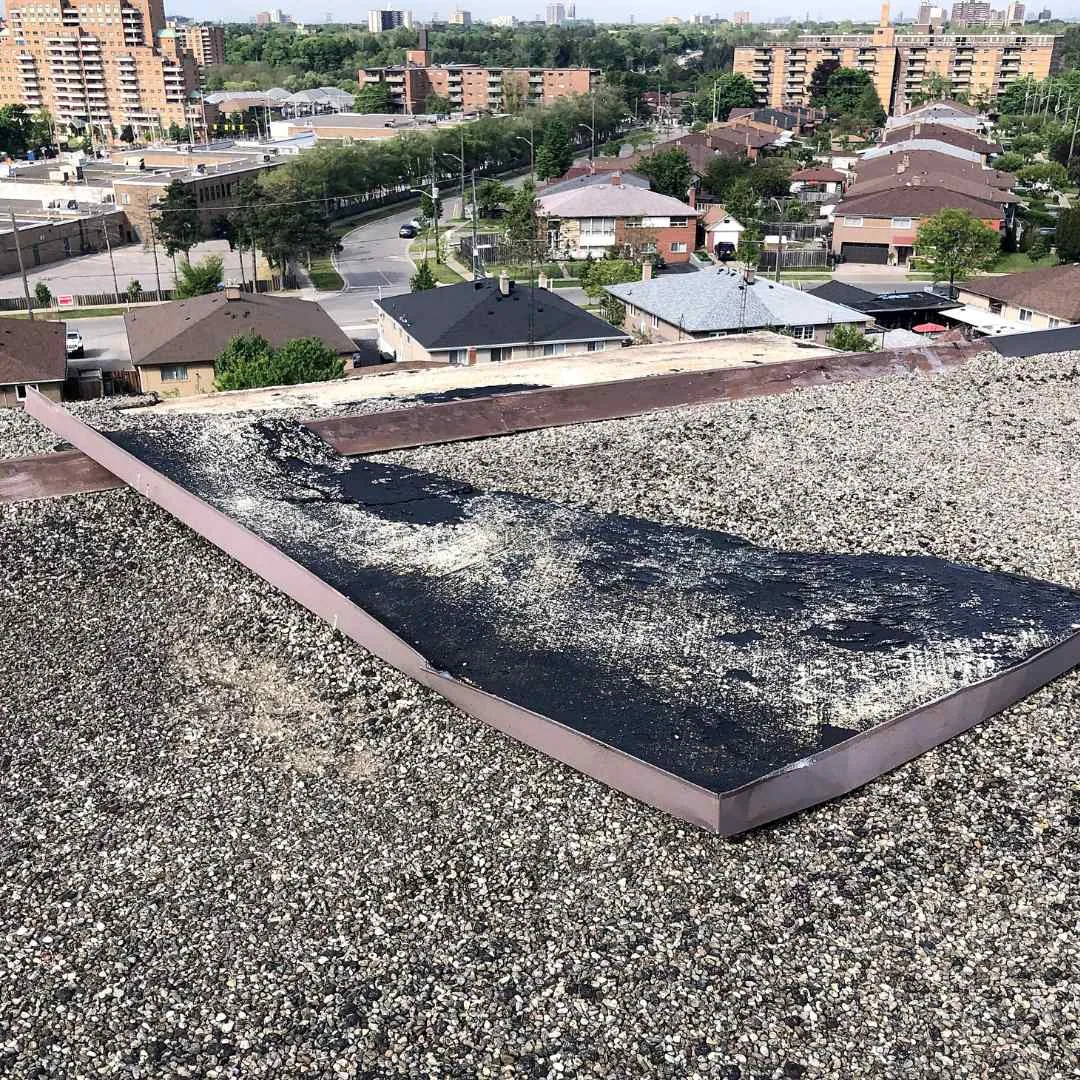
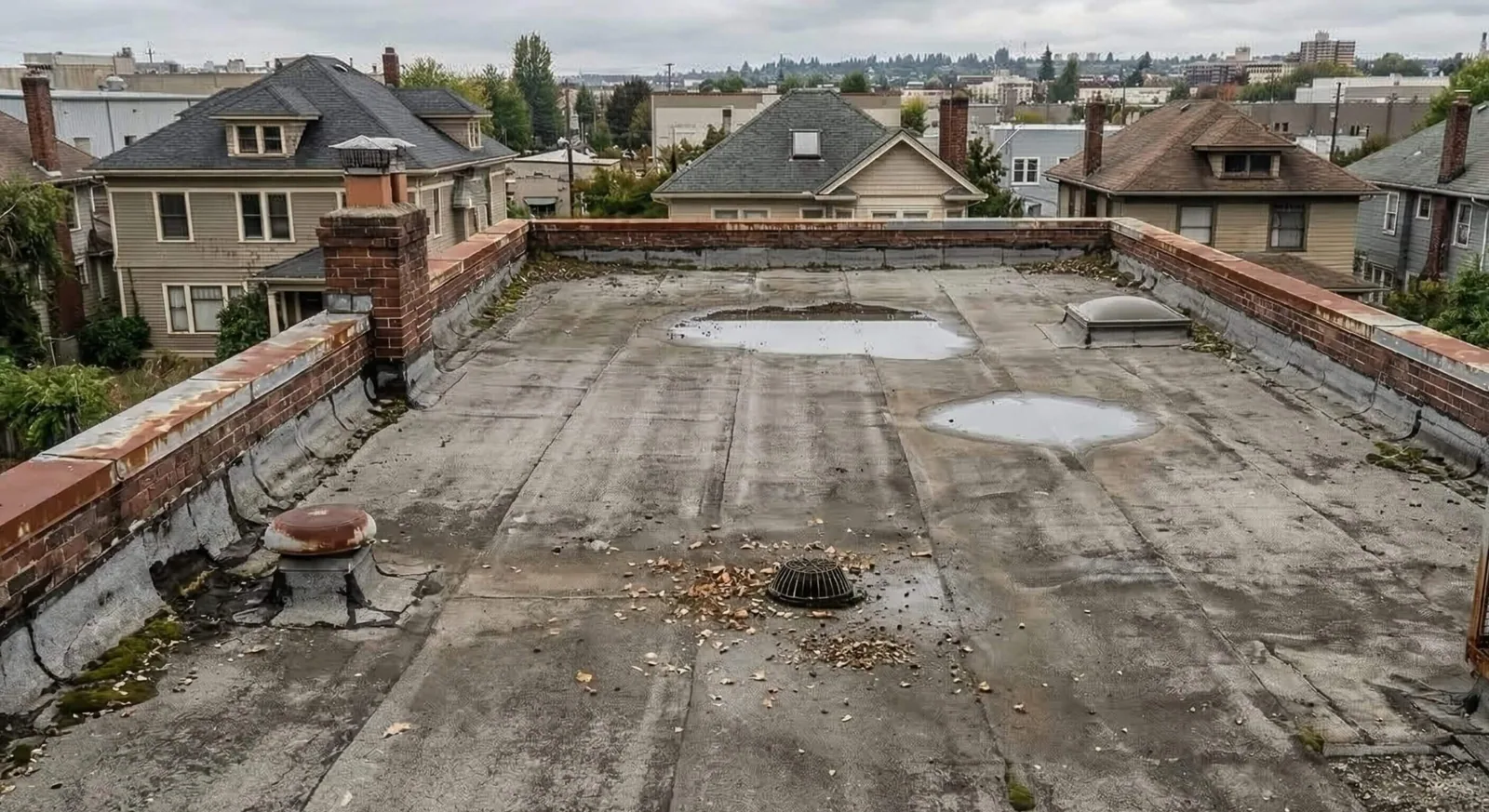
Edge condition, north face: coping joints open at three splice plates, a cleat line visible through a slight bulge in the metal, and the membrane termination behind it chalked white where the sealant has pulled back from the wall. The roof field may be in better shape than any of this suggests, yet the perimeter is where a roof starts to come apart in wind, and it is the first place water finds its way behind the membrane. Edge metal, coping and gutters in Thousand Oaks, CA carry a larger share of the roof's risk than their small footprint suggests, which is why they belong in the capital plan as a line of their own.
Edge Metal, Coping and Gutters
Commercial Roofing Services
Call our team
Written findings and options
Thousand Oaks, CA
Ventura and Los Angeles counties
Components: what sits at the edge of a roof
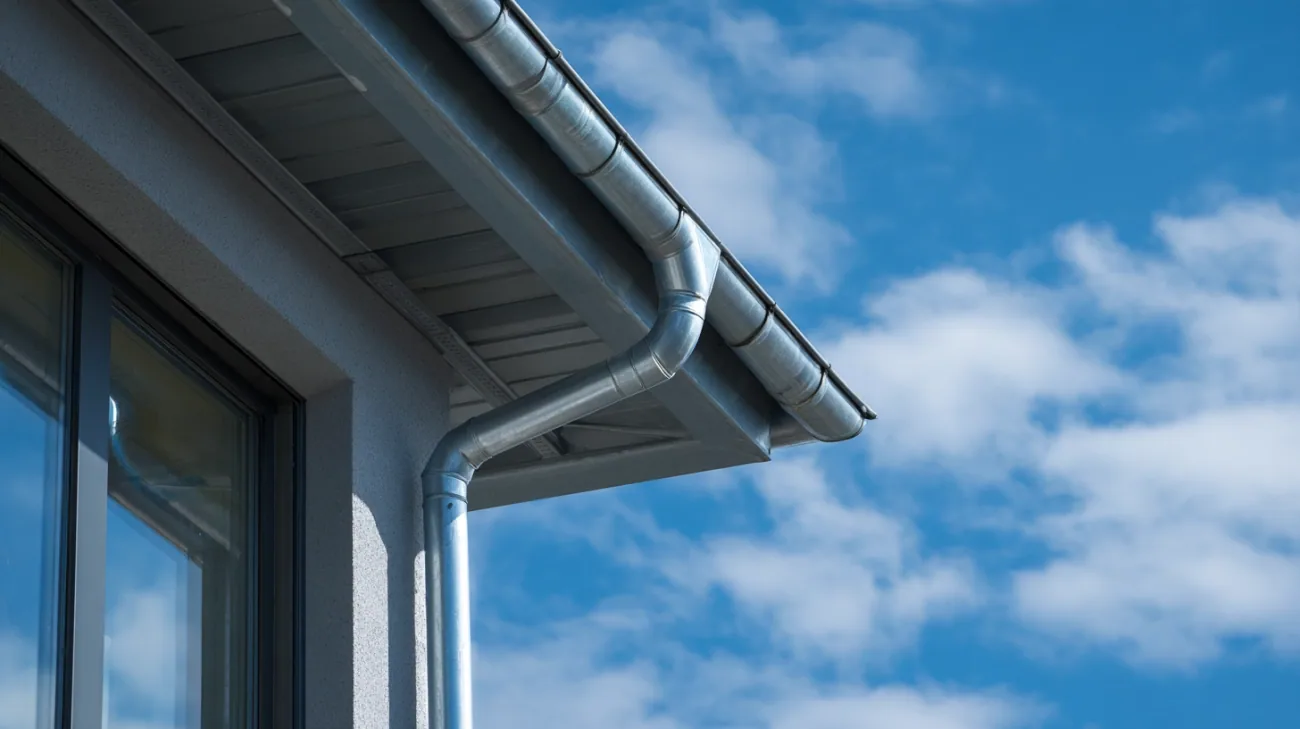
Four assemblies share the perimeter. Coping caps a parapet wall and sheds water away from it. Fascia and gravel stop trim the edge of a roof that has no parapet and hold down the membrane at that edge. Gutters and conductor heads gather the water, and downspouts carry it to grade or into a storm system. Each piece is made from sheet metal formed to a profile, joined at splices and fastened to the building through cleats or continuous bars.
The pieces work as a system with the membrane. The membrane terminates under or behind the metal, sealant closes the joints, and the metal shields the termination from sun and weather. When any one part fails, the others are exposed. A split in coping admits water into the wall. A loose fascia lets the membrane edge flap in the wind. A downspout that is blocked at the base fills the gutter until it overflows against the wall.
Wind: why the perimeter lets go first
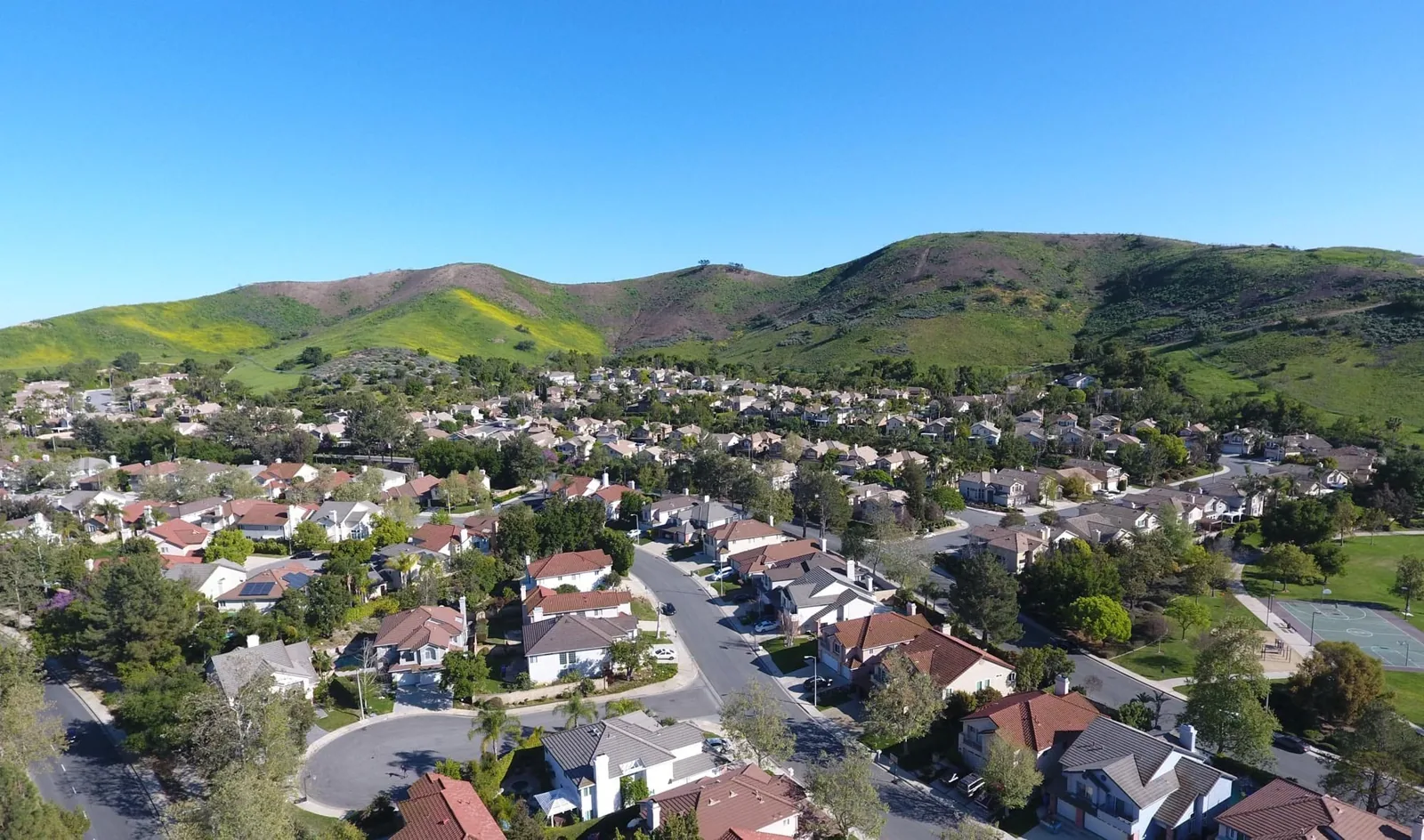
Air moving over a roof creates suction, and suction is strongest at edges and corners. That is why damage after a Santa Ana event can start with peeled coping or fascia, and then spreads inward under the lifted membrane. Santa Ana winds can exceed forty miles an hour, and the November 2024 Mountain Fire came with gusts forecast above sixty-five, so edge metal in this valley is tested by real events and not by theory.
The defense is attachment. Continuous cleats and heavier-gauge metal, fastened into sound blocking and tested to the recognized ANSI/SPRI edge standard for the design wind speed, hold where a nailed-on strip will not. When we replace metal we check what lies behind it, because new coping fastened into rotted wood fails the same way the old one did. When a perimeter has already let go, the first job is wind damage roof repair to the lifted membrane behind it, followed by a walk of the whole roof, the way any storm damage roof repair begins.
Embers: gutters as the first place fire lands
In a wildfire, a gutter is a collection basket. Dry leaves and needles settle in it between maintenance visits, and a wind-carried ember that lands in that material can ignite it right at the roof edge. The Woolsey Fire of November 2018 burned into Thousand Oaks and Newbury Park as well as Oak Park, Agoura Hills and Westlake Village, and the January 2025 Kenneth Fire put Agoura Hills and Oak Park under evacuation warnings again, at the east edge of the Conejo Valley, so ember exposure at the roof edge is a recurring condition here and not a rare one.
Metal gutters and downspouts are noncombustible, which is why they are preferred over vinyl in exposed areas, and a screen or guard sized for the debris on site lowers the fuel load. Clearing is what counts. A guard that is left alone fills with fines, and a program that clears gutters before the dry, windy months removes the fuel and helps the water path stay open for the first rains.
Metals: finish, movement and coastal air
Material choice depends on exposure. Galvanized and coated steel are common and economical, aluminum resists rust and is easy to form, and copper and stainless steel serve where appearance and life span justify the cost. The wrong pairing causes trouble: dissimilar metals in contact corrode each other, and fasteners must be compatible with the metal they hold. Finish matters as much as metal, since painted surfaces fade and chalk in the same sun that ages the roof.
Thermal movement is the second concern. A long run of coping or gutter expands and contracts through the day, and the valley's summer heat widens that swing. Expansion joints and slotted fasteners let metal move without tearing the sealant or splitting at the splice. Near the coast the issue changes. For properties in Malibu, the survey still needs to document the actual metal, coating and fastener condition before a repair is specified.
Campuses: perimeters people walk beneath
On a campus, edge metal is visible and carries a safety consequence. The 290-acre main campus of California Lutheran University has 41 buildings, among them the 96,000-square-foot Gilbert Sports and Fitness Center. A loose sheet of coping above a walkway creates a safety concern, while a blocked gutter can spill at an entry during rain.
The way to handle a campus is by survey: walk every building, record edge condition on each face of each building, rank the findings by consequence, and schedule the work between terms. For a college or a corporate campus, perimeter work is often the first item in a phased plan, the way it leads a college and university roofing program.
Replacement: profile, tie-in and drainage
Replacing edge metal is a roofing task and not only a sheet-metal task. The old metal comes off, the termination is inspected, the substrate is repaired, and the membrane is tied into the new metal with compatible flashing before the cap goes on. Pieces are formed to match or improve the existing profile, joints are sealed and lapped to shed water, and downspouts are connected to a clear path away from the foundation. Where flashing behind the metal has failed, the repair goes the way flashing failure repair does, replacing the substrate and fastening and not only the sealant, and gutter outlets tie into the same roof drains and scuppers that carry the field's water.
Commercial Roofing Questions
Does a parapet need metal coping, or can the membrane cap the wall?
Membrane can cap a parapet, but metal coping shields it from sun, foot traffic and mechanical damage, and it sheds water off the wall. The choice depends on the parapet width, the wall material and the expected exposure.
How can I tell edge metal is close to failing?
Look for open joints, bulges along the line of the cleat, loose or missing fasteners, staining down the wall and metal that rattles in a breeze. Any of these is worth a closer look before the next windy week.
Are gutters worth keeping on a commercial building in a fire area?
Metal gutters are, provided they are kept clear. The risk lies in the debris they collect, not in the gutter, so a clearing schedule matters more than the choice of style.
Will new edge metal affect my manufacturer warranty?
Often it is a condition of the warranty, since manufacturers specify tested edge details for their membranes. Sending us the warranty before the work starts lets us match the required detail.
Can edge metal be replaced one side of the building at a time?
Yes, as long as each phase is tied into the membrane and sealed before the crew leaves for the day. Phasing helps an occupied building by limiting the area of roof edge that is open at once.