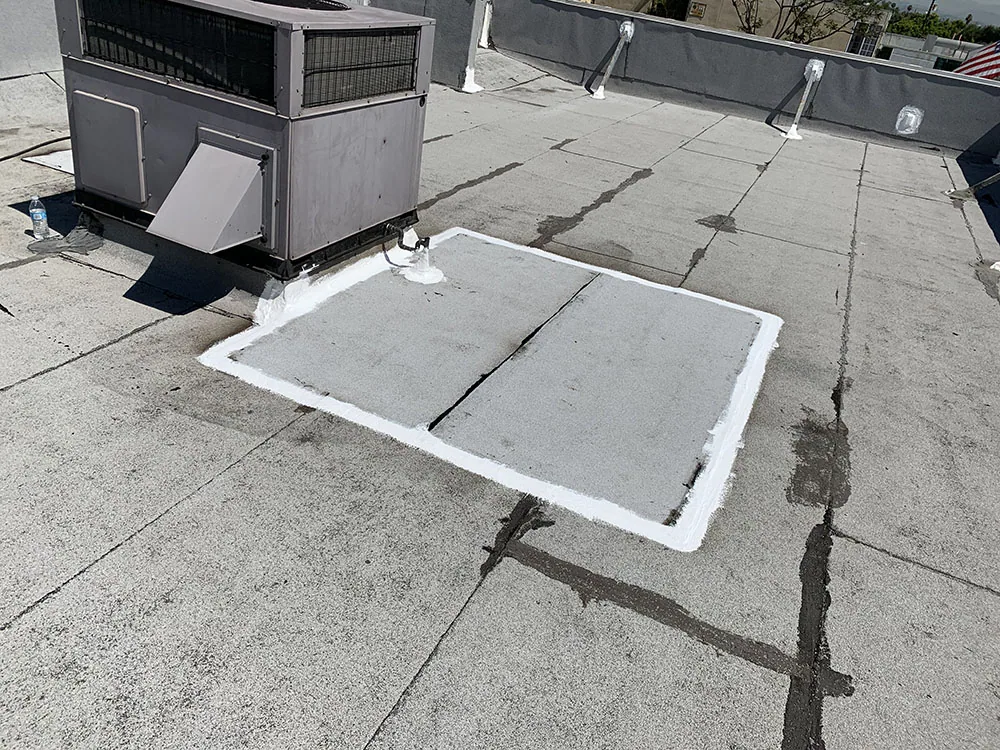
Flashing Failure Repair in Thousand Oaks, CA
Roof Damage Repair · Thousand Oaks, CA
Termination check, north parapet: the base flashing has pulled away from the wall along its top edge in a long, shallow gap, and the bead of sealant that was meant to close it has shrunk to a hard brown thread. The field membrane a few feet away is intact and still has years of service in it. That mismatch is the usual signature of flashing failure, and it matters to the owner because the details of a roof are consumed faster than its surface. Flashing failure repair in Thousand Oaks, CA pays for itself at the first open termination, since a gap the width of a pencil is enough to wet the insulation behind a wall.
Flashing Failure Repair
Roof Damage Repair
Call our team
Written findings and options
Thousand Oaks, CA
Ventura and Los Angeles counties
Junctions: where a roof turns up and stops
A membrane is a continuous sheet in the field, and flashing is the place where that sheet turns upward at a wall, a curb or a pipe. It relies on a chain of parts: the membrane itself, the adhesive or weld, the substrate behind it, a termination at the top, and counterflashing or sealant over that. Break any link and water finds its way behind the rest. Because the chain is vertical and exposed, it is the first thing to show wear on a roof that is otherwise sound.
The number of junctions depends on the building, not on its size. A structure that changes height puts lower roofs against taller walls, and each of those meetings is a termination worth inspecting. At a public-facing property in the downtown Thousand Oaks area or along the Thousand Oaks Boulevard Corridor, the survey still lists each wall-to-roof junction by roof zone, so the owner can see which terminations need repair and which remain sound.
Movement: shrinkage, heat and the daily cycle
Single-ply membranes shrink as they age. The sheet draws back from the wall and drags the flashing with it, loading the top termination until a fastener lets go or the sealant opens. Inside corners are the worst case, where a stretched flashing bridges the angle between wall and deck with nothing under it. A flashing that looked tight on installation can end up hanging in air within a few seasons, and the first rain simply finds the gap.
Heat drives the cycle. Surfaces facing south and west take the most sun, and heat events are not rare here: forecasters have posted extreme heat warnings across the valleys of both Ventura and Los Angeles Counties. Roof surfaces run hotter than the air. Every afternoon the flashing expands and every night it contracts, and sealant that was applied as a repair dries out and cracks at the joint it was meant to protect. That is why heat and UV damage and flashing failure so often appear on the same wall, and why a bead of caulk is a maintenance item, not a repair.
Penetrations: boots, curbs and equipment that moves
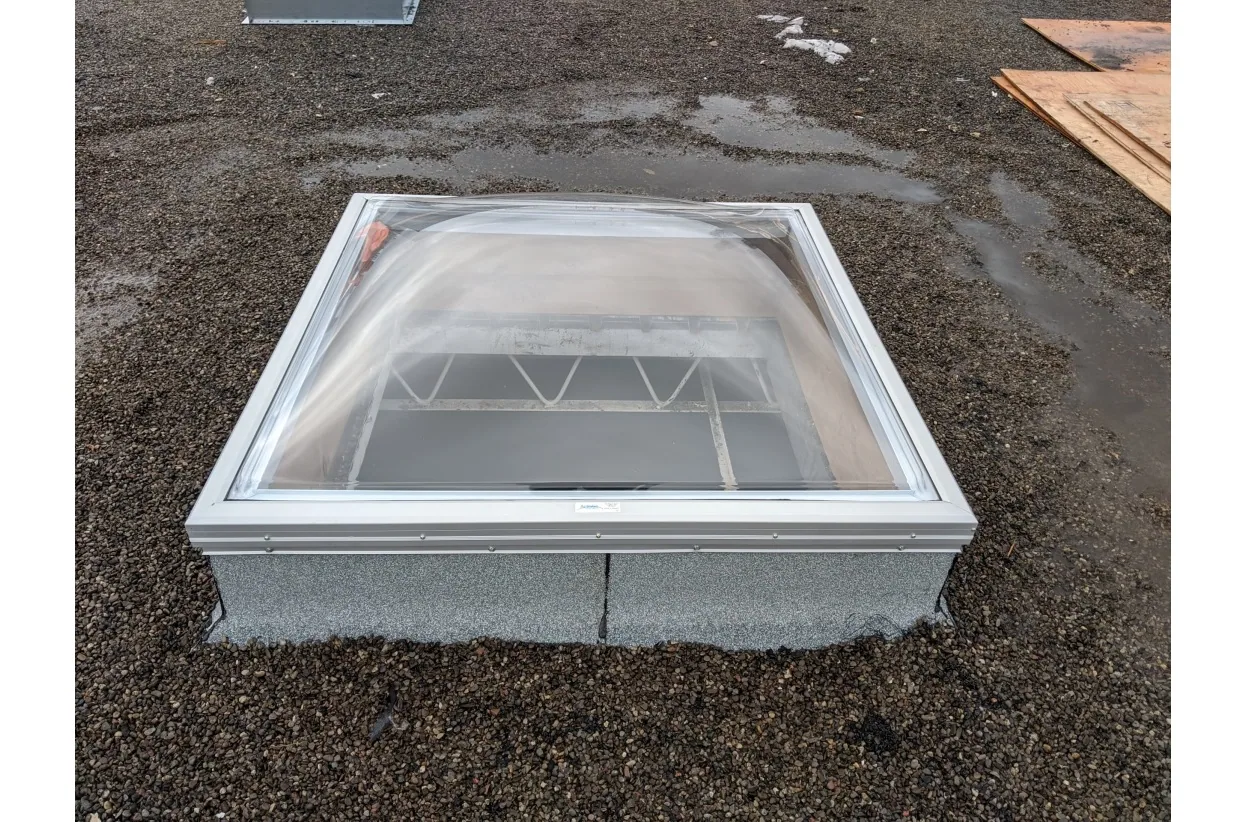
Pipes, conduit, skylight curbs and equipment curbs each carry their own flashing, and each ages at its own rate. Los Robles Hospital opened in 1968, but that date does not establish the age of any current roof section. We inspect each boot, pocket and curb in place, then match its repair to the membrane, receiving surface and movement at that interface. Records can guide the review, but the visible assembly and confirmed backing set the useful repair boundary.
Equipment adds motion. Vibration and wind loads can flex curb flashing until a termination pulls free; the actual unit and attachment need inspection before the repair method is chosen. We log skylights, pipes and conduit during a survey because skylight and penetration flashing needs its own inspection, and we coordinate with rooftop equipment curbs and supports when a unit replacement is scheduled, so the curb and roof connection can be reviewed before equipment returns to service.
Diagnosis: roof flashing or wall leak
Water that appears at a wall line does not always enter at the roof. Cracked stucco, a failed window head, an open control joint or a missing wall cap can all deliver water to the same ceiling stain. A contractor who replaces flashing on a wall that is the real source has spent the owner's money and left the leak. We test in stages, starting low on the wall and working upward, and wetting the flashing last, so the point where water first appears identifies the entry.
Findings go on the roof plan with photographs and probe results. When the cause lies in the wall, we say so and separate the scope, because the facade trade and the roofing trade should each be paid for the work that fixes their own detail. Where the cause is the roof, the same record supports commercial roof leak repair and gives the building file a dated reference for the next survey.
Repair: substrate first, termination second, sealant last
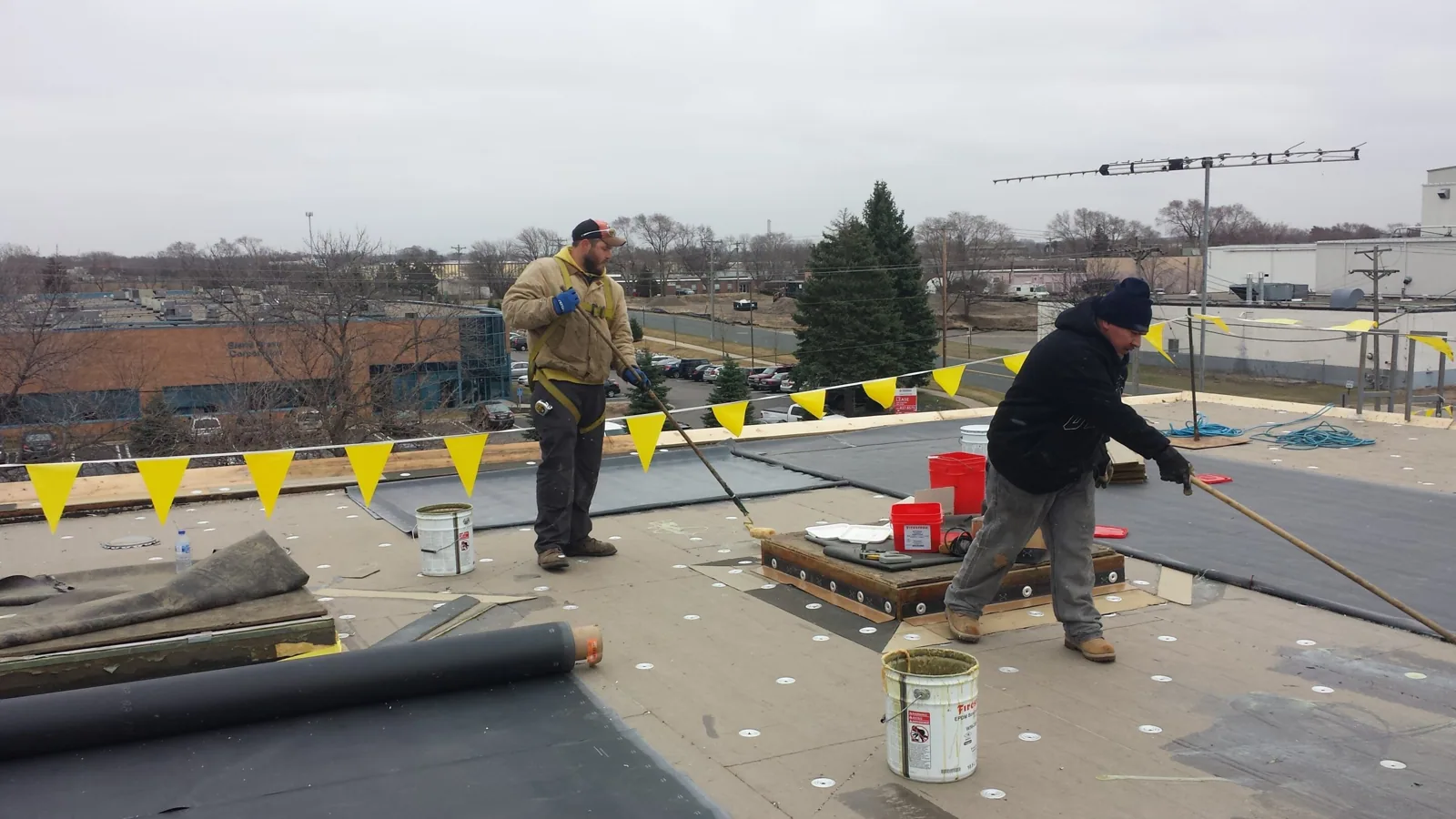
A lasting repair works from the wall outward. The old flashing is removed back to sound material, the nailer and cant behind it are checked, and any wet or crumbled substrate is replaced. New flashing is cut from the same polymer as the field, so a TPO roof is flashed with TPO and heat-welded, and the top edge is mechanically terminated with a bar before counterflashing or a sealant joint closes it. Sealant is the last layer, never the structural one.
Liquid-applied flashing suits tight, irregular geometry such as a cluster of small pipes, as long as the surface beneath is clean and compatible. Prefabricated corners shorten field seams where leaks start. Each completed detail is photographed before and after and logged against its location, so the survey can show which junctions fail repeatedly. After a wind year, the same log pairs with wind damage roof repair findings to show which terminations were already marginal before the event.
A useful closeout records the repaired junction, the substrate condition, the termination detail and any adjacent areas that were not opened. That lets the next inspector distinguish a completed repair from an unexamined transition and focus follow-up where it can answer a real question.
Commercial Roofing Questions
Can failed flashing just be recaulked?
Only as a stopgap. Cracked sealant is a symptom of movement or of a poor termination behind it, and a new bead fails the same way. A lasting repair removes the loose flashing, restores the substrate and re-terminates the top edge with a fastened bar.
Why does flashing fail before the rest of the membrane?
It carries the heaviest stress on the roof. Flashing stands vertical in direct sun, is pulled by membrane shrinkage and moves with every temperature swing, while the field lies flat and takes less abuse. Details routinely age out years ahead of the surface.
How can I tell whether a leak is the flashing or the wall?
A staged water test answers it. Wetting the wall below the roof line first, then the wall above, then the flashing itself shows which step produces the interior drip. Leaks that appear only in wind-driven rain often point to the wall.
Does flashing need to change when a rooftop unit is replaced?
Usually, because the new unit may sit on a different footprint and the old curb flashing has aged beyond reuse. Setting the crane date and the flashing work together means the roof is opened once and closed once.
What drives the cost of a flashing repair?
Linear footage of wall, the condition of the substrate behind the flashing, access for lifts or swing stages, and whether the membrane welds easily to new material. A short run on a sound wall is a modest line item, while a long run with decayed nailers behind it is not.