Heat and UV Roof Damage Repair in Thousand Oaks, CA
Roof Damage Repair · Thousand Oaks, CA
Sample result, south-facing slope: a gloved wipe lifts a visible film of white chalk, the surface beneath it is dull and faintly crazed, and a strip of sheet bent over a finger crackles where it was once supple. On a Rancho Conejo Industrial Park building those four observations add up to one conclusion. The membrane is still watertight, but its protective skin is spent on the exposed slopes, and the remaining service life is shorter than the building's capital plan probably assumes. Heat and UV roof damage repair in Thousand Oaks, CA is a planning discipline as much as a repair one, because the damage is cumulative and its most useful output is a date.
Heat and UV Roof Damage Repair
Roof Damage Repair
Call our team
Written findings and options
Thousand Oaks, CA
Ventura and Los Angeles counties
Mechanism: what sun and heat do to each sheet
Ultraviolet light breaks down the polymers and additives that keep a membrane flexible, and heat speeds every chemical reaction involved. The failure looks different on each system. TPO chalks and loses elongation at the surface. PVC loses plasticizer, stiffens and shrinks, pulling at its flashings. EPDM crazes and hardens, and its black surface absorbs the most heat. Modified bitumen sheds the granules that shield the asphalt beneath, and acrylic and silicone coatings erode in thickness until the substrate shows through. Coated metal fades and chalks, and its sealants dry and split at the laps.
These are surface conditions first and structural conditions later, and the interval between the two is the owner's window. A roof that is chalking but still flexible can be restored. A roof that is brittle through its thickness cannot. We find the line by testing and not by looking, because the surface can appear much the same to the eye in both states.
Climate: a valley with more than one thermal load
Summer days in Thousand Oaks typically sit in the 70s and 80s Fahrenheit, which sounds mild. Yet forecasters in the Los Angeles and Oxnard area have posted Extreme Heat Warnings reaching the valleys and coast of both counties, and Woodland Hills recorded 121 degrees in September 2020, the highest temperature on record for Los Angeles County. A roof surface in that heat runs far above the air temperature, and the swing from a hot afternoon to a cool night works every seam and flashing on the building.
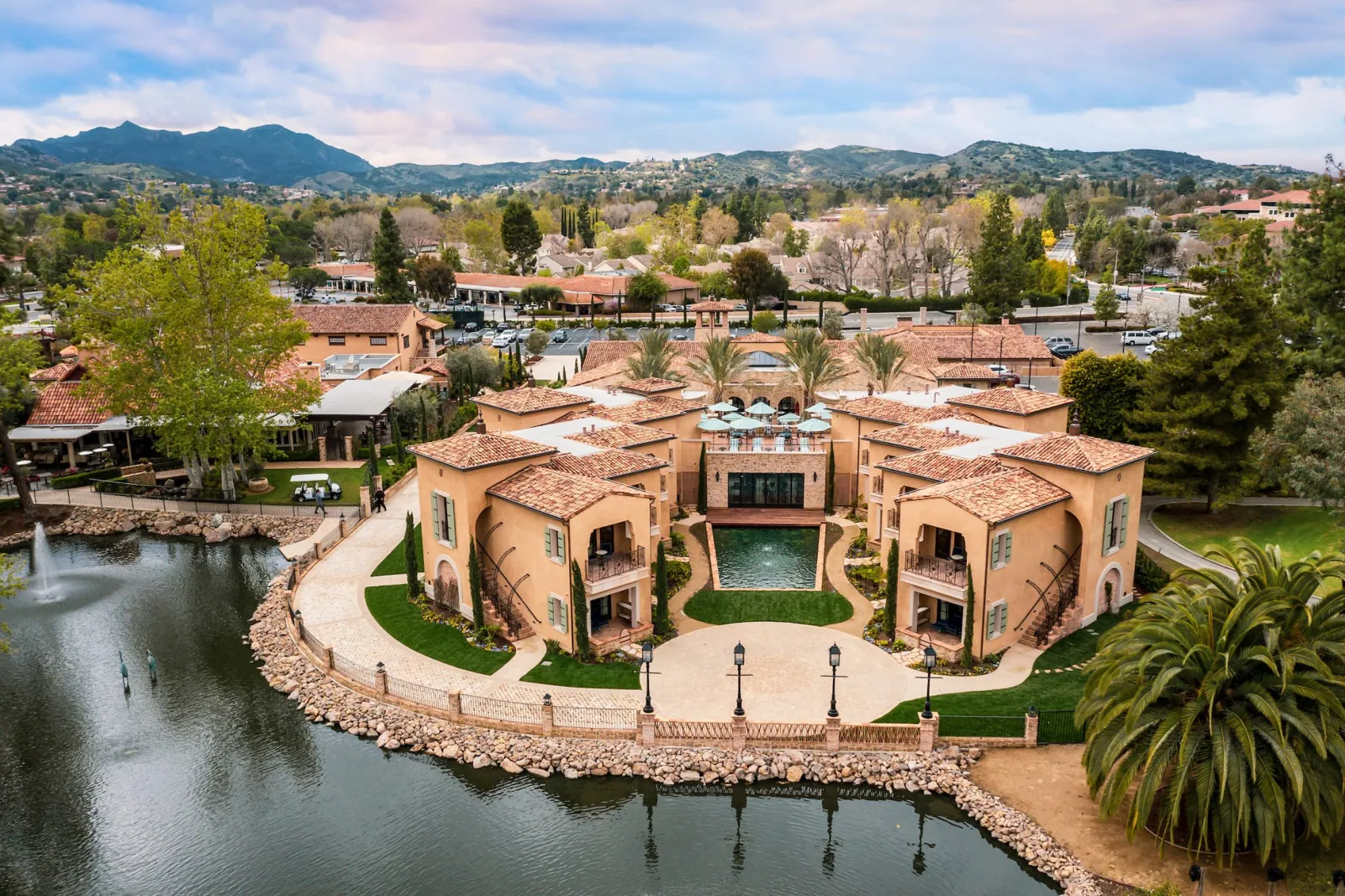
The valley is not uniform. A portfolio that includes coastal Westlake Village offices and inland Newbury Park industrial buildings should not assume one aging curve for every system; inspection records each building’s own exposure and condition. Dry Santa Ana days, with humidity below ten percent, add desiccation to the load. A portfolio that includes Westlake Village offices and Newbury Park industrial buildings should not assume one aging curve for both, and the condition index should record each building's own.
Indicators: reading a surface with more than the eye
We use a short list of tests. A wipe test shows chalk, and a photograph with a scale marker records how heavy it is. Magnified inspection finds crazing and hairline cracking, particularly at flashings, where sun and movement act together. A bend test on a small sample from a sheltered area, compared with one from an exposed slope, shows how much flexibility has been lost. Where an owner wants firm numbers, sample coupons can be sent for laboratory testing of elongation and tensile strength. Reflectance matters too, since a dirty or aged white roof sheds less heat and the cooling load rises with it.
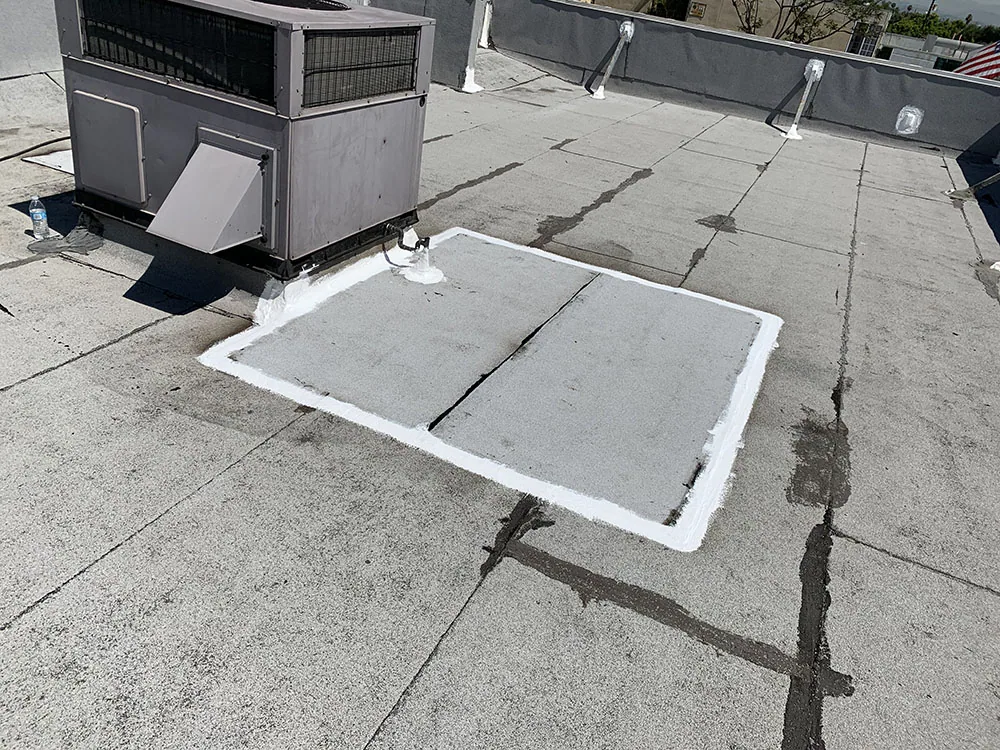
The results are mapped by exposure. South and west slopes, the ground beside rooftop units that blow hot exhaust, and flashings facing the sun are the first places to look. We report findings by area, not as a single grade, because a roof ages unevenly: the south slope may be at the end of its life while the north slope has years ahead. Failing laps and terminations found along the way are logged for seam failure repair and flashing failure repair as separate items.
Horizon: turning findings into a planning number
A survey is only useful if it ends in a date. For each roof area we assign a condition index, a range of remaining service life and a recommended action year, and those numbers go into the reserve study in the same format every year. An owner of several buildings can then rank them by replacement horizon and see which roof will need money first, instead of discovering it from a leak. A scheduled commercial roof inspection repeats the measurements, so the aging curve of each building builds from real data and not assumption.
Timing changes cost. Restoring a flexible, dry roof is usually far less work than replacing it, and a roof that waits past the brittle stage loses that choice. If water has reached the insulation by then, the scope grows from a surface treatment to a tear-off. For the tilt-up and R&D buildings in the Rancho Conejo Industrial Park, where the majority of the city's industrial businesses operate, the practical advice is to survey before the budget cycle opens, while every option is still available.
Options: restore, recover or replace
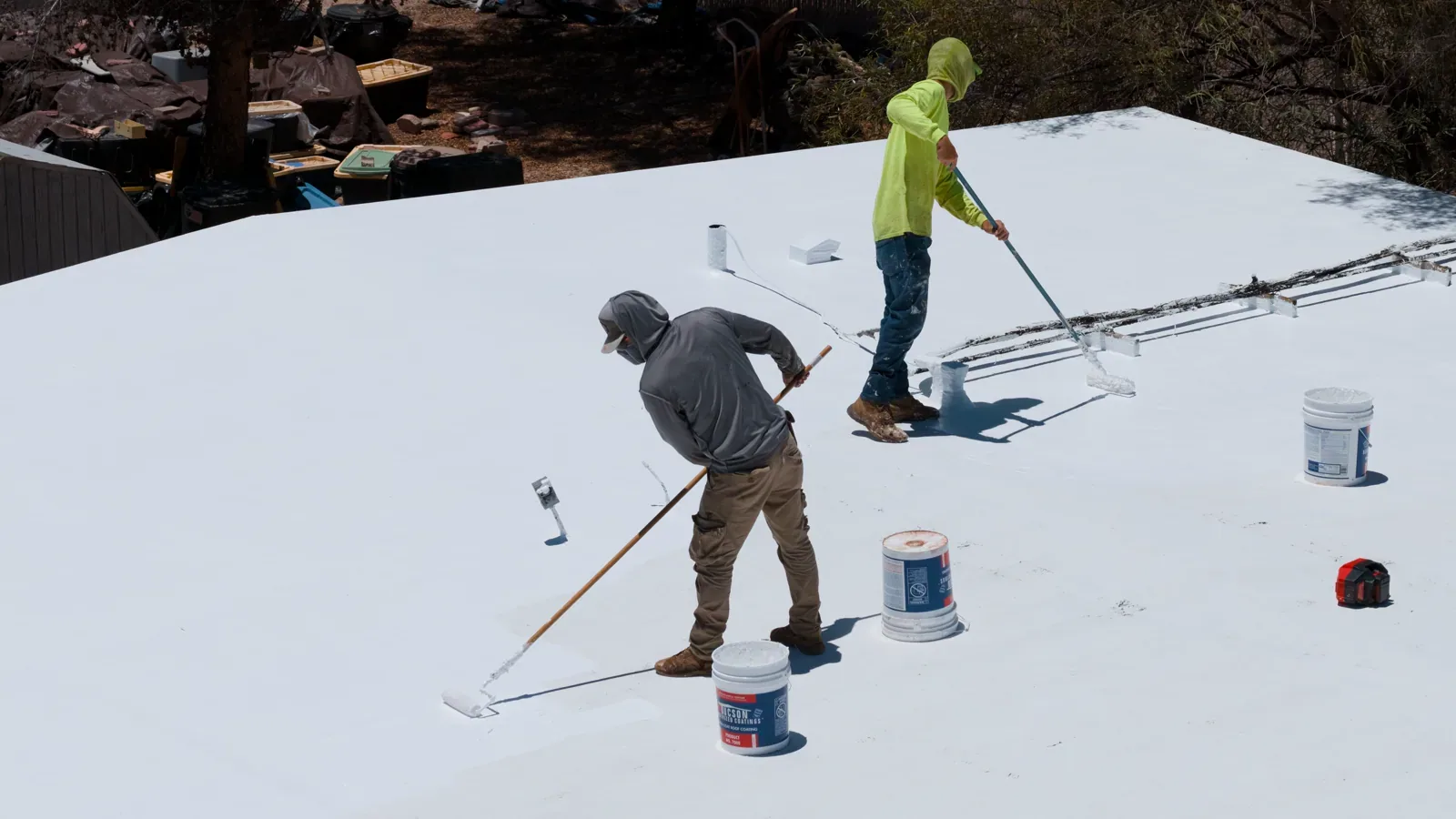
When the sheet is sound, clean and dry, a reflective roof coating renews the surface, lowers its temperature and delays replacement, and it is the usual answer for a roof that is chalking but still flexible. When the surface is brittle but the insulation is dry, a recover may be an option, and when moisture is present, replacement is the only repair that resets the clock. The 2025 California Energy Code applies to permit applications from January 2026 and touches cool roof standards, so we check any proposed scope against it before the specification is written.
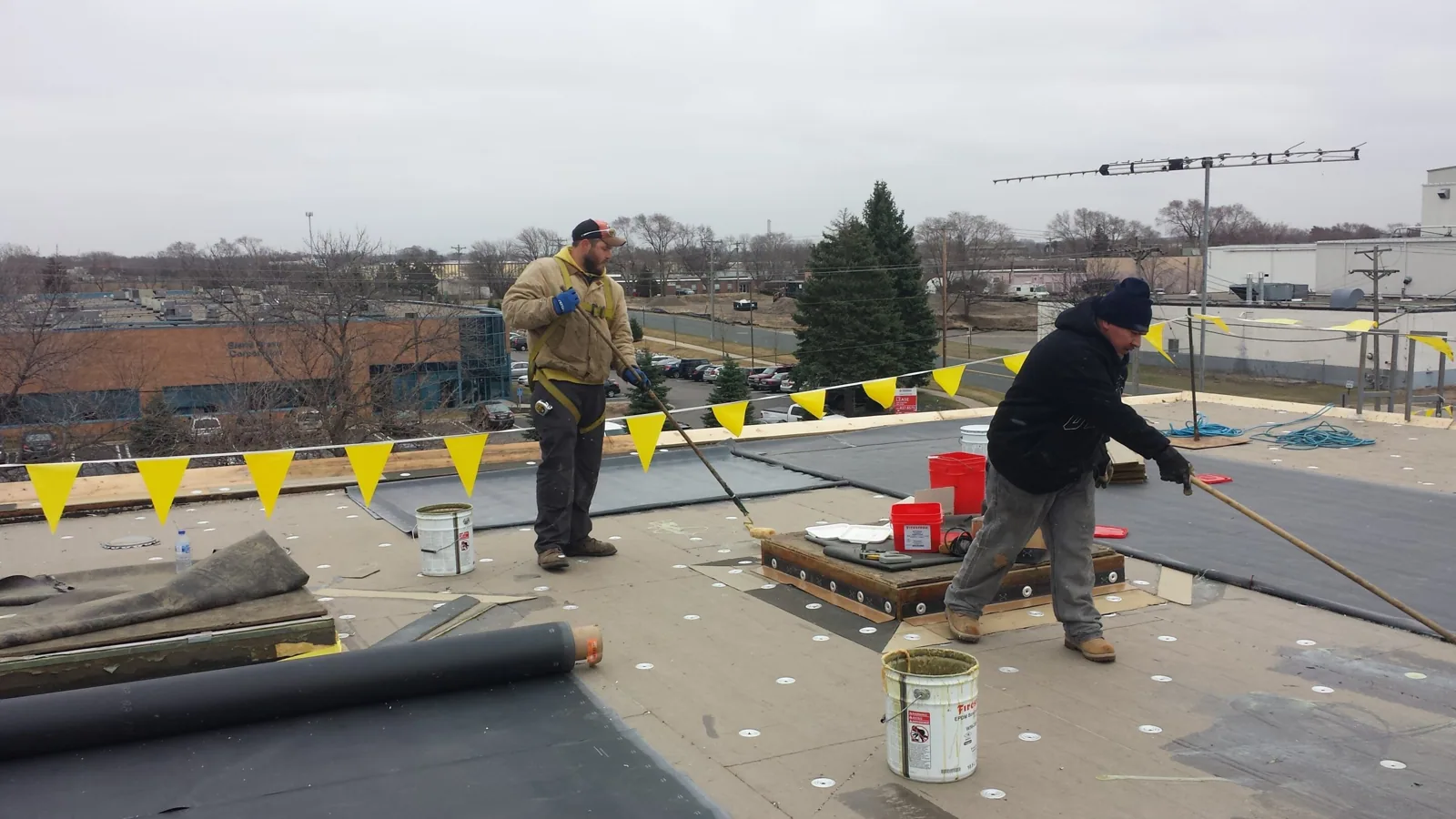
Reflective surfaces are also a design tool. A white membrane or coating reduces surface temperature and the load on rooftop cooling, which helps a building where air conditioning is a major operating cost. Specifying a reflective membrane during a reroof, as in cool roof installation, makes the same gain permanent. When a roof has passed the point where either is practical, the file should say so plainly and set out the case for commercial roof replacement in the next budget cycle.
Commercial Roofing Questions
Does chalking mean the roof is finished?
It does not, by itself. Chalk is a surface condition, and many roofs chalk for years while the sheet beneath stays flexible. A bend test on a sample and a probe of the seams show whether the material still has life, and that is the evidence to use.
Does a white membrane stay cool as it ages?
Less so each year. Dirt, ash and surface erosion lower reflectance, so the roof runs hotter and the cooling load rises. Cleaning helps modestly, and a reflective coating restores more, provided the sheet underneath is sound.
Which side of a building should be surveyed first?
The south and west slopes, plus any area beside exhaust from rooftop units. Those surfaces take the most sun and heat, so they show age first and set the pace for the rest of the roof.
How early should a roof be coated?
Earlier than most owners expect. A coating works best on a clean, dry, flexible sheet with sound seams, and that state ends once the surface turns brittle or the insulation takes on water. A survey well ahead of the planned replacement date leaves room to choose.
Will insurance pay for heat and UV wear?
Gradual wear from sun and heat is commonly excluded as age, so the policy wording matters. A dated condition report lets an owner budget for it instead of hoping to claim it. Sudden events such as fire are handled differently.