Seam Failure Repair in Thousand Oaks, CA
Roof Damage Repair · Thousand Oaks, CA
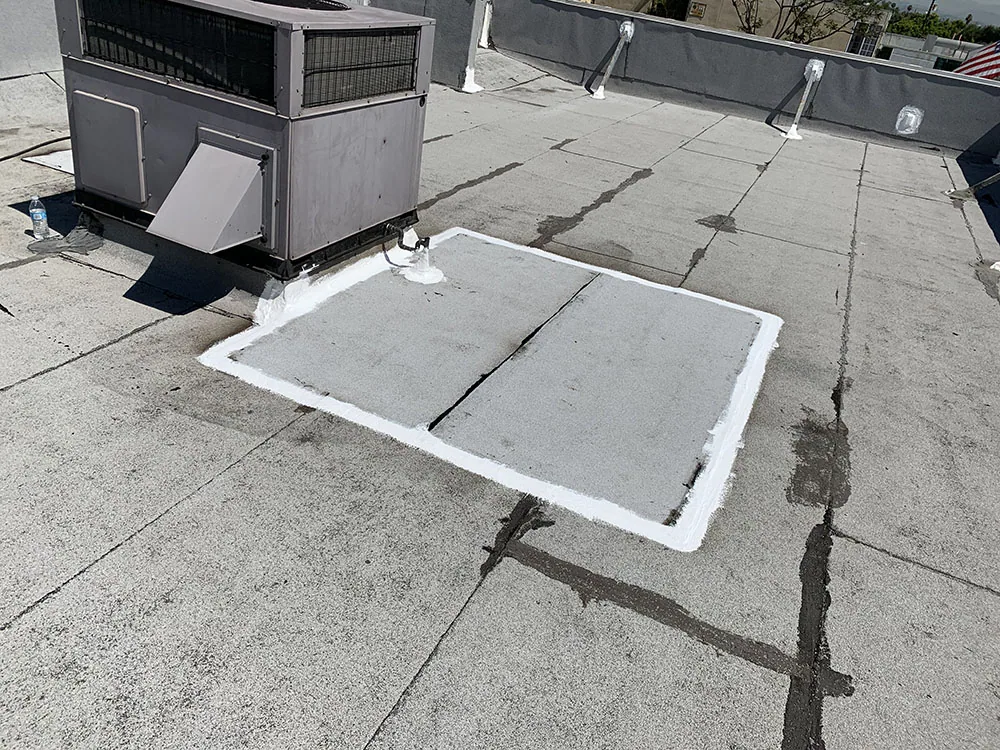
Seam map, east bay: one continuous lap has opened along most of its length, and the lower sheet's edge looks as clean as the day it was cut, with no weld residue on it. A seam that clean never bonded. On a single-ply roof in Thousand Oaks, CA that finding changes the conversation from age to workmanship, and it tells the owner that the open length is a defect that came with the roof and will keep growing. Seam failure repair is worth planning as a scope because open laps are the most common way a sound field membrane lets water in, and the cost of closing them rises with every season of delay.
Seam Failure Repair
Roof Damage Repair
Call our team
Written findings and options
Thousand Oaks, CA
Ventura and Los Angeles counties
Types: how each system joins one sheet to the next
Seams join one sheet to the next, and the method depends on the system. TPO and PVC are heat-welded, so the two sheets are fused into one. EPDM is joined with adhesive or splice tape, a chemical bond and not a fused one. Modified bitumen and built-up laps are bonded with heat or hot asphalt, and standing seam metal panels are mechanically seamed and sometimes sealed. Each fails in a different way, and the repair that works on one is wrong for another.
A split is a related but separate defect. Splits tear a sheet across its width, usually over a joint in the deck or insulation below where thermal movement concentrates, while an open seam is a joining failure along the lap. The distinction drives the fix: a split needs a reinforced patch and a look at what moved beneath it, and an open seam needs the lap rewelded or rebonded once we know why it opened. A roof showing both defects is usually moving at its details as well, so the same visit checks terminations and curbs for flashing failure repair.
Cause: never bonded, or bonded and pulled apart
Seams open for two broad reasons. The first is an installation finding. A weld made with too little heat, too fast a pass, or over a film of dust or moisture looks acceptable from above and holds until the first real load. The tell is a clean, uncolored edge with no residue on the lower sheet, which is a cold weld. The second is a service finding, seen as stretched, distorted edges and tears at the lap where a bond that was once good has been worked apart by movement.
We run a probe along every lap, press inward from the open edge and mark each place where the tip slides under. On welded sheets we also cut a small coupon from a representative seam, peel it apart and watch where it fails. A sound weld tears the sheet before it releases the bond. The result sorts the roof into three groups: seams that never bonded, seams that worked loose, and seams that are sound. Each group gets a different scope, and the sorting is the part of the work an owner can use at the next commercial roof inspection.
Movement: daily heat, cool nights and Santa Ana gusts
Thousand Oaks summers reach the 70s and 80s, while dark membrane runs hotter than the air and cools after sundown. Repeated movement works each lap and termination over time. Fused seams carry that cycle well when they are sound, while marginal ones creep open by small amounts until a gap shows. Add the Santa Ana winds, dry offshore gusts that can exceed 40 mph and flutter a loose edge, and a seam that was merely tired can lift along its full length in a single event.
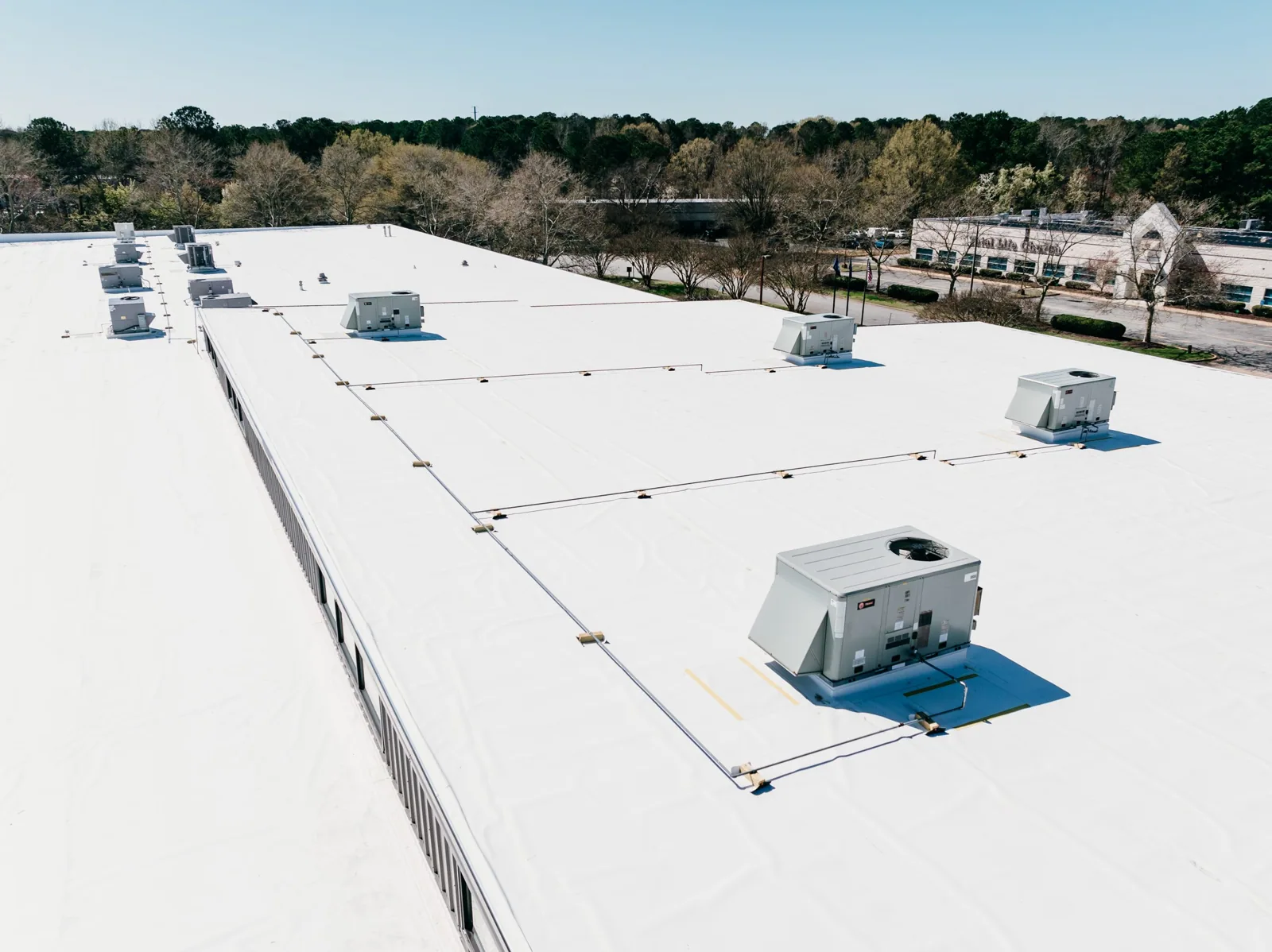
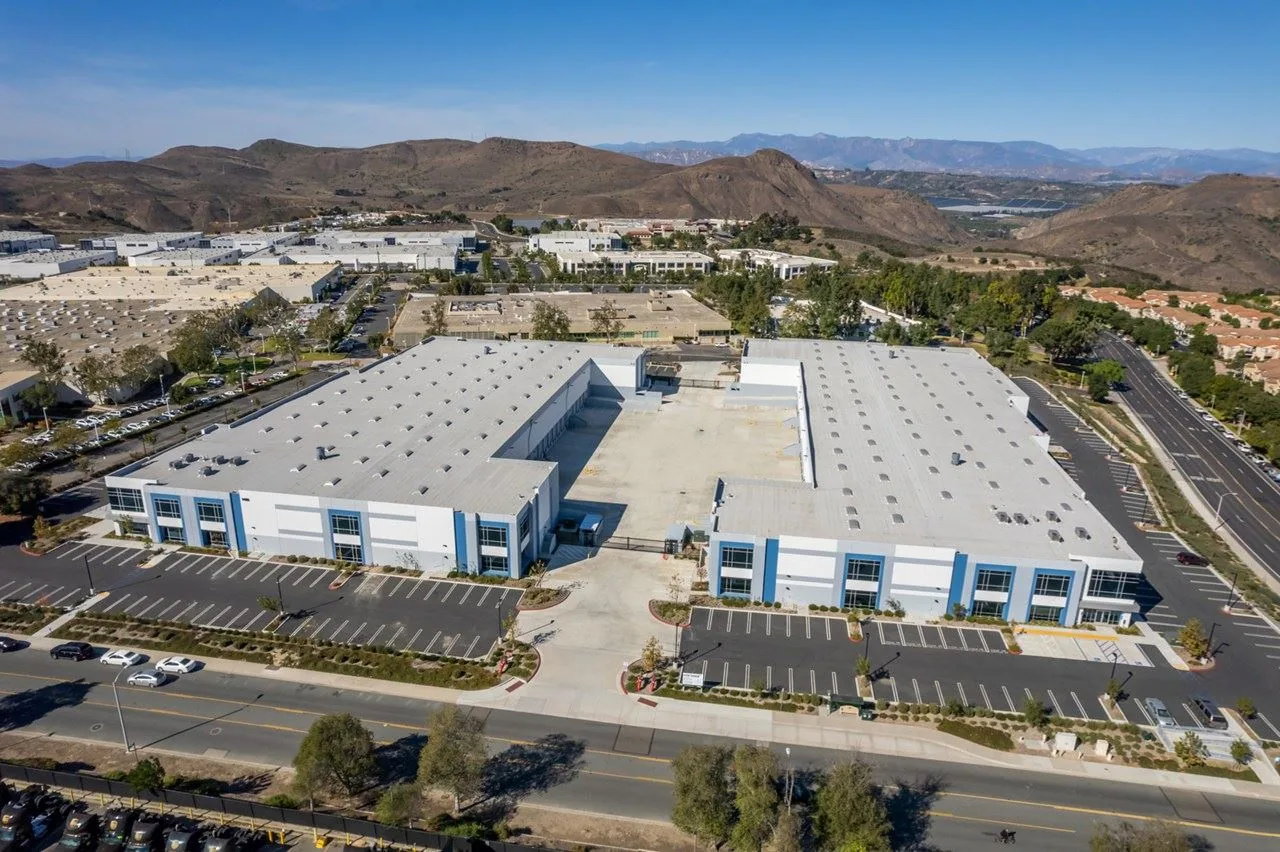
Standing water adds to the load. Seams under a pond are wetted and dried repeatedly, which is why a failing lap often follows the outline of a ponded area, and it is why a roof with seam trouble should also be checked for ponding water. Where a tilt-up building in the Rancho Conejo Industrial Park carries a single-ply roof, its long parallel laps make the pattern easy to read: failures concentrated on one side point to wind and exposure, failures at a regular spacing point to the installation, and scattered failures across the field point to age.
Repair: clean, compatible and tested before it is trusted
Repair follows the diagnosis. An open weld on a sound thermoplastic sheet is cleaned, reheated and rewelded, or covered with a welded strip of matching membrane that spans the lap on both sides. Splices on an EPDM roof are cleaned with the right solvent, primed and closed with new splice tape or a patch. Modified bitumen laps are reheated and bonded, and metal laps are resealed and refastened. A repair that is not compatible with the existing sheet is not a repair: a PVC strip will not bond to TPO, and an aged surface that cannot be welded has to be prepared or covered.
Where open lengths are many, we count linear feet by roof area and not by incident, since that count shows an owner when repair has become a recurring cost. On aged thermoplastic, a test weld is cut and peeled before the real work starts. If the sheet bonds, the repair proceeds along the whole run. If it does not, the survey says so and the talk turns to covering or replacing it, since a TPO roof that fails the test weld is near the end of its sheet life.
Aged sheets: when a seam repair stops holding
Warner Center Plaza and the Warner Center Business Park were developed from the 1970s through the early 1990s, so many of their roofs are now thirty to fifty years old. A low-slope roof in that age range often combines open laps, brittle edges and insulation that has had years to take on moisture, so a seam repair is a bridge to a larger decision and not a cure. Owners across the Warner Center business district should ask for the seam map and the moisture map together, because the pair shows how much of the roof is still worth saving.
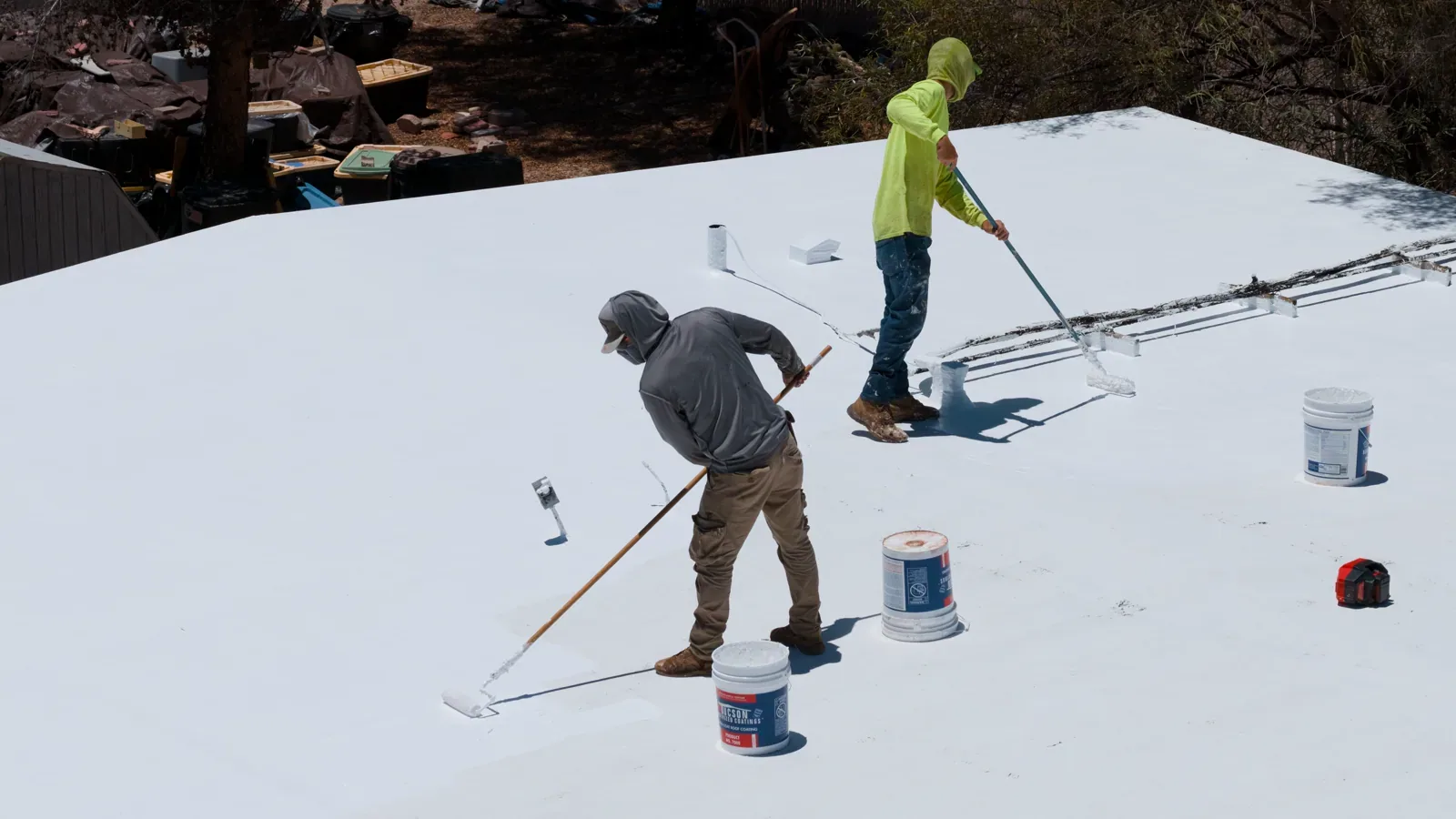
Between a lap repair and a full replacement sit the restoration options. When the sheet is clean, dry and structurally sound but its seams are numerous, a fluid-applied roof coating restoration over reinforced seams buys time and moves the cost into the capital plan on a schedule the owner chooses. Whether that time is worth buying depends on the infrared result and the remaining service life, and a roof with wet insulation under its seams is a poor candidate for either repair or coating.
Commercial Roofing Questions
How can I tell a cold weld from a seam that failed in service?
Look at the edge. A cold weld leaves a clean, uncolored sheet underneath with no residue, as if the two layers never touched. A seam that failed in service shows stretched edges, dirt that has crept into the lap and often small tears.
How many open seams before repair stops making sense?
There is no fixed count. When open lengths multiply from one survey to the next, when welds will not hold because the sheet has aged, or when infrared shows wet insulation under the laps, repair is chasing failure. That is the point to price a coating or replacement against more patching.
Why would seams open on a roof only a few years old?
Early failures almost always trace to the installation: a cold weld, a dirty lap or work done on a damp day. Heavy foot traffic along equipment paths can also work seams loose. The pattern across the laps says more than the age, and the installer should be on the roof early.
Can seam repairs be done in cold or damp weather?
Cold is rarely the obstacle in this valley, but moisture is. Welds and adhesives need dry, clean surfaces, so repairs wait for a dry window even in a wet week. The end of the dry season, before the first storm, is the usual time to close known open laps.
Do seam problems show up on a metal roof?
They do, though the form differs. Panels open at laps, sealant dries out and fasteners back out, and thermal movement works clips loose. The inspection looks at lap sealant, end laps and the screws through the panel as closely as at the standing seam itself.