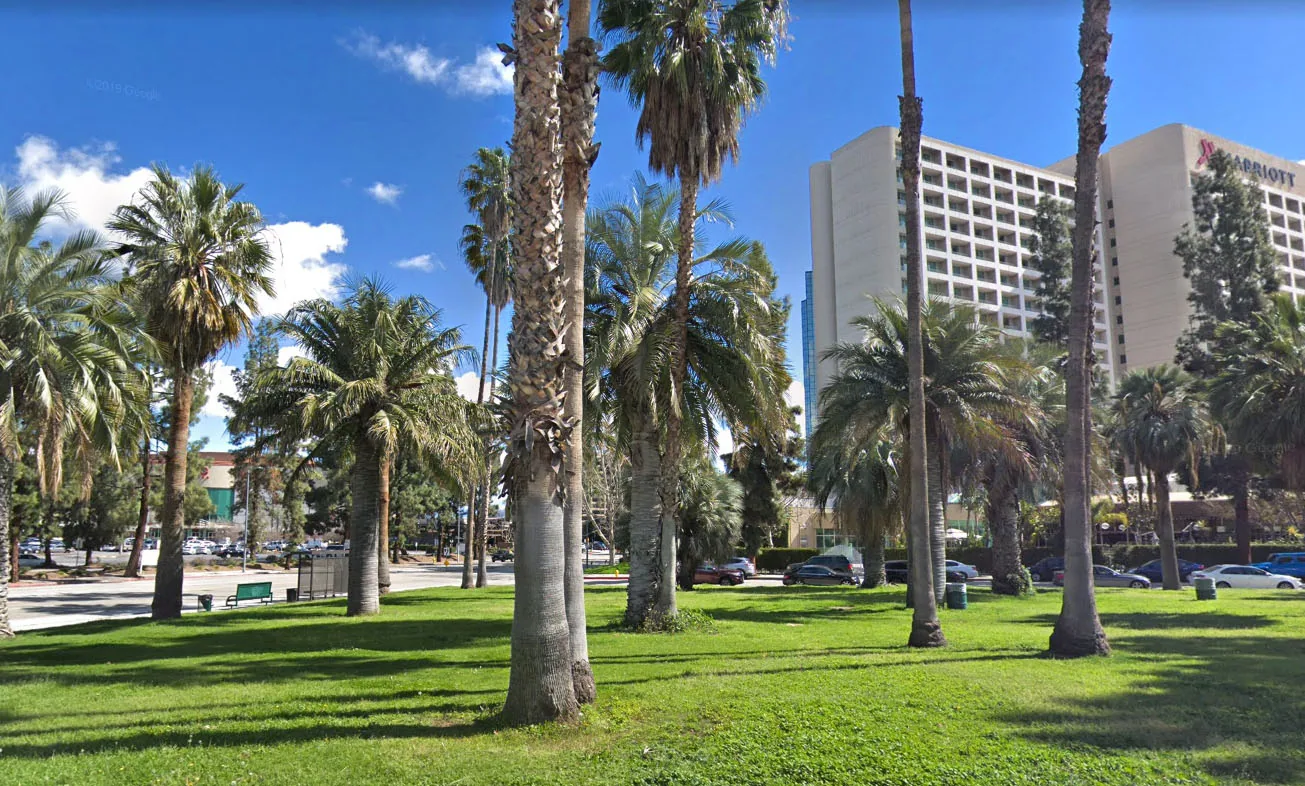
Commercial Roofing in the Warner Center District, Los Angeles, CA
Service Areas · Thousand Oaks, CA
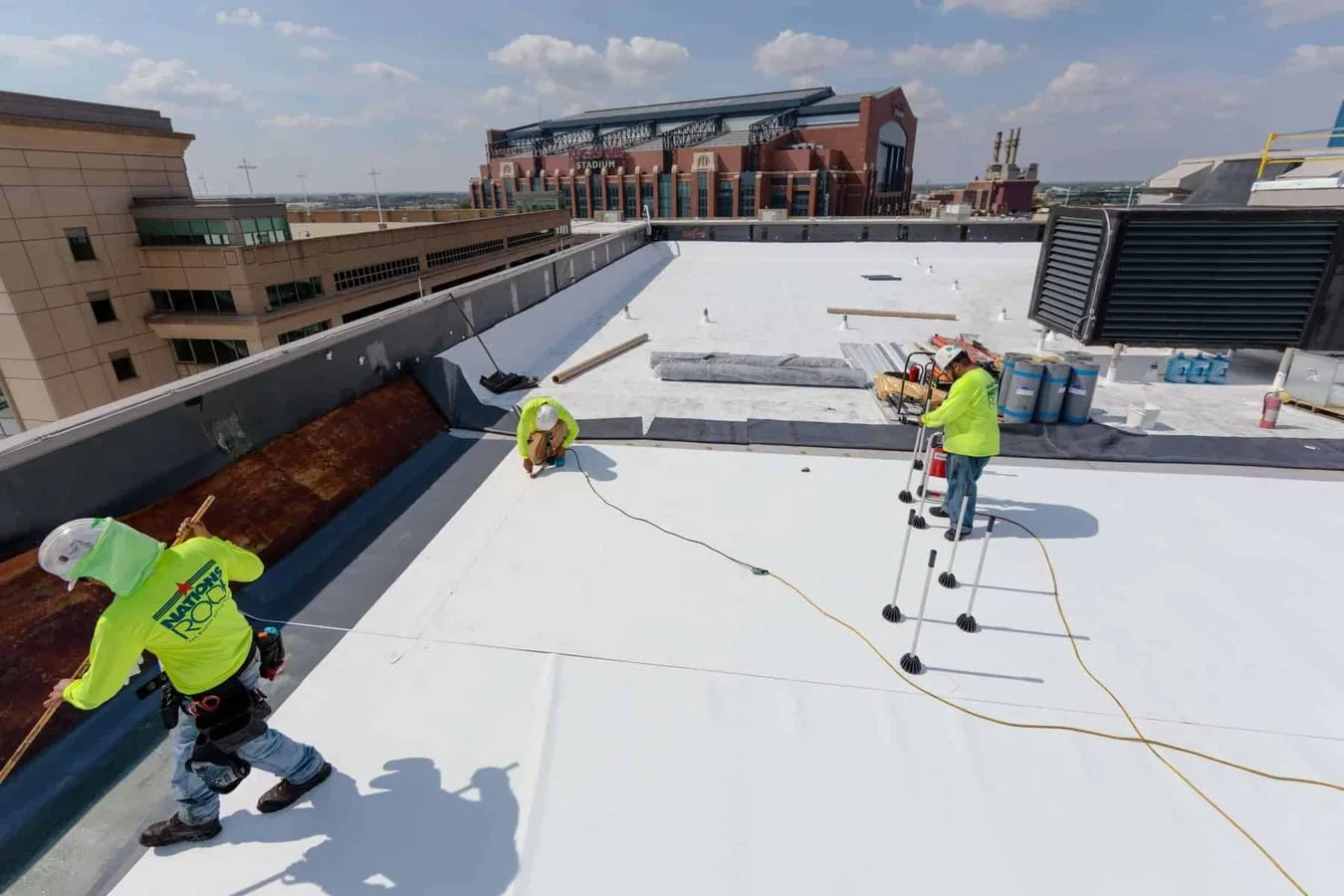
Register entry, mid-rise office building, parapet base: three generations of repair are visible in one eight-foot run, an original mopped-on flashing, a patch of mastic over it, and a newer strip of membrane lapped over both and already lifting at the upper edge. On a building in Warner Center that entry reads differently from the same entry in a newer market, because a district developed from the 1970s through the early 1990s is now asking its roofs to serve a third or fourth decade. The layers do not mean the roof has failed. They mean the file has outgrown the building's budget assumptions, and the replacement horizon needs to be set by measurement, not by whichever repair was cheapest last time.
Warner Center District
Service Areas
Call our team
Written findings and options
Thousand Oaks, CA
Ventura and Los Angeles counties
Age: roofs from the 1970s to the early 1990s
About 1,100 acres of Woodland Hills and Canoga Park make up the master-planned business district of Warner Center. Its office space runs to 1.8 million square feet at Warner Center Plaza and 1.1 million at the Warner Center Business Park, and the district was built out from the 1970s into the early 1990s, so many of its roofs are now 30 to 50 years old. We treat that range as a prompt to ask questions, not as a diagnosis. A roof of that age may be on its original system, on a recover that added a second membrane, or on a replacement done in a later decade, and the first walk sorts out.
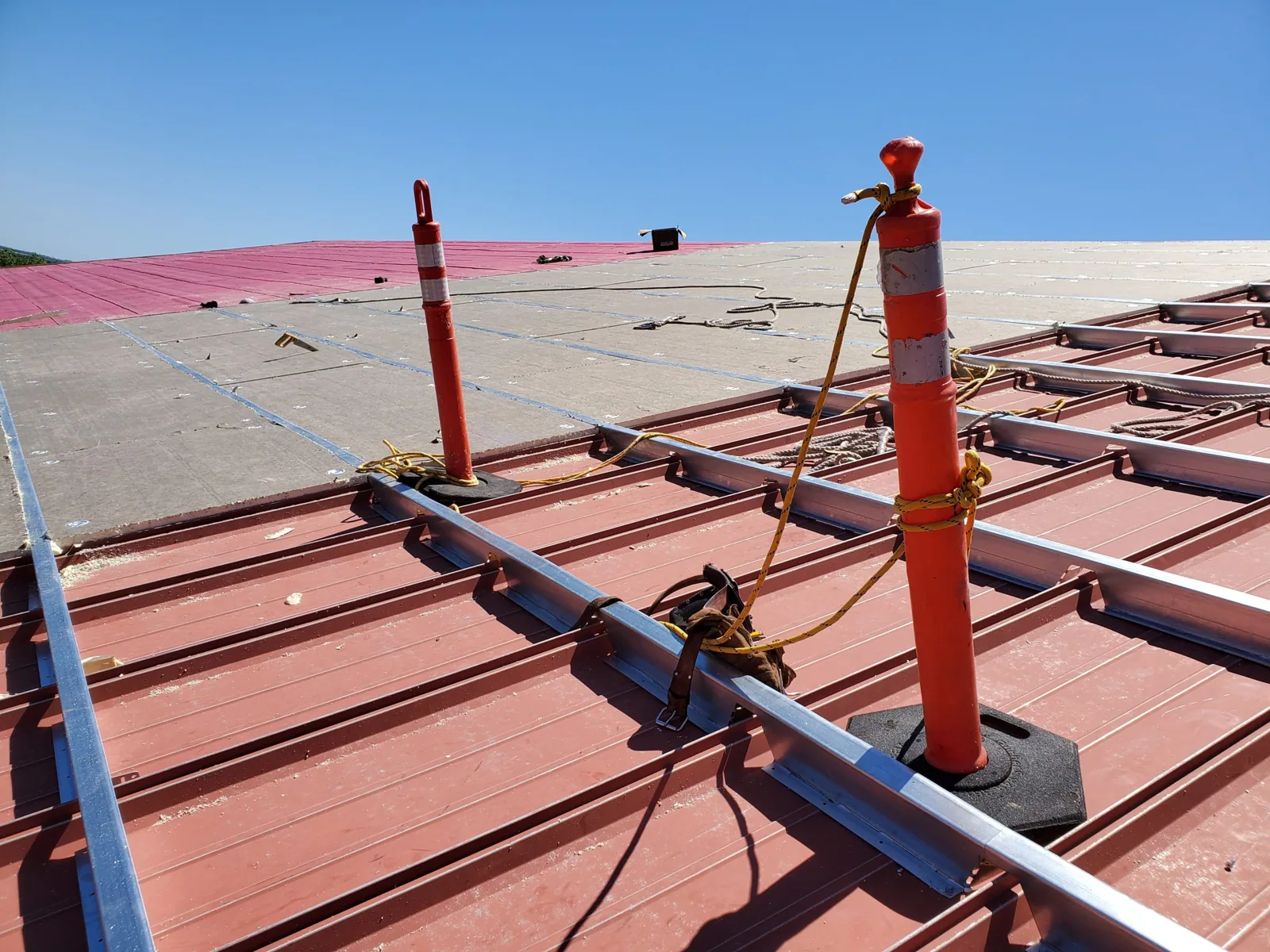
What we look for is specific. We core or probe to count layers and see whether the lower insulation is still dry. We note where past repairs overlap, because stacked patches hold moisture between them. We check the deck at drains and penetrations, test parapet terminations, and map any area where the surface has chalked or the seams have shrunk. The result is a condition index for each roof section and a remaining service life measured in years, which the owner can set beside the roof asset management register for the rest of the portfolio. Older assemblies often call for new insulation and cover board when the membrane is renewed.
Offices: tenant impact above the Plaza and the park
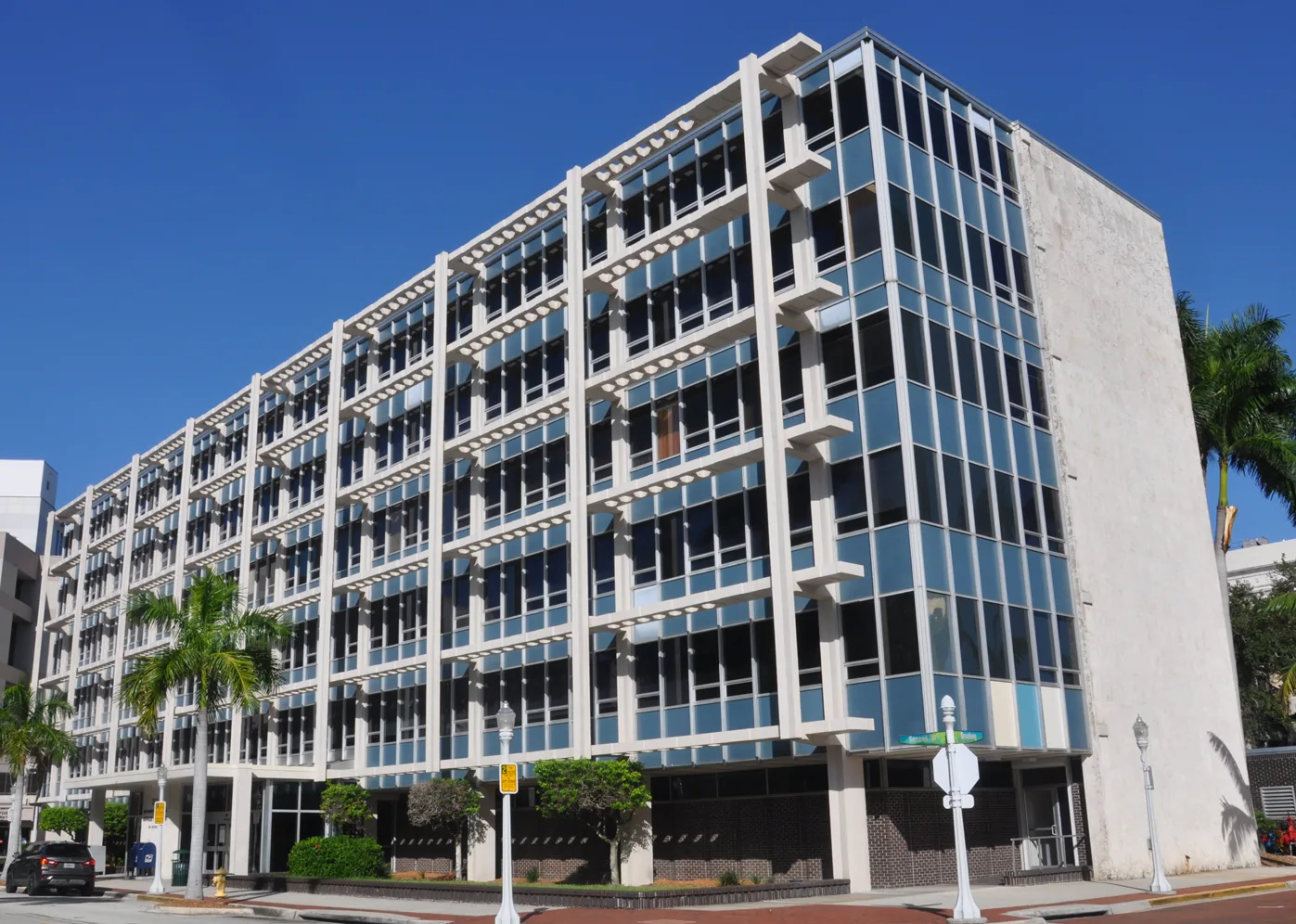
Office roofs in a district of this size belong to owners who answer to tenants, lenders and buyers doing diligence. Their concerns are concrete: which rooftop units sit on which curbs, which tenants' exhaust discharges onto the membrane, how a reroof will affect the floors beneath it, and what the report will say when it is requested during a sale or refinancing. We write the survey to answer those questions. Every roof section gets photographs, moisture results and a ranked list of actions.
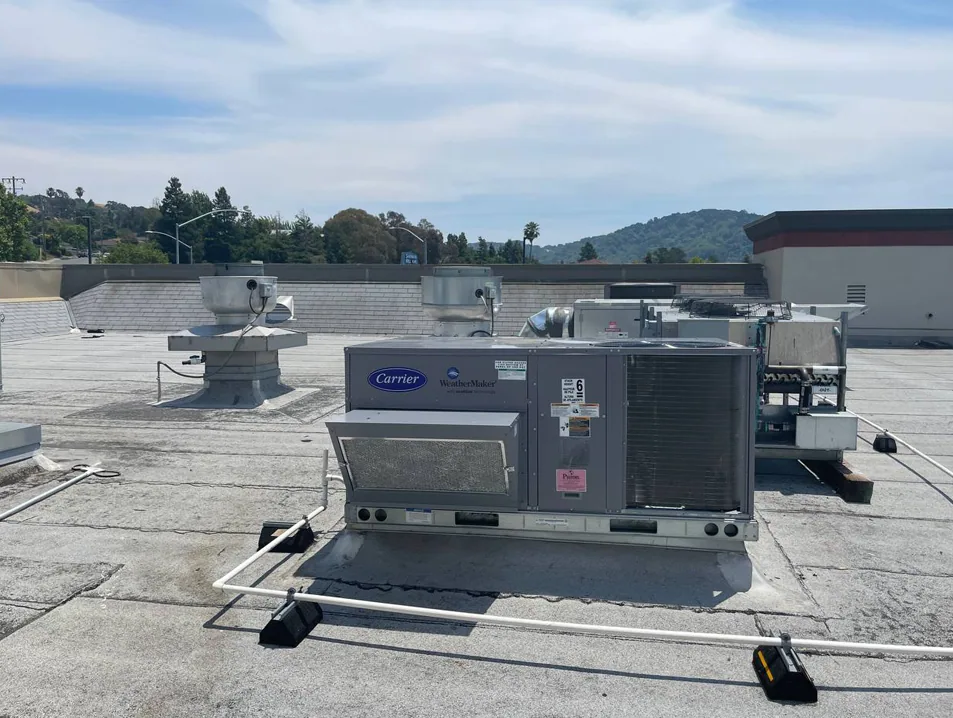
Tenant impact is part of the scope. Tear-off noise is placed early, outside meeting hours, or on weekends where the lease requires it. Intakes near the work are protected, and rooftop equipment is lifted and reset on a schedule that the facility manager can announce in advance. The condition of the curbs and supports under each unit is checked before the lift, because a unit set back on a failed curb brings the leak back with it, and the same care applies to every office building roof, large or small.
Retail: Westfield Topanga and The Promenade
Westfield Topanga and The Promenade, which occupies 34 acres, are the main retail in the district. A retail roof carries a different load than an office roof: foot traffic from service crews, rooftop units for individual tenants, and, wherever food service occupies a space, grease and heat from kitchen exhaust landing on the membrane. We walk the roof, mark every penetration against a tenant list, and look for discoloration, softening and ponding downwind of exhaust fans.
The other retail question is who pays. A landlord may be responsible for the membrane, a tenant for the units that sit on it, and the lease for the work that happens between them. A written survey that locates each penetration and each point of water entry makes that allocation simple to document. It also helps when a leak turns up in a store below and no one can say which roof section it came from. A shopping center roof works this way everywhere: one membrane, many occupants, and a record of who touched what.
Hospital and headquarters: two different roof problems
Kaiser Permanente has operated a hospital in Warner Center since 1986, and the Rams owner has acquired about 100 acres in the district for the Rams Village team headquarters and practice facility. A hospital roof needs a continuity plan: work by zone, protected intakes, no interruption to care below, and a record that satisfies the facility's own reviewers.
A team headquarters and practice facility raises a different question for any owner developing one, which is what to ask of the roofs at turnover: a baseline survey, cover board over the insulation, well-sized drainage, and, where rooftop solar is planned, a roof built to carry it. Later work on a roof ready for solar and any roof warranty claim both start from that early record, because the best time to document a roof is the year it is finished.
Exposure: heat warnings and dry wind across the valleys
On September 6, 2020 Woodland Hills reached 121 F, a county record for Los Angeles, and heat like that pushes membrane surface temperatures up while rooftop HVAC works hardest. Santa Ana winds in Los Angeles and Ventura Counties can exceed 40 mph with humidity below 10 percent, and in November 2018 the Woolsey Fire, which touched Thousand Oaks and neighboring communities, burned in winds of 50 to 60 mph. For a roof in Warner Center, those facts translate into a standing checklist: UV degradation on the field and flashings, tight edge metal and coping, secure equipment, clear drains, and a fire-rated assembly where the code calls for one.
Code adds a dated line to the horizon. California's 2025 building code became effective on January 1, 2026, and permits requested from that day onward fall under the new energy code, whose updates touch roofing and cool roof standards. We note on each section whether a planned replacement triggers them, so the replacement horizon in the report also carries a code line. An owner with buildings in neighboring Woodland Hills or Canoga Park can put them on the same baseline.
For a district with several large properties, compare roof records by observed assembly and condition, not by development era alone. A building constructed in the same period as its neighbor may have a newer recover, different drainage and a separate maintenance history. Ask for permits and prior work orders, then verify the roof in the field before setting a replacement horizon. Map tenants and mechanical zones to the roof so a repair schedule can avoid sensitive office hours and active retail access. A consistent baseline across Warner Center, Woodland Hills and Canoga Park makes portfolio decisions easier while keeping evidence attached to each building.
Commercial Roofing Questions
Can a 30 to 50 year old roof still be repaired?
Often, if the insulation under the membrane is dry. A core and an infrared scan separate a roof that needs patching from one that needs to come off.
How is a business park with many buildings surveyed?
One report format covers every building, with a condition index per section, so the owner can rank all of them against a single budget.
What does a retail landlord need from a roof report?
A map of every penetration, tied to the tenant who owns it, plus the location of each leak path. That settles who is responsible before a dispute starts.
Why do stacked patches matter on an older office roof?
Water can sit between layers and spread far from the visible leak. The survey records where repairs overlap and tests the material beneath them.
When should a new building have its first roof survey?
At turnover. A baseline taken when the roof is finished gives later findings something to be measured against.