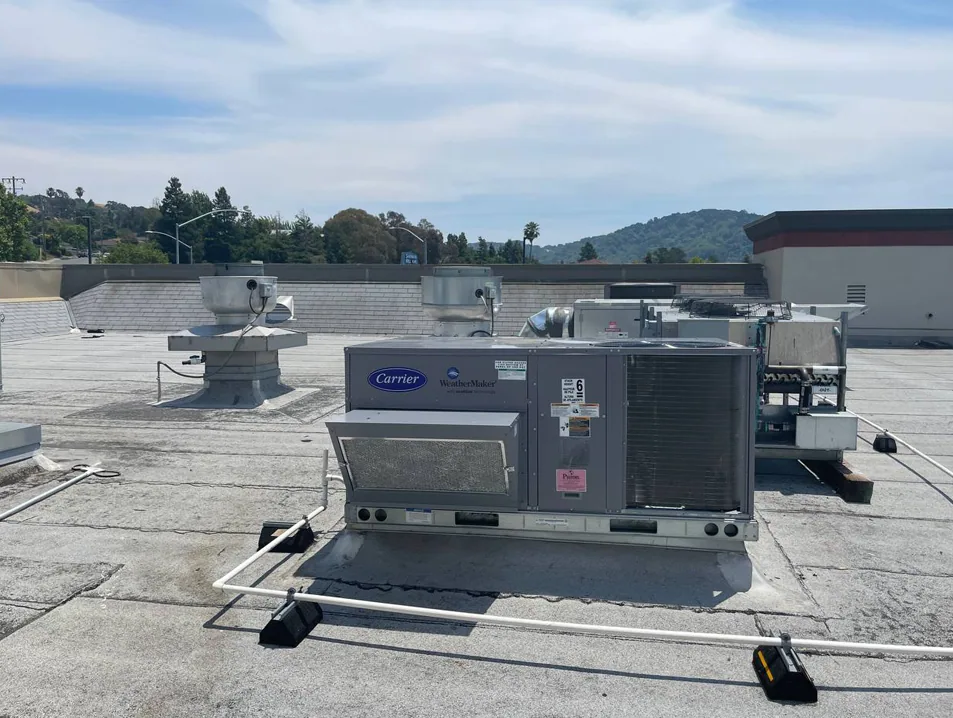
Rooftop Equipment Curbs and Supports in Thousand Oaks, CA
Commercial Roofing Services · Thousand Oaks, CA
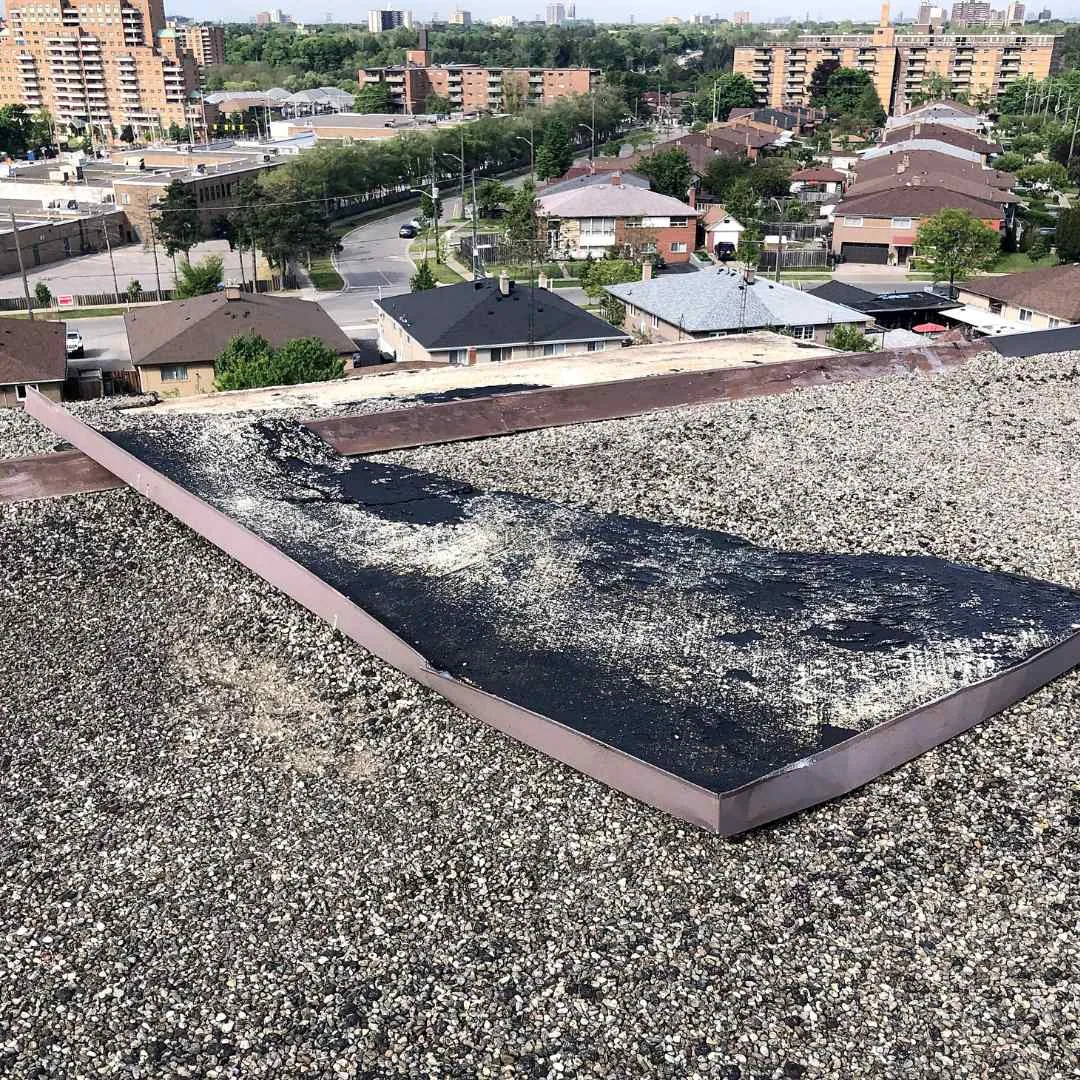
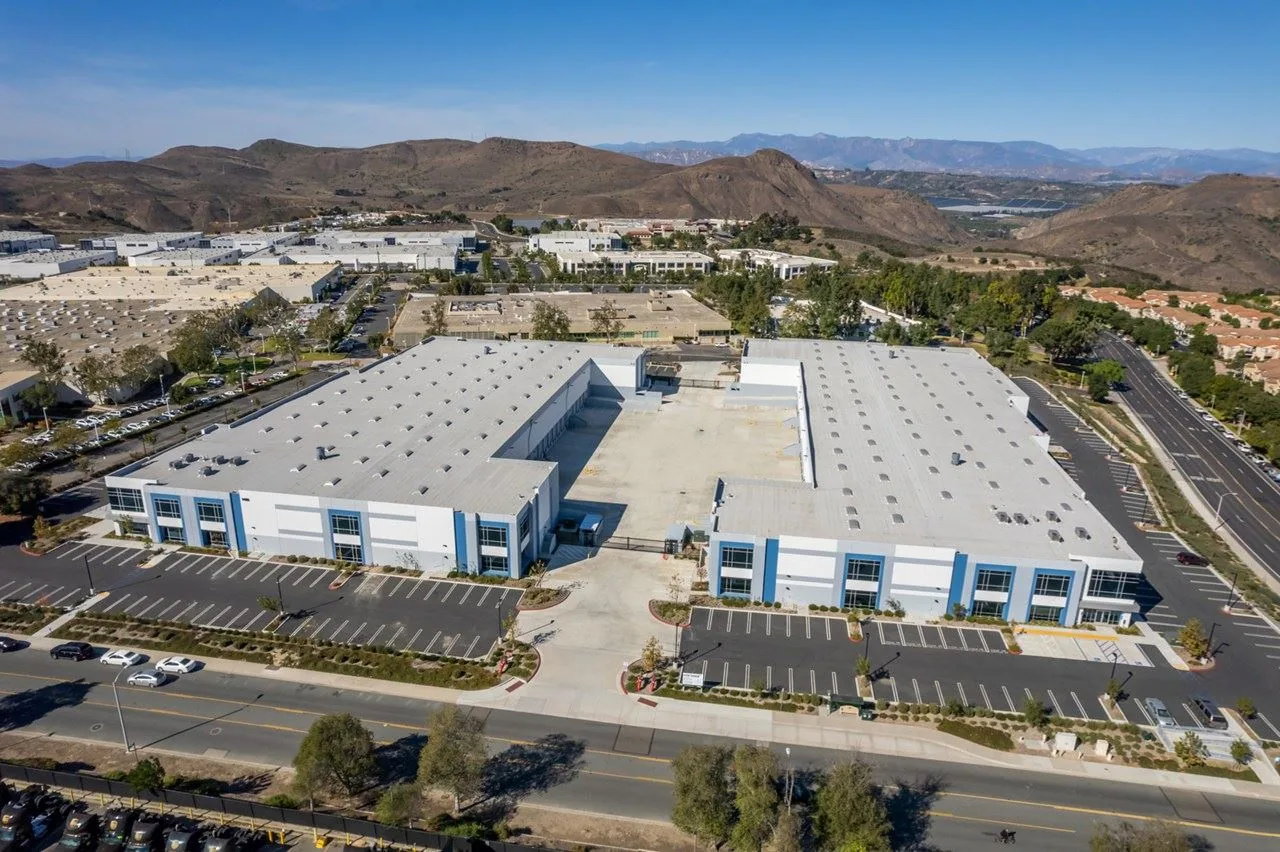
Finding: base flashing split at the corners of the oldest curbs, sealant pulled back from the boot on a refrigerant line, and a unit rail resting directly on the membrane with no pad beneath it. On an office or R&D building of the kind found in Rancho Conejo Industrial Park, that combination is ordinary, because equipment is often set long before anyone prices a reroof around it, and each change of tenant can add another unit, another pipe or another conduit run. The field of the roof may still have years of service life. The curbs, supports and penetrations around the equipment usually do not, and they are where water finds its way in.
Rooftop equipment curbs and supports in Thousand Oaks, CA carry two risks at once: water entry where a curb or pipe meets the membrane, and wind exposure where the equipment meets a Santa Ana gust. Giving both their own condition index and replacement horizon lets an owner schedule the work with the membrane instead of discovering it one leak at a time.
Rooftop Equipment Curbs and Supports
Commercial Roofing Services
Call our team
Written findings and options
Thousand Oaks, CA
Ventura and Los Angeles counties
Curbs: where the unit meets the membrane
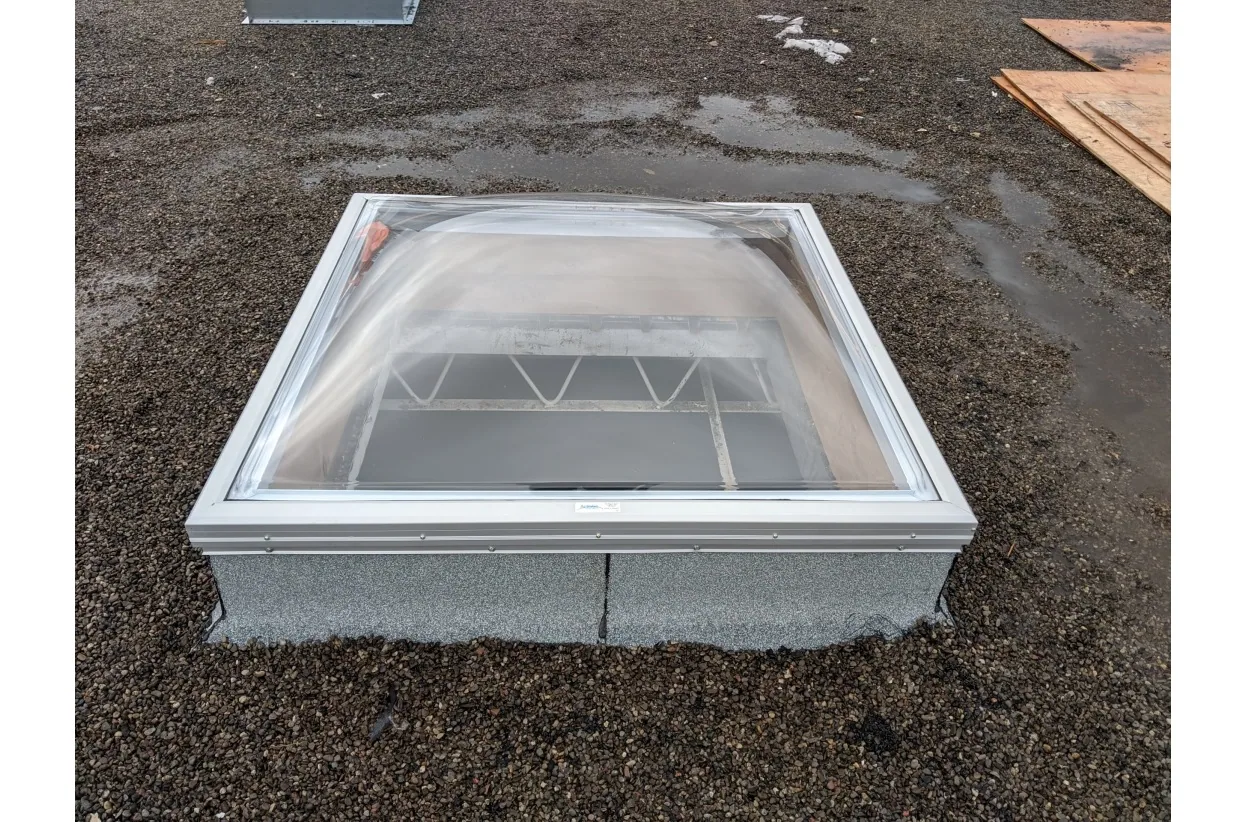
A curb is a raised frame that lifts a unit above the roof surface and gives the membrane something to terminate against. The membrane climbs the side as base flashing, is fastened at the top edge, and is covered by counterflashing or the unit's own skirt. Corners are cut and folded by hand, so they hold the most seams. Heat cycling opens sealant. Units swapped in place often sit slightly off the original curb, which leaves a gap the old flashing was never meant to bridge.
On a survey we measure how high each curb stands above the field, since a low curb leaves the flashing without the clearance it needs, and we check whether it was flashed to the standard of the current membrane or to whatever covered the roof on the day the unit was set. The repair is then flashing rebuilt in the same membrane family, a new curb set when the unit is replaced, or an adapter when a new unit arrives with a different footprint. Curb flashing and skylight and penetration flashing are one set of details on the same roof, and the survey lists them together.
Supports: rails, pedestals and the loads they carry
Condensers, small packaged equipment, conduit and refrigerant piping usually rest on rails, pedestals or sleepers laid on top of the membrane, and those supports quietly cause a great deal of damage. A rail bearing directly on single-ply abrades it with every thermal cycle. A pedestal with a hard metal foot compresses the insulation beneath it. A pipe run strapped down too tightly pins the membrane to the deck and stops it moving as it expands.
The remedy is usually modest: a protection pad or strip of sacrificial membrane under each bearing point, a base that spreads the load, and supports tall enough that water drains beneath them. Where a support has to be fixed down, the fastener passes through a flashed and sealed penetration, never a loose screw in the field. Walk paths to serviced equipment need the same attention, since the track technicians wear is often the first place a membrane gives out.
Pipes: small penetrations that keep moving
A pipe that carries hot or chilled fluid moves differently from the membrane around it, and sealant that held in spring is open by the end of summer. Pitch pockets, once a standard detail, dry out and shrink away from the pipe. On a roof that is being worked on anyway, the better answer is a prefabricated boot or a collar formed from the same membrane family as the roof.
Where a bank of pipes runs close together, individual boots cannot be fitted, and a sealed enclosure sized for the whole run is the practical detail, with room to service the pipes later without cutting the roof again. Wherever we find a penetration kept alive with surface mastic alone, we log it as a temporary measure with a short remaining life and recommend permanent flashing the next time that roof section is in the budget.
Exposure: Santa Ana gusts and summer heat around equipment
Santa Ana winds blow dry and offshore, and gusts can easily top forty miles an hour. The Mountain Fire of November 2024 burned during a Santa Ana event described as the most extreme in years, with gusts forecast above 65 miles an hour. Equipment is where that wind gets its first grip on a roof. A unit not strapped to its curb, a panel that has lost a latch, and loose conduit all become airborne, and a displaced piece pulls the nearest flashing with it. Restraint hardware and latches belong on the condition list for that reason, alongside the wind damage repair history of the building.
Heat works on the same equipment. Extreme heat warnings have covered the Los Angeles and Ventura County valleys, and hot weather of that kind raises membrane surface temperature and the cooling load on every unit at once. The Woolsey Fire of 2018 affected Newbury Park and Westlake Village, and ash on roofs is a local issue after a fire, so a walk of the equipment, its latches and the nearby drains belongs in the maintenance cycle after any fire event.
Coordination: shutdowns, lifts and trades
Rebuilding flashing around a unit usually means the unit is disconnected, lifted by crane and reset, or at least that its panels and electrical are accessible. The mechanical contractor isolates and lifts, the roofer rebuilds the curb flashing and tests it, and the unit goes back down. At Los Robles Hospital and Medical Center, rooftop mechanical serves critical areas and the campus has multiple construction eras, so the sequence is built from which units can be offline and for how long.
The same planning applies, with different constraints, to the R&D buildings of Rancho Conejo Industrial Park, where air handlers may feed controlled spaces. We ask for the equipment list, the shutdown windows and the lift access before we price anything, and a hospital roof in particular is staged unit by unit so no area loses cooling longer than the operators have agreed.
Records: an equipment-by-equipment schedule
The most useful deliverable is a schedule that lists every unit, support and penetration by roof section: what it is, how it is flashed, what condition it is in and what it needs. A written roof condition report carries it with a photograph for each location. At a repositioned office campus, review every new curb or conduit against the roof plan during preventive maintenance visits.
Commercial Roofing Questions
Can a curb be repaired without lifting the unit?
Sometimes. If the base flashing is intact and only a corner or a bead of sealant has failed, a repair from the outside can hold for a reasonable period. Once the flashing has split along a full face, or the curb itself has rotted or rusted, the unit has to come up so the curb can be rebuilt properly.
What happens to the flashing when a unit is replaced?
A replacement is the best moment to fix the curb. Newer units often have a different footprint, so the curb needs an adapter or a rebuild, and the flashing is cut open anyway. Bring the roofer into the schedule before the old unit is lifted, not after the new one is set.
Are loose panels and hoods really a roofing concern?
During a Santa Ana event they are. A failed latch lets a panel lift, and the panel then strikes the membrane or tears at a flashing. We record panel condition and restraint hardware on the same survey as the curbs and flag what the mechanical contractor should secure.
Should pipe supports be replaced when the roof is replaced?
Usually, because the supports sit on the new membrane for the next cycle. Worn pads or rails over fresh single-ply defeat the point of the replacement, so we price them into the roof scope.
Do I need to hire the mechanical contractor and the roofer separately?
You can, and many owners do. We coordinate directly with whichever mechanical contractor services the building, set the lift and shutdown sequence together, and keep the roof open only for the hours the equipment is off.