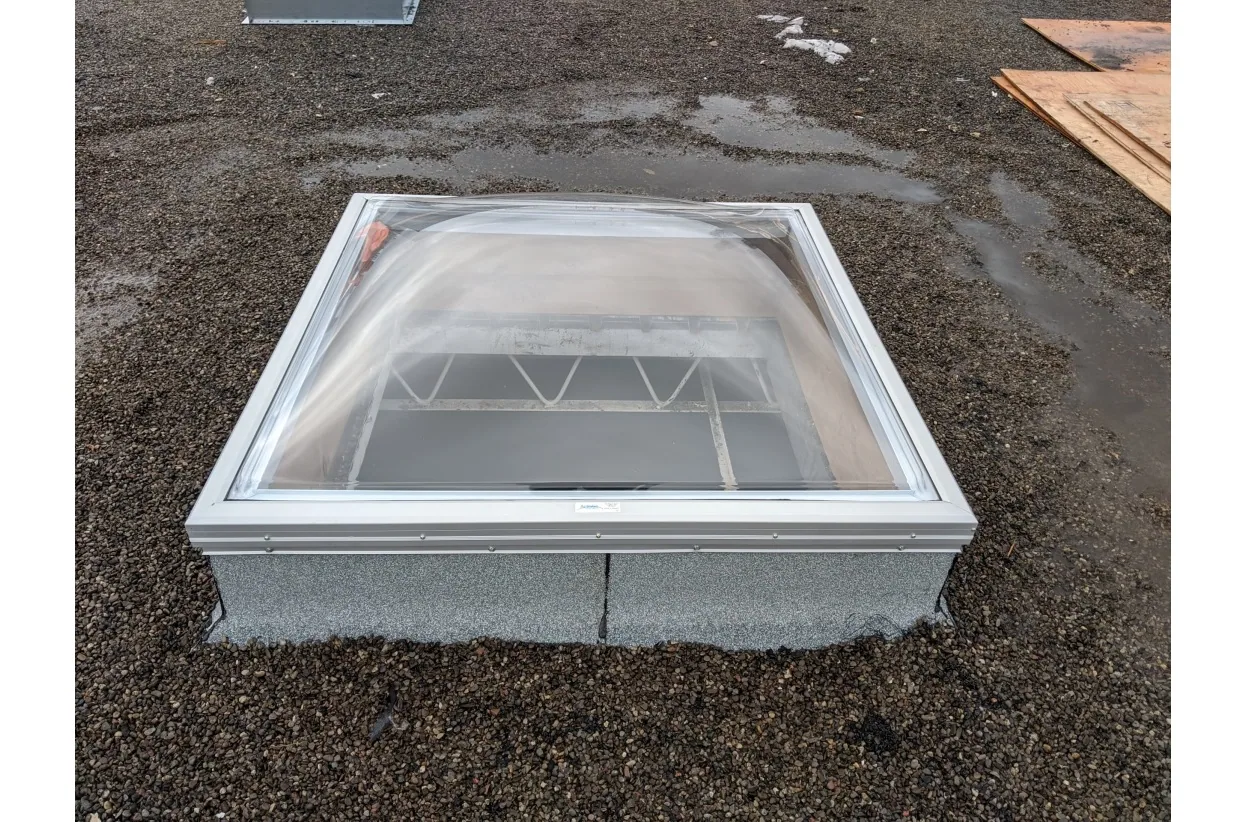
Skylight and Penetration Flashing in Thousand Oaks, CA
Commercial Roofing Services · Thousand Oaks, CA
Penetration schedule, line fourteen: a four-inch vent stack with a split rubber boot, a conduit bundle passing through a pitch pocket that has dried to a crumbling shell, and a skylight curb whose base flashing has pulled away from the frame at the northeast corner. Each is a hole in a roof that was once watertight, and each is held closed by a small piece of material that ages faster than the membrane around it. Skylight and penetration flashing in Thousand Oaks, CA is the work of keeping those holes sealed, and on many commercial roofs it accounts for a large share of the leak history.
Skylight and Penetration Flashing
Commercial Roofing Services
Call our team
Written findings and options
Thousand Oaks, CA
Ventura and Los Angeles counties
Inventory: counting everything that pierces the roof
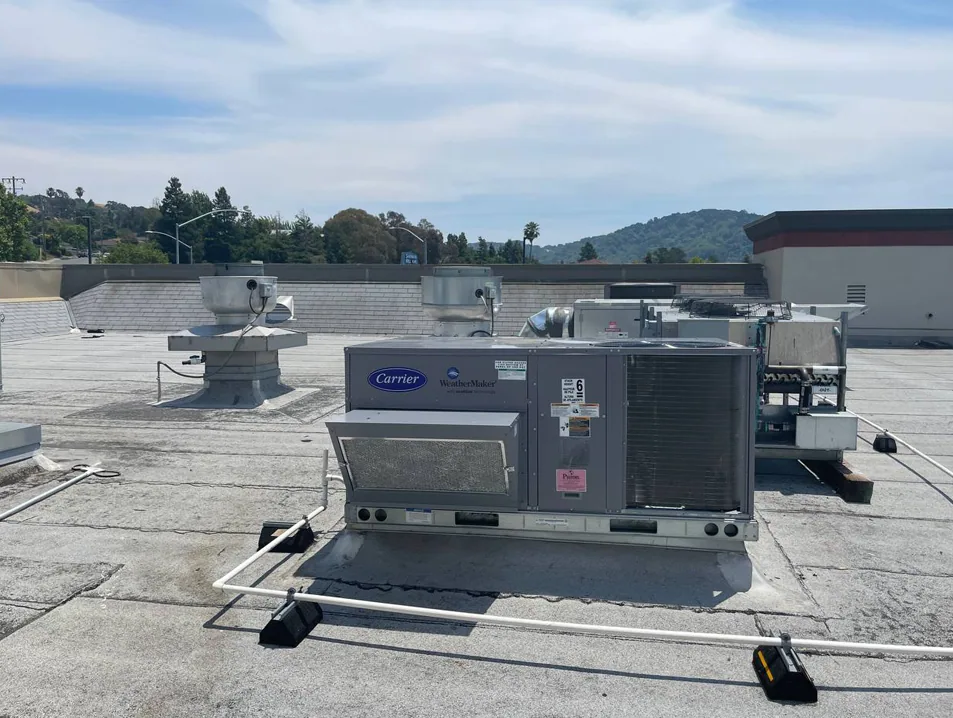
Every roof accumulates penetrations over time. The original design includes vent stacks, drains, exhaust fans, gas lines and skylights, and tenants add to the list as they fit out their space: a new kitchen exhaust, a conduit run to a satellite dish, a refrigerant line to a split system. Each addition is cut by whoever happened to be on site, and not always by someone who will answer for the seal.
A flashing program begins with a count. We walk the roof, tag every penetration on the plan, record its type, size, material and condition, and grade it. The result is an inventory that shows which details are original, which were added later, and which are oldest or most exposed. Owners who manage many buildings get a comparable inventory for each roof, which makes it possible to schedule the worst details first across the portfolio.
Skylights: curb, frame and glazing as three separate problems
A skylight leak has three possible sources, and the repair differs for each. The curb flashing can fail, which lets water enter at the base. The joint between the glazing frame and the curb can open as the materials expand and contract. Or the glazing can be fine and the dripping can be condensation, which forms on cold glass inside a warm building and has nothing to do with the roof. A thermal imaging check and a controlled water test tell the three apart, and they are worth running before a replacement is ordered.
Aged plastic domes yellow, craze and become brittle after years of sun, and a brittle dome is a fall hazard as well as a leak. Where a skylight stays, we re-flash the curb and replace gaskets and caps. Where it has reached the end of its life, we replace the whole unit and curb with a new assembly, tie it into the membrane and add a guard or screen so that nobody can step through the glazing during future roof work.
Pipes and conduit: boots, clamps and pitch pockets
Small round penetrations fail in predictable ways. Rubber boots crack as they age, clamps loosen, and sealant dries and splits at the point where pipe and boot meet. Pitch pockets, the open-topped boxes filled with sealant around odd-shaped penetrations, shrink and open as the filler cures, and they need constant topping up. We treat them as a last resort.
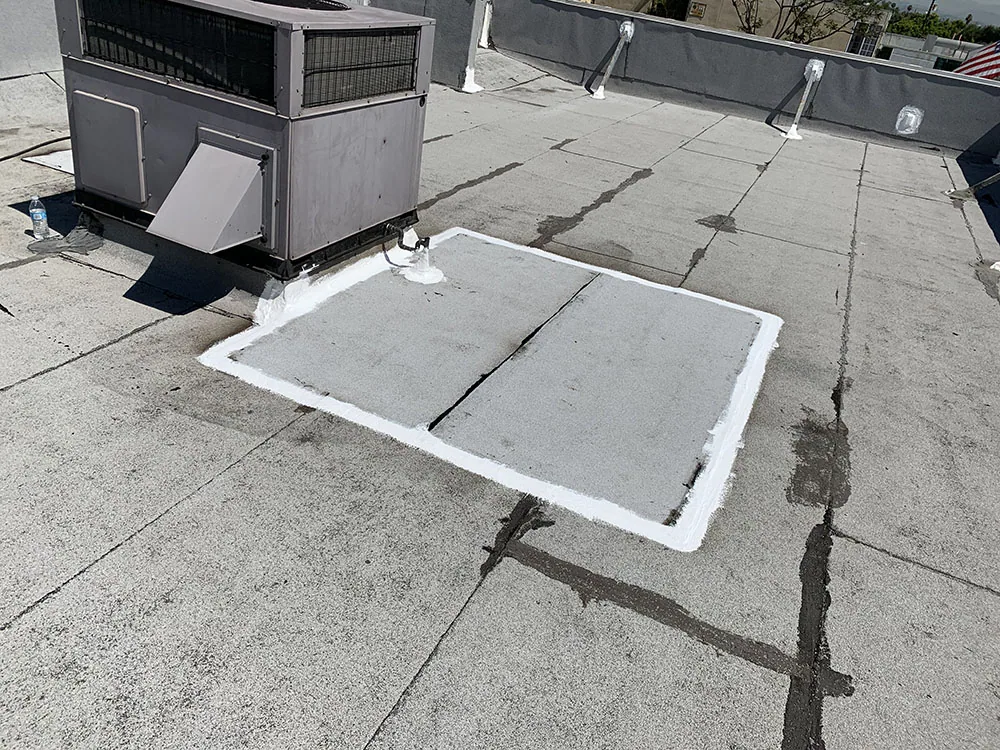
The better detail is a prefabricated or field-fabricated flashing in the same material as the roof, welded or bonded to the membrane and sealed at the pipe with a clamp and compatible sealant. On bundles of conduit or irregular supports, we reorganize the penetrations where possible, so that several small holes become one properly flashed opening. Each repair is photographed and added to the penetration schedule so the next inspection can check it.
Terminations: height, counterflashing and sealant
Where a flashing meets a curb or wall, its height and termination decide how well it sheds water. Membrane flashings run up the face of the curb to a height that keeps splashing and ponded water from reaching the top, and they are covered by metal counterflashing or a termination bar that holds the edge in place. A flashing that is too low, or a termination held only by a bead of sealant, fails first when the roof moves.
Sealant is a maintenance material and not a permanent seal. It dries out, shrinks and loses adhesion after several summers of sun, so a joint that was sound at installation needs a scheduled look. Where a base flashing has already separated, the correction is flashing failure repair, and where the curb carries heavy equipment the curbs and equipment supports are assessed on the same visit.
Density: campuses and hospital roofs with many openings
Buildings with heavy mechanical and laboratory loads carry the densest penetration sets. Amgen employs roughly 7,000 people in the Newbury Park and Conejo Valley area, which means large multi-building lab, manufacturing and office campuses, and laboratory and process buildings of that type carry exhaust, piping and ventilation openings in quantity. At Los Robles Hospital and Medical Center, opened in 1968 and expanded since, roofs from several construction eras carry rooftop mechanical for critical areas, so the openings on them come from different eras. A hospital roof allows no water at those details, so the schedule and the repairs are planned around operations.
Assembly roofs bring different penetrations. The Thousand Oaks Civic Arts Plaza downtown rises to ten stories at its highest point and houses the 1,800-seat Fred Kavli Theatre, a large assembly-occupancy roof on a mixed postmodern and modern building. In downtown Thousand Oaks, a roof of that kind has varied heights and openings that each need a detail of their own.
Phases: retail roofs built in more than one era
Retail centers add another wrinkle. The outlet center opened in 1995 and added 23 stores in 2009, so the roofs at Camarillo Premium Outlets come from at least two construction phases, and the flashing details on each side can differ in material, age and method. Surveys of such centers keep the phases separate, since a repair that works on one may not suit the other. Repairs are scheduled to leave storefronts open, with interior protection below any skylight or penetration being reworked, and a final water test closes each detail before the crew moves on. Where a leak is already active, it is traced and stopped first, which is commercial roof leak repair work, and the flashing correction follows.
Commercial roofs along the Thousand Oaks Boulevard corridor also require each penetration to be documented before a repair scope is set.
Commercial Roofing Questions
Does a dripping skylight always have a failed seal?
Not always. Condensation on cold glass in a warm building drips in a similar way, and a thermal check or a controlled water test tells the two apart before any money is spent.
Is it better to replace an old skylight or to reflash it?
Reflash when the frame and glazing are sound and only the curb flashing has failed. Replace when the glazing is brittle, yellowed or cracked, since a fresh flashing around a failing dome only moves the problem.
How many penetrations are too many for one roof?
There is no fixed count. Each opening needs its own proper detail, and the real limit is how many a maintenance program can keep inspected, which is why consolidating small openings pays off.
Who should be allowed to cut a new hole in my roof?
Only the roofer who will close it, or a trade working under that roofer's direction. Tenant contractors who cut openings and leave a temporary seal create many of the leaks we trace later.
Are pitch pockets still acceptable on a new roof?
They are a last resort. The filler shrinks and cracks over summers of heat, so a prefabricated flashing or a welded boot is the better detail wherever the geometry allows it.