Ponding Water Roof Repair in Thousand Oaks, CA
Roof Damage Repair · Thousand Oaks, CA
Post-storm survey, two days after the last rain: a pale ring of dried residue marks where a pond sat across the center of the roof, and the sheet inside the ring has gone dull while the sheet outside it is still clean. On a flat industrial roof in Thousand Oaks, CA, that ring is a finding with a cost attached. It shows that water has been leaving this part of the roof slowly, probably more than once, and it tells the owner that the remaining service life of the membrane is being spent faster in that zone than anywhere else. Ponding water roof repair starts by deciding whether the cause is a drain, the deck, or the insulation, because each one leads to a different budget line.
Ponding Water Roof Repair
Roof Damage Repair
Call our team
Written findings and options
Thousand Oaks, CA
Ventura and Los Angeles counties
Measurement: finding the low points after the rain, not before
Ponding is judged by how long water stays, and a dry roof hides its low spots. The usual line is water that is still present about two days after rain has stopped, so we schedule the visit after a storm, mark the edge of each pond in photographs, and measure depth at its center. On a dry visit the evidence is indirect: dirt rings, algae, stained or chalked sheet, and debris collected in a shallow bowl. Those marks are reliable enough to build a first map, but a wet-weather visit confirms it.
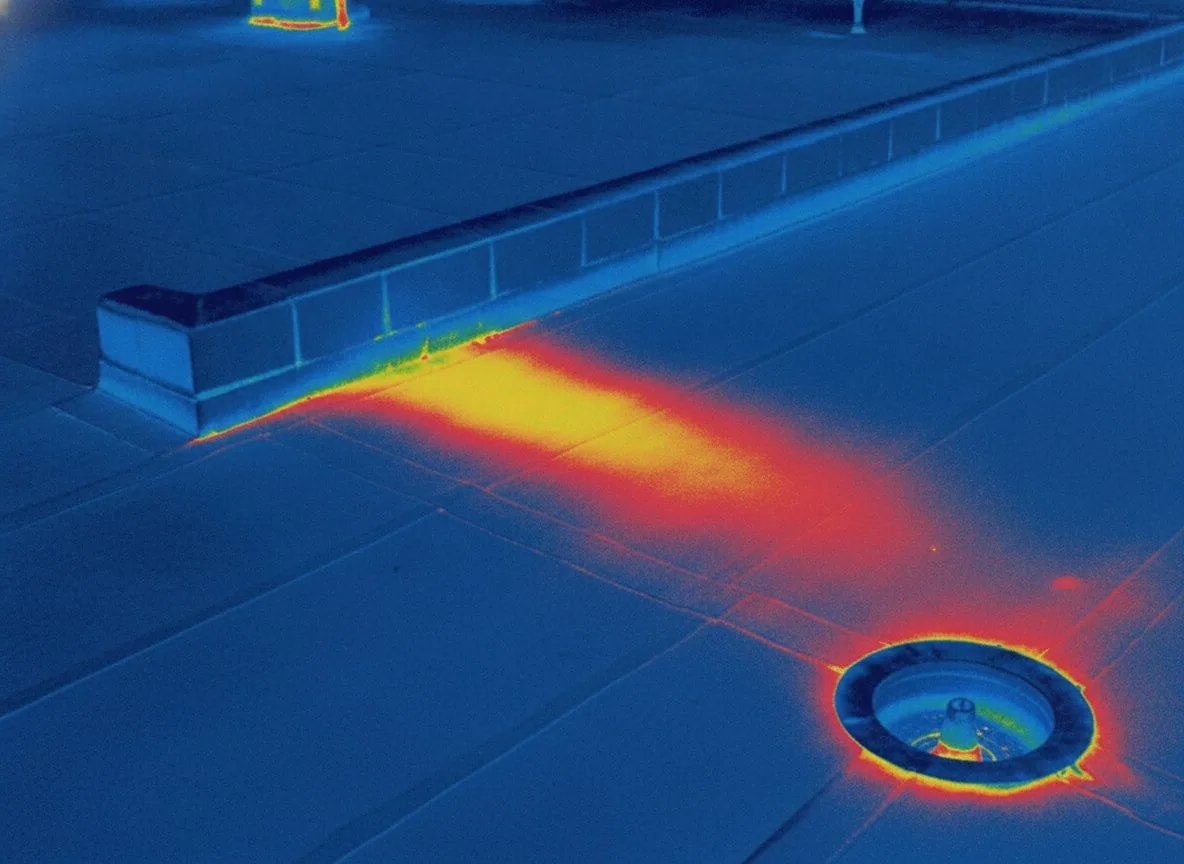
Depth and area together tell us what kind of problem we have. A shallow film spread across a wide area is a drainage design finding, usually a missing cricket or a drain sitting above the low point. A deep pond in a small footprint is a deck or insulation finding. We also look at what sits under each pond, because water over a seam or a flashing is the likeliest place for moisture to enter, and an evening infrared moisture survey shows whether the insulation below has already taken it on.
Causes: deck, insulation, drains and what was added later
Ponds form for a short list of reasons. A long-span steel deck can deflect between supports and leave a shallow bowl in the middle of a bay. Insulation compresses under traffic or breaks down once it is wet, and the surface settles with it. Drains installed above the surrounding field leave a standing ring around each body, and strainers blocked with debris do the same job. Distribution-scale roofs, such as the low-slope roof Amazon's 2018 warehouse added to the Rancho Conejo Industrial Park, generally have long drainage paths, and long paths magnify small errors in slope.
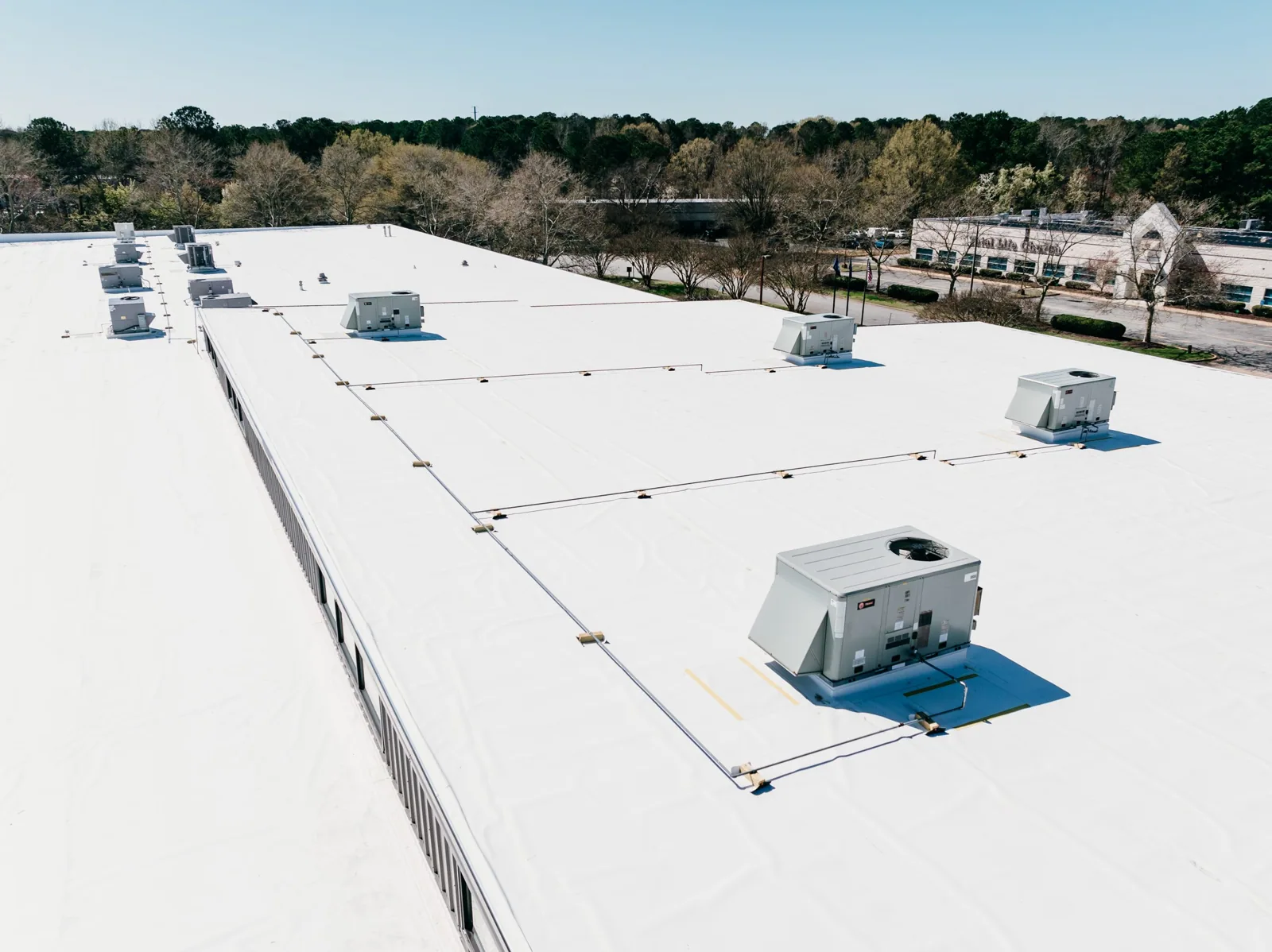
Later changes make older roofs worse. A new rooftop unit builds a dam across the flow path, a recover adds thickness to the field without raising the drain, and solar racks or conduit runs interrupt the fall between a ridge and a scupper. Where roofs from different building phases meet, as they do at Camarillo Premium Outlets, which opened in 1995 and was expanded in 2009, the slope often changes at the junction. We trace each pond back to one of these causes before proposing anything, so the repair addresses the cause and not the symptom.
Storm load: ten inches a year, delivered in a few weeks
Yearly rainfall around Newbury Park runs near ten inches, nearly all of it in a compressed winter season. Oxnard, on the wetter coastal side of the service area, receives about fifteen and a half. A roof can therefore sit dry for nine months and then be asked to shed a season's water in a handful of storms. Low-slope drainage that looked adequate in the dry months shows its limits in the first heavy event, and the dry months also leave ash, leaves and wind-driven litter in every strainer, particularly in the weeks after a fire such as Woolsey or the Mountain Fire.
The structure feels the same event differently. Standing water weighs roughly five pounds per square foot for every inch of depth, so a deck that has already sagged becomes heavier exactly where it is weakest, and the bowl deepens with each storm. That feedback is why we treat repeated ponding as a structural trend and not a cosmetic one, and why an owner who has seen a pond come back each winter should have the deck checked before the next budget cycle.
Membrane: what a pond does to each sheet
Different membranes tolerate standing water differently. Thermoplastic sheets such as TPO and PVC show surface dulling and seam stress inside a long-lived pond, and dirt trapped in the ring absorbs heat that the rest of a reflective roof sheds. EPDM handles water well but is hard on its splices if the pond sits over a lap. Modified bitumen and built-up roofs lose surface protection and, in the worst cases, blister or open at laps. In every case the damage is concentrated in the ponded area while the rest of the roof ages normally.
Owners should also check the paperwork. Many manufacturer warranties limit or exclude coverage over ponded areas, so a roof that ponds may already be outside its own protection. That shifts the repair decision, because spending on a membrane that will not be covered is a different calculation from spending on one that is. For chemical-resistant or constantly wet conditions, a sheet such as KEE roofing is formulated for exactly that exposure and is worth weighing against the alternatives.
Options: drain it, build slope or coat through it
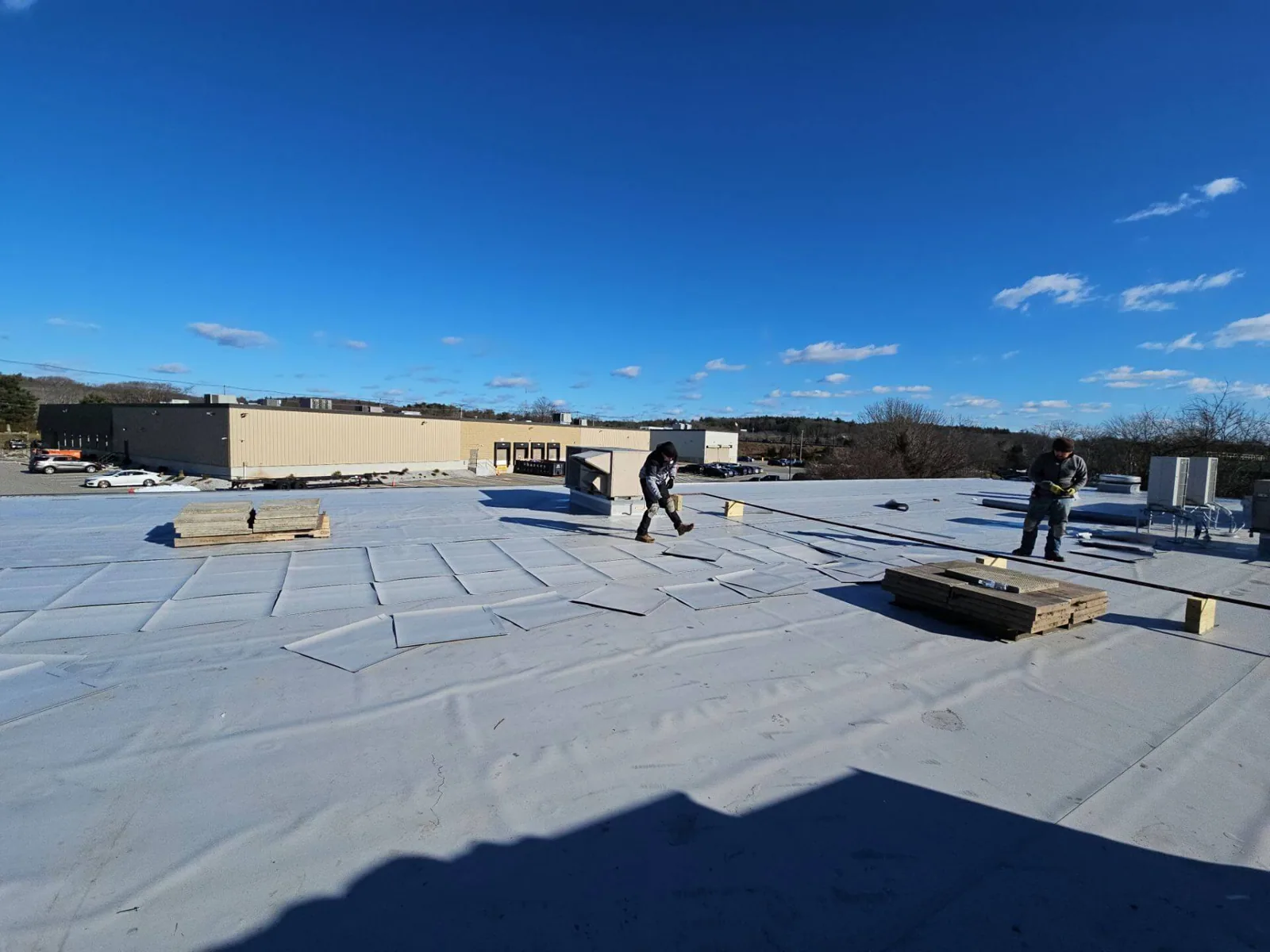
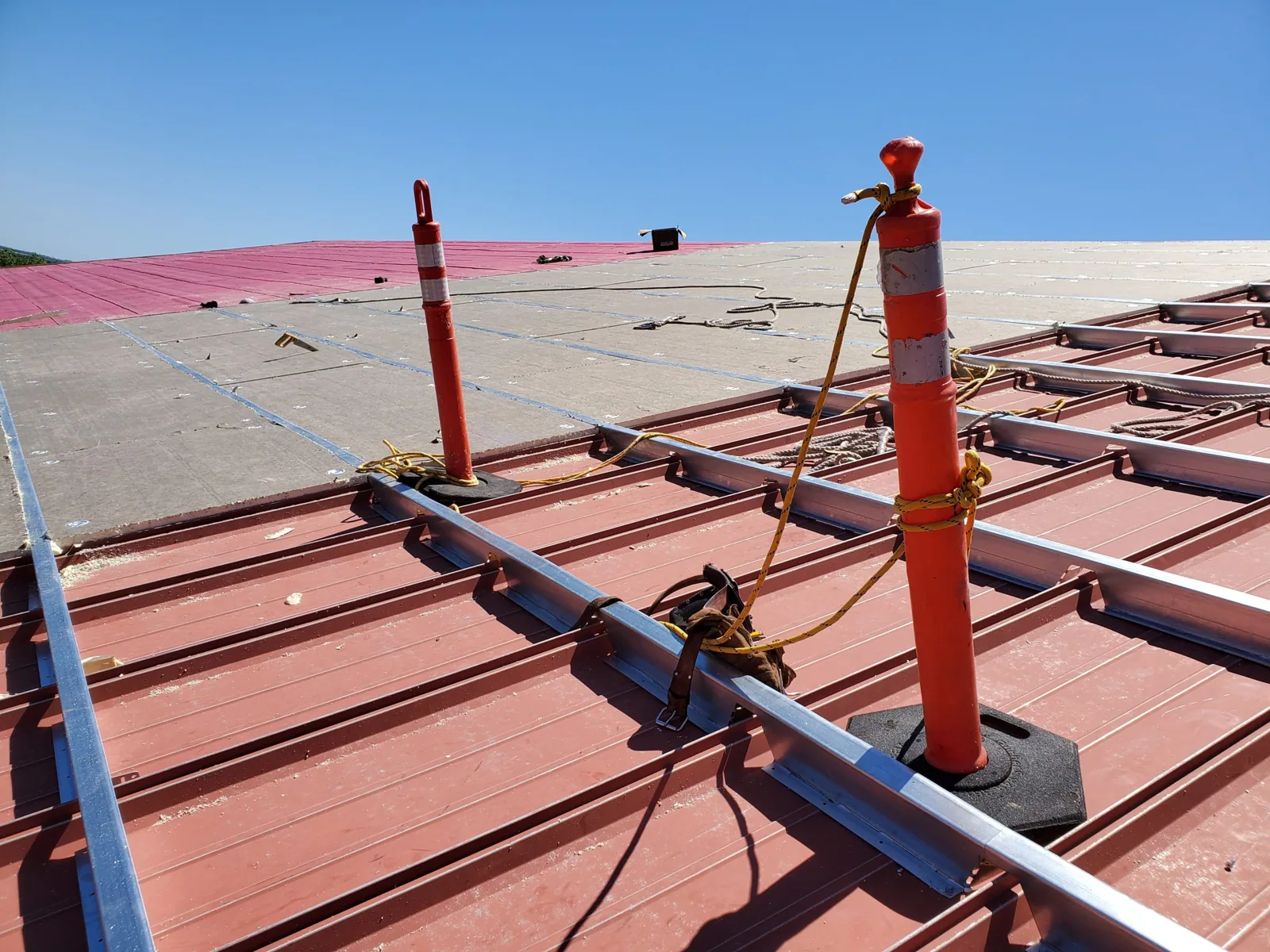
The first remedy is mechanical. Clear and reseat the drain, lower or add a drain at the low point, install crickets behind equipment, or open a scupper in a wall that can take it. That is detail work at the roof drains and scuppers, and it is often the least expensive fix by a wide margin. If water is staying because the field is flat, a layer of tapered insulation and cover board under a new membrane builds the slope the original roof never had, and it can be designed to feed existing drains.
Where the sheet is sound and the structure is stable, a fluid-applied silicone coating is a practical way to protect a ponded zone, because silicone tolerates standing water better than most surfaces. A coating does not move water, though, so it follows the drainage work and does not replace it. When the same pond keeps returning and the deck is moving, repair spending is chasing a moving target, and the survey should say so. Two related failures often travel with ponding: seam failure at the edge of the pond, and heat and UV damage in the dirt ring.
Related roof planning in the surrounding market includes the Camarillo Old Town, where tenant coordination, access, and phased work can shape the schedule.
Commercial Roofing Questions
How long can water stand on a roof before it is a problem?
Water still present two days after rain is the usual line for calling a spot ponding. An occasional puddle after a heavy storm is tolerable on many roofs. Repeated ponds in the same place, or ponds that leave algae and dirt rings, signal a drainage or structure fault worth correcting.
Does ponding mean the roof deck is failing?
Not necessarily, though it can. Water often collects because a drain is blocked, set high, or missing a cricket, and none of those involve the structure. A sagging deck shows up as a broad depression that follows the framing, and a level survey of the roof confirms it.
Will a coating fix ponding on an older roof?
A silicone system can protect a ponded area when the membrane beneath is sound and dry, but a coating does not move water. If the pond is a drainage fault, slope or a drain comes first and the coating follows.
Why does a roof pond only after the first storm of the season?
Dry months let ash, leaves and windblown litter settle into drains and strainers, and wildfire years add more. The first heavy rain then meets a half-blocked outlet. Clearing sumps and strainers before the wet season prevents most early-season ponds.
How do I find out whether the insulation under a pond is wet?
Infrared scanning on a clear evening shows wet insulation as a warm patch, and a core sample or moisture meter confirms it. Start with ponds that sit over seams or flashing, since those are the likeliest entry points.