KEE Roofing in Thousand Oaks, CA
Roof Systems · Thousand Oaks, CA
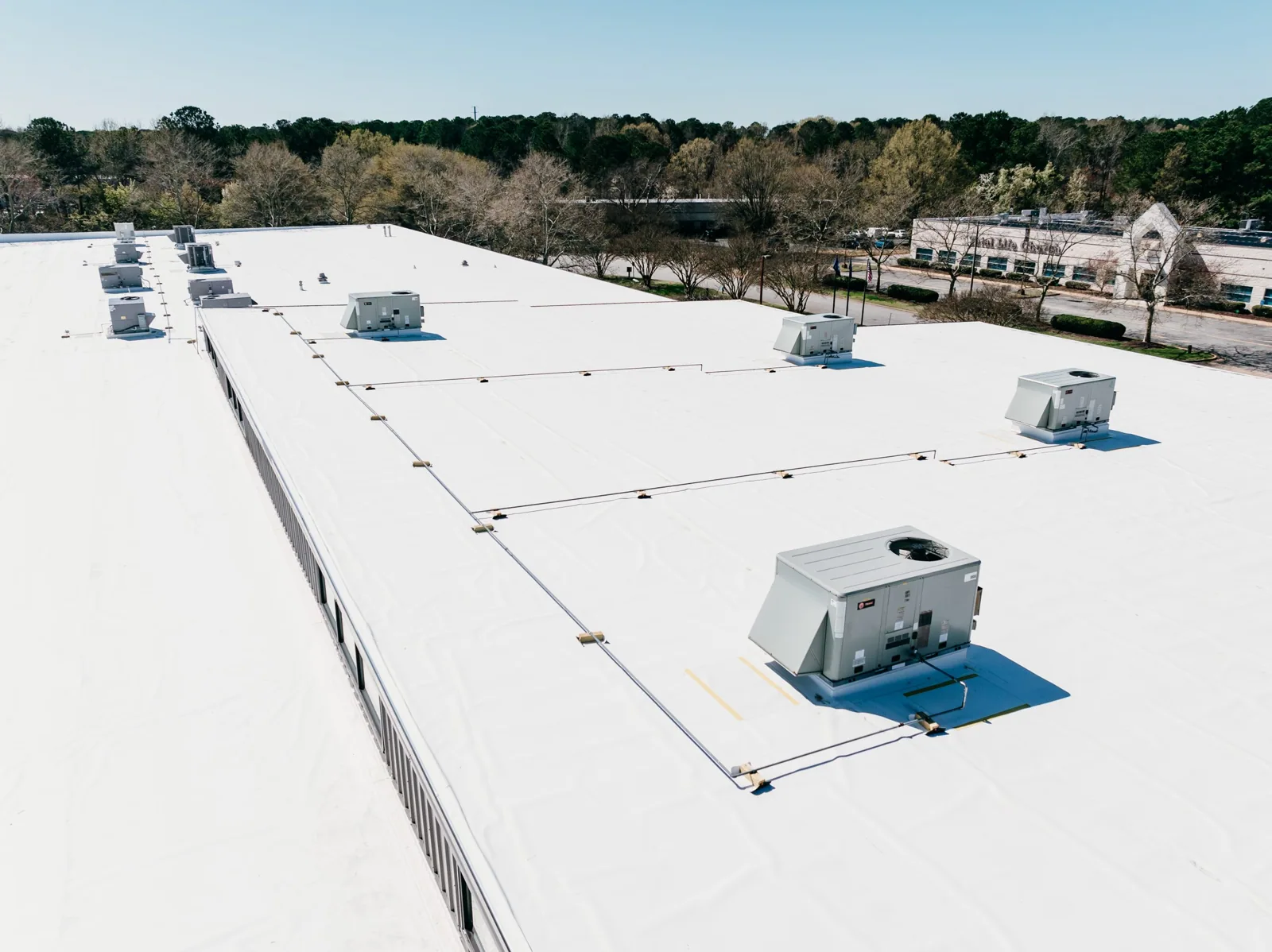
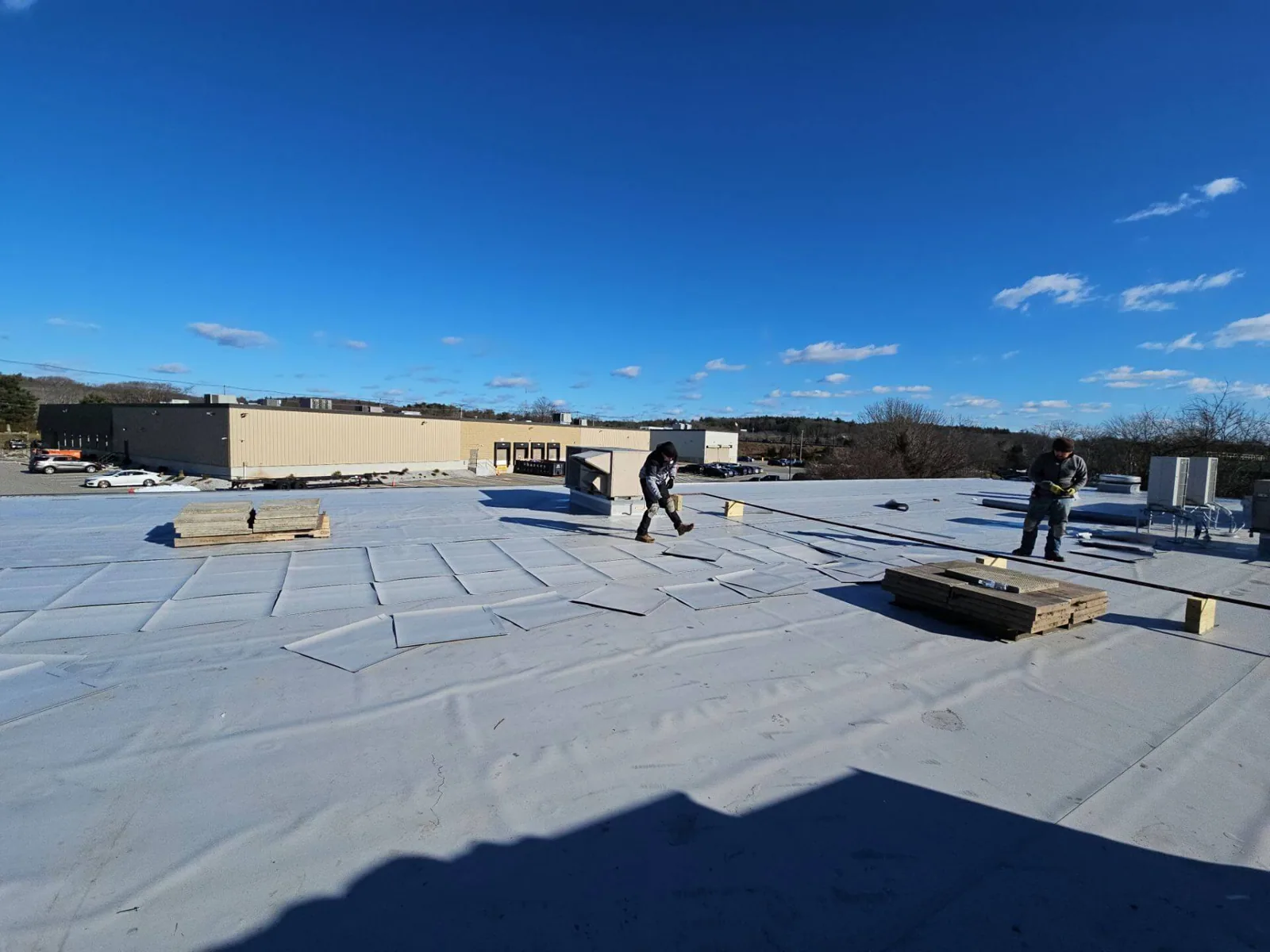
Residue sampling: a pale, oily film on the membrane around two laboratory exhaust stacks, with the PVC-alloy sheet beneath it still soft to the touch and every weld in the path unmarked. On a biotech or R&D building in Newbury Park, that is the finding that separates a KEE roof from an ordinary single-ply roof. Rooftops serving laboratories and production space receive more than weather, and the chemistry of what lands on the surface sets how long the sheet stays flexible. KEE is a ketone ethylene ester membrane, a specialized branch of the PVC family, and for owners in Thousand Oaks, CA with process exhaust, grease or standing water it is a planning decision, not a catalog preference.
KEE Roofing
Roof Systems
Call our team
Written findings and options
Thousand Oaks, CA
Ventura and Los Angeles counties
Formulation: the ketone ester and the problem it solves
Standard flexible PVC relies on plasticizers that can slowly migrate out of the sheet, and that loss is what makes older membranes stiff, brittle and prone to cracking at corners. KEE sheets use a ketone ethylene ester polymer as the modifier. It is a larger molecule that stays in the membrane, resists leaching and holds flexibility longer. The result is a sheet that tolerates oils, fats, many solvents and acids, and it holds up under prolonged standing water.
The rest of the system looks familiar. Seams are fused with hot air, accessories are prefabricated and welded, and the membrane is installed mechanically attached or fully adhered over insulation and a cover board. What changes is the service profile. The sheet gives its owner more tolerance for the things a roof should not be exposed to but often is, and the baseline survey records where those exposures sit so the premium can be tied to a finding.
Laboratories: exhaust, solvents and the R&D campus
Amgen is headquartered in Thousand Oaks, and about 7,000 of its people work in the Newbury Park and Conejo Valley area, which points to large multi-building campuses with laboratories, manufacturing and office space. Teledyne Scientific operates on the former Rockwell Science Center campus acquired in 2006, a research and light-industrial complex, and the Rancho Conejo Industrial Park mixes R&D buildings with tilt-up industrial space. Those building types put fume hoods, process exhaust and chilled-water equipment on the roof, and each stack can leave residue on the sheet.
We map each exhaust discharge before a repair or replacement scope is written. Where a stack sprays onto the field, a welded splash pad or a stack extension protects the sheet; where equipment is being added, the new curb is flashed with prefabricated KEE-compatible accessories. The goal is a membrane whose weakest spots are the ones a facilities team can see and service without opening the roof.
Cold chain: Oxnard packing houses and Port Hueneme
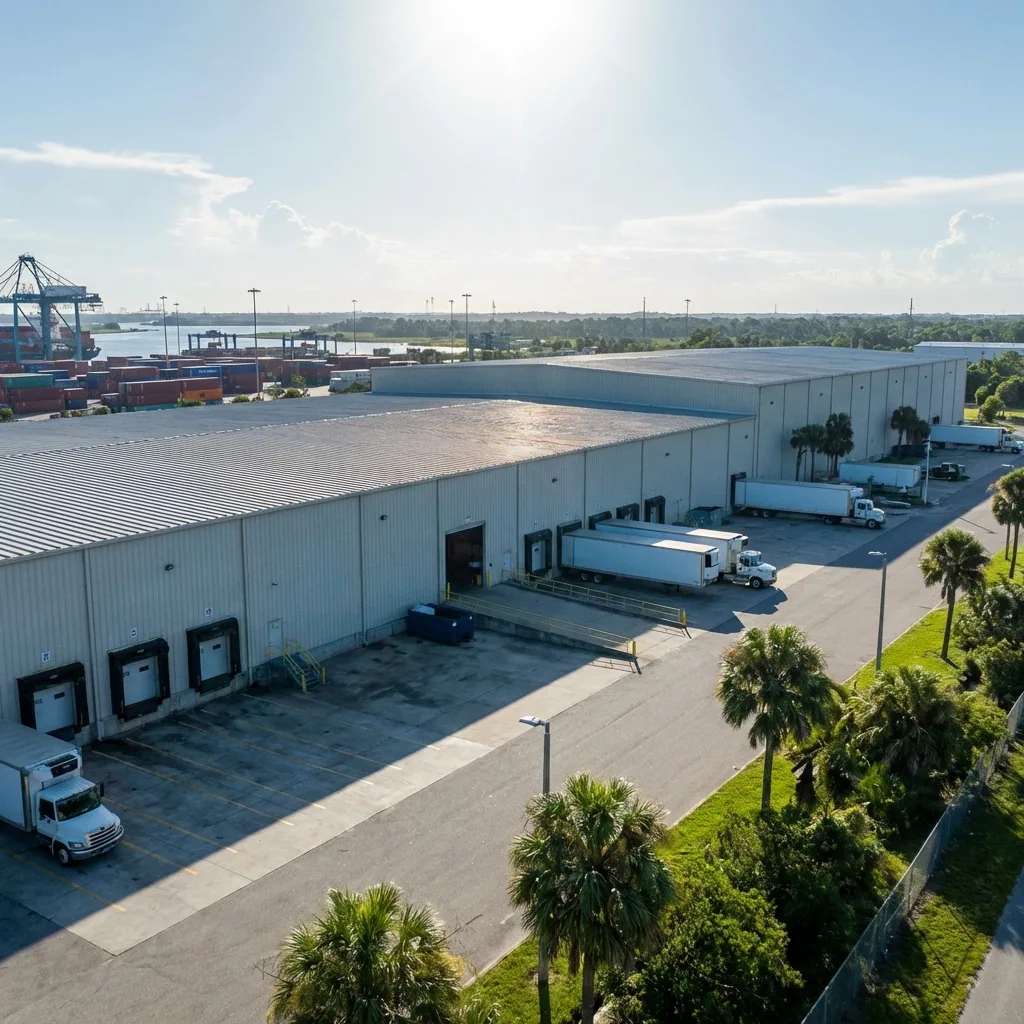
Oxnard supplies about a third of the state's strawberries, so packing and cold storage buildings are common there, and the Port of Hueneme processes around 3.3 billion bananas annually, so refrigerated warehouses are a major building type in that city. These roofs share a problem with laboratories: fats, cleaning chemicals and moisture. A food plant exhausts hot, humid, greasy air through the roof, and a cold warehouse sits below a membrane that is warm on top and cold underneath, which invites condensation inside the assembly.
KEE suits that exposure, but only when the assembly design is right. Vapor retarders, insulation thickness and the placement of rooftop condensers need to be reviewed together. On a cold storage roof the survey starts with moisture detection. Oxnard averages about 15.6 inches of precipitation a year against the ten inches Newbury Park sees, so on the coastal side near Port Hueneme drainage is reviewed with the same care.
Standing water: low spots, short storms and sump detail
Newbury Park receives close to ten inches of rain across a year, concentrated in a short winter season, so the roof is tested by a handful of heavy storms. A building that drains slowly can hold water for days afterward, and while KEE tolerates immersion better than most sheets, the insulation, deck and flashings below it do not. We measure the low spots after rain and compare them with drain locations, then decide between tapered insulation, new sumps and a cleaned outlet. Ponding water repair is usually a design fix, not a membrane fix.
The sheet's tolerance for water should not become a license to ignore the drainage. Debris collects in low spots, vegetation takes root and the extra weight adds load on a framing system that was sized for a dry roof. The maintenance log records every clearing, so the next survey starts from facts. Heat compounds the issue: sustained summer temperatures raise the membrane surface temperature, and a warm, wet, chemically exposed sheet ages faster than a dry one, which is why the survey records the surface condition near every low spot as well as the seams.
Selection: where KEE earns its place against PVC and TPO
KEE costs more than a standard single-ply sheet and is not the right answer for most roofs. A clean, quiet warehouse is well served by TPO. A restaurant with grease but little chemical exposure is often well served by conventional PVC. KEE belongs where the findings point to prolonged chemical contact, repeated ponding or long-term plasticizer loss on an earlier PVC roof. Those facts usually appear in manufacturing, laboratory and food buildings.
A KEE specification also needs a repair plan. We document the manufacturer markings, seam layout, flashing type and any coating or patch already on the field, then test a proposed repair area before committing to a detail. Oils can soften some sealants, and cleaning agents can change the surface a weld needs. A compatible patch is prepared on a clean, dry area with the correct hot-air settings, then probed after cooling. The record identifies the material used and the location, so the next survey can distinguish a new repair from an original seam.
For an owner with several of them, the prioritized scope puts the premium sheet on the roofs that show those conditions and the standard sheet everywhere else. The same logic runs through a manufacturing plant roof program, and the reserve study can show the difference line by line. When a building changes use, for example from light assembly to a laboratory fit-out, the roof is reviewed again, because a sheet chosen for the old tenant may not suit the new exhaust.
Commercial Roofing Questions
What exactly does the ketone ester change compared with PVC?
It replaces the small plasticizers that leach out of ordinary PVC with a larger polymer that stays put. The sheet keeps its flexibility longer and tolerates oils, fats and chemicals with less surface damage.
Does a laboratory roof need KEE?
Not automatically. The exhaust chemistry, the layout of stacks and the condition of the existing roof drive the answer. We sample residues and map discharge points, then recommend KEE only where the findings support it.
Can KEE be welded to an older PVC roof?
Compatibility varies by manufacturer and by the age of the existing sheet. Test welds on the actual surface settle it, and aged PVC often needs cleaning or a transition detail instead of a direct bond.
How does KEE perform on a cold-storage building?
The sheet handles the wet, greasy conditions, but condensation inside the assembly is a separate risk. Vapor retarders and insulation have to match the cold side of the building, and a moisture survey after the first winter confirms the design.
Will KEE roofing survive a wildfire season?
It resists flame spread like other PVC-based sheets, though the fire rating belongs to the tested assembly. We check the assembly, then look for ash, char and clogged drains after any smoke event.