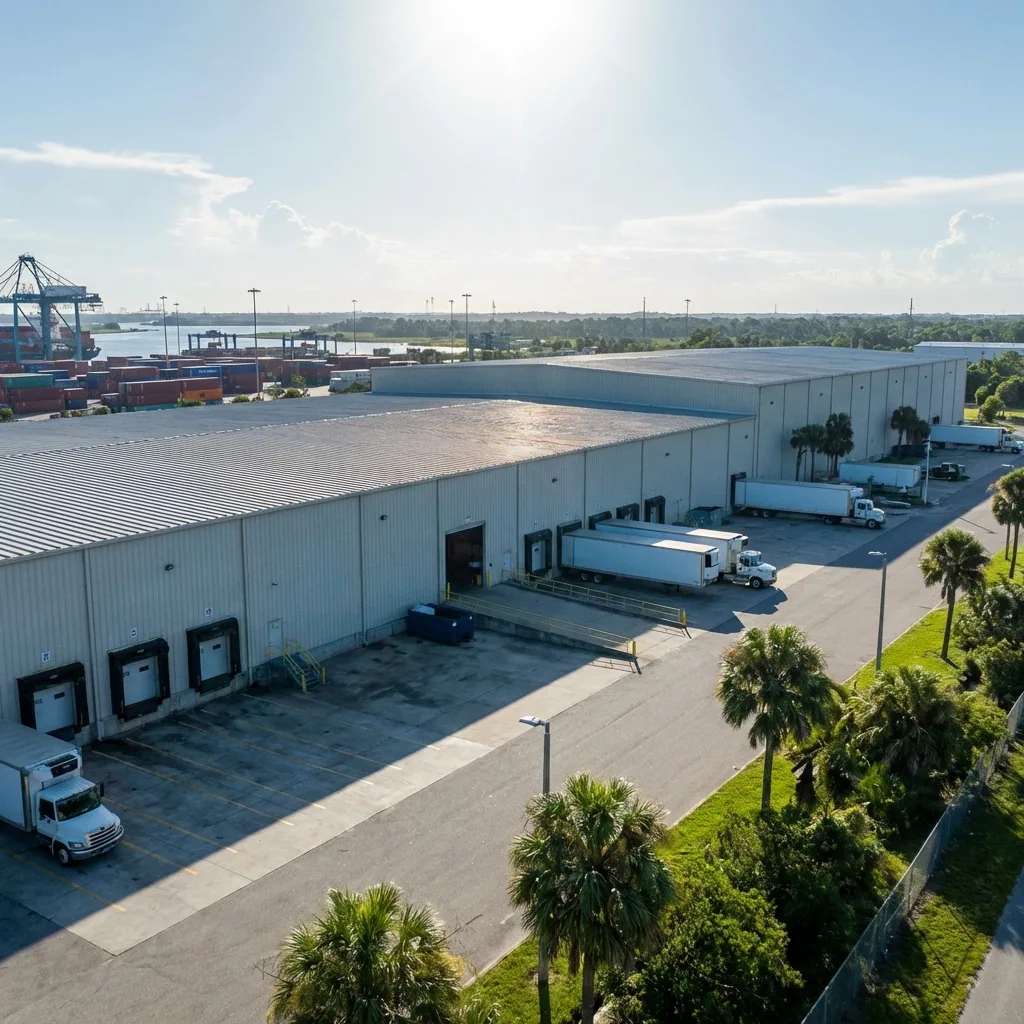
Cold Storage Roofing in Thousand Oaks, CA
Property Types We Roof · Thousand Oaks, CA
Freezer wing, roof section F: core sample saturated through the top two insulation layers, frost visible on the underside of the deck at one pipe penetration, and a vapor retarder lapped open where it meets the parapet. A refrigerated building asks its roof to fight moisture from two directions at once, warm humid air pressing inward from above and cold interior air pulling vapor toward the deck, and the findings on these roofs read differently from those on a dry storage building. The leak, when there is one, is often the last symptom. For an owner of cold storage in the Thousand Oaks, CA region the planning question is how much of the insulation has already lost its value, because that number sets the scope, the budget and the schedule for everything that follows.
Cold Storage Roofing
Property Types We Roof
Call our team
Written findings and options
Thousand Oaks, CA
Ventura and Los Angeles counties
Vapor: why a cold building draws moisture into its own roof
Water vapor moves from the warm, wet side of an assembly toward the cold side. In a freezer or cooler building that direction is downward, so any gap in the vapor retarder, any unsealed penetration for a refrigerant line, conduit or sprinkler pipe, and any warm air leaking up around a hatch becomes a path for moisture into the insulation. The vapor condenses, then freezes, and the insulation loses its thermal value layer by layer while the surface of the membrane looks perfect. We trace the vapor path before we assume the roof is leaking, by coring, by inspecting penetrations from above and below, and by checking where interior stains do not line up with exterior defects. Some refrigerated roofs are wet from the inside out, and a repair made only on the surface will not change.
The correction is usually mechanical and specific. Penetrations get new boots and sealed collars, the retarder is lapped and bonded back to the parapet, and hatches and curbs are gasketed against warm air migrating upward. We write each of those as its own line in the scope, so the owner can see which fixes stop the moisture and which only improve appearance, and we recheck them after the first cold season to confirm that frost no longer forms at the same places.
Insulation: the thickest layer carries the most risk
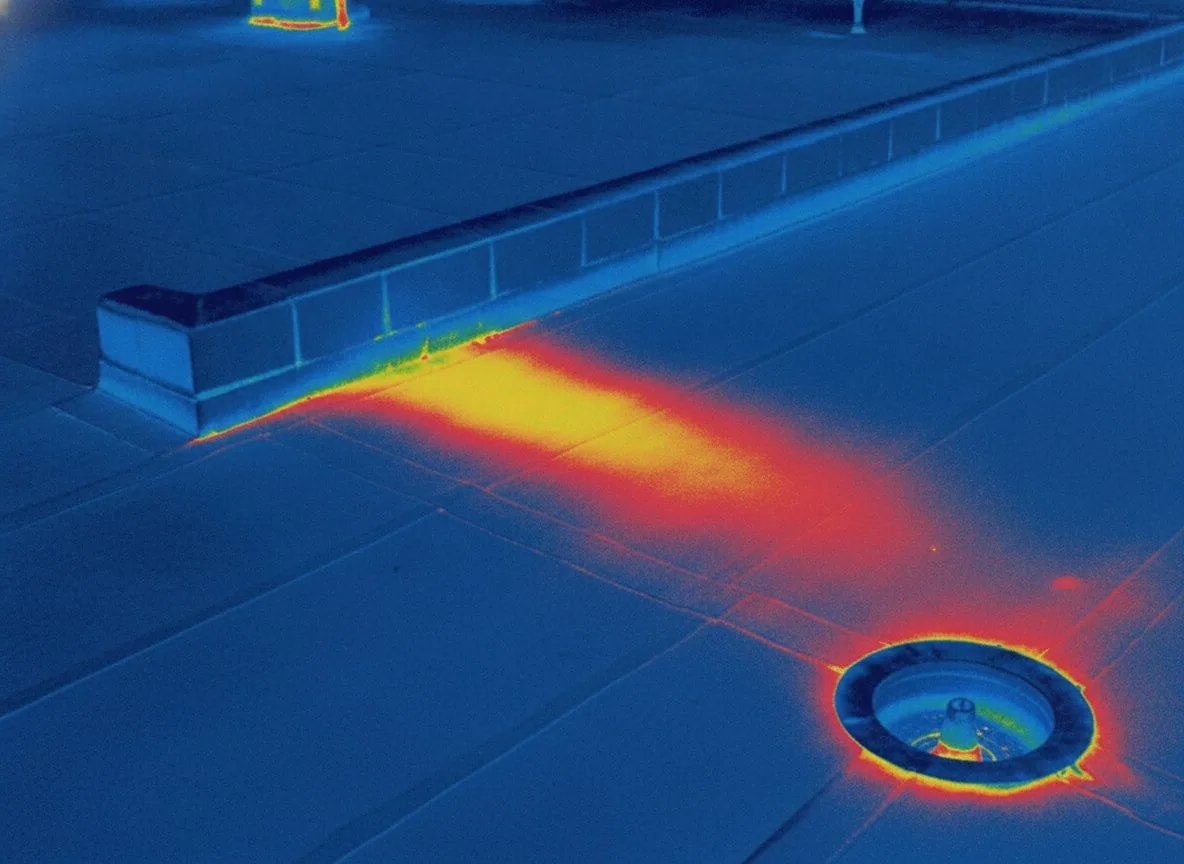
Cold storage roofs carry more insulation than ordinary buildings, and every inch of it is worth protecting. Wet insulation conducts heat, adds weight, swells fasteners and plates, and forces the refrigeration plant to run harder to hold temperature. A moisture survey, backed by core samples, maps what is wet and what is dry, and often shows that a roof can be saved by replacing only the saturated areas under a new cover board and membrane. A closed-cell spray polyurethane foam roofing assembly is another option, since it forms a continuous layer around refrigeration penetrations, though whether it suits depends on the existing build-up. An infrared moisture survey run early keeps that decision based on a map, not a guess.
Refrigeration load: reflectivity, condensers and heat events
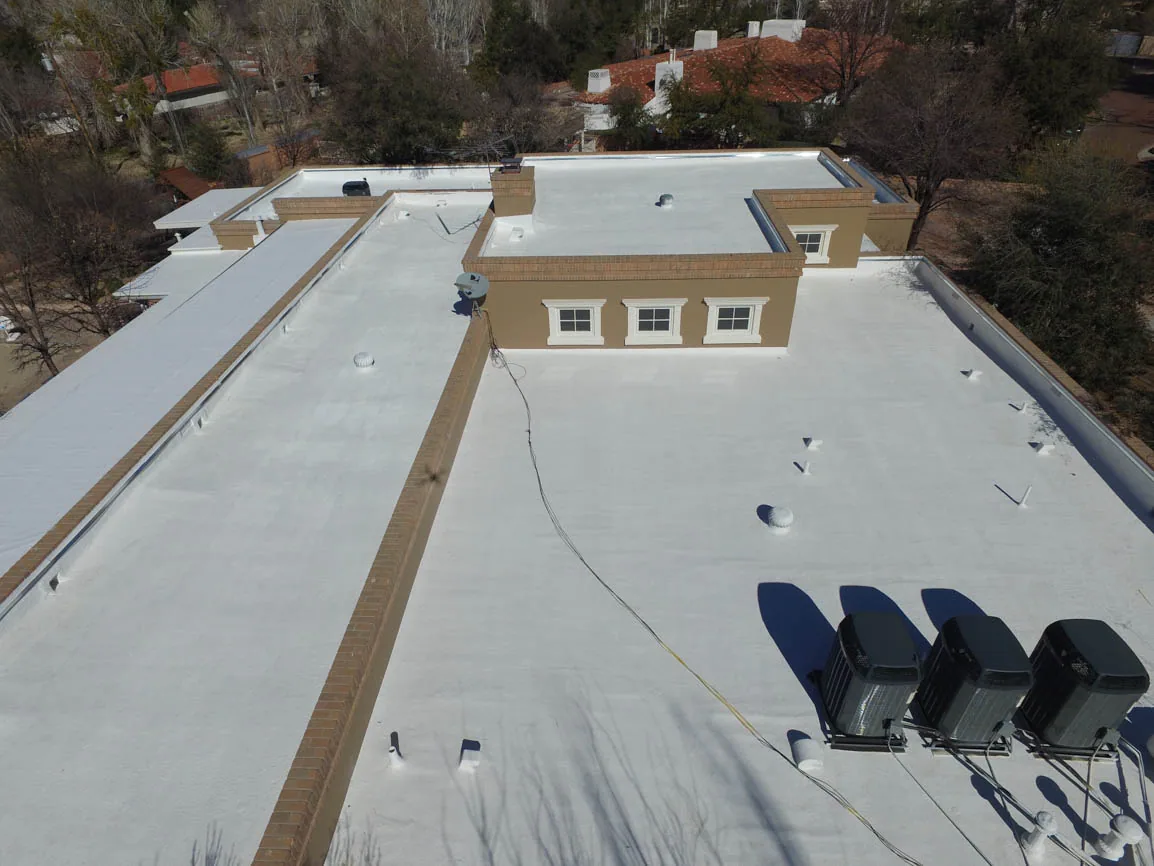
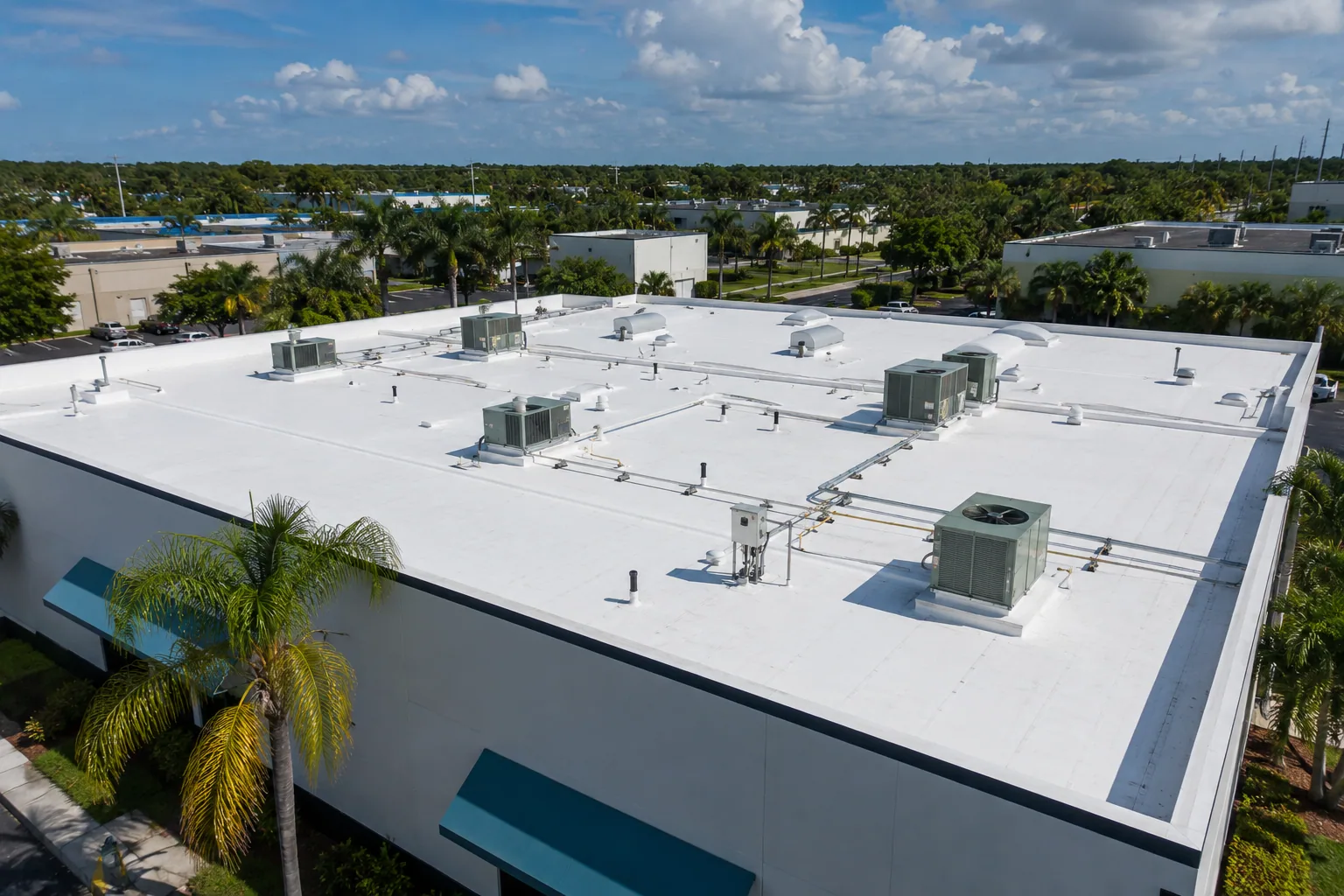
Thousand Oaks has a warm-summer Mediterranean climate, but forecasters have posted Extreme Heat Warnings for the coastal and valley zones of Los Angeles and Ventura Counties alike, and sustained heat raises both the membrane temperature and the work the refrigeration plant must do. A white reflective membrane or a restored reflective surface reduces the heat load reaching the insulation, which is why cool roof installation pairs naturally with refrigerated space. Condensers and compressors on the roof add their own demands. Their supports, vibration and condensate lines should be checked on the same visit, because rooftop equipment curbs and supports are where a roof shared with refrigeration often leaks. The vapor control and the reflective surface work together, and neither substitutes for the other.
Coastal plain: Oxnard and Port Hueneme buildings
Cold storage is a coastal-plain building type here. Oxnard supplies roughly one-third of California's strawberries, so packing and cold storage buildings are common there, and its annual precipitation runs near 15.6 inches, falling mostly in mild, wet winters. Port Hueneme moves roughly 3.3 billion bananas a year through the only deep-water commercial port between Los Angeles and San Francisco, which makes refrigerated warehouse roofs a major building type in that city. Inland, Fillmore's orchard farming and packing and the citrus economy of Santa Paula put farm-economy buildings along the Santa Clara River. Oxnard and Port Hueneme sit on the coastal side of our service area, and the extra rainfall on the coastal side is one more reason drains and edge details on those roofs deserve attention before winter, with sumps and scuppers cleared and the edge metal checked against the first storm. Oxnard is served by US 101 and State Route 1, which matters when a crew has to arrive within hours.
The repair sequence matters as much as membrane choice. We mark refrigeration lines, condensate paths and the areas where a shutdown would affect product, then coordinate the roof opening with the operator. Wet insulation comes out in controlled sections; dry material stays protected. At the end of each shift, temporary seals are checked at the perimeter and around every exposed pipe. That approach keeps vapor control continuous as the assembly is rebuilt and gives the facilities team a clear record of which bays were opened, dried and closed.
Emergency: product at risk and the first hours
A leak over a freezer wing puts inventory and equipment at stake, and the hours matter. Our emergency roof repair response runs at any hour, every day of the year, and its first task is to stop water entry with temporary terminations, tarps or sealed patches while the area over product is protected. Core samples follow once the weather allows, to establish how far the moisture has traveled. We photograph the damage as we find it, which supports an insurance claim. Where a food processor runs a plant on the same site as the freezer wing, the manufacturing plant roof is surveyed on the same visit, and so is a distribution center with a chilled annex. Where an older freezer building has been added to in stages, the report separates the roof areas by age, since the original section and the later additions often carry different insulation, different vapor details and different remaining service life.
Commercial Roofing Questions
Why does insulation in a freezer building get wet without a roof leak?
Because vapor moves toward the cold side and condenses where it meets the cold deck. Open laps in the vapor retarder and unsealed pipe penetrations feed it continuously, so the insulation can be saturated while the membrane is intact.
Can a coating or a recover go over wet insulation on a cold storage roof?
Not for long. Trapped moisture keeps traveling, the insulation keeps losing value, and the new surface blisters. Wet areas should be removed first, even when the rest of the roof is sound.
Does a white membrane help a refrigerated building?
It lowers the surface temperature through the afternoon, which reduces the heat reaching the insulation and eases the load on the plant. The effect is real but secondary to keeping the insulation dry.
How is product protected while the roof is open?
The area over product is the last to be opened and the first to be closed. We stage in small sections, test terminations at day's end and agree the sequence with the operator before work starts.
Why take core samples instead of relying on a moisture scan alone?
A scan shows where heat behaves differently, and a core shows why. Only a cut sample distinguishes wet insulation from a thick patch or a heat source, and it confirms how many layers are damaged before a scope is written.