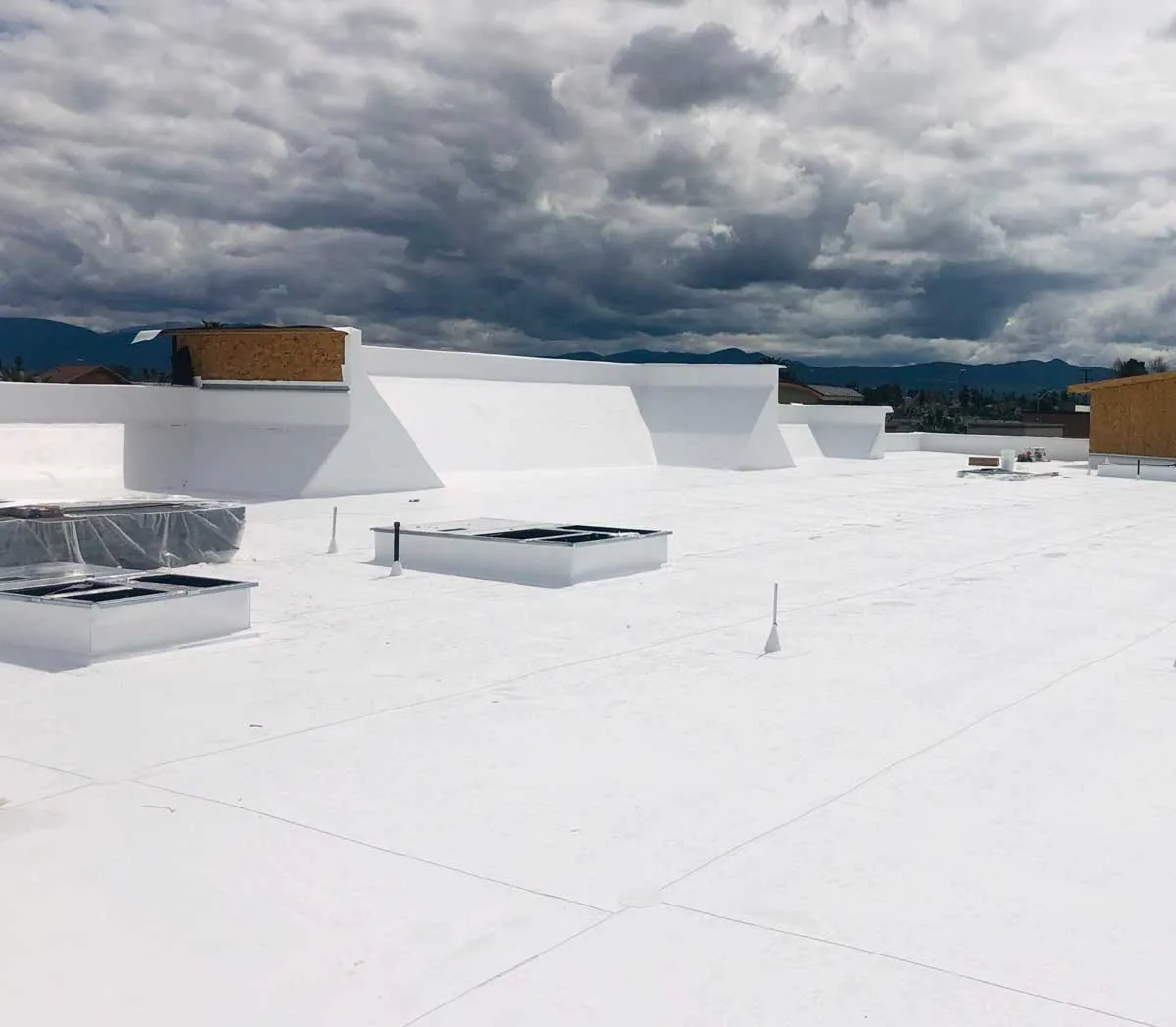
TPO Roofing in Thousand Oaks, CA
Roof Systems · Thousand Oaks, CA
Seam probe record: three open laps and two probe-lifted edges along the south run of a white TPO roof, all within a few feet of a rooftop unit curb. On a warehouse in the Rancho Conejo Industrial Park, that pattern reads as the early signature of a membrane that has spent its summers swinging between cool nights and a hot, reflective surface. It is not yet a leak and it is not yet a replacement. It is a dated finding that tells the owner how much remaining service life the roof carries and how soon that number belongs in the budget cycle. TPO, thermoplastic polyolefin, is a single-ply sheet many owners in Thousand Oaks, CA meet first, and knowing how it ages is the fastest way to plan around it.
TPO Roofing
Roof Systems
Call our team
Written findings and options
Thousand Oaks, CA
Ventura and Los Angeles counties
Aging: how a white sheet weathers under Conejo Valley sun
TPO is a flexible membrane blended from polypropylene and ethylene-propylene rubber, usually reinforced with a polyester scrim and finished with a white or light-gray top ply. Its seams are fused with hot air, which turns two sheets into one continuous layer, and that welded joint is the main reason owners choose it over adhesive-bonded options. The sheet still depends on stabilizers in its surface formulation to survive ultraviolet exposure, and those formulations differ between manufacturers and production years. In a valley with year-round sun, the usual story is gradual: the top ply chalks, reflectivity drops as dirt embeds, and fine cracks appear first where the sheet stretches over a cant strip or around a pipe boot.
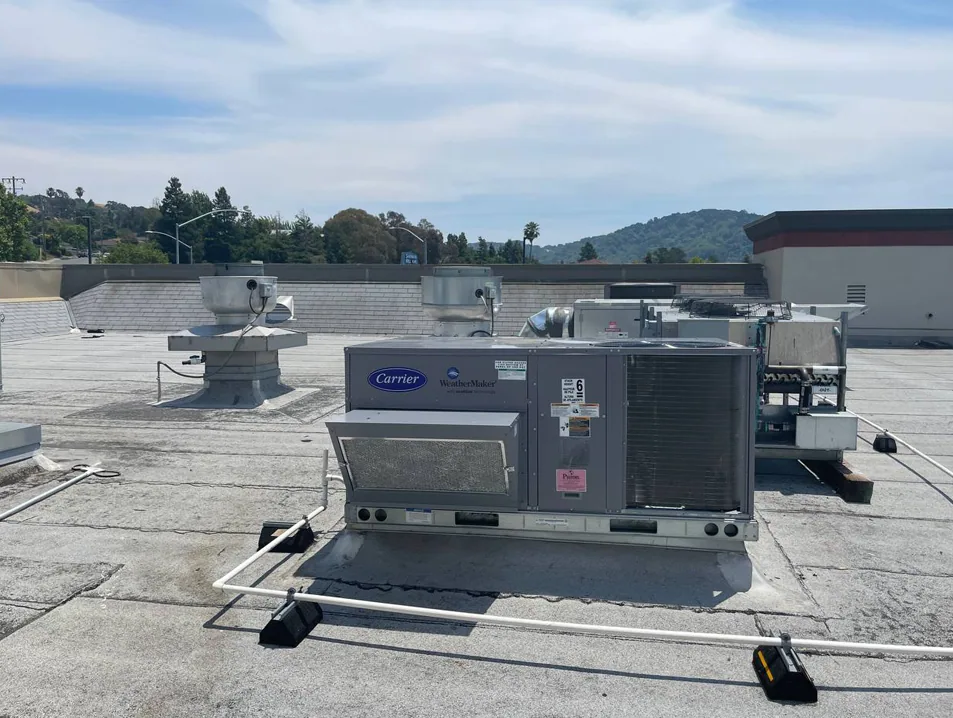
Heat sharpens every step of that. The National Weather Service office for Los Angeles and Oxnard has issued Extreme Heat Warnings covering the coast and valleys of Los Angeles and Ventura Counties, and a September afternoon in 2020 pushed Woodland Hills to 121 degrees, the highest temperature ever recorded in Los Angeles County. Flashing terminations, welded corners and the membrane under mechanical equipment take the most expansion and contraction, so those are the locations we read first.
Attachment: fastened, adhered or ballasted against Santa Ana uplift
A TPO roof is held down one of three ways, and the choice sets how it behaves in wind. Mechanically attached systems run plates and fasteners through the membrane into the deck, which suits large, simple steel-deck buildings. Fully adhered systems bond the sheet to the insulation or cover board and resist flutter, which matters at tall walls and corners. Ballasted systems rely on stone or pavers and add weight the structure must carry. Santa Ana winds can easily exceed 40 mph, and the Woolsey Fire ran on winds of 50 to 60 mph, so perimeters, corners and parapet returns call for tighter fastener spacing and heavier edge metal than the field of the roof.
During a survey we count fasteners, look for backed-out plates and watch for billowing, because a membrane that moves in a light breeze fatigues its seams long before it tears. Roofs carrying heavy rooftop equipment curbs get a second look at every penetration, since a wind event finds the weakest detail first.
Welds: what a probe, a coupon and a clean sheet tell us
A good weld shows a continuous, even bead at the lap edge and resists a firm pass of a probe. We run the probe along every seam in the survey area, flag any lap that lifts, and cut a small coupon from representative locations to pull the weld apart by hand. A sound weld tears the membrane itself rather than separating at the joint. Cold welds, contamination under the lap and welding over a dirty or oxidized surface are the faults that show up here, and they explain most of what owners call premature seam failure.
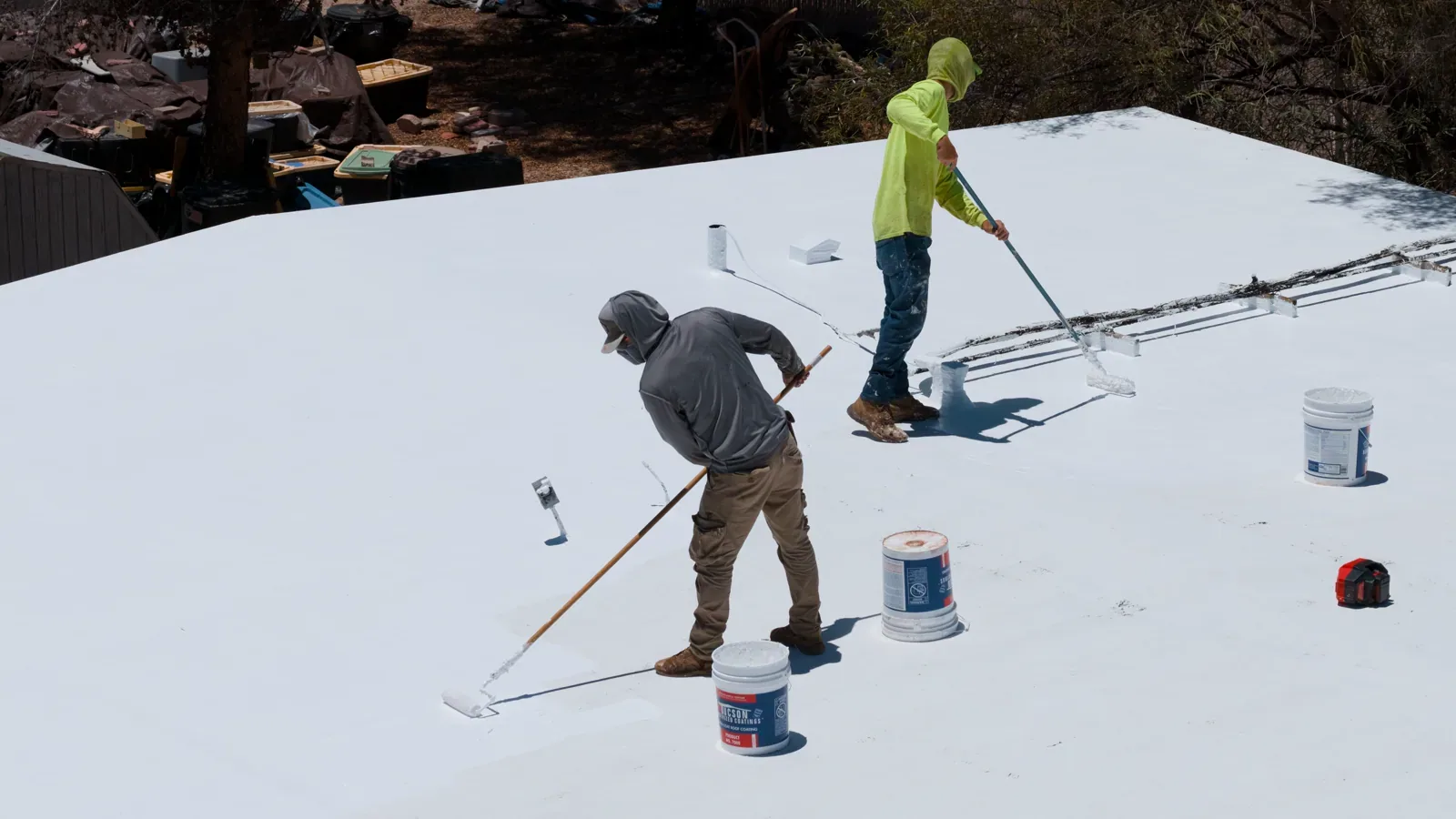
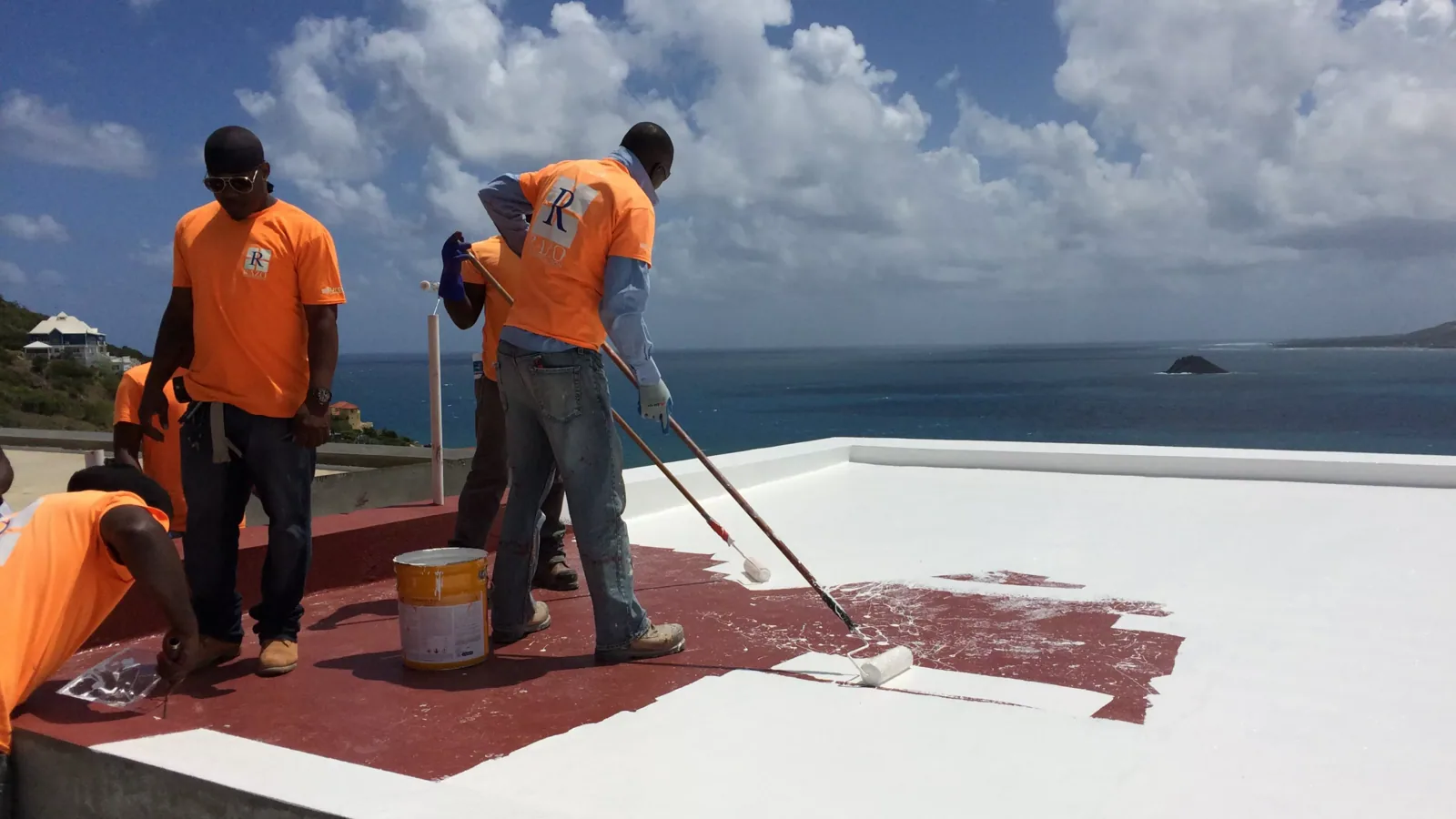
The same discipline governs repair. An aged TPO surface will not weld until it is cleaned and abraded, so a patch applied over chalk will peel in the first hot month. When a roof has too many open laps to fix individually, the finding moves from maintenance to scope: how much can be re-welded, how much needs a cover strip, and how much belongs in a coating or recover program. Each outcome gets a price attached before the budget meeting.
Energy code: reflectivity as a design input
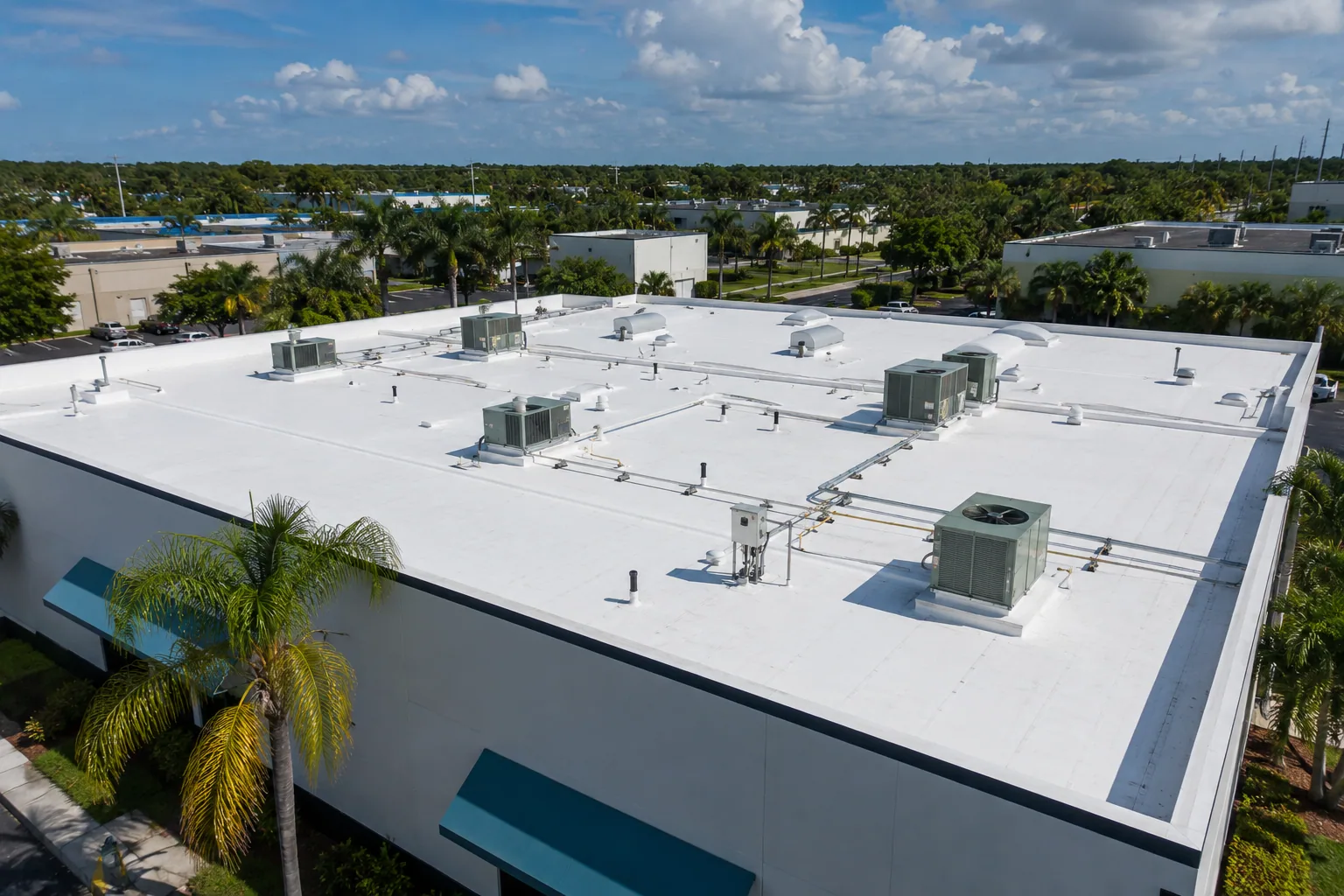
Under Title 24 Part 6, projects whose permit applications go in from January 1, 2026 onward are reviewed against the 2025 energy code, which reaches commercial roofing, cool roof criteria, solar and storage. The city folded the state package into its local building regulations in 2025, so a reroof here meets that combined review. White TPO is a natural fit for the cool roof side of it, and the product data should be settled before the permit is filed, not after the crew arrives. Reflectivity also declines as dirt and chalk accumulate, which is why the survey records the surface condition and not only the seams.
Owners planning for rooftop solar should raise it early. Placing arrays, ballast trays and walkways on a membrane changes the attachment, the traffic protection and the warranty conversation, and the reflective surface chosen for a cool roof installation should be selected with the array layout already on the table.
Inventory: distribution space, big boxes and re-tenanted floors
Most of the city's industrial businesses sit in the Rancho Conejo Industrial Park, a 2017 count of more than 120 properties, and the Amazon warehouse that opened there in 2018 added a distribution-scale low-slope roof beside the park's tilt-up and R&D buildings. Wide low-slope fields with few obstructions suit single-ply, and TPO is the usual choice for them. Warehouse roofing at Rancho Conejo is surveyed in a fixed order: seams first, then curbs, then drains.
Retail has its own timing. Sears and Toys R Us both closed at Janss Marketplace in 2018, leaving large big-box roofs to re-tenant, and every new tenant arrives with new rooftop units, new penetrations and new loads. A TPO roof that was sound under the old tenant can fail at the first unmapped curb the new tenant adds. We document the roof before the lease work begins, so the finding on day one is the baseline for day one thousand. Where grease, chemicals or heavy rooftop traffic are in play, PVC is the closest alternative sheet, and we price it beside TPO so the choice rests on exposure, not habit. An EPDM roof system is another single-ply option, with different seam details and repair materials to record.
Commercial Roofing Questions
How long should a TPO roof last in the Conejo Valley?
Service life tracks the thickness of the sheet, the quality of the welds and the maintenance the roof has received. Clean drains and prompt puncture repairs routinely separate a roof that reaches its horizon from one that does not. The baseline survey puts a remaining-life estimate on paper for your specific roof.
Can an aging TPO roof be coated instead of replaced?
Sometimes. TPO is a low-surface-energy plastic, so adhesion has to be tested on the actual roof and the seams must be tight before anything is applied. A coating that peels is worse than none, which is why the cores and pull tests come first.
Do TPO seams fail from the sun or from the installation?
Early failures within the first few seasons point to installation: cold welds, contamination or missed laps. Failures that appear late and cluster on south exposures point to weathering. The pattern of open laps on the roof usually shows which one we are looking at.
Does the energy code require a white membrane on a reroof here?
The 2025 California Energy Code sets cool roof standards for qualifying nonresidential work, effective for permits filed from January 1, 2026. We specify a membrane and insulation that meet it and confirm the details with the building department at permit.
What should an owner ask about ember exposure on a single-ply roof?
Ask for the fire rating of the whole assembly, not just the sheet, because membrane, insulation and cover board are tested together. After events like the Woolsey Fire, we also check laps and penetrations for ash and char when a roof has been under smoke.