Storm Damage Roof Repair in Thousand Oaks, CA
Commercial Roofing Services · Thousand Oaks, CA
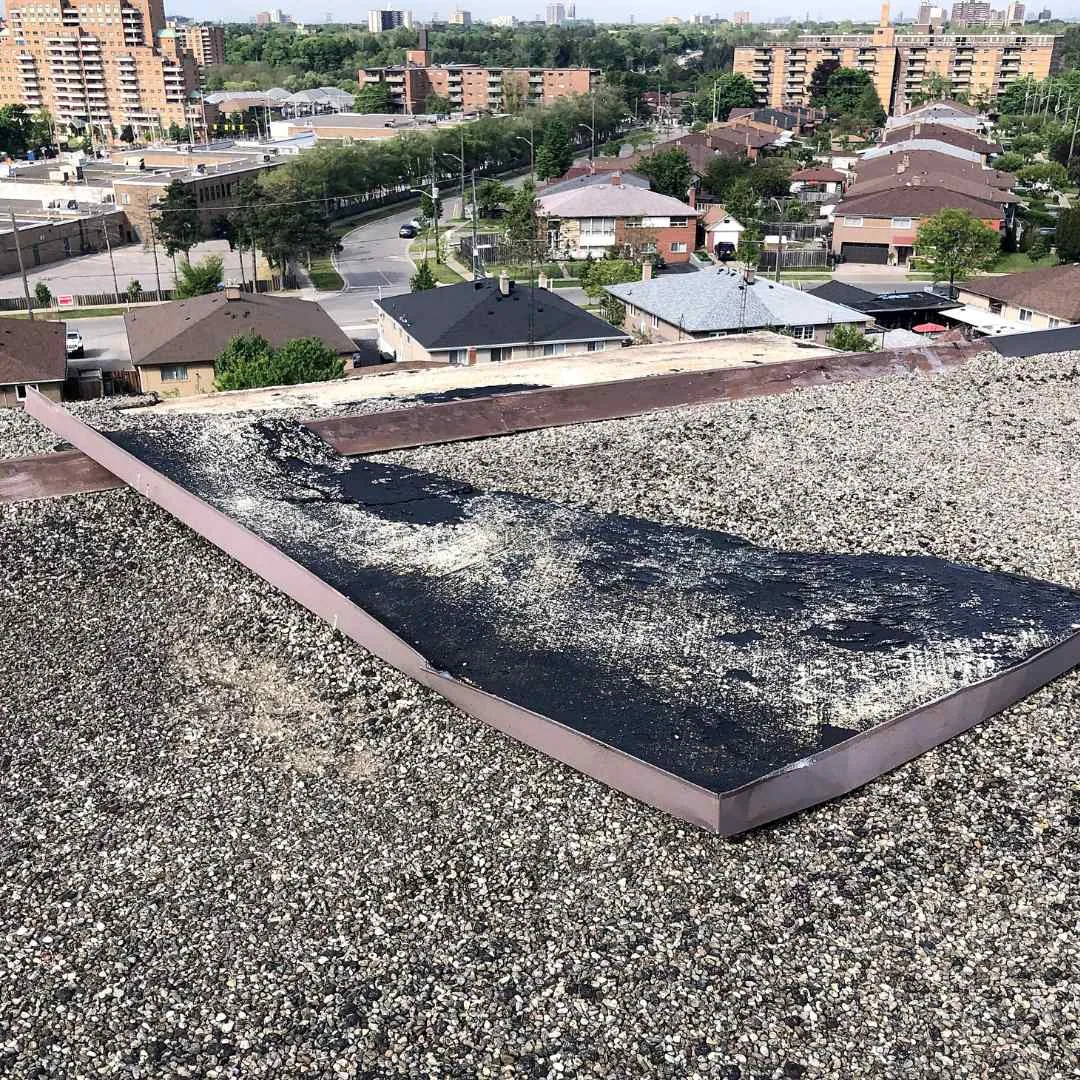
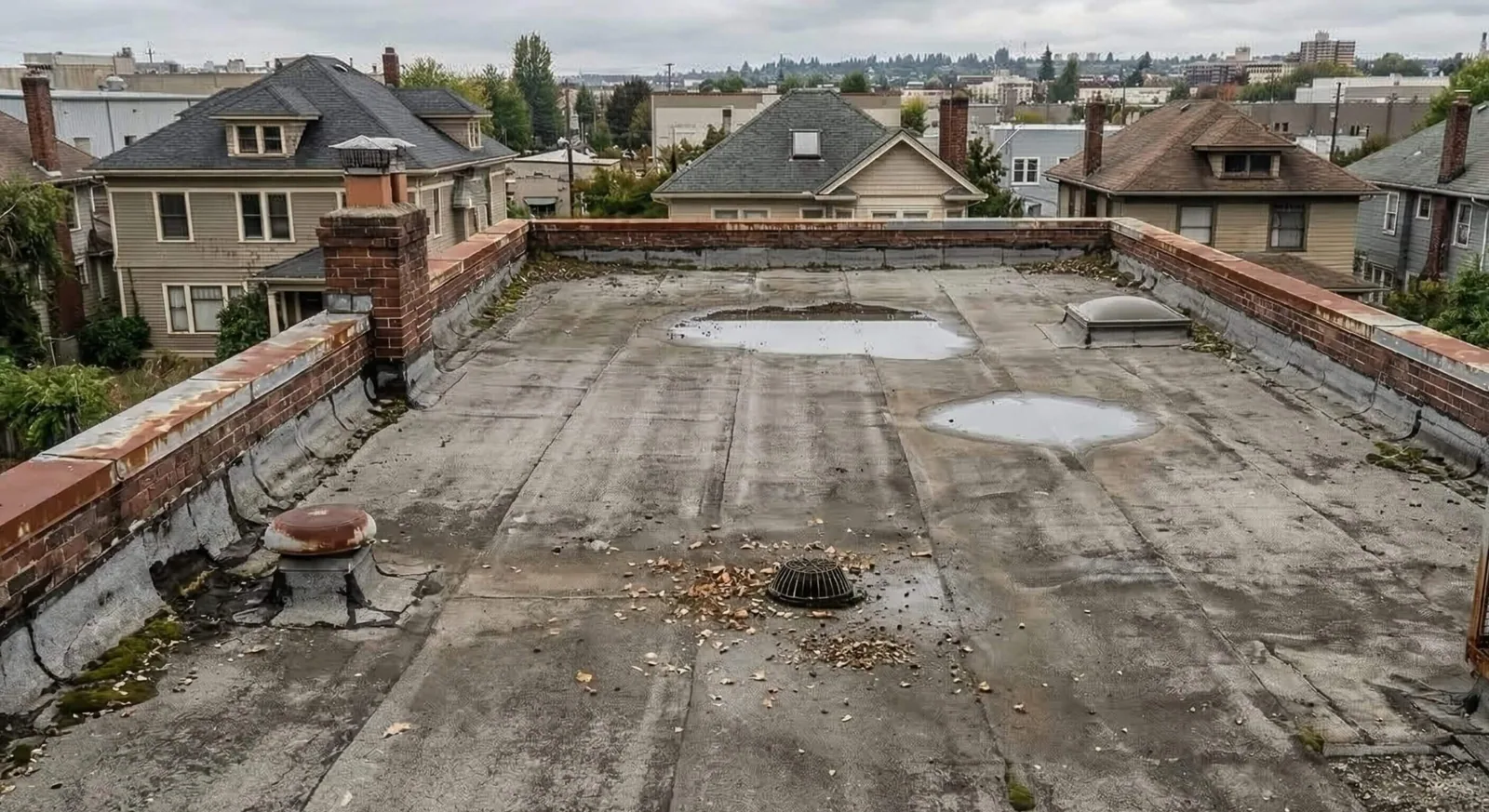
Event inspection, roof section B: a rooftop unit shifted a hand's width off its curb rail, a ragged tear in the membrane where a palm frond was dragged across it, and scorch marks the size of coins scattered over the north half of the field. Taken one at a time, each finding looks minor. Taken together they show that the roof absorbed wind, debris and fire in a single event, and that the damage is spread across several systems that an owner will have to price and schedule as one scope. Storm damage roof repair in Thousand Oaks, CA starts with an orderly assessment of all of it, because the first leak is only the visible part of the loss.
Storm Damage Roof Repair
Commercial Roofing Services
Call our team
Written findings and options
Thousand Oaks, CA
Ventura and Los Angeles counties
Events: wind, embers and the few heavy storms
Local storm exposure is unusual because the worst events are dry. Santa Ana winds are offshore, can exceed forty miles an hour and drop humidity very low, and the 2017 Thomas Fire burned under gusts of up to seventy. The Woolsey Fire of November 2018 ran in winds of fifty to sixty miles an hour, and the Mountain Fire of November 2024 arrived amid the strongest offshore wind event in years, with gusts forecast above sixty-five. In each, wind uplift and flying embers threatened roofs at the same time.
The wet side is smaller but real. Annual rainfall around Newbury Park is only about ten inches, delivered in a short winter, so a few strong storms test every drain, seam and flashing that went unchallenged through the dry months. Roofs damaged in a wind or fire event and left unrepaired meet that first heavy rain with the defects already open.
Order: the sequence of an assessment
The first step on arrival is safety: loose edge metal, displaced equipment, a weakened deck or a hot spot that is not fully out. Then water: the crew finds where it is entering and closes the opening, which is the first task of emergency roof repair whenever water is already entering an occupied space. Only after the building is protected does the condition assessment begin.
Assessment is done before anything is moved. The crew photographs each displaced item in place, notes the direction of damage, and marks the roof plan so the wind pattern is visible: perimeter first, then corners, then equipment. Insulation under every torn or scorched area is probed with a moisture meter, because a membrane that looks intact can sit over insulation that has taken on water. Where the roof is large or the pattern is unclear, an infrared scan after sundown shows the extent of the wet area.
Uplift: what lifts, what tears and what travels
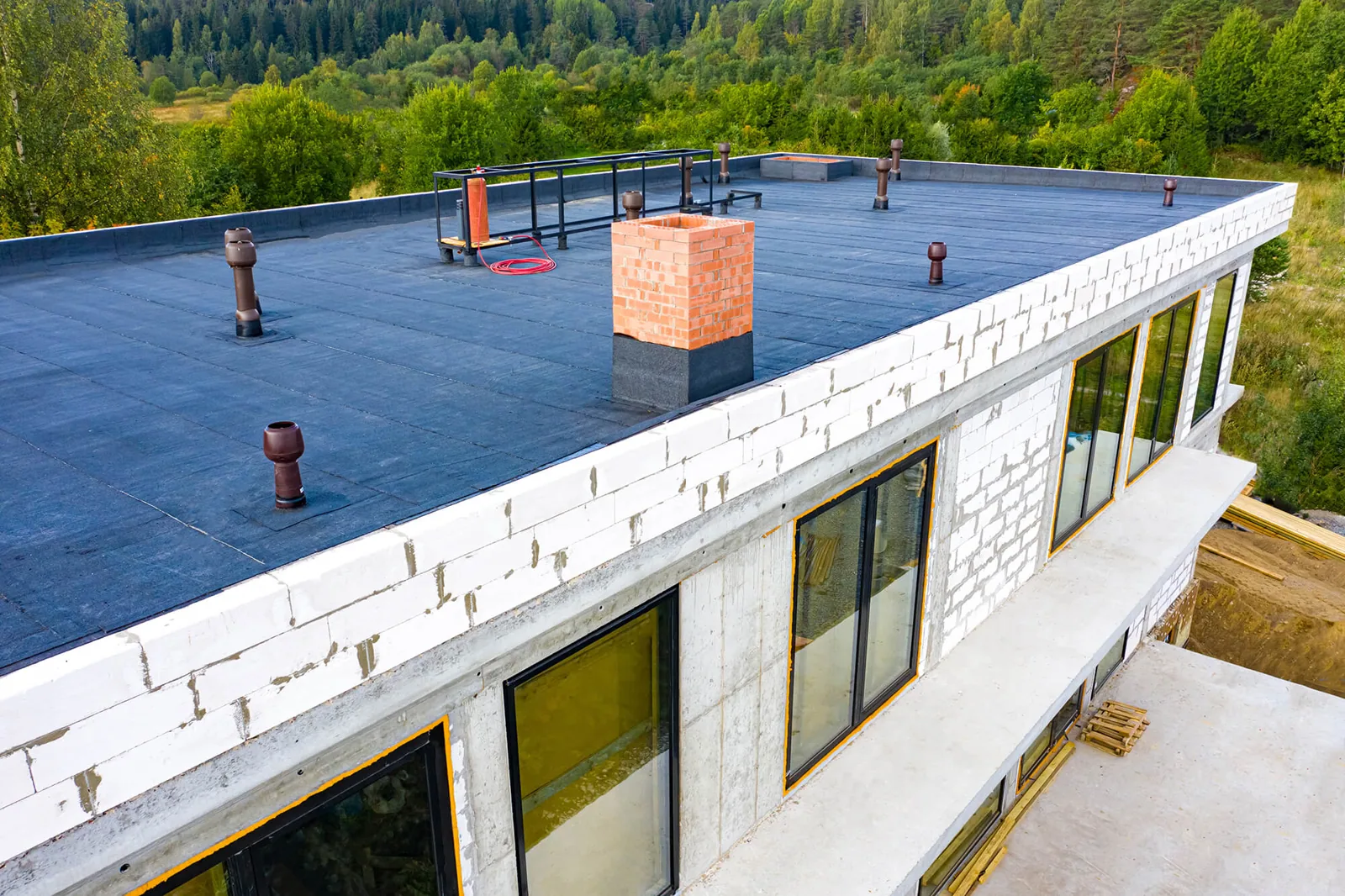
Wind damage follows a pattern. Suction is strongest at corners and along edges, so metal coping and fascia fail first, followed by perimeter membrane fastening and base flashings at parapets. After that come rooftop items that are heavier than they look: condensing units, exhaust fans and screens, each held by a few fasteners that were adequate on the day they were set and have loosened since. On wind-damaged roofs we check the attachment of everything, not only what is visibly moved.
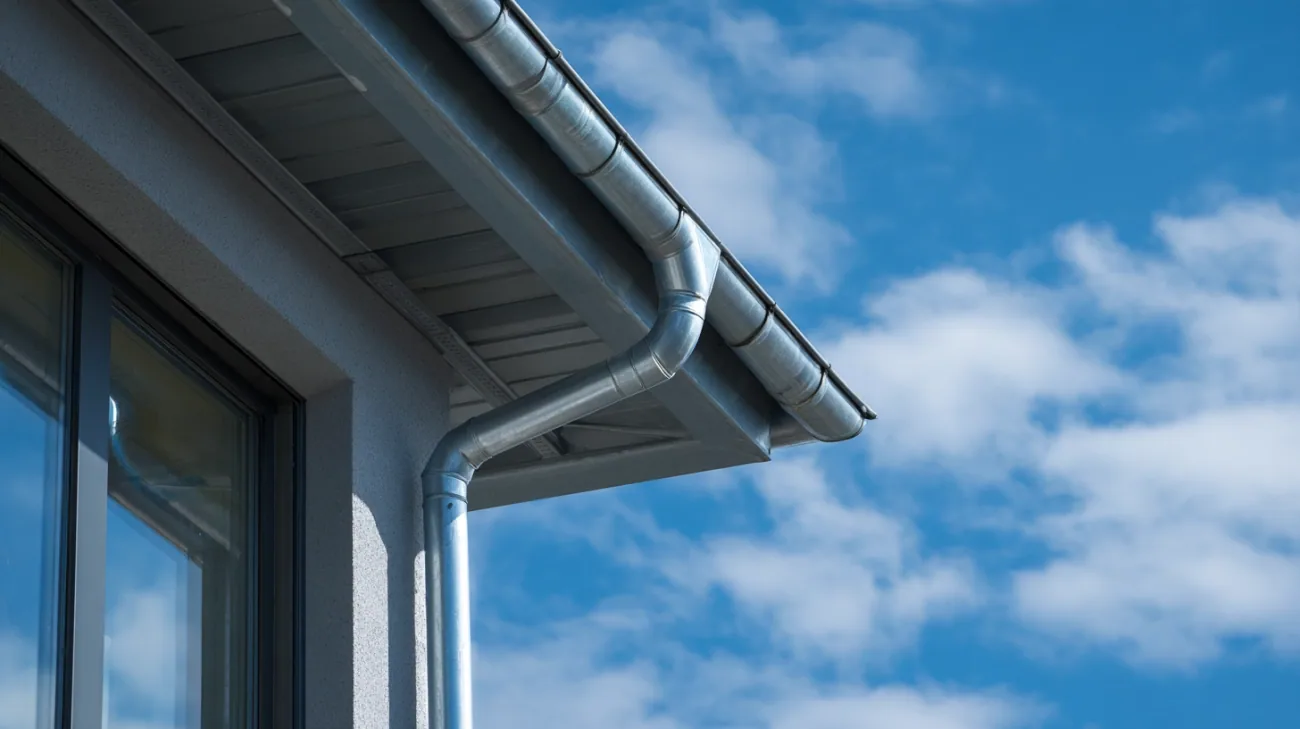
The second wave is debris. Branches, signage, fence panels and roof gravel from neighboring buildings cut membranes and crush drains. Corrections at the roof edge deserve their own detail work, since a perimeter re-secured with the same weak fastening will fail again in the next event, and the cleats, gauge and blocking at the edge metal, coping and gutters decide whether it does.
Embers: scorch, melt and ash
Ember damage is easy to miss. A burning fragment that lands on a thermoplastic or modified bitumen roof can melt a small pit, scar the surface or burn through the top ply, and the mark can sit unnoticed until water finds it. The Woolsey Fire hit Thousand Oaks, Newbury Park, Oak Park, Agoura Hills and Westlake Village, while the Mountain Fire began north of Somis and burned near Camarillo, so roofs across this region are worth checking for ember marks after every event.
Burn damage often calls for fire damage roof repair in full, but the storm assessment has a practical task of its own: sweep ash from drains, strainers and low spots before rain turns it to paste, and photograph the scorch pattern, which helps separate ember marks from age-related chalking. Ember marks are sharp-edged and local. Age is uniform.
Repair: temporary measures, permits and current code
Temporary dry-in buys time, but it is not the repair. Permanent work replaces torn membrane with compatible material, restores flashing, re-secures or replaces edge metal with properly rated fastening, resets equipment on its curbs and renews insulation where it is wet. The repair has to match the existing system, and a mismatch between a patch and the membrane will fail at the first heat cycle.
Permits and code enter the picture when damage is extensive. California's 2025 building standards took effect on January 1, 2026, and the City of Thousand Oaks adopted and amended the 2025 codes in 2025, including its local Wildland-Urban Interface provisions. How much of a damaged roof must come up to current requirements depends on the extent of the repair and on plan check, so we raise the question before the scope is priced and not after the first permit comment.
Record: damage written down as it stands
The assessment produces a written file: dated photographs, the roof plan with damage mapped, moisture readings and a separation between storm damage and conditions that predate it. That separation matters, because a roof with prior wear carries a mix of both. Owners who file claims get a file that carries the documentation an adjuster asks for, which is the basis of roof insurance claim assistance, and owners who do not file keep a record of the roof's condition after the event.
A storm scope should separate immediate stabilization from permanent restoration. First document conditions that affect safe access, such as loose perimeter metal, displaced equipment or an unstable deck. Next protect occupied areas and control active water entry, while marking temporary materials so they can be removed or incorporated intentionally. The permanent estimate should identify each damaged roof zone, distinguish event-related conditions from pre-existing wear and state whether wet insulation or deck damage needs further testing. Keep undamaged sections closed to traffic where possible, and coordinate equipment isolation before disturbing curbs or supports. After repairs, photograph the completed seams and edges, record moisture or water-test results where applicable, and update the roof plan. This gives the owner a clear closeout file for facilities planning and any claim review without promising that every observed condition arose from the same event.
Commercial Roofing Questions
Should I wait for the adjuster before any work starts?
Make the building watertight first. Policies generally expect the owner to protect the property from further loss, so temporary dry-in goes ahead after photographs are taken of everything in its damaged position.
A roof came through the wind with no leaks. Does it still need a check?
It does. Fasteners can loosen, edge metal can shift, and a membrane can be stretched or punctured without admitting water until the first rain. A walk-over after the event costs little next to a winter leak.
How do I tell ember damage from ordinary aging?
Ember marks are local, sharp-edged and often clustered on the side facing the fire or near vegetation. Aging shows up as uniform chalking and crazing across whole slopes.
Will storm repairs force the whole roof up to current code?
Local plan check answers that, based on how much of the roof is affected and what the existing building provisions require. We raise it at the start so the owner is not surprised by a permit comment.
Why does one building lose its edge metal while the neighbor is untouched?
Edge metal depends on the fastening behind it, which varies even between neighboring buildings. A coping cleat nailed into aged blocking at a corner, where suction peaks, lets go first.