Commercial Roofing in Somis, CA
Service Areas · Thousand Oaks, CA
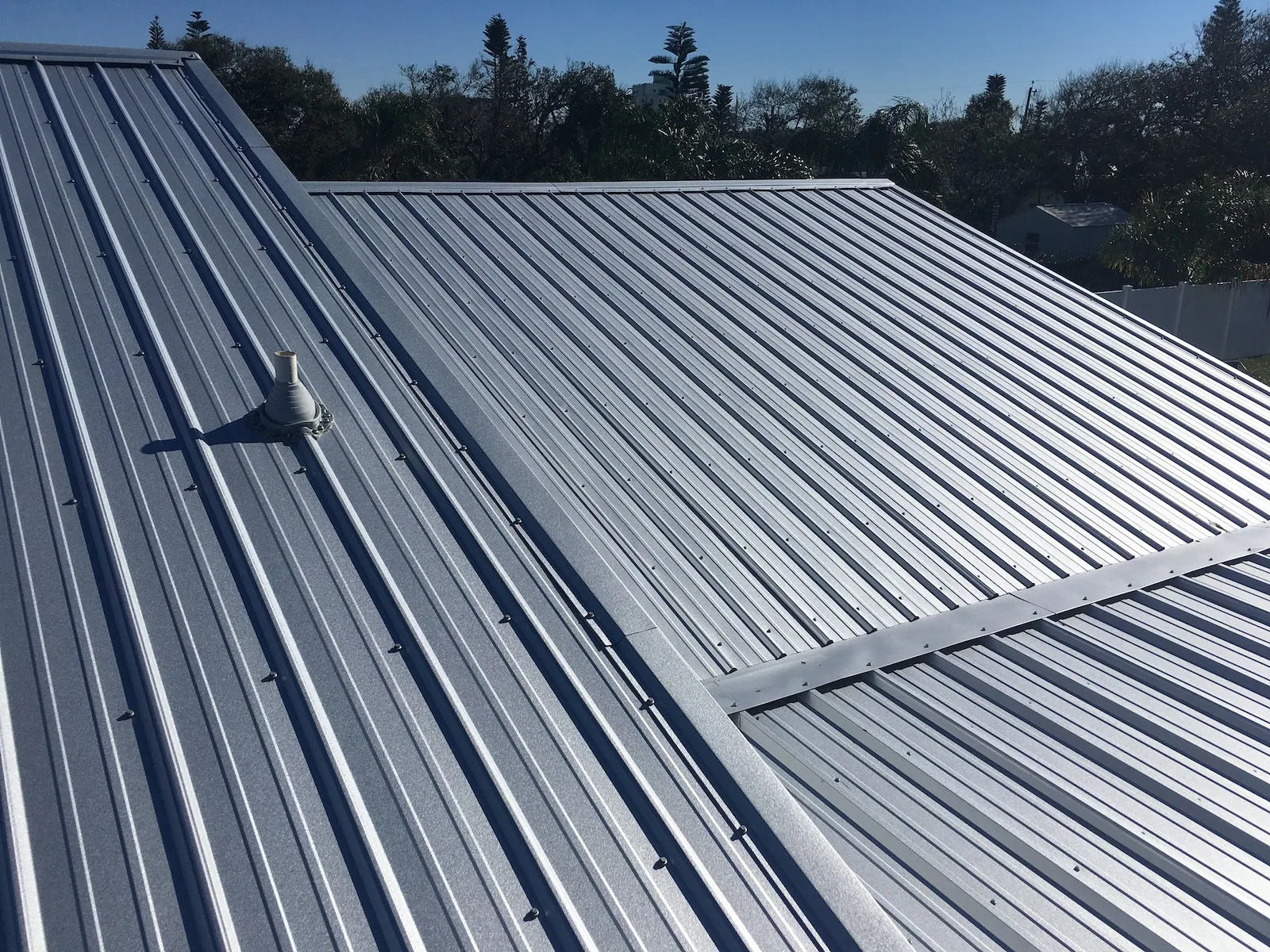
Post-wind entry, long-span metal roof: a lifted ridge cap, a loose gutter run and a row of panels with fasteners pulled partway out of the purlins, found the morning after a strong offshore gust. It is the entry we expect on any working building in an open agricultural setting, and Somis is exactly that: a primarily agricultural community of about 3.35 square miles in the Las Posas Valley. On a working agricultural property the roof is often reviewed by nobody until something fails. For an owner of Somis, CA property, a first survey converts that informal history into a record: what the roof is made of, what condition it is in, how much service life remains and what it would cost to carry it to the end of its horizon.
Somis
Service Areas
Call our team
Written findings and options
Thousand Oaks, CA
Ventura and Los Angeles counties
Setting: working buildings in an open valley
The open country around a small farming community puts a clear set of conditions on any roof: full exposure to sun from sunrise to dusk, wind that meets no building across a field to slow it, and dust and debris that collect in gutters, valleys and drains. Those conditions are what we look for on a first walk, and they are the same whether the roof covers equipment, storage, an office or a small commercial building.
On a metal roof we count loose and backed-out fasteners, check washers for cracking, look at panel laps and ridge closures and trace every penetration. On a low-slope membrane we look at seam condition, surface wear, ponding at drains and the state of flashing at walls and curbs. A roof in this setting is also walked less than a roof in a managed office park, which means defects tend to run longer before anyone sees them. A written roof condition report is the fix for that: it records what is found, shows where, and ranks the work.
Wind deserves its own line in that report. Uplift concentrates at corners, eaves and ridges, and on an open site the first sign of trouble is usually a lifted edge or a ridge cap that has shifted. We check how edge metal is attached, whether the fasteners are long enough and spaced closely enough for the perimeter zone, and whether equipment covers and vents are secured. Santa Ana winds that can exceed 40 mph are a regular feature of the region, so a perimeter that is merely adequate on a calm day is a finding, not a pass.
Fire: the Mountain Fire began north of town
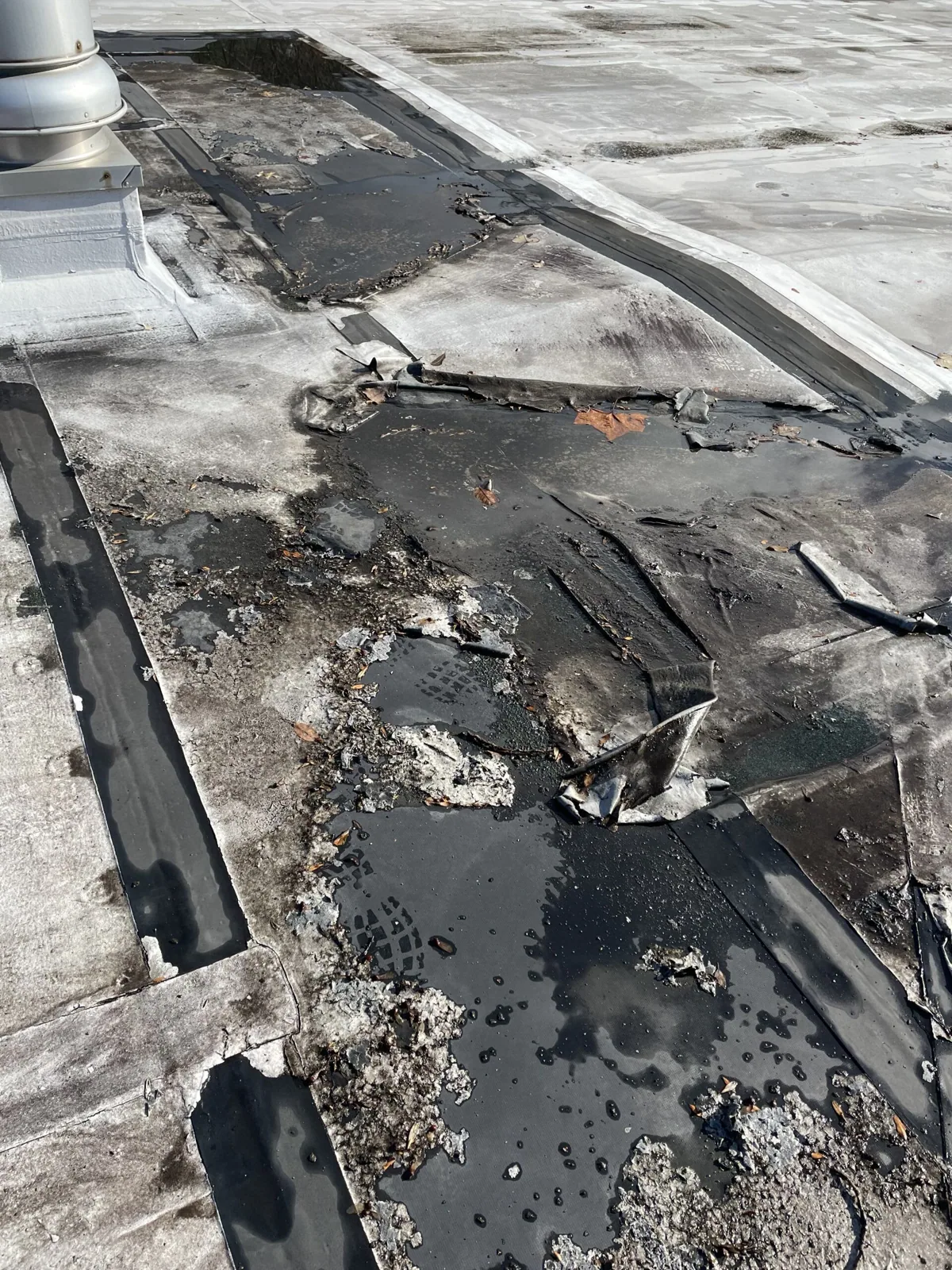
The November 2024 Mountain Fire began in a remote area north of Somis and went on to burn 19,904 acres and destroy 243 structures. It came during the most extreme Santa Ana wind event in years, with gusts forecast above 65 mph. Roofs that stood through those hours may show nothing from the ground. Up close, we look for ember pitting on membranes, ash and burned debris in gutters and drains, blistered or cracked sealant, and edge metal or ridge caps that moved in the wind and never fully reseated.
That evidence has two uses. It tells the owner what needs repair before the winter rains, and it gives an insurer a dated, photographed record that connects each defect to the event. Owners dealing with an active claim should expect a temporary dry-in first, a written scope next and a permanent fire damage roof repair after the claim position is clear. Where a loss has been reported, the paperwork for roof insurance claim assistance follows the same photographs.
Options: restore, retrofit or replace on a small building
On a smaller roof, mobilization is a larger share of the price than it is on a campus, so the choice of scope matters more. A metal roof with sound panels and tired fasteners can often be tightened, resealed and maintained for several more years. Panels with widespread corrosion or enlarged fastener holes call for a metal roof retrofit that covers the old surface without tearing it off, or a new standing seam metal roofing system where the structure and budget support it. A membrane that tests dry may take a roof recover overlay, which keeps the building in use while the work proceeds.
Cost follows four drivers: how much of the insulation is wet, how many penetrations need new flashing, how the roof drains and how easily crews can stage materials. Timing depends on the owner's operating calendar and the weather window. A replacement permitted in 2026 or later answers to the 2025 California Energy Code, and its nonresidential updates include roofing and cool roof rules, so the scope should be checked against them before the bid is final. Because National Weather Service Extreme Heat Warnings have covered the valleys of Ventura County, a reflective surface is worth pricing against a standard one.
Maintenance: a seasonal visit before wind and rain
Most roof failures on buildings like these begin as small defects that a seasonal visit would have caught. A program of preventive roof maintenance checks drains and gutters before the rains, tightens and reseals metal fasteners, clears debris from valleys and records each visit against the roof plan. Over several seasons the file shows which sections are deteriorating faster than the rest, and that is the information an owner needs to schedule a replacement for a chosen year rather than the week after a storm.
State Route 34, also called Somis Road, meets State Route 118 north of town, so a maintenance route through Somis can be planned with stops elsewhere in Ventura County. For an owner who also holds property in Camarillo or Fillmore, one survey and one maintenance schedule can cover all of the roofs, which spreads mobilization and keeps the records in one place.
A roof plan for an agricultural or light-industrial property should account for seasonal access as well as the membrane. Confirm where delivery vehicles can turn, which entrances must remain clear and whether work can be staged without obstructing the tenant's daily activity. Record exposed edges, rooftop penetrations and drainage paths in separate zones, then rank the findings by water risk and consequence below. If a repair is planned during a windy period, the daily scope should define when temporary materials are secured and what weather condition pauses installation. Owners can use that record to group maintenance with other nearby properties while preserving a separate condition history for each roof. For buildings with limited records, the first visit should establish system type and attachment before a replacement horizon is assigned.
Commercial Roofing Questions
What does a fire north of town mean for a roof that was not burned?
Embers, ash and extreme wind can leave marks even where no flame arrived. We look for pitting, clogged drains and displaced metal, and write down what we find so the condition is on record.
Is a small agricultural building worth a formal survey?
A survey scales to the roof. A short walk and a written list of findings cost little next to a failure over equipment or stored goods, and the list tells the owner what to fix first.
Can a metal roof be left alone between repairs?
Not for long. Fasteners and sealants move with the heat, and an annual check catches backed-out screws before water finds them.
When does a recover make more sense than a replacement?
When a moisture scan shows the existing insulation is dry and the deck is sound. If water has spread through the layers, removing them is the better investment.
How can a Somis owner add a Camarillo property to the same program?
Through a single scope and schedule. Both sets of roofs are surveyed together, which reduces mobilization and puts all of the findings in one report.