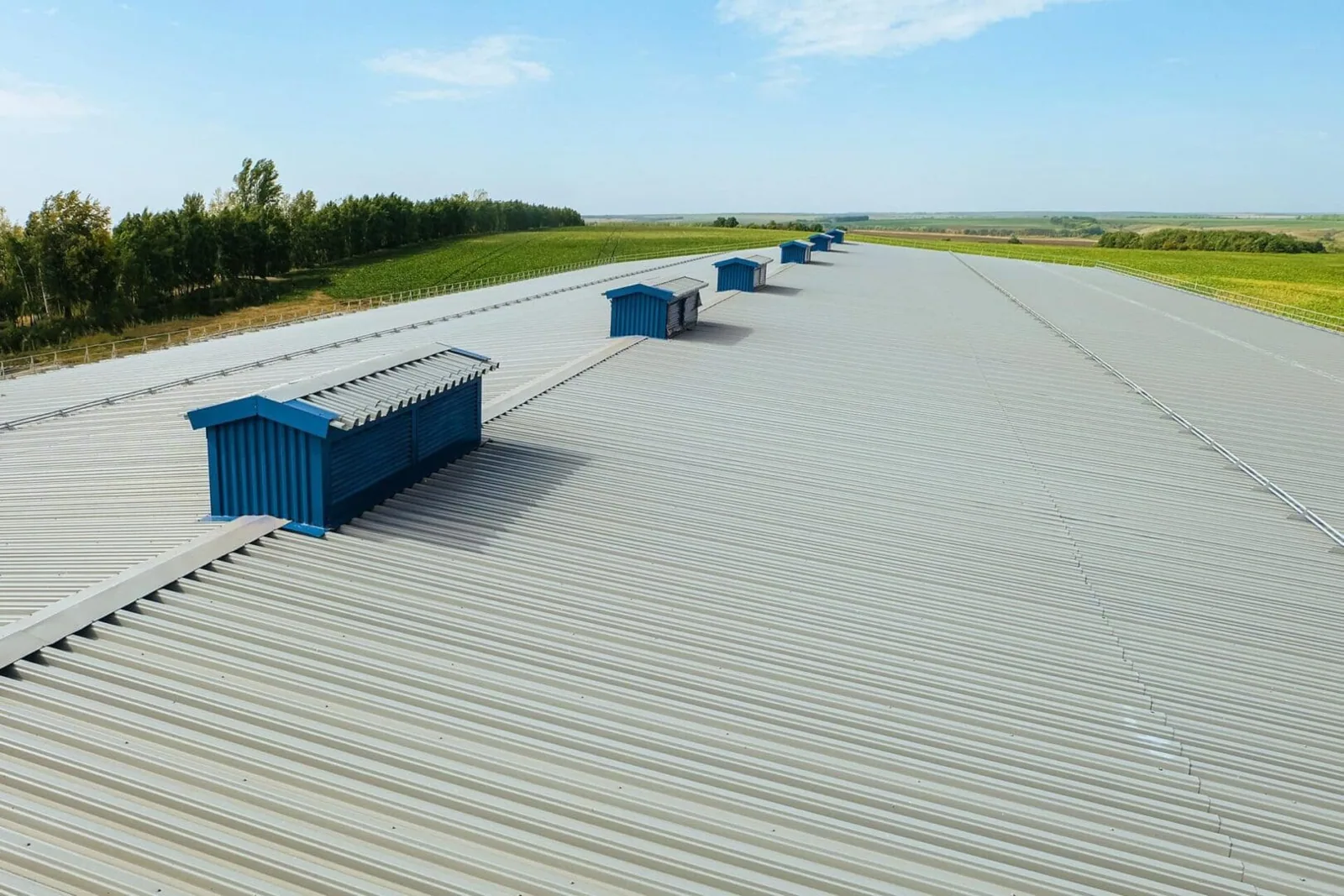
Standing Seam Metal Roofing in Thousand Oaks, CA
Roof Systems · Thousand Oaks, CA
Panel movement: witness marks at the clips along the south slope of a long hangar roof, showing the seams have slid a measurable distance through the seasons without a single open lap or a stressed fastener. On a shop or hangar building, that finding is the sign of a standing seam roof doing its job. The panels float on concealed clips, expand and contract with each day's heat, and keep their seams closed while they move. Standing seam metal is the long-horizon option among commercial roofs, and for owners in Thousand Oaks, CA who answer to a replacement budget it changes the question from when the roof must be replaced to which small items must be kept in order.
Standing Seam Metal Roofing
Roof Systems
Call our team
Written findings and options
Thousand Oaks, CA
Ventura and Los Angeles counties
Mechanics: clips, seams and the daily movement of metal
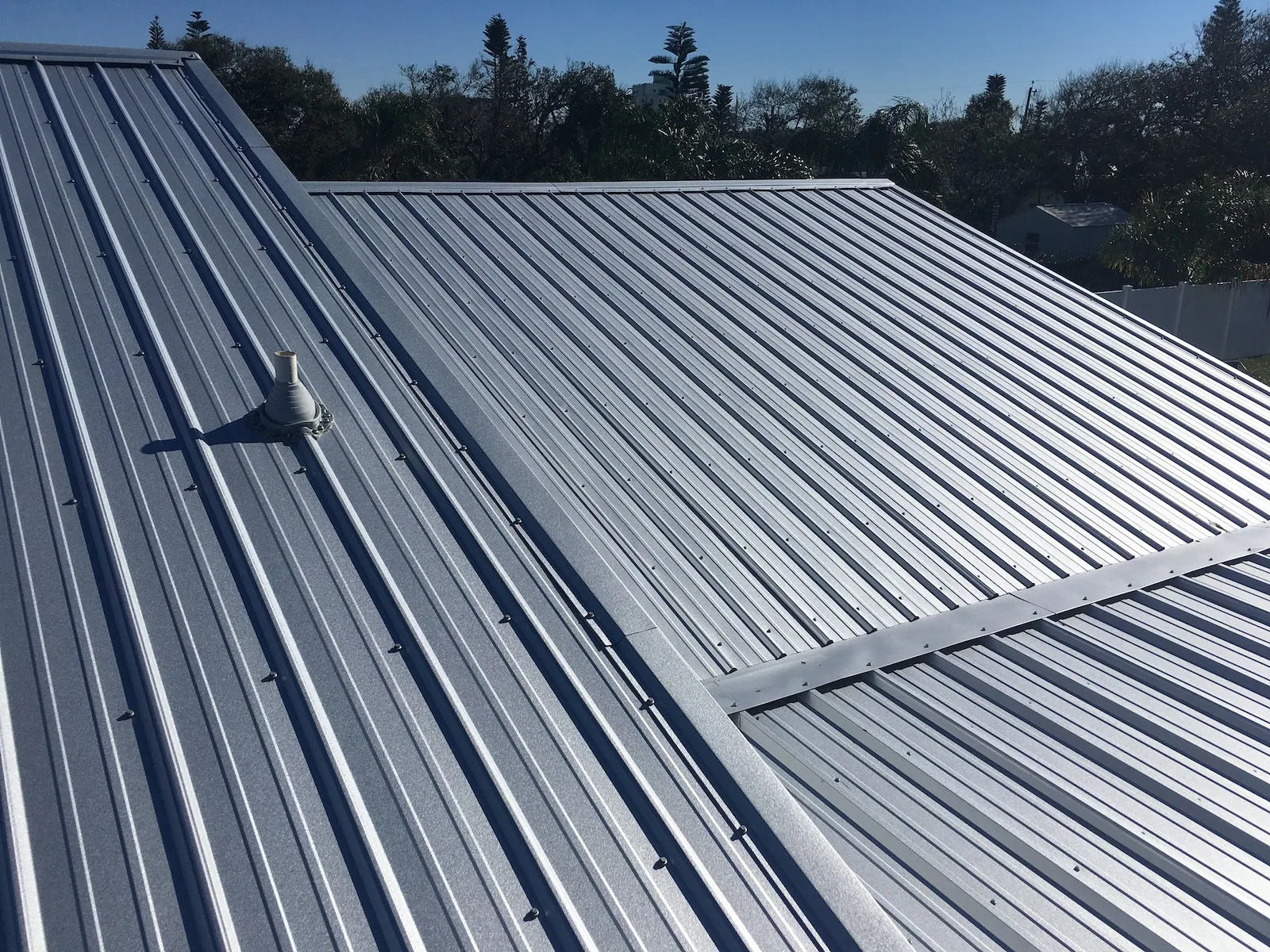
A standing seam roof is built from long metal panels with raised, interlocking edges. The panels are held to the deck by concealed clips, and the seams are folded or mechanically seamed closed so that fasteners never penetrate the weathering surface. That is the central difference from exposed-fastener metal, the older roof that often ends up in a metal roof retrofit: nothing pierces the panel in the field, so there is no row of screws and washers to age. Panels can span a full slope and carry a low-pitch structural roof when the seam is properly seamed and sealed.
Metal moves. A dark or exposed panel on a hot afternoon can be much warmer than the air, and it can expand and contract by an amount that is visible in a long run. The clips are designed to let the panel slide, and the surveys we write look for clips that are binding, panels that have walked out of their trim and seams that have opened at end laps. Penetrations, curbs and snow guards or solar rails are the usual places where movement is blocked and trouble begins.
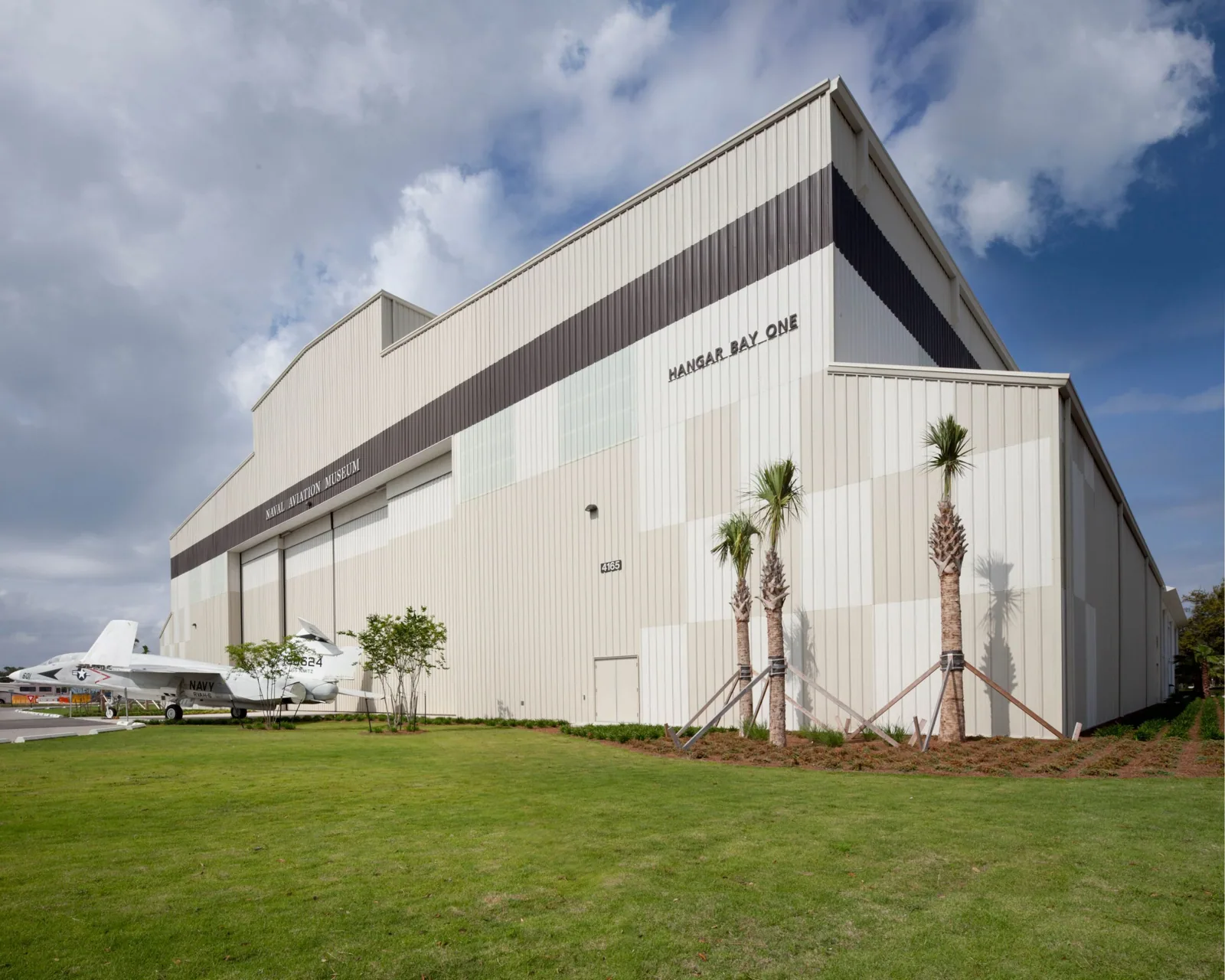
Hangars: long spans and shop roofs at Camarillo Airport
Camarillo Airport, within Camarillo, is a county-owned, 650-acre general aviation field three miles west of central Camarillo with a 6,013-foot runway. Its tenants include flight schools, charter operators, aircraft maintenance providers and dealers, plus support facilities for the Ventura County Fire Department and the Sheriff's Office, which means hangar and shop roofs. The airport handled 108,566 aircraft operations in 2020, with 383 based aircraft, and a hangar with an aircraft in maintenance cannot absorb a leak.
Long, open spans put a premium on a roof that does not need frequent access. Standing seam panels are cut to length, have no fastener rows to re-seal and can be designed for the building's span and exposure, which is why metal is a familiar choice for an aircraft hangar roof. On a metal hangar or shop roof at Camarillo Airport, a survey checks end laps, door headers where wind loads concentrate and the gutters that carry water off a very long run.
Uplift and embers: Santa Ana wind on a noncombustible roof
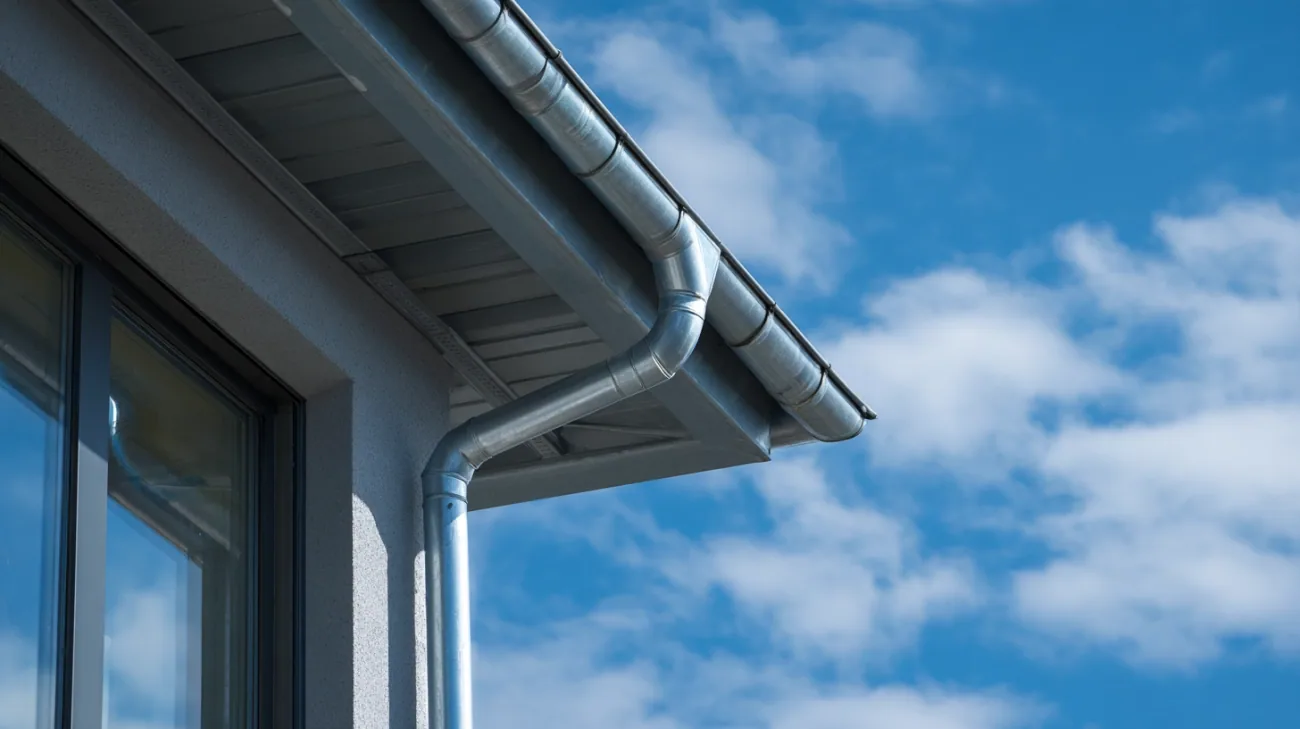
Santa Ana gusts can pass 40 mph, and the Woolsey Fire of 2018 came with winds of 50 to 60 mph, loads that a roof edge feels first. Metal roofs fail by uplift at the eaves, ridges and corners, so clip spacing and edge details are denser at those zones than in the field. A panel is only as secure as the clip and the deck beneath it, and a roof that was fine at installation can loosen as sealants and fasteners age. We look for lifted trim, rolled edges and lost sealant at the gable and the eave, and we repair edge metal and gutters as a system rather than piece by piece.
Fire exposure is the other reason metal comes up in this valley. Steel and aluminum panels do not ignite, so an ember landing on the surface has nothing to burn. The assembly, including underlayment and insulation, is tested together, and the specification we give an owner carries the rated assembly, not just the panel. After any smoke event, the report records scorch, ash and the condition of every penetration boot.
Finish: coil coating, chalk and coastal air
The painted finish is the part of a metal roof that wears. Coil-coated panels use a baked paint system, and the better fluoropolymer finishes resist chalking and fading under year-round ultraviolet exposure. Lower-grade finishes chalk early, the color shifts, and the panel loses reflectivity. Where the roof is near the coast, salt air accelerates corrosion at cut edges, fasteners and dissimilar-metal contacts. Malibu has a coastal Mediterranean climate along 21 miles of Pacific shoreline, and its salt air affects metal roofing and rooftop equipment, so owners near the ocean should read the finish warranty with that exposure in mind.
When a finish is tired but the panels are sound, a cleaned and primed surface can take a fresh coating. Silicone roof coatings are used on metal where adhesion tests and seam condition support them, and the cores or pull tests come before the specification.
Installations: Point Mugu, the Guard station and base access
Naval Air Station Point Mugu, part of Naval Base Ventura County, is home to E-2 Hawkeye squadrons and operates two asphalt runways of 11,102 and 5,502 feet. An adjacent 204-acre Air National Guard site houses the 146th Airlift Wing, which flies C-130J aircraft, and the wing completed a permanent fire-retardant reload facility in 2021. The Guard site means large aircraft hangars and fire-retardant loading facilities. Roofing on an installation follows its own rules: base access and escort procedures, badging, scheduling around mission operations, and design to the Unified Facilities Criteria for roofing.
On a base like Point Mugu, the survey package, the safety plan and the staging area are coordinated before mobilization, as on any military hangar and maintenance facility roof. Metal's long span and low maintenance fit that environment, but the access and schedule are the real drivers of cost.
A standing-seam inspection checks the panel field and the attachment system together. Look for clip movement, seam separation, oil canning, coating wear and openings around curbs, then identify which panels can be removed without disturbing sound work. The detail at a ridge, eave and rake should match the roof’s actual panel profile and movement allowance. Replacing exposed fasteners or adding sealant alone can conceal a loose clip or a failed transition, so verify the load path before choosing a repair. Where a retrofit is considered, review structural capacity, existing insulation and condensation control before overlaying the panels. The owner should receive a map of affected runs, photographs and a repair boundary, plus maintenance instructions for checking seams after strong wind.
Commercial Roofing Questions
How low a slope can a standing seam roof handle?
Mechanically seamed panels can serve low slopes when the seam is properly closed and sealed, which is why they appear on flat-looking commercial buildings. The manufacturer's minimum slope and the seam type govern each case.
Why are clips more important than panels?
The panels carry the weather; the clips carry the wind. A clip that binds, backs out or sits at the wrong spacing will let a panel peel at the corner, so we check clips at the perimeter first.
Do hangar roofs get special treatment?
Door headers, long gutter runs and equipment penetrations concentrate wind and water, so we inspect those points first. Work is staged around aircraft movement and maintenance operations to keep the bays dry.
Will metal survive a wildfire season without damage?
Panels do not ignite, but sealants, boots, skylights and underlayment can. After a fire we check every penetration and trim piece for scorch and replace anything that has softened.
What does base access change for a military roof?
Escort rules, badging, restricted work zones and mission schedules all affect crew size and sequencing. We plan for those before submitting a schedule, and we follow the criteria that apply to roofing on the installation.