Fire Damage Roof Repair in Thousand Oaks, CA
Roof Damage Repair · Thousand Oaks, CA
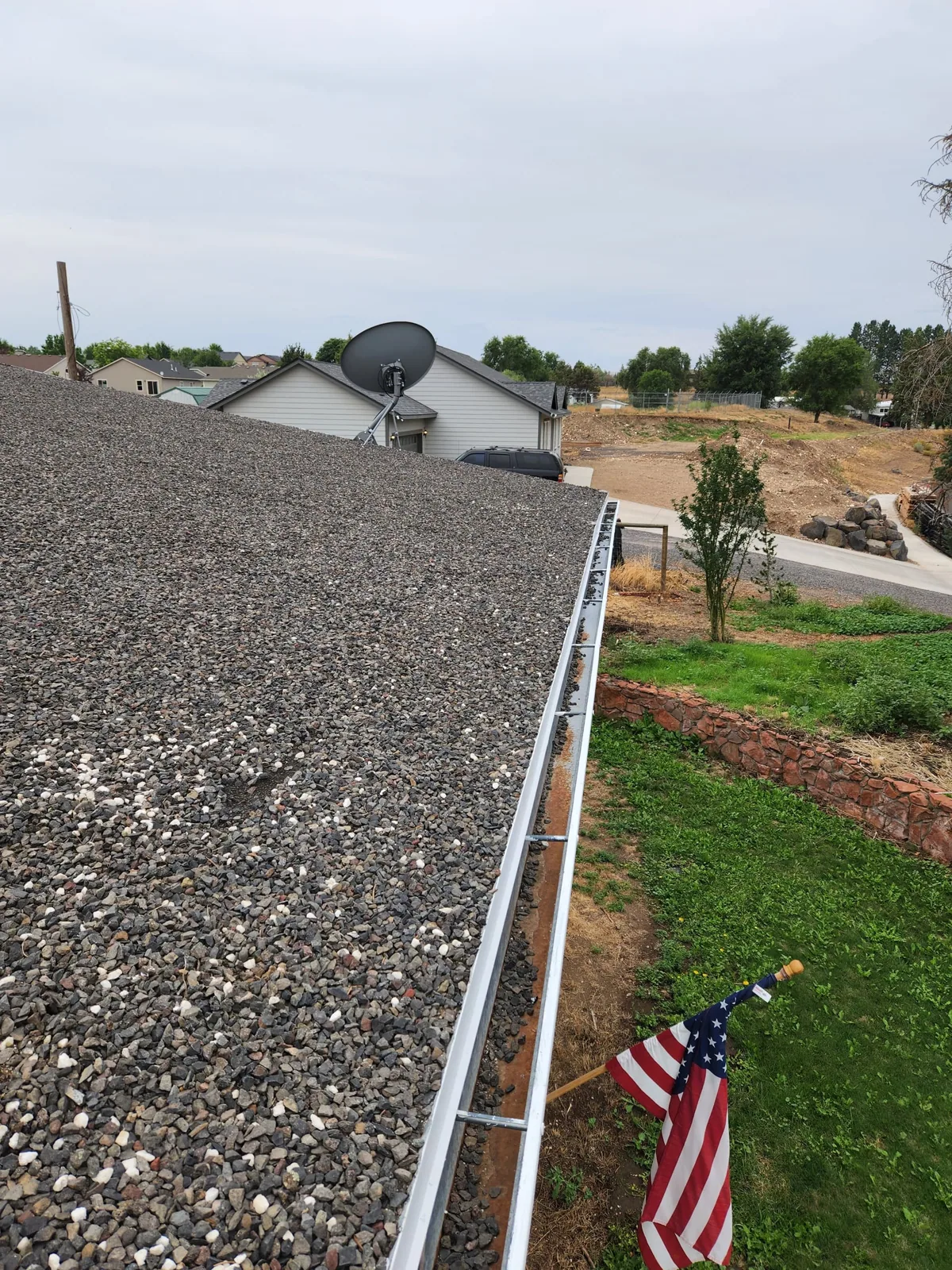
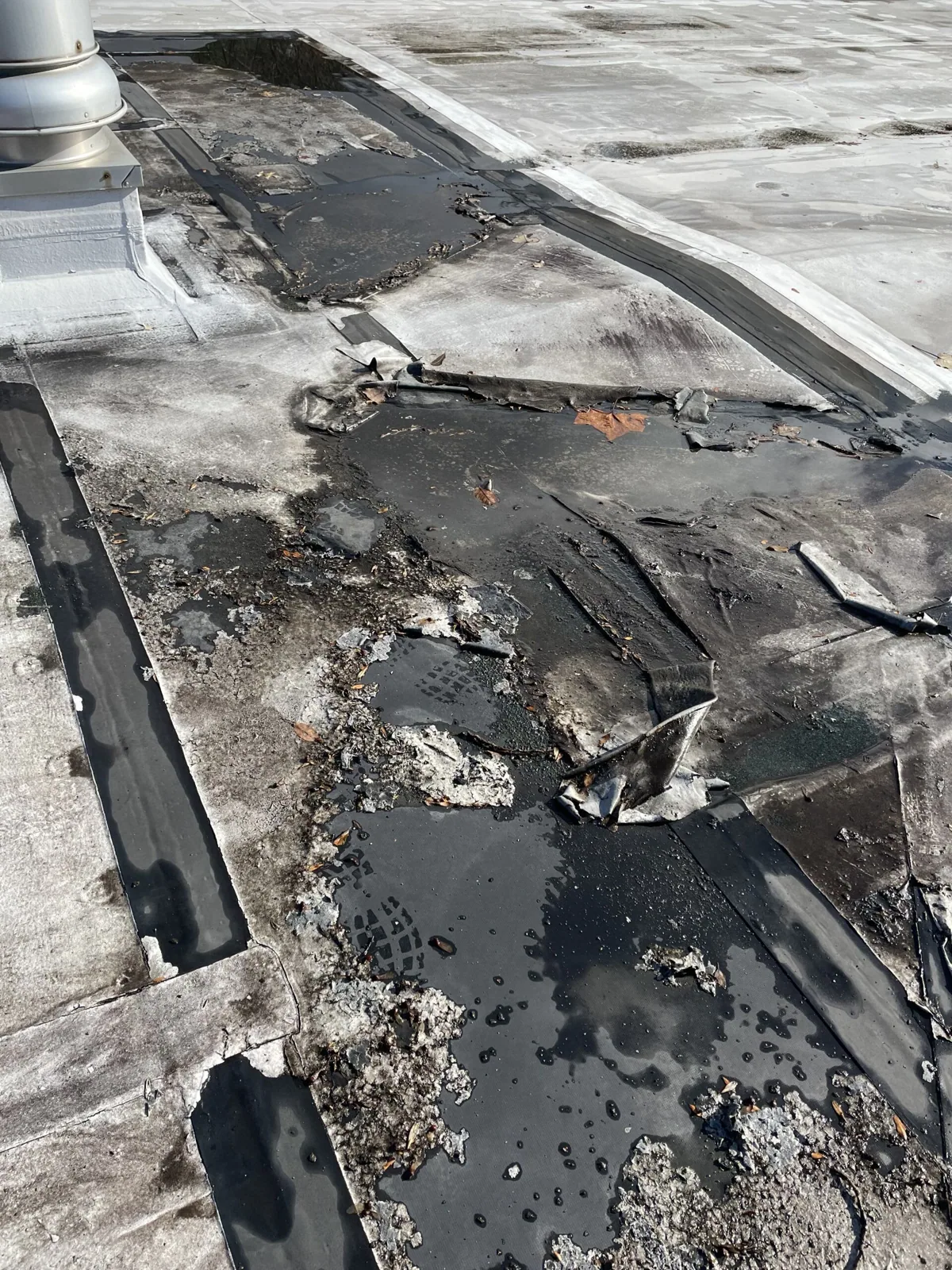
Post-fire condition report, parapet and edge: charred blistering along the cap flashing, ash packed into the gutter, and one pitted burn where a single ember lodged against the wall and went out. The membrane across the field looks undamaged from the walkway. That is the most common result of a wildfire year on a flat roof in Thousand Oaks, CA, and it is the reason a fire claim should never be scoped from the ground. The visible damage is local, the invisible damage is thermal and cumulative, and the owner needs both on paper before cleanup starts to change the evidence.
Fire Damage Roof Repair
Roof Damage Repair
Call our team
Written findings and options
Thousand Oaks, CA
Ventura and Los Angeles counties
Fire years: Woolsey, Mountain, Kenneth and what each left behind
In November 2018 the Woolsey Fire ran before Santa Ana winds of 50 to 60 mph, burned nearly 97,000 acres, destroyed 1,643 structures, and touched Westlake Village, Agoura Hills, Oak Park, Newbury Park and Thousand Oaks. The Mountain Fire of November 2024 burned close to 20,000 acres near Somis and Camarillo during the most extreme Santa Ana wind event in years, and the Kenneth Fire of January 2025 brought evacuation warnings to Agoura Hills and Oak Park again. A building near any of those fires carries ash and ember exposure whether or not a flame touched it.
For an asset manager, a fire year is a portfolio event. Several buildings take the same wind, the same ash and the same adjuster's calendar, and the order in which roofs are inspected becomes a decision about risk. The Agoura Hills business parks along Agoura Road and the community of Oak Park share a fire history, and an owner with roofs in both benefits from one consistent condition report across them.
Embers: where a roof actually ignites
Wind-driven embers do not land evenly. They settle where debris collects and where air slows: gutters, parapet corners, the lee side of rooftop units, drain sumps and the pockets behind curbs. A roof that is clean in those places rarely ignites, and one that is not may smolder for hours. Wood nailers at the edge, combustible insulation exposed at a termination, plastic skylight domes and vent openings are the components that fail first, and they give the survey its list of places to check.
The evidence is specific. Ember burns are scattered, pitted and concentrated where debris sat, with melted edges on thermoplastic sheet and charred nailers beneath cap metal. Roofs with gravel surfacing, noncombustible metal panels or a rated assembly fare better, which is why built-up roofing and metal systems are often discussed in the same breath as fire exposure. A removed layer of leaves and ash is the cheapest ember protection a roof can have, and it is part of every maintenance visit before the Santa Ana season.
Heat and smoke: damage without ignition
A roof does not have to burn to be hurt. Radiant heat from a fire across a parking lot or a hillside can blister a membrane, soften thermoplastic sheet and shrink foam insulation, and hot gases can warp thin steel deck panels. The sheet may return to a normal appearance within days, but it has lost surface integrity and some of its remaining service life. Smoke and soot leave a film that darkens a reflective surface, and firefighting adds water, which soaks insulation, and sometimes cut ventilation openings that need to be closed as a permanent repair.
Ash is a second problem. Left in strainers and sumps, it turns to a paste at the first rain, blocks roof drains and scuppers and holds moisture against the sheet. We remove it with low-pressure methods, because aggressive washing lifts laps and flashing and ends up costing more than the ash did. A fire-exposed roof also tends to show heat and UV damage earlier than its neighbors, which is worth tracking in the next several surveys.
Claim: separating fire loss from age
An adjuster has to separate what the fire did from what the years did, and the roof will not volunteer the answer. Before cleanup we photograph every burn, mark it on the plan, record moisture readings and sample the sheet where heat damage is suspected. Pre-event photographs and prior survey reports are the strongest evidence of the roof's condition, which is another reason to keep a baseline on every building. Our crews coordinate with the adjuster on access and sampling, and the photographs, plan markings and readings go into the file behind a roof insurance claim.
Hidden damage often surfaces after the first visit. Insulation that was wet from hose water, a deck panel that warped, or a termination that was heat-aged will reveal itself weeks later. A good claim file anticipates a supplement and records why. For events that involve wind as well as fire, the documentation kept for a storm-damaged roof applies too, with the fire findings added as their own section.
Code: rebuilding to the current wildfire provisions
Thousand Oaks amended its Municipal Code in 2025 to adopt and modify the new California building, fire and wildland-urban interface codes, a package that took effect for permits from January 2026. Those provisions address how the exterior of a building resists ember ignition, and the extent of a fire repair can decide how much of the roof assembly has to be brought up to them. Whether a given property sits within a mapped hazard area is for the building department to confirm, and we ask before the scope is final.
That sequence protects the owner's budget. Learning mid-project that a repair triggers an upgrade is far more expensive than pricing it at the start, and a written survey that lists the burned sections, the heat-aged sections and the unaffected sections lets the city and the insurer agree on the line between repair and replacement. When a fire loss is large, the documented scope supports a recommendation for commercial roof replacement with a fire-rated assembly in place of continued patching. At the perimeter, the same event review used in wind damage roof repair checks whether the edge metal shifted before the fire response began.
Commercial Roofing Questions
How soon after a nearby fire should a roof be inspected?
As soon as access is safe, and before the first rain. Ash in drains turns to paste when wet, and an ember burn that smoldered unseen may be open to water. A quick walk with photographs also fixes the condition before cleanup alters it.
Can a roof be damaged by a fire that never touched it?
Yes. Radiant heat and hot gases can blister the membrane, shrink insulation and warp deck panels on a building that never ignited. The damage is gradual, so some of it appears only as early aging in the following summers.
Is ash on a roof harmful to the membrane?
Mostly it is a drainage and cleaning problem. Wet ash holds moisture against the surface and clogs strainers, so remove it with low-pressure methods and keep it out of the drains. Harsh washing can lift seams, which makes the method more important than the speed.
What shows that a burn mark came from the fire and not from a torch?
Pattern and timing. Ember burns are scattered, pitted and concentrated where debris collected, while hot-work damage lines up with a detail that was being repaired. Dated photographs from before the event and the permit record close most disputes.
Does a fire-damaged roof need a different system?
Not automatically. The question is the fire classification of the assembly and the condition of its parts. If the current provisions call for a higher rating than the old assembly carries, the repair scope reflects it, and local code officials set that line.