Acrylic Roof Coatings in Thousand Oaks, CA
Roof Systems · Thousand Oaks, CA
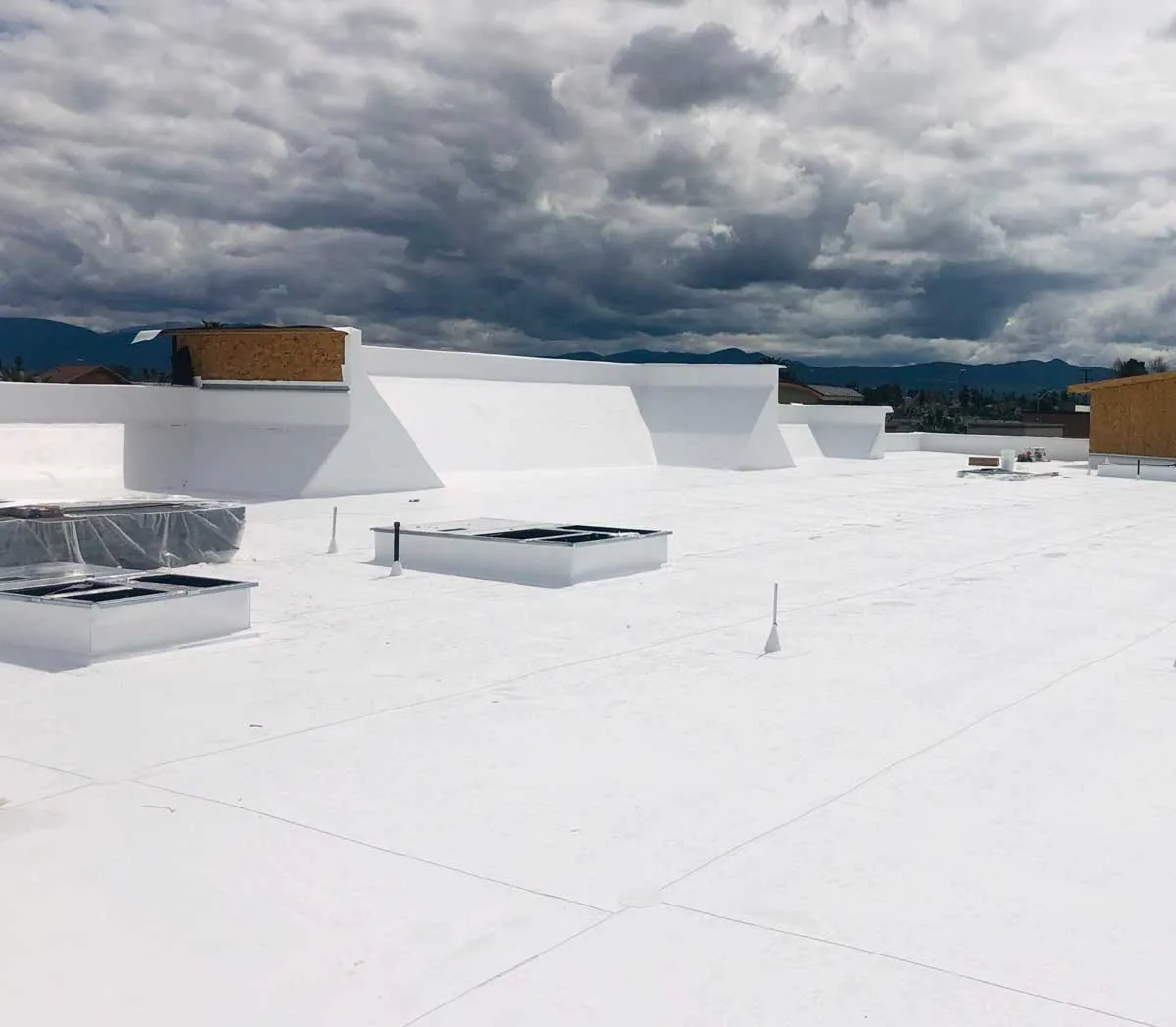
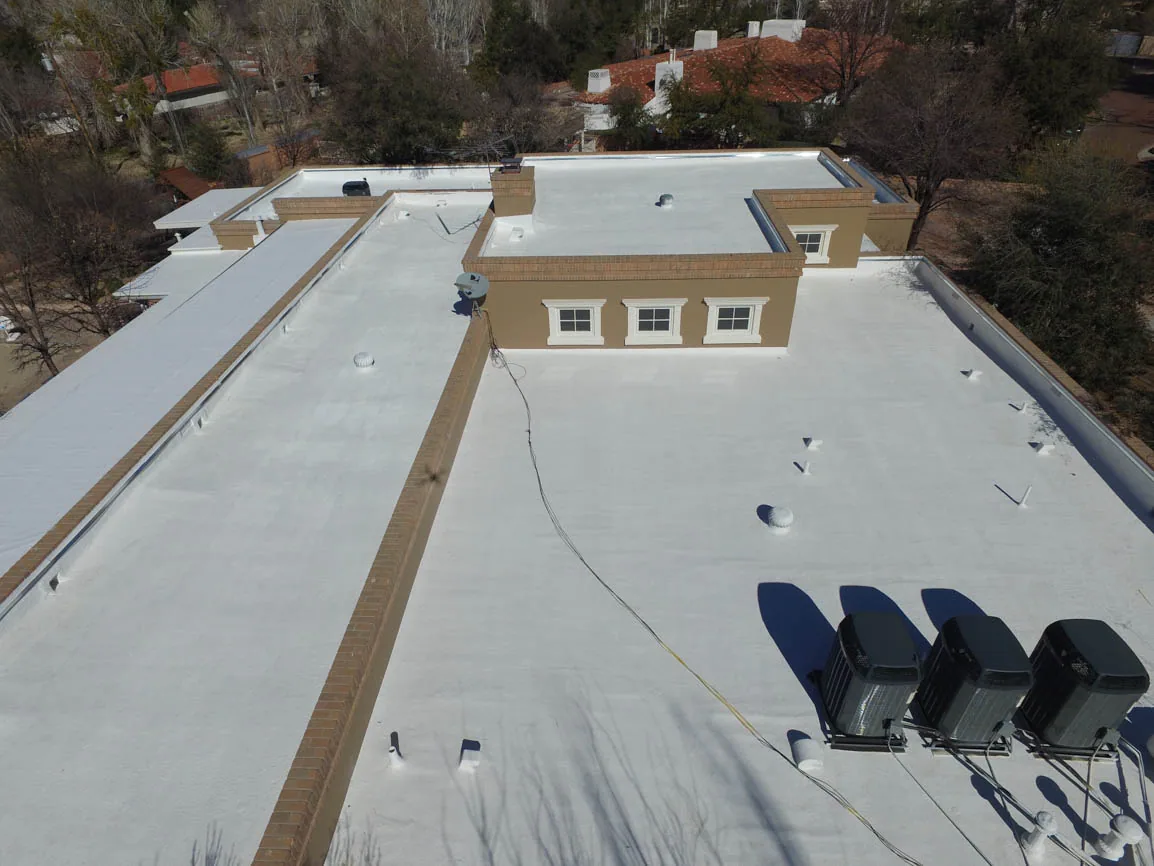
Slope check, west wing: a flat-looking single-ply roof that sheds water to its drains within an hour of the last rain, with a field chalked to a dull gray and seams that still pass the probe test at every lap. For a roof in that condition, a water-based acrylic coating is the economical way to restore reflectivity and extend the membrane. The same coating on the building next door, where a long basin stays wet for days, would start failing within a few seasons. That contrast is the planning question behind acrylic roof coatings in Thousand Oaks, CA, and it is why the first visit measures drainage before it measures anything else.
We apply acrylic over sound TPO and other single-ply roofs, over metal, over built-up surfaces and as the topcoat on sprayed foam. Where water stays on the roof, silicone is the stronger candidate, and the survey says which one the building actually needs.
Acrylic Roof Coatings
Roof Systems
Call our team
Written findings and options
Thousand Oaks, CA
Ventura and Los Angeles counties
Drainage: the roofs acrylic suits and the ones it does not
Acrylic is an emulsion that forms a film as its water leaves. Cured, it is tough and elastic, but prolonged immersion can re-wet it, and the result is blisters, a milky haze or lifted edges at the low spots. The coating therefore belongs on roofs that drain: positive slope, clear outlets, no standing water after a rain. The number to look at is not the average slope but the worst basin, and a survey marks every area where water remains longer than a day or two. Those areas are repaired, re-sloped or given a different system.
Local rainfall sharpens the test. Newbury Park averages only about ten inches a year, delivered in a few heavy winter storms, so a roof that drains in a drizzle can still pool in a cloudburst. We check drain and scupper capacity against the heavy storm, not the annual average.
Weather: cure windows, surface heat and the first rain
Acrylic cures by evaporation, so it needs dry weather for the full cure and not only for the hours of spraying. In the Conejo Valley that is the easy part, because rain is confined to a short winter season. The harder part is heat. Summer air in Thousand Oaks typically sits in the 70s to 80s Fahrenheit, yet a membrane surface runs far hotter, and Woodland Hills reached 121 F in September 2020. Acrylic applied to a roof that hot skins over, trapping moisture beneath it and leaving pinholes.
Crews therefore start in the cooler morning hours, break while the roof peaks, and watch humidity as well as temperature, since Santa Ana air below 10 percent humidity dries the surface faster than the film can level. Gusts carry mist off the roof, so wind limits are set before mobilization and glazing and parked vehicles are masked. When an early storm is forecast, the coating schedule moves, because a film washed off at partial cure is a cost the owner would otherwise carry.
Film build: coats, reinforcement and the details first
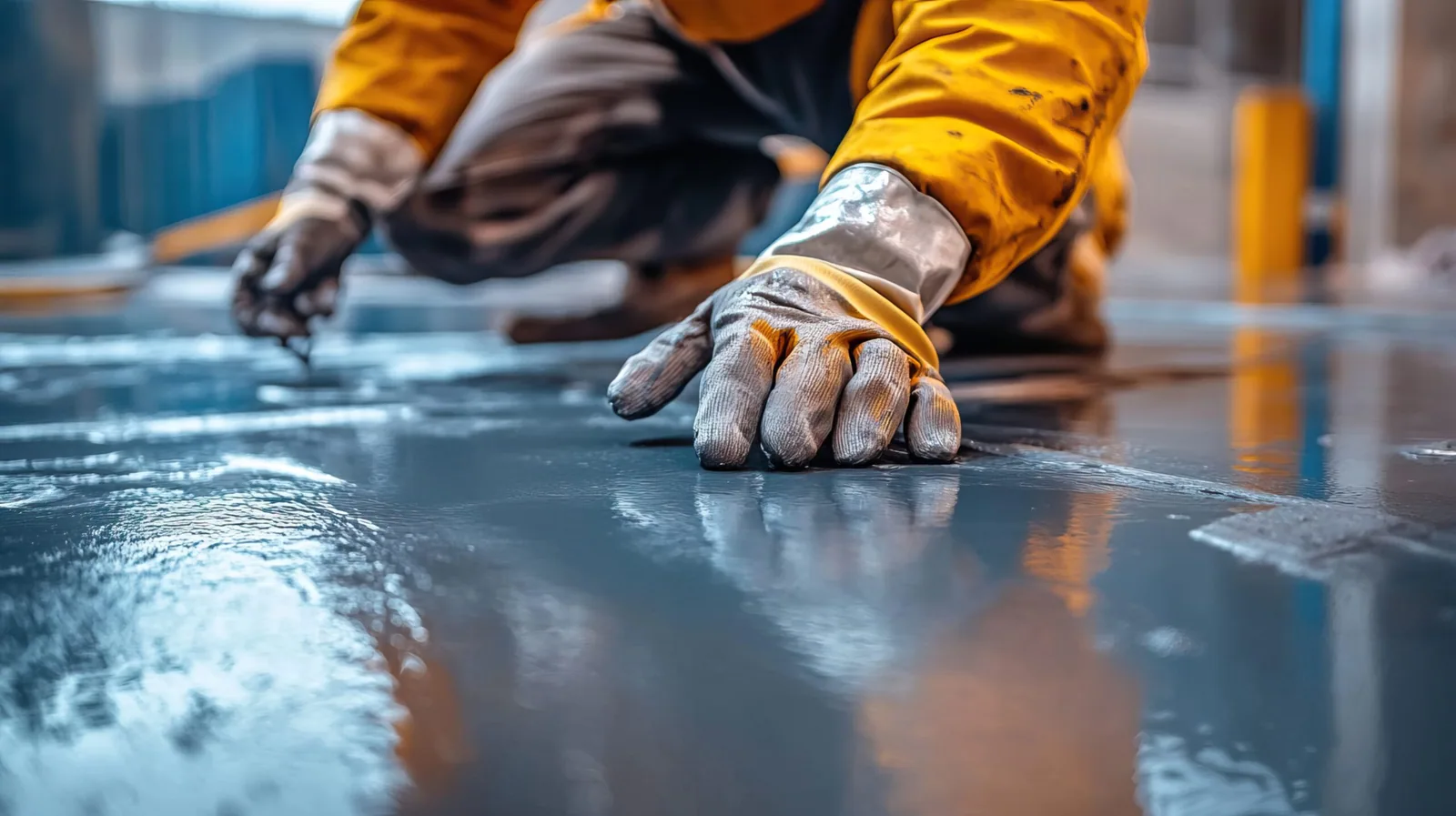
Acrylic goes on in coats, and the finished thickness, not the number of passes, sets how it performs. Seams, penetrations and fastener heads receive detail treatment before the field: sealant, then reinforcing fabric embedded in coating, then the full coats over both. Slick or contaminated membranes take a primer or tie coat, and on standing seam and other metal roofs, rust is treated and fasteners are sealed before the reflective topcoat. Because the film is thin and light, it adds little weight to a deck, which matters on older buildings where a recover would load the structure.
Fire and code: the listing travels with the assembly
A coating is part of a roof's fire classification, not an addition to it. A listed acrylic over a listed substrate can carry a rating that a different pairing does not, so we check the exact combination and put the listing in the file. After the 2018 Woolsey Fire and the January 2025 Kenneth Fire, which brought evacuation warnings to Agoura Hills and Oak Park, owners ask what a coating does in an ember event. The practical answer is that the assembly rating and a clean roof matter more than the brand: debris collected in corners and behind curbs is what embers ignite.
The state's 2025 building code and the amended local codes the city adopted the same year both apply to new permits, so scopes now reference each. A coating that changes the roof's reflectance also draws an energy code review for nonresidential work.
Sequence: restoring a campus roof by roof
For owners of several buildings, the question is order. California Lutheran University has 41 buildings on its 290-acre main campus, and the two-building Conejo Corporate Campus, nearly 200,000 square feet of office space, is headed for Class A multi-tenant repositioning under its new owner. Groups of buildings like these are rarely coated in a single season. Acrylic suits staged work because each roof is a short mobilization and the next coat bonds easily to the last. Sound roofs are coated early, roofs with wet insulation come off the coating list and onto a replacement schedule, and the order follows the condition index, the remaining service life and the lease or academic calendar. On a campus with as many buildings as California Lutheran, the low-slope roofs are sorted into those three groups before any material is ordered, and larger owners fold that sort into a multi-site roof program.
Recoat: easy to renew, easy to neglect
Acrylic can be recoated with acrylic after a wash and an adhesion check, which is its main advantage over silicone and the reason owners can treat it as a repeating maintenance item. The same ease makes it simple to neglect. The tell is a coating that thins, loses reflectance and begins to show the substrate at the seams. We record thickness at installation and measure again at each visit under a preventive maintenance program, so the recoat shows up in the reserve plan before thin spots arrive. Warranty terms belong to the coating manufacturer, and the closeout file shows what that manufacturer requires. Before any coating is chosen, core cuts and moisture readings decide whether the roof is a candidate for roof coating restoration at all.
On a building in the Thousand Oaks Boulevard corridor, adhesion testing and dry-insulation confirmation belong in the coating decision before the owner compares its price with a recover.
Commercial Roofing Questions
How soon after application can rain reach an acrylic coating?
Only after the film has cured enough to resist wash-off, which the manufacturer states for each product and temperature. We skip days with rain in the forecast window and recheck the radar on the morning of the work.
Is acrylic cheaper than silicone, and what is the catch?
Material cost is usually lower, which is the appeal. The catch is the drainage requirement: if the roof ponds, the savings disappear into repairs and an early recoat.
Can acrylic be applied over a spray foam roof?
Yes, it is a common topcoat for foam, typically over a basecoat that seals the foam surface at a specified thickness. The foam is kept dry and clean until the coating goes on.
Will an acrylic coating make my building cooler?
It lowers the roof surface temperature by reflecting sunlight, and the building benefits most where the roof sits over conditioned space with a real cooling load. The effect fades as dirt collects, so the survey tracks reflectance over time.
What if only part of the roof ponds?
We treat the low areas on their own: build them up with tapered board or foam, or coat that portion with silicone, and use acrylic on the rest. A mixed scope costs more than a single material, and it costs less than a failed film.