Johns Manville Roofing Systems in Thousand Oaks, CA
Roofing Manufacturers · Thousand Oaks, CA
Core cut 4, northeast quadrant: two layers of polyisocyanurate board with an open joint between neighboring boards, the upper layer stained along the gap, and a membrane above it that still reads dry on the surface. On an office or laboratory roof in Thousand Oaks, CA, that finding is a quiet one. Nothing leaks, yet the gap is a thermal bridge and a path for moisture, and the stain says water has already moved through at least once. Johns Manville makes membranes and the insulation beneath them, which gives its assemblies a particular advantage in survey work: the board, the cover and the sheet can be read as one system. What the owner needs from the findings is a remaining service life for the whole assembly and not only for the surface.
Johns Manville Roofing Systems
Roofing Manufacturers
Call our team
Written findings and options
Thousand Oaks, CA
Ventura and Los Angeles counties
Catalog: JM membranes, bitumen systems and the insulation line
Johns Manville sells TPO, PVC and EPDM single-ply membranes, a modified bitumen line that includes torch-applied products under the DynaWeld name, built-up roofing components, and polyisocyanurate insulation sold as ENRGY 3. A roof from this maker is therefore often an assembly of its own parts, from deck-level board to the cap layer, which makes the survey cleaner than on mixed-origin roofs where each layer has a different history.
We identify what is on the roof from markings, cut samples and the construction drawings if they exist, then record the build-up layer by layer. That inventory feeds every later choice. A roof with sound membrane and wet insulation needs a different plan than one with a worn surface and dry board, and the two cases look alike from the roof deck until a scan and a core tell them apart. Owners who also hold GAF or Sika Sarnafil roofs get the same layered inventory for those buildings.
Board: thermal resistance, joints and the dusk scan
Polyisocyanurate gives high thermal resistance for its thickness, which is why it dominates low-slope roofs where parapet height and door thresholds limit how much can be added. Its performance depends on installation as much as on the board itself. Joints must be tight and staggered between layers, facers must stay dry, and the board must be fastened or adhered to the pattern the assembly requires. Where joints open, heat escapes in winter and the cooling plant works harder through the warm Conejo Valley summer.
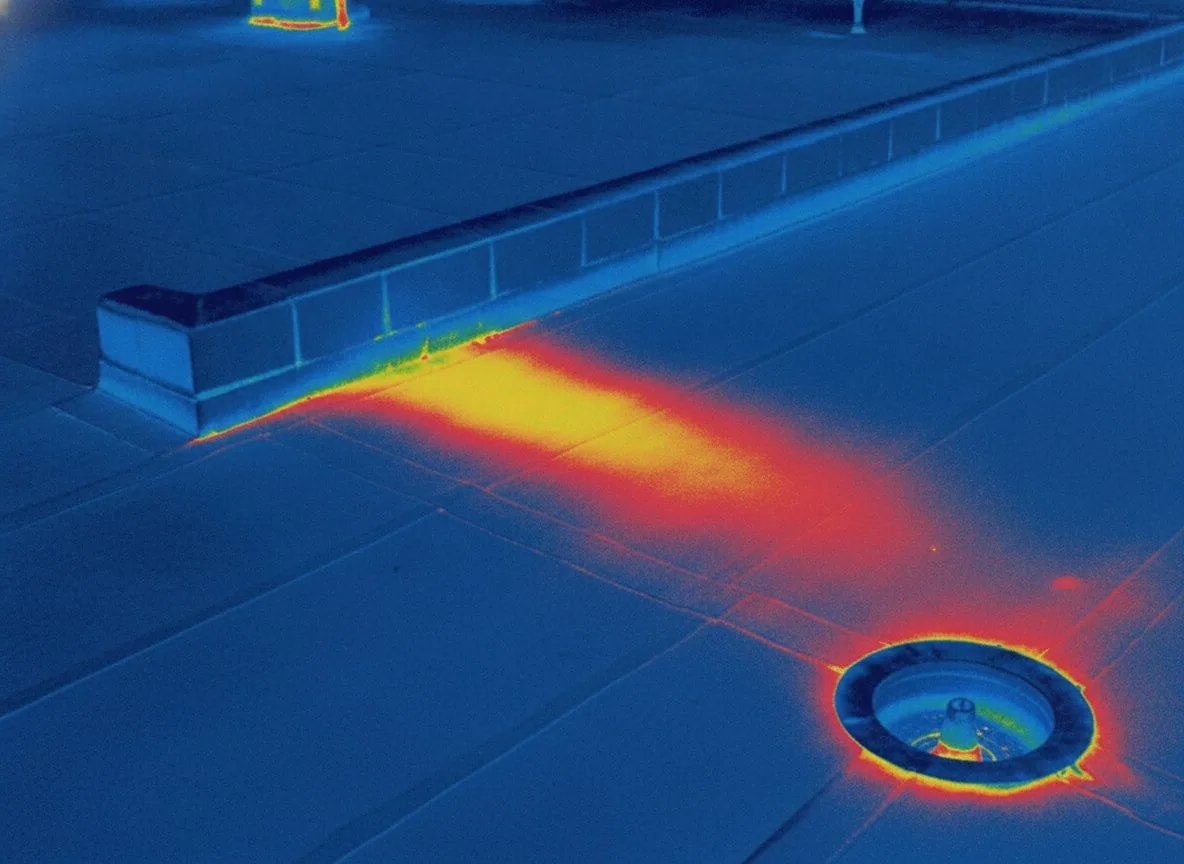
Moisture is the larger risk. We commission an infrared moisture survey at dusk, when wet insulation still holds daytime heat longer than dry board and shows warm on the scan, and mark every anomaly on the plan. Core cuts at the marked locations confirm what the scan suggests. Wet board comes out regardless of how the surface looks, and the insulation and cover board layer is rebuilt before any membrane returns.
Campuses: laboratories, offices and the many-building owner
Amgen is headquartered in Thousand Oaks and is the largest employer in the Conejo Valley, which means multi-building laboratory, manufacturing and office campuses across the Newbury Park area. Teledyne Scientific works from the old Rockwell Science Center site, which came to Teledyne in 2006 and now serves as a research and light-industrial complex. Conejo Corporate Campus, two office buildings totaling 198,478 square feet on 11.36 acres, was Amgen's home for ten years. Its buyer plans Class A multi-tenant repositioning and holds a second office and R&D property, the Think Here campus.
For owners of that kind of property the question is not a single roof but a set of them, each with a different age and a different next step. A campus plan sorts office building roofing by remaining service life, groups the work into seasons, and sequences it ahead of leasing or equipment installation. When a property is repositioned for multi-tenant use, the roof is reviewed for new rooftop loads before the new tenants arrive. Run as a multi-site roof program, that work shares one set of records.
Plies: built-up and modified bitumen on older roofs
Not every low-slope roof in Newbury Park and Thousand Oaks is a single-ply sheet. Layered bitumen systems remain in service because they resist traffic, tolerate many penetrations and are repairable in small sections. Their weak points are the ones a survey knows: surface granule loss that exposes the asphalt to ultraviolet light, splits at expansion joints, blisters over trapped moisture, and flashings that have pulled from walls as the field shrinks.
On a built-up roof, repair means opening blisters and cutting out wet plies, then rebuilding the section with compatible layers. Because torch-applied products add an open flame, we plan hot work with the owner's fire safety staff and consider cold-applied or self-adhering alternatives where tenants or surrounding vegetation make flame a concern. In a valley that has seen the Woolsey Fire, that preference is not abstract.
Energy: the 2025 code, local amendments and rooftop solar
Permit applications filed from the first day of 2026 are reviewed under the 2025 California Energy Code, with nonresidential revisions that reach roofs, reflectivity, solar arrays and battery storage. Thousand Oaks folded the state codes into Title 8 of its municipal code during 2025, so a reroof is reviewed against the combined package. Insulation thickness, reflectivity and the readiness of the roof for panels are each a plan-review question and should be answered before drawings are submitted.
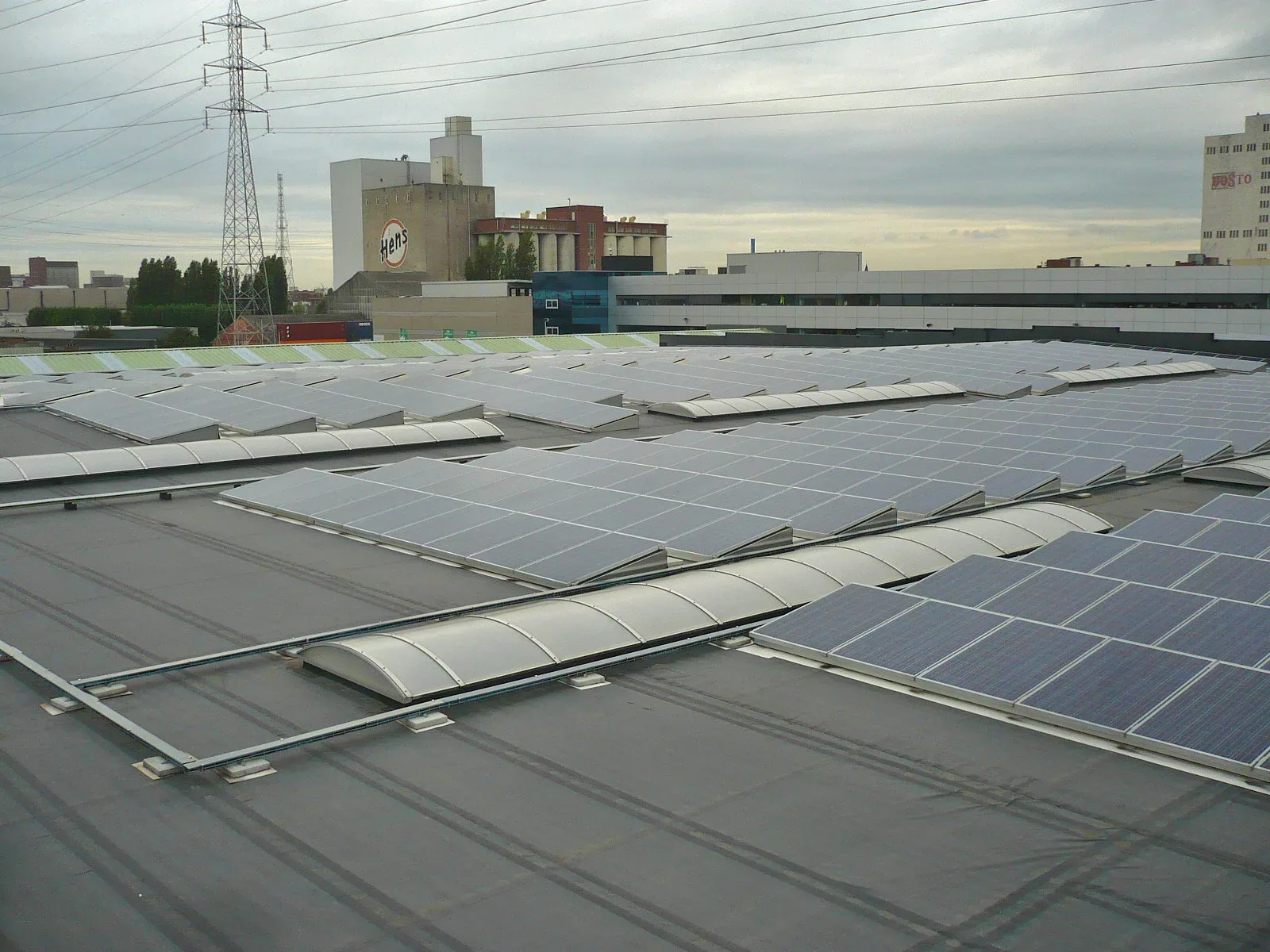
An array outlasts several roofing decisions. A membrane that will fail in the middle of the panel life forces a removal and reinstallation of the array, which costs more than replacing the sheet beforehand. That is why solar-ready roofing starts with a survey of remaining service life and ends with a membrane that will outlive the equipment above it.
Records: the layer-by-layer file an owner can hand over
A roof assembly with several layers needs a record with several layers. Ours lists each component found at every core location, the thickness and condition of the board, the state of the vapor retarder if one exists, the membrane type and its attachment, and photographs tied to a plan. When the manufacturer issued a warranty on the assembly, the file also notes which conditions apply to repairs, so that no patch or penetration is added that the terms do not allow. For an owner who answers to a budget cycle and to a lender, that file turns an argument about the roof into a list of dated findings.
Commercial Roofing Questions
How can an owner tell whether the insulation under a membrane is wet?
An infrared scan at dusk marks suspect areas, and core cuts or a moisture meter confirm them. The surface of the membrane tells very little about what sits underneath.
Is polyiso the right board for every reroof?
Usually for new work, since it gives high resistance per inch of thickness. Existing roofs with low parapets or fixed door heights may limit how much board fits, and a cover board is added over it.
Do built-up and modified bitumen still make sense on a new roof?
Where traffic is heavy, penetrations are many and small repairs are routine, layered bitumen remains a sensible choice. The ignition risk of torch work is handled with hot work controls or non-flame products.
Does adding solar change the membrane choice?
Arrays outlast several roofing decisions, so the membrane should have more service life remaining than the equipment. Replacing a sheet under panels is the costlier path.
What do plan reviewers ask about insulation at a reroof?
They read the submittal against the 2025 California Energy Code as the city has adopted it, looking at insulation values, reflectivity and the layers of the assembly. We prepare the product data before the permit goes in.