GAF Commercial Roofing Systems in Thousand Oaks, CA
Roofing Manufacturers · Thousand Oaks, CA
Finding: fasteners at a TPO roof perimeter can loosen while the interior field remains seated. That pattern calls for a separate review of the edge attachment, corner zones and termination detail. It does not by itself establish a product defect or a specification shortfall. The repair or replacement decision follows the tested assembly, approved details and current supporting condition. It matters to an owner in Thousand Oaks, CA because GAF sells commercial membranes in thermoplastic, self-adhering and modified bitumen families, and each of them fails in its own way. A baseline survey separates what the product can do from what the installation allowed it to do, and that difference sets the replacement horizon on the budget.
GAF Commercial Roofing Systems
Roofing Manufacturers
Call our team
Written findings and options
Thousand Oaks, CA
Ventura and Los Angeles counties
Families: what GAF makes for low-slope roofs and where each fits
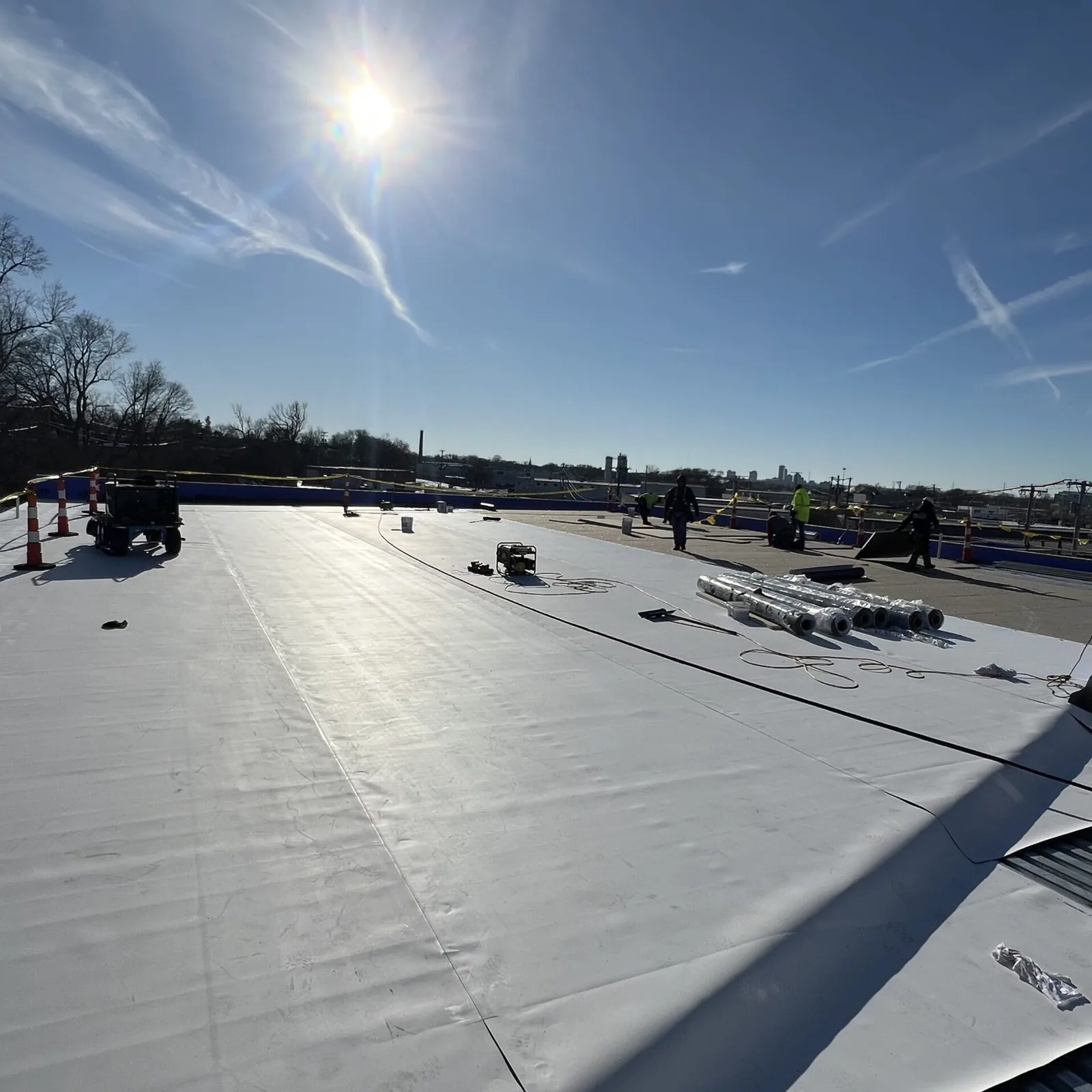
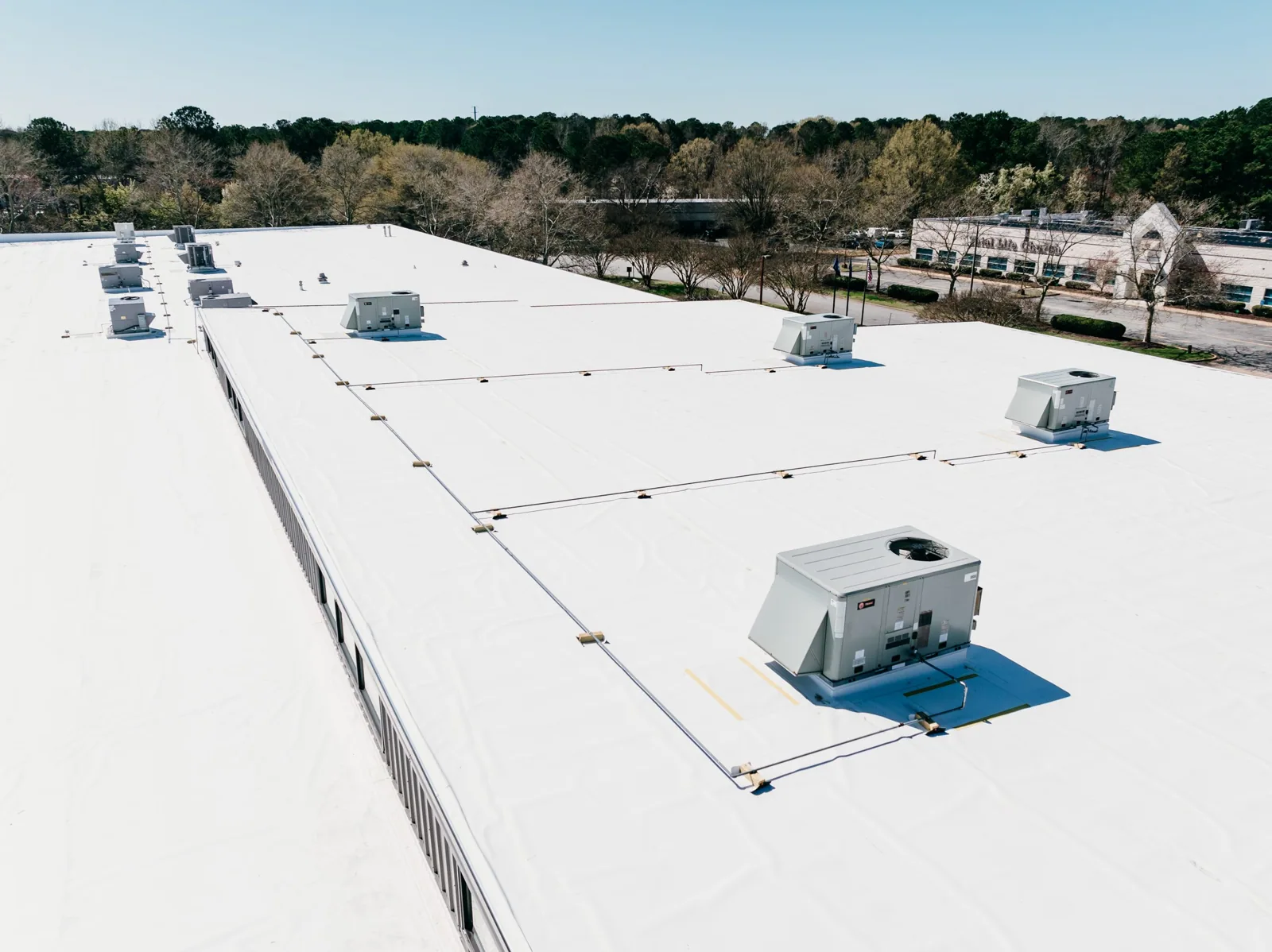
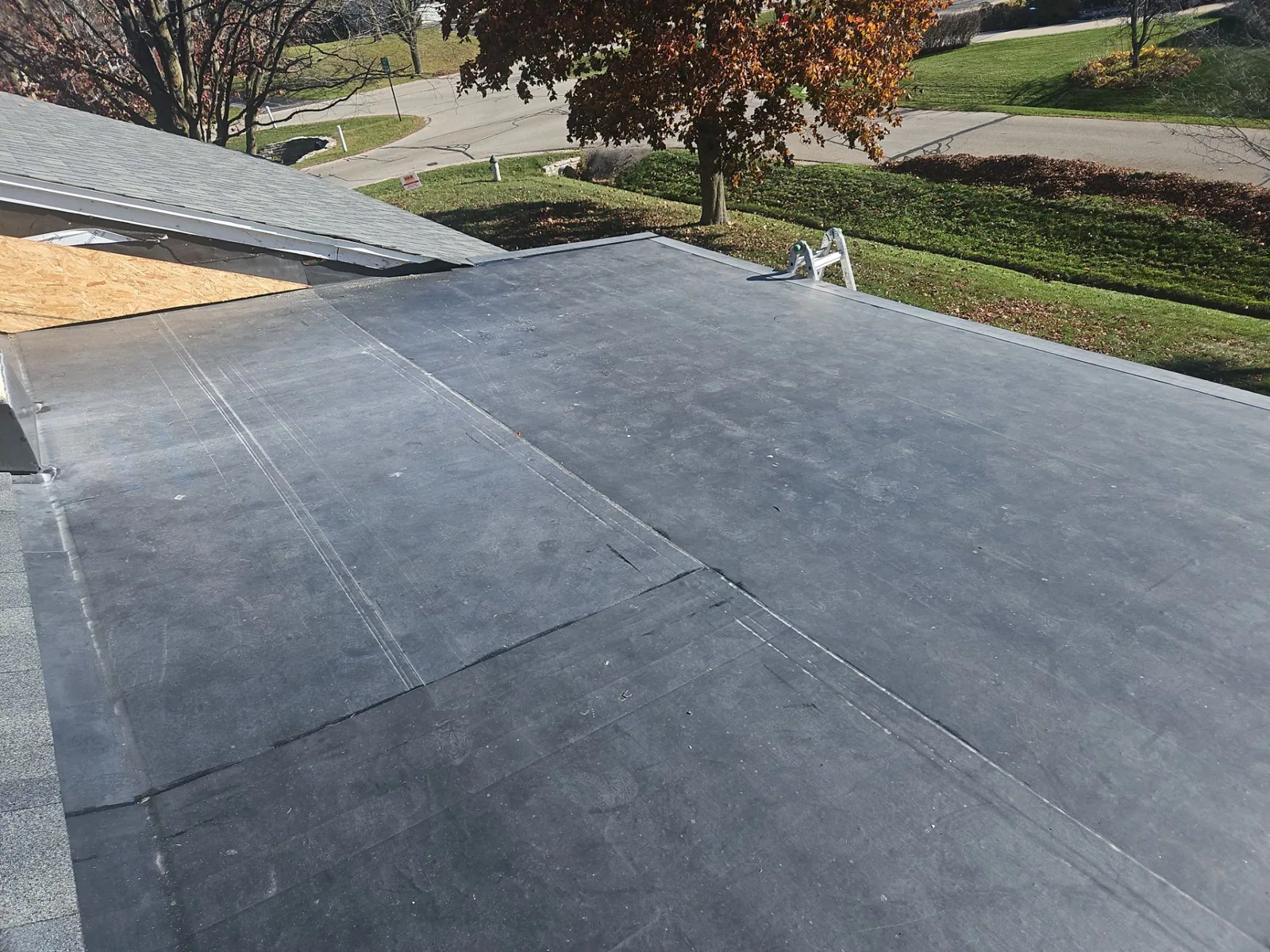
GAF's commercial line includes EverGuard TPO, offered in mechanically attached and fully adhered forms, a self-adhering SBS modified bitumen system sold as Liberty, and a conventional modified bitumen line under the Ruberoid name. Polyisocyanurate insulation sits in the same catalog under the EnergyGuard name, so one manufacturer can supply both the membrane and the board beneath it. For a warehouse or R&D building with a large, simple deck, a TPO system is usually the working choice. For a roof with many penetrations, tight parapets or a tenant that cannot tolerate hot work, the self-adhering option earns a second look.
We read the existing roof before anything is specified, because many owners already carry one of these systems overhead and need its condition before choosing a path. The survey records membrane type, attachment method, seam condition and insulation age, then sorts the roof into repair, restore or replace. Owners who are also weighing Carlisle SynTec or Johns Manville specifications receive the same findings for each, so the comparison rests on the roof and not on a brochure.
Uplift: Santa Ana wind and the edge of the sheet
Santa Ana winds can easily exceed 40 mph in Ventura and Los Angeles Counties, and winds of 50 to 60 mph drove the Woolsey Fire of November 2018. Those are the loads a Thousand Oaks roof is attached to resist. On a mechanically attached TPO roof the weak point is almost always the perimeter and the corners, where uplift pressure peaks and where the fastener pattern is supposed to tighten. On a fully adhered system the weak point is the bond at those same locations and at the base of taller walls, where a lifted edge lets wind get under the sheet and peel it back across the field.
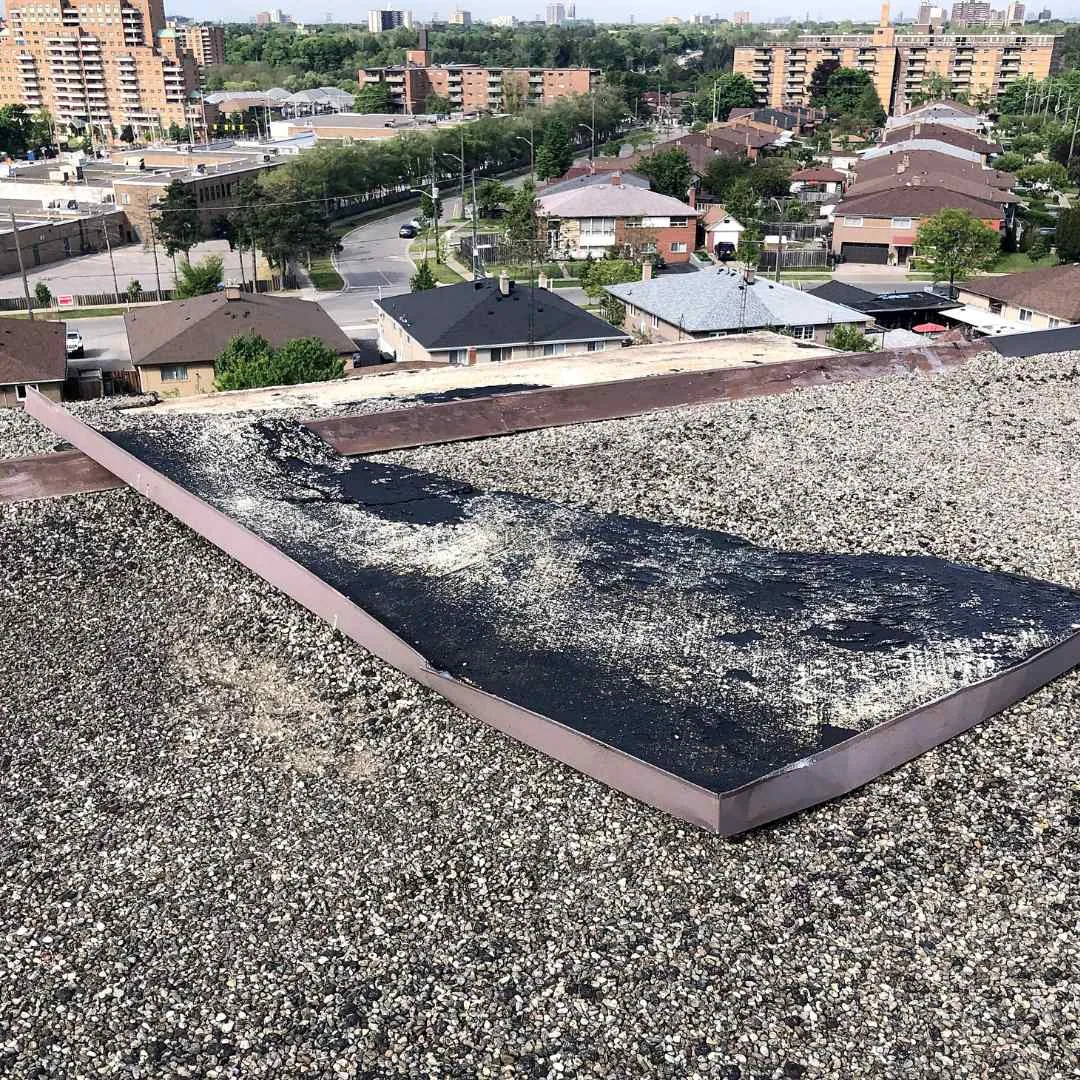
Our survey probes the edge metal, counts fastener spacing at the perimeter and tests adhesion at the corners. A GAF roof installed to the manufacturer's published perimeter details usually shows it, and one that was not installed that way usually shows that too. The correction costs less before a wind event than the wind damage roof repair that follows one.
Drainage: ten inches of rain delivered in a few storms
A Newbury Park roof sees about ten inches of rain across a year, but nearly all of it arrives in a short winter season. A drain that sits half blocked with leaves and dust through the dry months therefore gets its real test in two or three heavy storms, and a thermoplastic membrane that holds water after those storms collects dirt in the basin, loses reflectivity there first and ages faster than the sheet around it. Manufacturers set their own limits on how long water may stand on a membrane, and the survey measures the depth and duration of ponding against those limits.
Where the structure is the cause, the answer may be tapered insulation or an added drain. Where debris is the cause, it is a maintenance item. We separate the two in the report, with photographs, so a facilities team knows whether it is looking at a ponding water repair or a cleaning schedule, and so the roof drains and scuppers are on the calendar before November.
Peel-and-stick: dust, temperature and the laps that fail first
A self-adhering membrane bonds to a clean, primed and dry surface, and nearly everything that goes wrong with one starts with a failure of those conditions. Fine dust carried by dry offshore wind settles on a prepared substrate within minutes, a damp morning leaves a film that the primer will not wet through, and a cold deck slows the cure of the adhesive layer. The first signs of trouble appear at side laps and end laps, where the edge of one sheet fails to fuse to the sheet beneath it and a hairline channel opens.
On a modified bitumen roof that was installed this way, we run a probe along every lap, press the corners of the flashing returns and look for fishmouths at terminations. Because no open flame is involved, the system suits occupied medical and office buildings where hot work would require a fire watch and a long list of conditions. It still needs a competent surface preparation, and the report records what the surface looked like on the day the work was done.
Options: repair, restore or replace by planning horizon
Near term, a roof with a few failed laps and soft flashings is a commercial roof repair candidate. The patch material is matched to the sheet in place, since formulations changed over product generations and an older sheet does not always accept a current patch without cleaning, abrasion and a test weld or test bond on the actual roof. Mid term, a dry roof with a weathered surface may be restored with a coating, which pushes the replacement horizon out and moves the cost from capital to the maintenance budget. Long term, a roof with wet insulation, shrinkage or widespread seam distress goes on the replacement schedule with a target year.
The point of sorting a portfolio this way is that each building receives the cheapest action that still protects the structure. Treating all of them as replacements overspends. Patching all of them hides the roofs that are nearing the end of their service life, and those are the roofs that fail in the first big storm of the season.
Closeout: what the file holds for the next owner
System warranties on GAF assemblies are issued by the manufacturer and carry their own conditions for components, installation and upkeep, so the wrong repair or an untracked change to the roof can cause trouble later. Our file keeps the product labels, core cut results, seam probe notes, photographs and a roof plan with each area marked, which lets the owner read the warranty against the roof as it actually stands. That is the same file a lender asks for at refinance or a buyer asks for in due diligence, and it connects to a longer roof warranty management program for owners with several buildings.
Any building in the Rancho Conejo Industrial Park, which held more than 120 properties in 2017, or among the biotech and industrial buildings of Newbury Park can change hands or tenants. A roof file that travels with the building keeps the first conversation after closing from becoming an argument about what is on the roof.
Commercial Roofing Questions
Can a GAF TPO roof go over the existing roof in Thousand Oaks?
Sometimes, as a recover, when the insulation below is dry and the deck is sound. A moisture survey and core cuts come first, and the layer count at that building has to be allowed under the adopted code.
Why do corners and edges fail before the middle of the roof?
Uplift pressure is highest at those locations, so a fastener or bond that is adequate in the field can be marginal there. Santa Ana gusts expose the weakness faster than ordinary breezes.
Is a self-adhering membrane gentler on tenants?
Mostly, because it avoids open flame and most hot-work odor. Surface cleanliness, temperature and lap pressure still control the result, so the schedule follows the weather windows.
What does a baseline survey record on an existing GAF roof?
Product labels, membrane family, attachment pattern, seam and flashing condition, drain status, and moisture readings. Each finding is photographed and placed on a roof plan.
Do wildfire embers change which system should be specified?
The fire classification belongs to the assembly as tested, meaning membrane, insulation, board and attachment together. The Woolsey Fire of 2018 makes that rating worth asking for in writing.