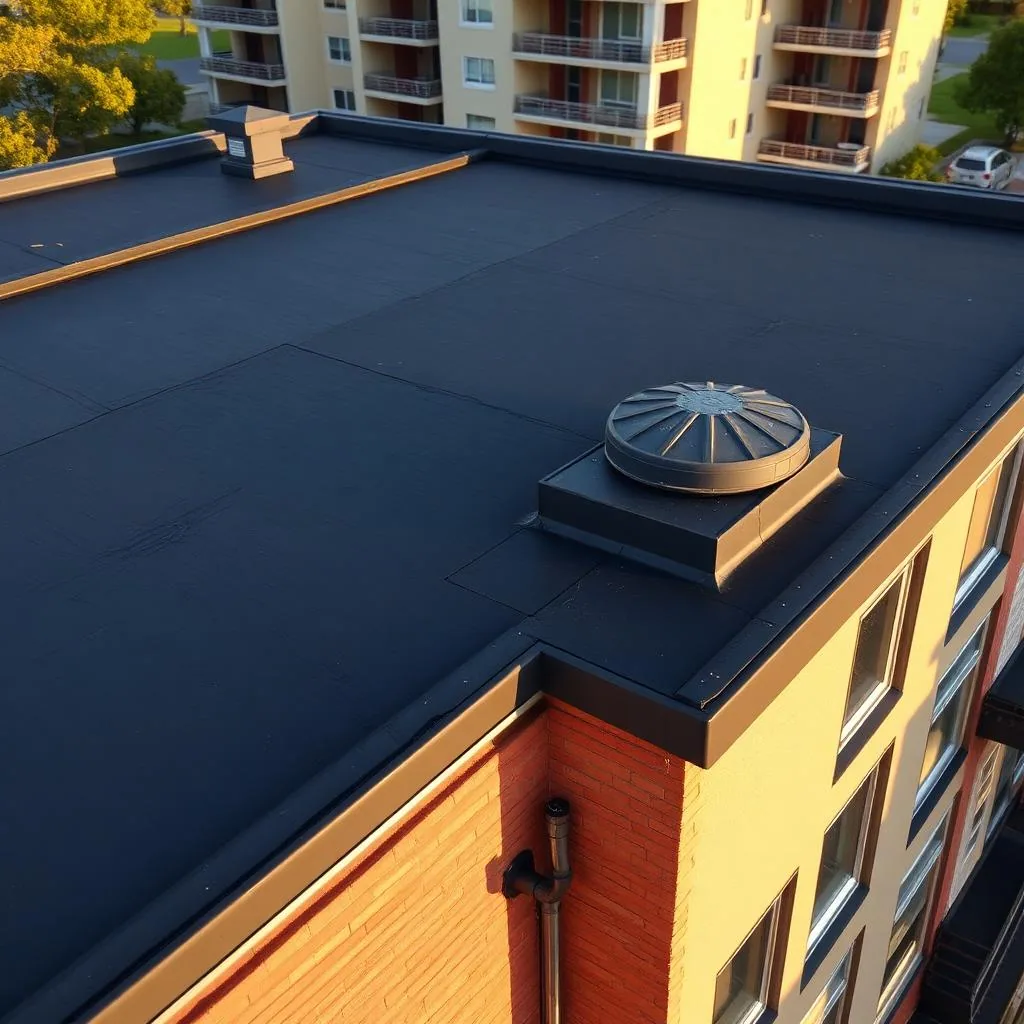
Modified Bitumen Roofing in Thousand Oaks, CA
Roof Systems · Thousand Oaks, CA
Granule loss: a wide band of bare asphalt showing through the cap sheet along the west drainage valley, with the laps still sealed and the base ply beneath it untouched. On a commercial roof in the Conejo Valley, that finding reads as ordinary sun damage on a modified bitumen system, and it carries a clear planning message. The cap sheet is the sacrificial layer, and once the mineral surface is gone the asphalt beneath it begins to oxidize at a pace the owner can calculate. Modified bitumen is a layered roof, usually a base sheet under a granulated cap, and for owners in Thousand Oaks, CA the question is how many seasons of that protection remain and what each stage of repair costs.
Modified Bitumen Roofing
Roof Systems
Call our team
Written findings and options
Thousand Oaks, CA
Ventura and Los Angeles counties
Types: SBS, APP and how each sheet is applied
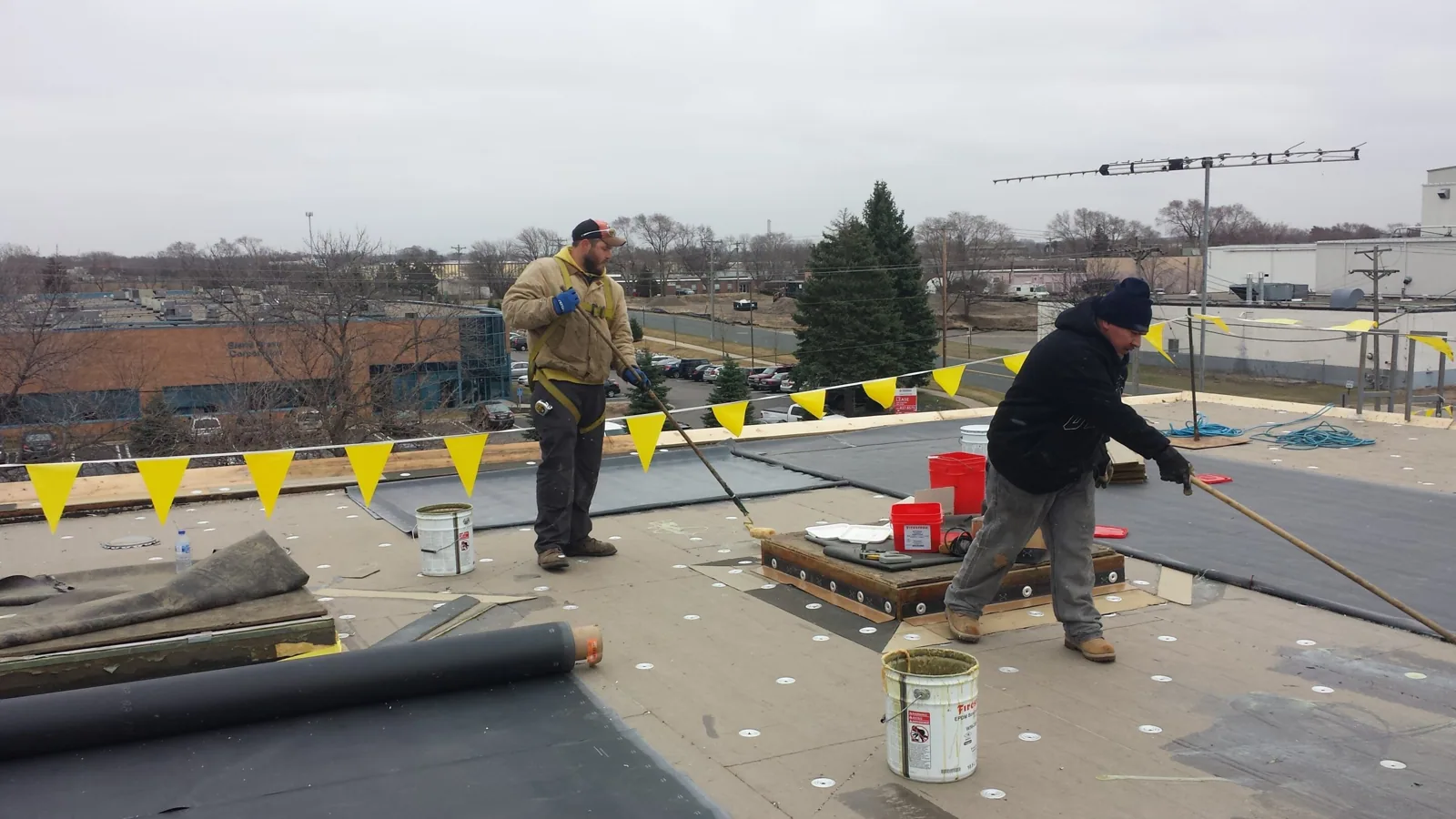
Modified bitumen is asphalt blended with a polymer and reinforced with polyester or fiberglass. Two polymers dominate. SBS, a rubber-like modifier, makes a flexible sheet that stretches with building movement and recovers, and it is applied with hot asphalt, cold adhesive or a self-adhering backing. APP, a plastic modifier, makes a stiffer, more heat-stable sheet that is typically installed with a torch, which melts the underside of the roll onto the substrate. Both are assembled in two or more plies, which is the main reason owners value them: a puncture in the cap sheet does not necessarily open a path through the base.
The mineral granule surface protects the asphalt from ultraviolet light and fire and provides some reflectivity. In a valley with year-round sun, the cap sheet's condition predicts the roof's remaining service life more reliably than its age, and we record it by zone so the owner can see which slopes are weathering faster.
Fire watch: open flame, dry wind and the local code package
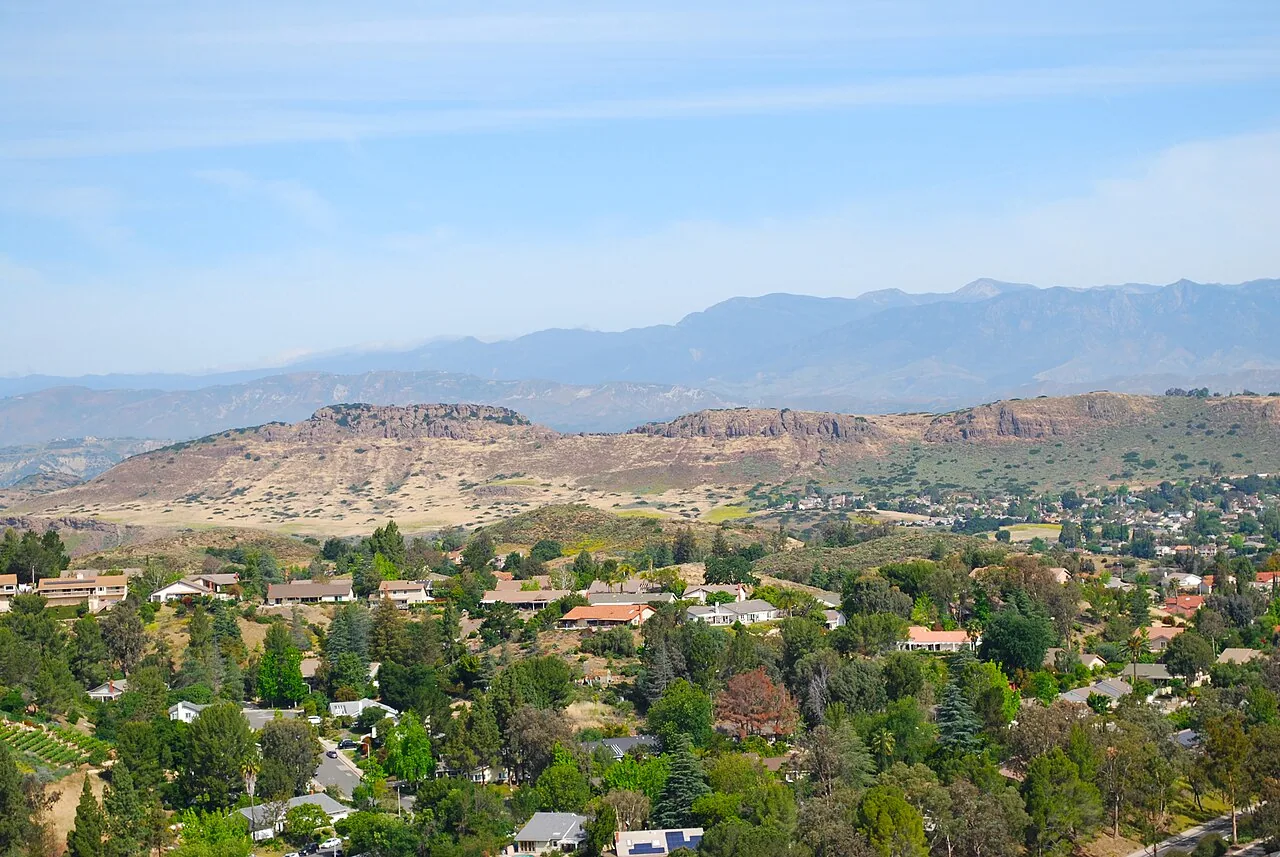
Torch-applied roofing is an open-flame process, and the Conejo Valley is a poor place to treat that casually. Santa Ana winds blow dry and offshore, can top 40 mph and pull relative humidity under 10 percent, and the Woolsey Fire of 2018 burned in winds of 50 to 60 mph while the Mountain Fire of 2024 burned amid the most extreme offshore wind event in years. The city's 2025 amendments to Title 8 adopt and amend the state wildland-urban interface and fire codes alongside the building code, so a plan for torch work is written with those codes in hand.
That is why we plan the method first. Where flame is a concern, we choose cold-applied, self-adhered or hot-mopped assemblies with controlled equipment, and where a torch is the right tool, the schedule includes a fire watch after the last seam is made and a stop rule for red-flag wind days. A work plan that treats dry, windy weather as a scheduling item protects the building and the tenants inside it.
Cap sheet: blisters, ridging and what the record shows
The cap sheet tells the story in a handful of recognizable patterns. Granule loss concentrated at valleys and along drainage paths shows where water has been running. Blisters, raised pockets of trapped moisture or air between plies, show where the layers are not fully bonded, and ridging along the seams of the underlying insulation shows movement in the substrate. Cracking at the base of walls and curbs shows that flashings are tired. None of these alone means replacement, but they build a condition index that guides the next budget cycle.
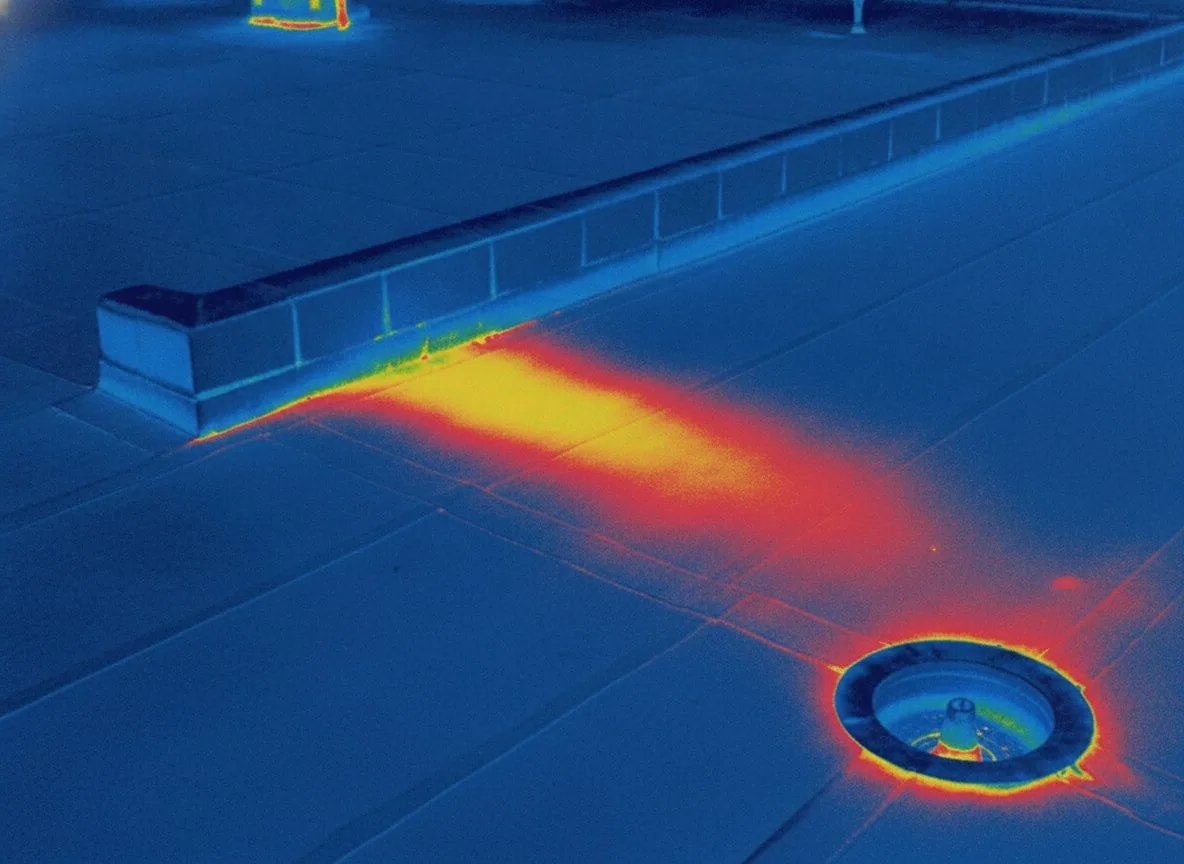
We cut a small sample where the pattern is unclear, look at the layers, and test for moisture with an infrared moisture survey. The survey separates a cosmetic problem from a wet-insulation problem, and that difference is the difference between a coating and a recover. Most of what it finds begins as heat and UV damage, which is why the survey records exposure by slope.
Buildings: civic complexes, outlet centers and phased roofs
Thousand Oaks Boulevard is a commercial corridor with public-facing and mixed-use properties in downtown Thousand Oaks. For roofs in Camarillo, the property-specific survey still starts with the observed assembly. Modified-bitumen repair in that setting still begins with the roof itself: identify the plies and transitions, confirm the supporting layers, and plan noise, access and protection around the occupied space. A nearby civic building does not establish another property’s assembly or event schedule. The decision for government building roofing depends on inspected conditions.
Retail properties bring a separate planning challenge: tenants need clear access while work is underway. At any shopping center roof, the survey identifies each membrane section and prior repair from records or direct inspection; the property’s age alone does not establish the roof installation date. Phasing follows the verified assembly, tenant access and daily dry-in capacity.
Restoration: coat, recover or tear off
A cap sheet with moderate granule loss and dry insulation can often be restored with a reflective coating, and acrylic roof coatings are the usual choice on modified bitumen because they bond well to asphalt surfaces and reduce surface temperature. Where the cap sheet has failed but the insulation is dry, a new membrane can be installed over a cover board. Where the insulation is wet, the roof is removed. Soprema produces SBS and self-adhered modified bitumen systems, and its published details guide how laps, flashings and cold-applied sheets are formed.
Every one of those outcomes has a price and a horizon, and the owner should see all three before a decision is made. A condition survey that ends with a single recommendation is a sales document. One that shows the cost of waiting a year is a planning document. A nearby system choice is built-up roofing, where the surfacing and ply condition guide repair and replacement decisions.
A repair scope should identify whether the defect is limited to the cap sheet or extends through the base plies and insulation. A compatible patch needs sound, dry material around its perimeter; applying a new sheet over a wet or debonded layer hides the condition without restoring the assembly. At curbs and walls, carry the new flashing far enough to reach a sound termination and confirm that the adjoining surface accepts the chosen adhesive or weld detail. Before a coating or recover is considered, verify the existing membrane, surface preparation requirements, drainage and manufacturer eligibility. Torch work also requires an approved fire-prevention plan and a stop condition suitable for the day’s weather. The owner should receive the alternatives together: localized repair, restoration where eligible, and replacement where moisture or substrate damage is extensive. Each option should state its limits and what inspection would trigger the next phase.
Commercial Roofing Questions
How can I tell if a modified bitumen roof is near the end of its life?
Look for bare asphalt across more than isolated patches, open laps, blisters that have split and flashings that have pulled away from walls. A core cut shows whether the insulation is still dry, which is the real limit on restoration.
Is torch-applied roofing still used in wildfire country?
Occasionally, with strict controls. Cold-applied and self-adhered sheets avoid the flame entirely, and any torch work is planned around wind forecasts, a fire watch and the building department's code requirements.
What separates SBS from APP on a commercial roof?
SBS stays flexible and handles movement; APP is stiffer and holds up well under heat. Building type, slope and installation method decide which makes sense, and the manufacturer's roll specification governs the final choice.
Can modified bitumen be coated without tearing it off?
When cores show dry insulation and the laps are tight. The surface is cleaned and primed, open seams are repaired, and an acrylic or silicone system goes on. A blistered or saturated roof is not a coating candidate.
How do outlet and mall roofs handle foot traffic from service crews?
Walk pads protect the granule surface along routes to equipment, and a written access plan keeps vendors on those paths. Traffic damage is one of the cheapest problems to prevent and one of the most common to find.