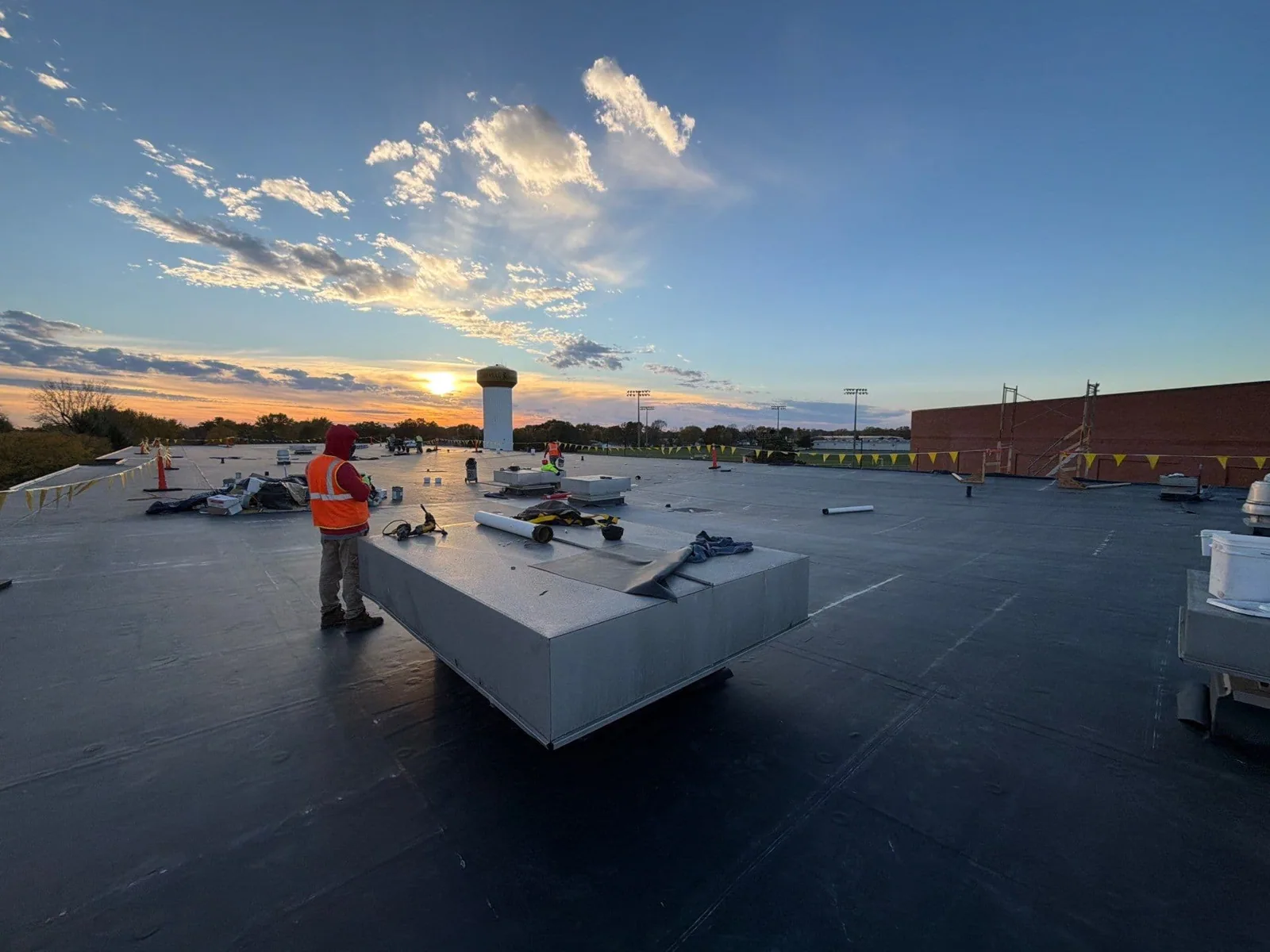
Holcim Elevate (Formerly Firestone) Roofing in Thousand Oaks, CA
Roofing Manufacturers · Thousand Oaks, CA
Lap marking, older sheet: the printed edge of a rubber membrane reads Firestone, the roof plan on file reads Firestone, and the warranty paperwork in the owner's cabinet comes from a company that now trades as Holcim Elevate. On a commercial roof in the Conejo Valley that mismatch is not trivia. It decides whether a facilities manager can find the right repair material, the right detail drawing and the right contact when a seam opens. Holcim Elevate is the current name of the manufacturer that sold roofing under the Firestone Building Products label, and its UltraPly TPO, UltraPly PVC and RubberGard EPDM systems are among the systems an asset manager in Thousand Oaks, CA is likely to meet on an inherited roof. The first task is to reconcile the label, the file and the roof.
Holcim Elevate (Formerly Firestone) Roofing
Roofing Manufacturers
Call our team
Written findings and options
Thousand Oaks, CA
Ventura and Los Angeles counties
Names: Firestone on the sheet, Holcim Elevate on the file
Product names persist longer than corporate names. A roof installed years ago under the Firestone Building Products name may carry a sheet that is still in production under a newer product designation, or one that has been replaced by a successor with different thickness and surface chemistry. The roof is not any less sound for that, but repair materials must match what is actually there. We identify the sheet by markings on the lap, by thickness measured at a cut sample, and by seam type, and we record the result in the file with photographs.
The current catalog includes UltraPly TPO and UltraPly PVC for welded thermoplastic roofs, RubberGard EPDM for adhered, ballasted and mechanically attached rubber roofs, and the insulation and cover board that go beneath them. Owners who compare this maker with Carlisle SynTec on an EPDM project see two similar rubber sheets with different seam accessories and different paperwork, and the survey identifies which accessories the existing roof needs.
Age: Warner Center office stock from the 1970s to the early 1990s
Warner Center includes the Plaza and Business Park, developed from the 1970s through the early 1990s. Those building dates do not establish the age of any current roof section, so a survey checks replacement records and the assembly itself. A roof of that age may well have been through a reroof or recover, and the building may carry layers from several eras: a base ply, an insulation board, an older membrane and a newer one on top. Each layer adds weight and hides some of the history of the one beneath it.
In the Warner Center area the survey starts with the permit record and a core cut, because the number of layers sets what the code allows next. We then scan for moisture, probe seams and report on whether the top membrane has life left or whether the roof has reached the point where tear-off is cheaper than the next three repairs. The answer is stated as a condition index with a replacement horizon, so the capital plan can carry a number for each building.
Critical areas: hospital roofs across several construction eras
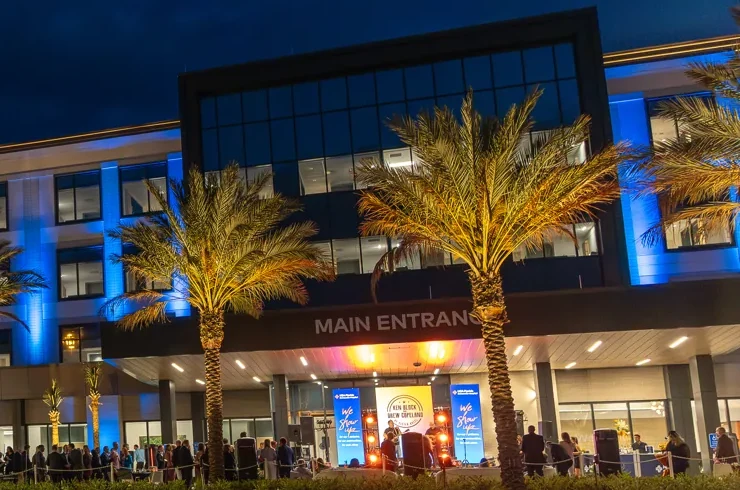
Los Robles Hospital and Medical Center, on Janss Road, opened in 1968 and has grown through successive additions, so its roofs span several construction periods and carry mechanical equipment serving critical areas. Kaiser Permanente has run a hospital in Warner Center since 1986. A healthcare roof is a different survey from an office roof. Air intakes must be located before anything is opened, odor and noise windows are negotiated with facilities staff, and there is no day on which operations simply stop.
Welded thermoplastic and adhered rubber systems both suit that environment, because neither needs an open flame, and a skilled crew can finish a repair section quickly and leave a watertight roof at the end of each shift. Our hospital roofing plans start with a schedule of the areas that cannot be disturbed, and the work around the Los Robles hospital district is arranged to avoid them.
Ash: what a roof carries after a fire in the hills
The Woolsey Fire in 2018 and the Mountain Fire six years later made ember exposure and ash on roofs a real local issue. Ash clogs drains and scuppers, holds moisture against the membrane and, once wet, becomes a paste that settles into low spots. Ember burns show as small pits or melted patches on a thermoplastic sheet and as scorched rubber around penetrations. The Kenneth Fire in January 2025 brought evacuation warnings to Agoura Hills and Oak Park, so the fire season does not close with the calendar year.
We inspect after any smoke event: drains and scuppers first, then penetrations, edge metal and the membrane near mechanical units. Any burn or breach found is documented and treated as fire damage roof repair, with photographs for the insurer. Debris is removed by hand so that the sheet is not scratched during cleaning.
Repairs: rubber and thermoplastic need different hands
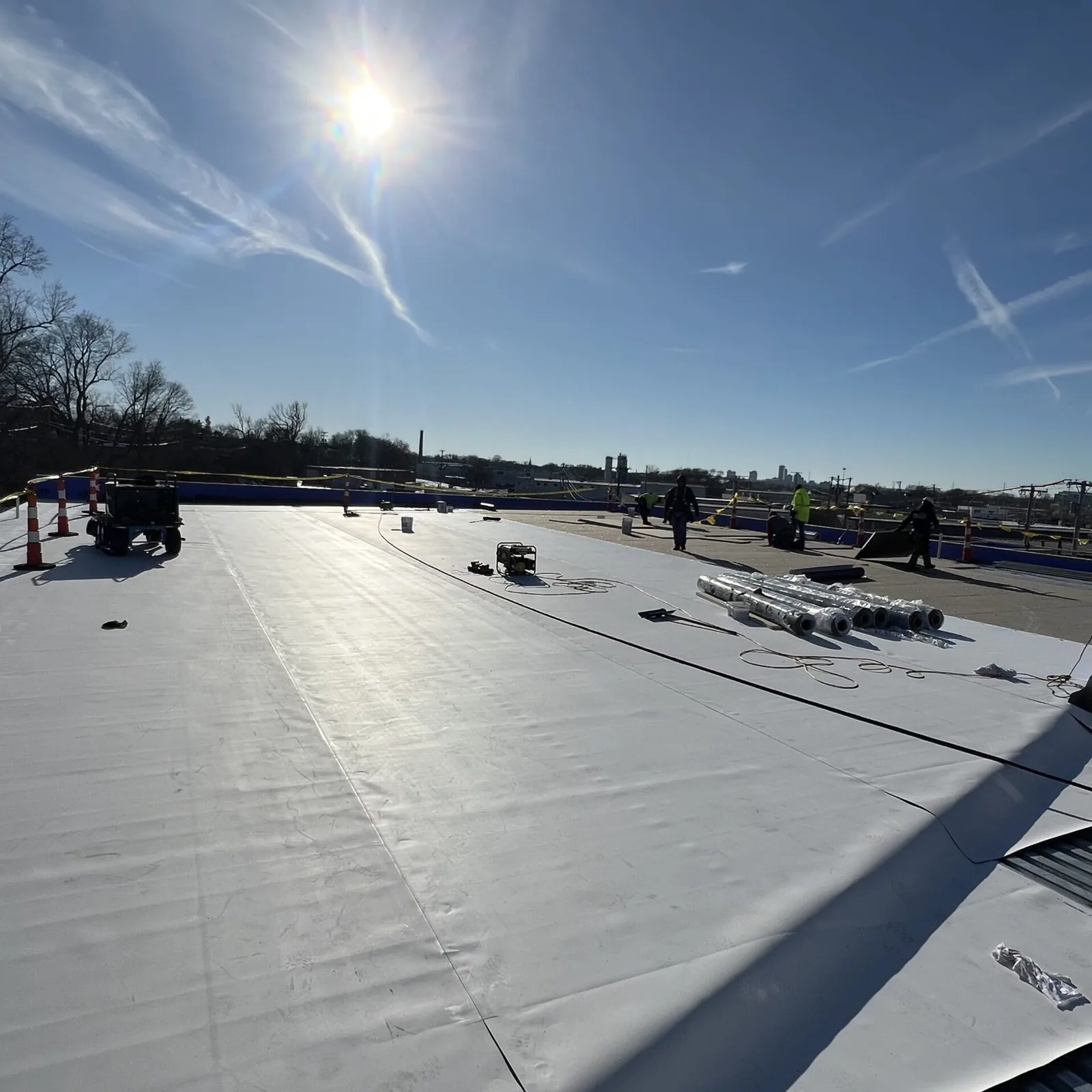
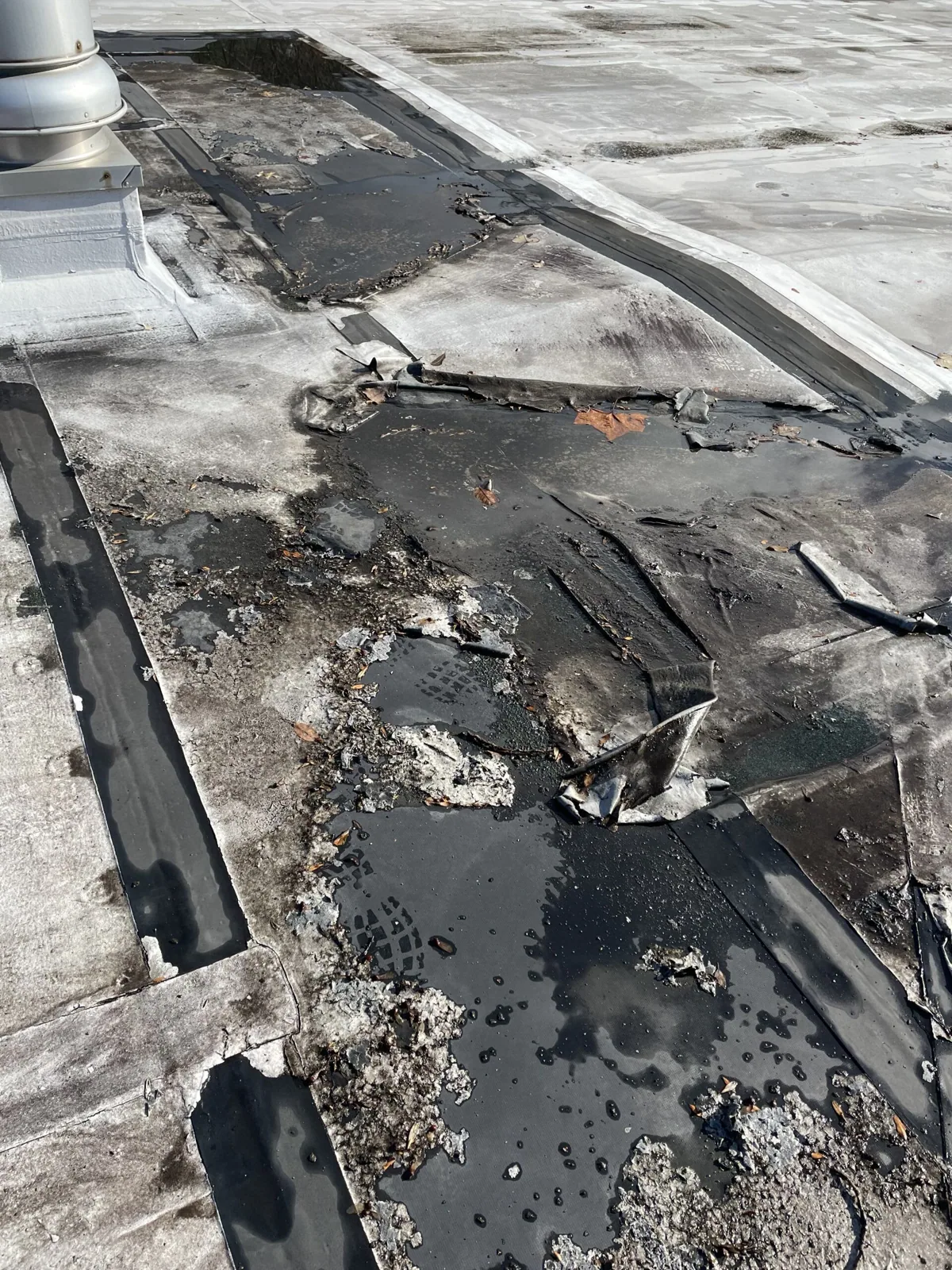
An aging EPDM surface carries a film of oxidation and dirt that prevents adhesives from bonding. The repair begins with a scrub and cleaner, then a primer, then tape or a patch rolled under pressure. Cured rubber flashing is also used for pipe boots and curb corners, and its removal is a careful job because the adhesive underneath is part of the water seal. A thermoplastic UltraPly sheet is repaired by welding, which requires a clean, dry surface and a test weld on the roof before the patch is committed.
These steps are the substance of a good commercial roof leak repair: find the entry point, which is often several feet from the stain, repair it with materials that match the membrane and photograph the result. On EPDM roofing the seams and flashings give way well before the field sheet, so the repair plan starts at the joints.
Records: tying the old name to the present condition
The file we leave behind states the product identified on each roof, the name under which it was sold and the manufacturer's current name, so a future facilities manager can locate the correct details. It records core results, moisture readings, seam probe notes and a plan marking each repair. A roof condition report in that form meets the needs of an insurer, a lender and a buyer at once. A portfolio with more than one sheet type may also include GAF single-ply systems, which need their own compatible repair materials and documentation.
Commercial Roofing Questions
Is Firestone the same company as Holcim Elevate?
Holcim Elevate is the current name of the manufacturer that sold roofing under the Firestone Building Products name. Roofs installed under the earlier name remain in service, and their paperwork refers to it.
Can an older Firestone EPDM roof be repaired with current materials?
Generally, after the surface is scrubbed, cleaned and primed. We test a patch on the roof first, because an old sheet and a new adhesive do not always bond.
How do ash and soot affect a roof after a fire in the hills?
Ash clogs drains and holds moisture against the membrane, and embers can pit or scorch the surface. We clear drains, inspect penetrations and record any burns for the insurer.
What does a hospital roof need that an office roof does not?
Planning with facilities staff for air intakes, noise and odor, plus a schedule that leaves the roof watertight at the end of every shift. Equipment curbs get extra attention.
Is a roof from the 1980s worth repairing?
Only when the insulation is dry and the top membrane still has life. A moisture scan and core cuts show whether repair buys years or just delays tear-off.