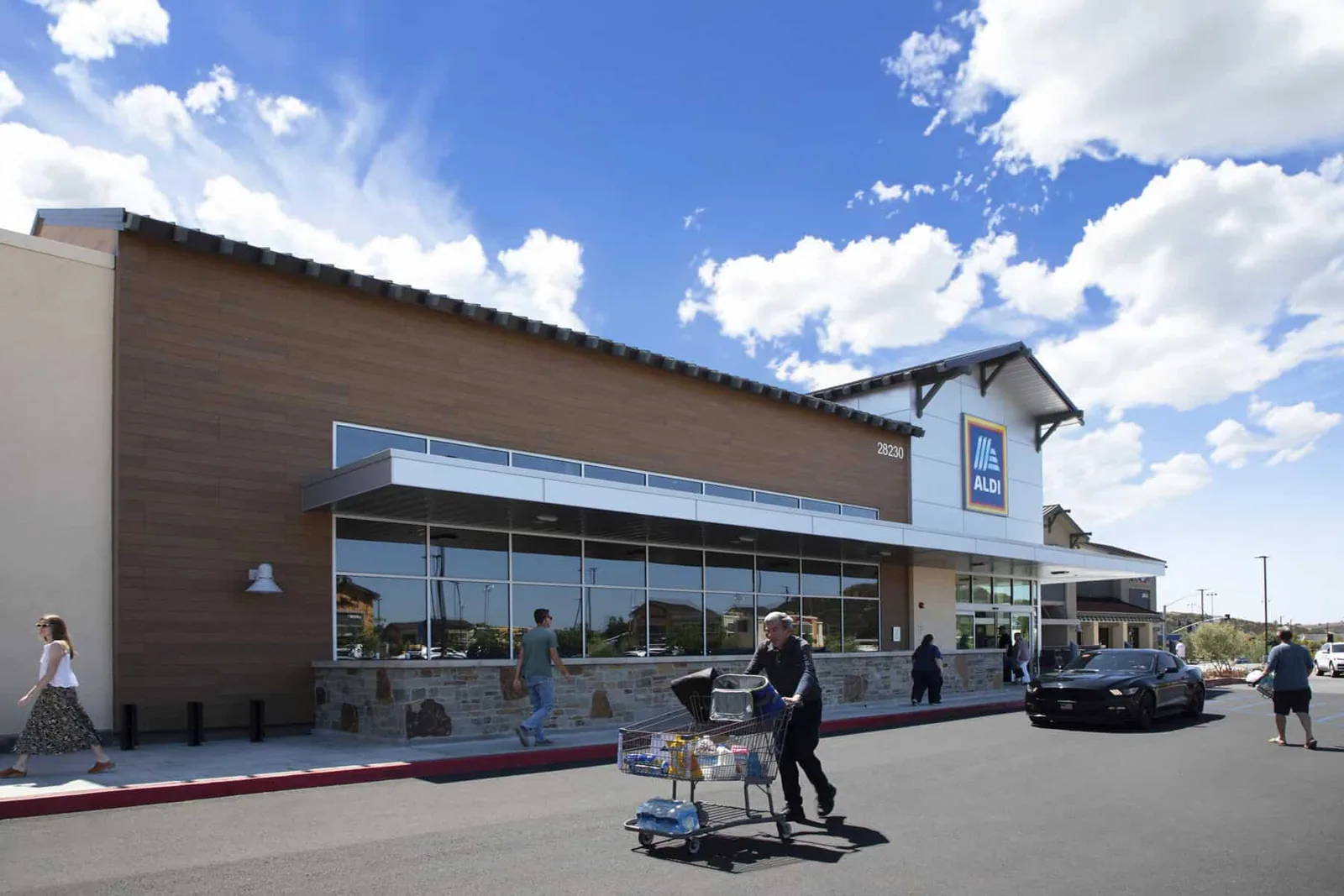
Grocery Store Roofing in Thousand Oaks, CA
Property Types We Roof · Thousand Oaks, CA
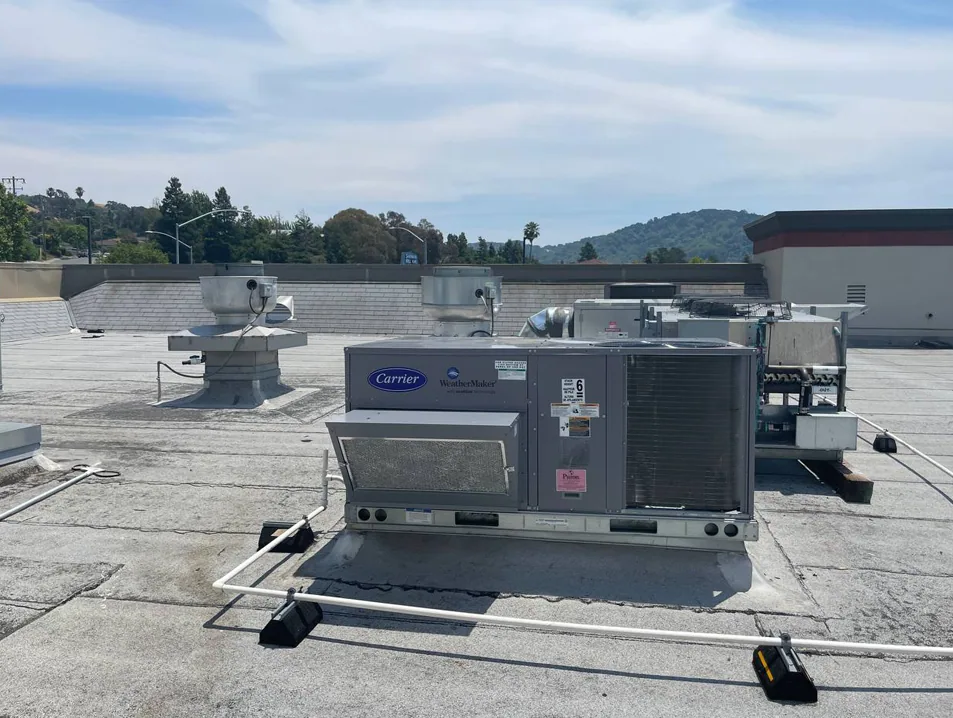
Equipment deck, rear of the sales floor: two condensers on rails, refrigerant lines running to the wall through a cluster of pipe boots, sealant cracked at three of them, and a dark stripe in the membrane downwind of the compressors where oil and dust have settled. A grocery roof is a service platform for refrigeration, and that is where its failures concentrate. The membrane between the units has usually been walked by technicians for years, the penetrations have been disturbed more than once, and the cold interior below turns even a small leak into a moisture problem inside the insulation. We survey grocery stores in Thousand Oaks, CA with that equipment layout in mind, whether the store is a freestanding building or a tenant in a shopping center along the US 101 and Thousand Oaks Boulevard corridors, and we give the owner findings that separate a tired membrane from a leaking detail.
Grocery Store Roofing
Property Types We Roof
Call our team
Written findings and options
Thousand Oaks, CA
Ventura and Los Angeles counties
Equipment: condensers, racks and the paths between them
Refrigeration puts more hardware on the roof of a food store than most retail uses require. Condensing units, rack equipment, make-up air, kitchen or bakery exhaust and long runs of refrigerant and electrical lines all cross the membrane, and each crossing is a place where water can enter. The first finding is usually foot traffic: technicians walk the same routes to the same units, so walkway pads are worn through or missing and the sheet underneath has been scuffed. The second is penetration condition, where boots and sealant have aged out, and the third is drainage, because equipment platforms and pipe runs often interrupt the slope that carries water to a drain. Each is recorded with a photograph, a location on the roof plan and a repair priority. Rebuilding curbs, replacing pipe supports that have settled and adding protected walkways between the units that technicians visit most often is rooftop equipment curbs and supports work, and it answers the first and third findings together.
Moisture: wet insulation above a cold interior
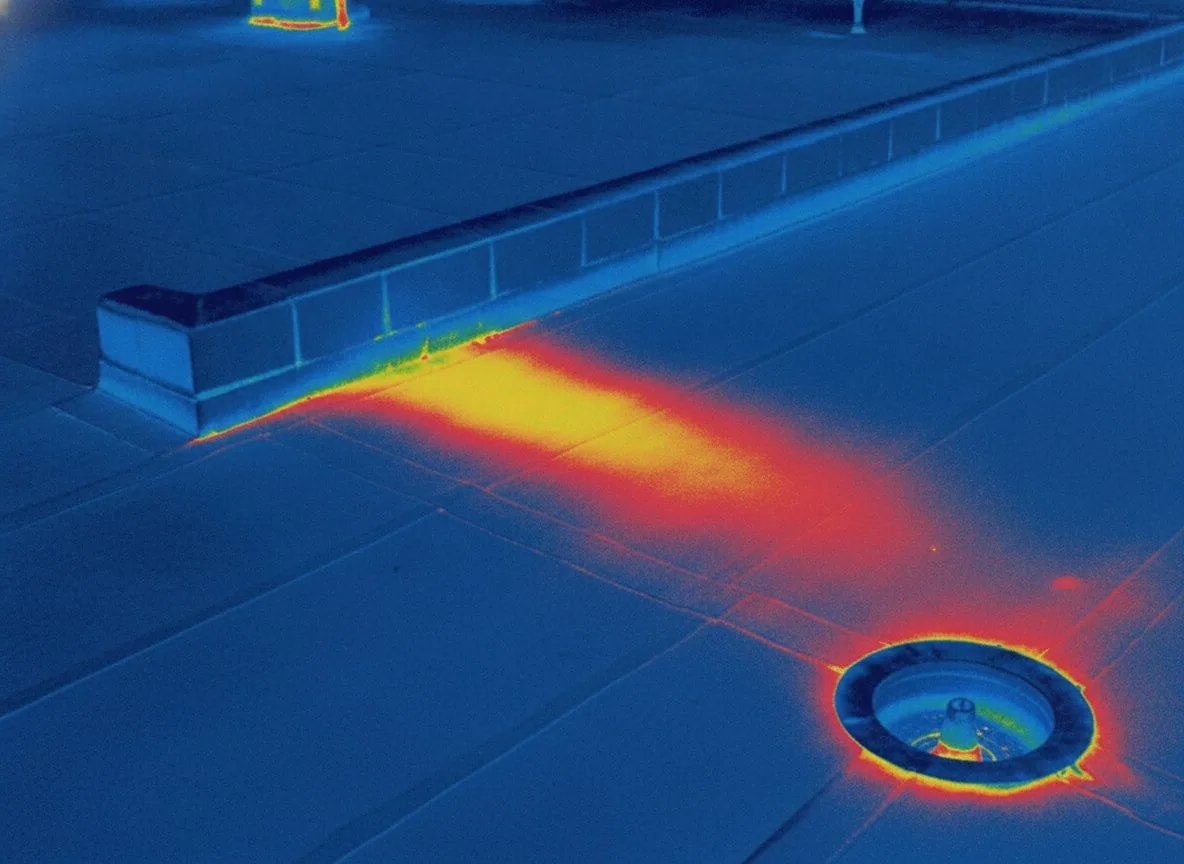
A refrigerated or frozen space below a roof changes the way moisture behaves in the assembly. Water that enters through a small defect can soak the insulation and stay there, and where the interior is cold, vapor drive from above can compound the problem and leave the layer saturated long after the leak has stopped. The first sign is often a ceiling stain in a stockroom or frost at the top of a cooler wall, and by then the wet area is usually larger than the stain suggests. An infrared moisture survey mapped to a roof plan shows where the wet areas run, core samples confirm the reading, and the report can then limit tear-off to the wet section instead of the entire roof. For a store with a refrigerated stockroom, that precision keeps the replacement budget proportional to the actual damage.
Hours: a building that is open when the crew arrives
A grocery store trades for long hours and stocks food, which sets the working rules. Fumes from adhesives, primers and hot-applied materials must stay away from air intakes and open doors, so intakes are covered or the work is planned with a mechanical lead before the first roll goes down. Staging stays clear of the loading dock and the fire lane, and deliveries are timed to avoid a refrigerated truck arriving when a lift is on the dock. Noise is limited to hours when the sales floor is quiet, and debris is contained so nothing reaches a produce case or a cart corral. In a store with a pharmacy or a bakery, the plan names those spaces and protects them. It is occupied building reroofing with customers and food as the occupants. Wind decides when a section may stay open, so nothing is left unclosed when a gusty afternoon is forecast, and the crew finishes each day with the roof tied back to the existing system.
Coastal plain: wetter winters and refrigerated neighbors
Rainfall is not uniform across the service area. Annual rain runs to about ten inches in Newbury Park and about 15.6 inches in Oxnard, down on the coastal plain, with mild wet winters and dry summers in both places. A grocery operator with stores on each side runs two drainage loads under one maintenance budget: a strainer half blocked with dust and leaves may get through a Conejo Valley winter and still back up in Oxnard, where each winter delivers more water to the same size of drain. The survey records drain size, strainer condition and ponding stains store by store, so the coastal stores can be cleared and checked first when the season's first storm is forecast.
The coastal plain also concentrates refrigerated buildings. Oxnard supplies roughly one third of California's strawberries and the Port of Hueneme processes about 3.3 billion bananas a year, so packing houses and refrigerated warehouses are common around Port Hueneme. Those cold storage roofs face the same vapor and wet-insulation questions as a grocery cooler at a larger scale, and an operator that runs both kinds of building can put them on one survey format and one budget cycle.
Heat: summer load on condensers and the roof beneath
Refrigeration works hardest when the weather is hottest. Extreme Heat Warnings have gone out for both the shoreline and the inland valleys of Ventura and Los Angeles Counties, and the San Fernando Valley community of Woodland Hills logged 121 F in September 2020, a county record. Days like that push a store's compressors to their limit. Heat also shortens the interval between sealant inspections, because pipe boots and curb caulk dry out first under sustained sun. Condensers throw off heat while the membrane around them is also absorbing it, and a dark, aged surface can reach temperatures that accelerate UV degradation and soften sealants at the penetrations. A reflective surface, whether a new white membrane or a restoration coating, lowers that load, and because the 2025 California Energy Code, with its nonresidential updates to cool roof standards, applies to permit applications submitted from January 1, 2026, the reflectance requirement for a reroof is confirmed before the system is chosen. Where a roof is dry and serviceable, roof coating restoration can reduce surface temperature without replacing the roof, and the moisture survey is what establishes that the insulation underneath is dry enough to qualify. A store that runs its refrigeration hardest in summer gains the most from scheduling that survey in spring.
Commercial Roofing Questions
Why does a grocery roof need a walkway to the equipment?
Technicians walk the same routes for years, and bare membrane wears through. Walkway pads protect the sheet and show a crew where to step.
Can wet insulation be found without removing the roof?
An infrared survey at dusk maps the warm, wet zones, and small core samples confirm them. Only the confirmed sections need to be opened.
Who coordinates a refrigeration shutdown for roof work?
The store's mechanical contractor does, with our schedule in hand. We provide the dates and sequence early, because condensers should come off only when cases can stay cold.
Does a hot-applied system suit a food store?
Usually a cold-applied or mechanically attached single-ply fits better, since fumes and open flame are the main concerns near a food store. The final call is made with the store manager and the fire authority.
What belongs in a roof file for a multi-store grocery operator?
A condition index for every store, equipment inventories, penetration photographs and a log of every service visit. With those records the operator can rank stores for the next budget cycle.