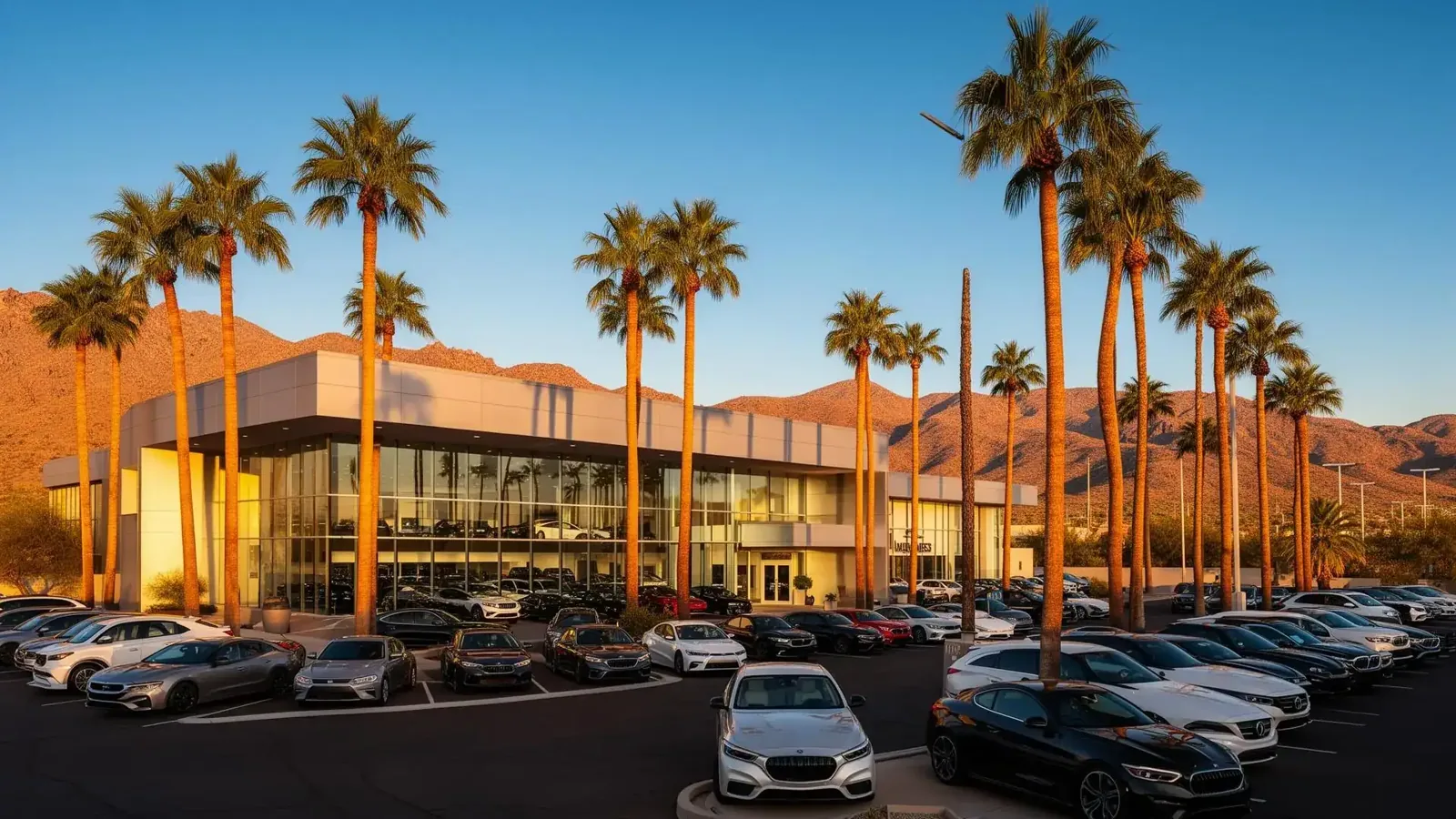
Auto Dealership Roofing in Thousand Oaks, CA
Property Types We Roof · Thousand Oaks, CA
Showroom parapet, north face: a coping joint open by a quarter inch, a dark stain running down the wall behind the glass, and a service advisor's report that water reached the display floor twice last winter, once within a foot of a vehicle on the turntable. A dealership roof protects two kinds of asset at once, the building and the inventory that sits under or beside it, and a leak onto a new vehicle is priced very differently from a leak onto a pallet. We survey dealership roofs in Thousand Oaks, CA by use: the sales floor, the service drive, the parts room and the canopies, each ranked by what it exposes beneath. The findings give a general manager and an owner the same picture of what is failing, what it puts at risk and which sections can be restored before they must be replaced.
Auto Dealership Roofing
Property Types We Roof
Call our team
Written findings and options
Thousand Oaks, CA
Ventura and Los Angeles counties
Showroom: glass walls, tall parapets and the leak that reaches the floor
A showroom is a tall room with glass on one or more sides and a roof edge that rises above it as a parapet. That arrangement concentrates risk at the parapet and at the head of the curtain wall. Water that gets behind coping, or through an open joint, runs down inside the wall and reaches the floor beside the glass, where every customer sees it. The roof above is usually a low-slope membrane draining to scuppers or interior drains, and a clogged scupper behind a tall parapet lets water rise against the wall flashing. A stain on the interior side of the glass can also mislead, because condensation and air movement in a tall room carry moisture away from where it entered, so we confirm every entry point with moisture readings before assigning a cause.
We inspect the coping and edge metal, the termination at the wall, the sealant at the curtain wall head and the full drain path, and we trace any interior stain back to its entry point before a repair is scoped. Because a showroom is a retail space, repairs are timed for hours when customers are absent, and ceilings and finishes are protected before the first cut is made.
Service drive: exhaust, oils and the membrane that must tolerate them
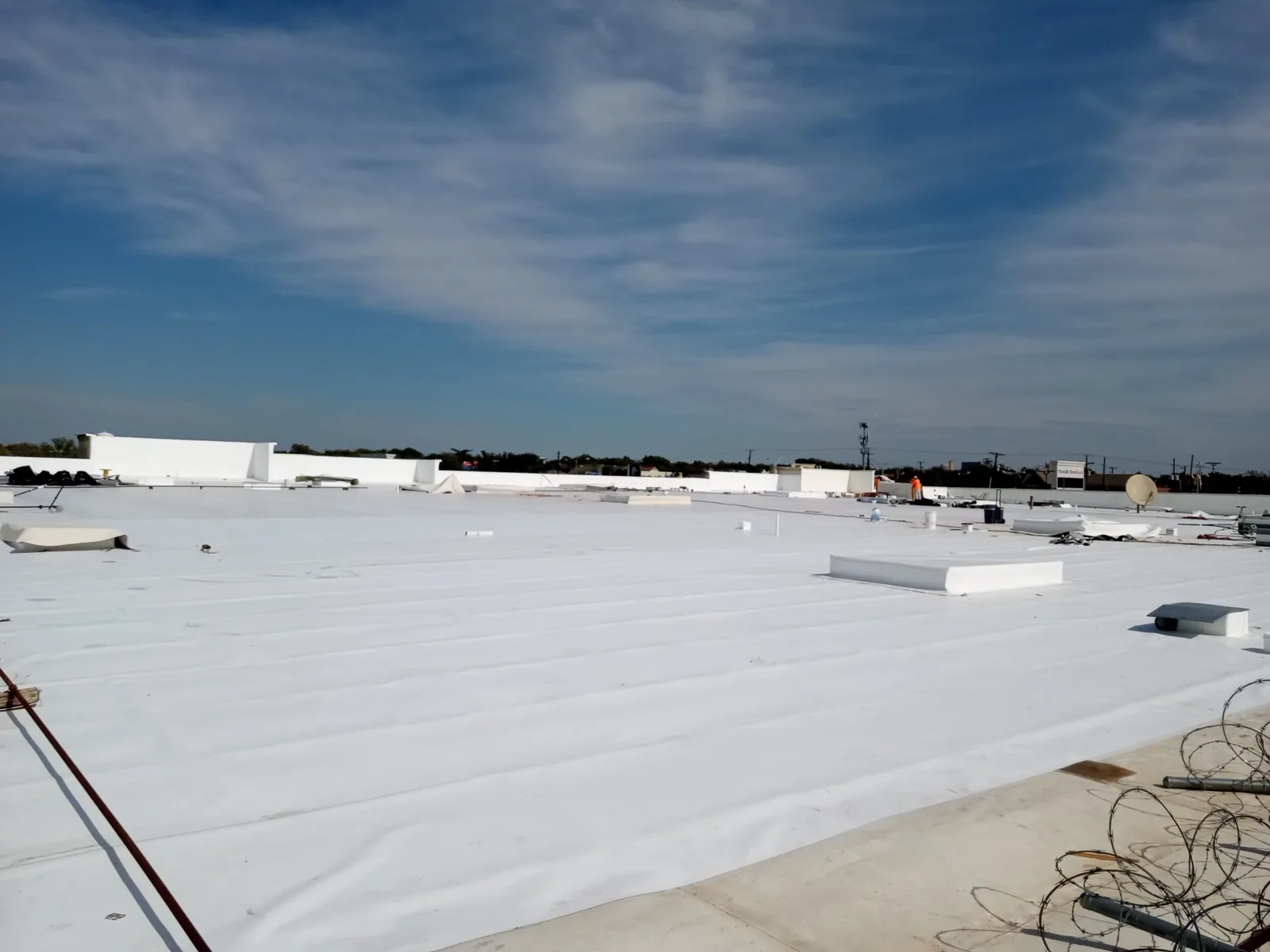
Behind the showroom, the service department makes its own demands. Exhaust fans pull vapor from the bays, make-up air units run all day, and oil mist, brake dust and solvent vapor settle on the roof around them. Some membranes absorb petroleum products and then swell, soften and lose seam strength, and a roof near service exhaust is where that damage tends to show first. PVC and KEE membranes are formulated to resist oils and grease, which is why PVC roofing and KEE roofing are the usual choices around exhaust.
The question is familiar from the restaurant roof, where grease is the contaminant. We examine the membrane inside the exhaust zone for softening, swelling and open laps, add protection where technicians walk, and propose a localized membrane upgrade when the surface near the fans is failing ahead of the rest of the roof.
Canopies: delivery lanes, overhangs and wind
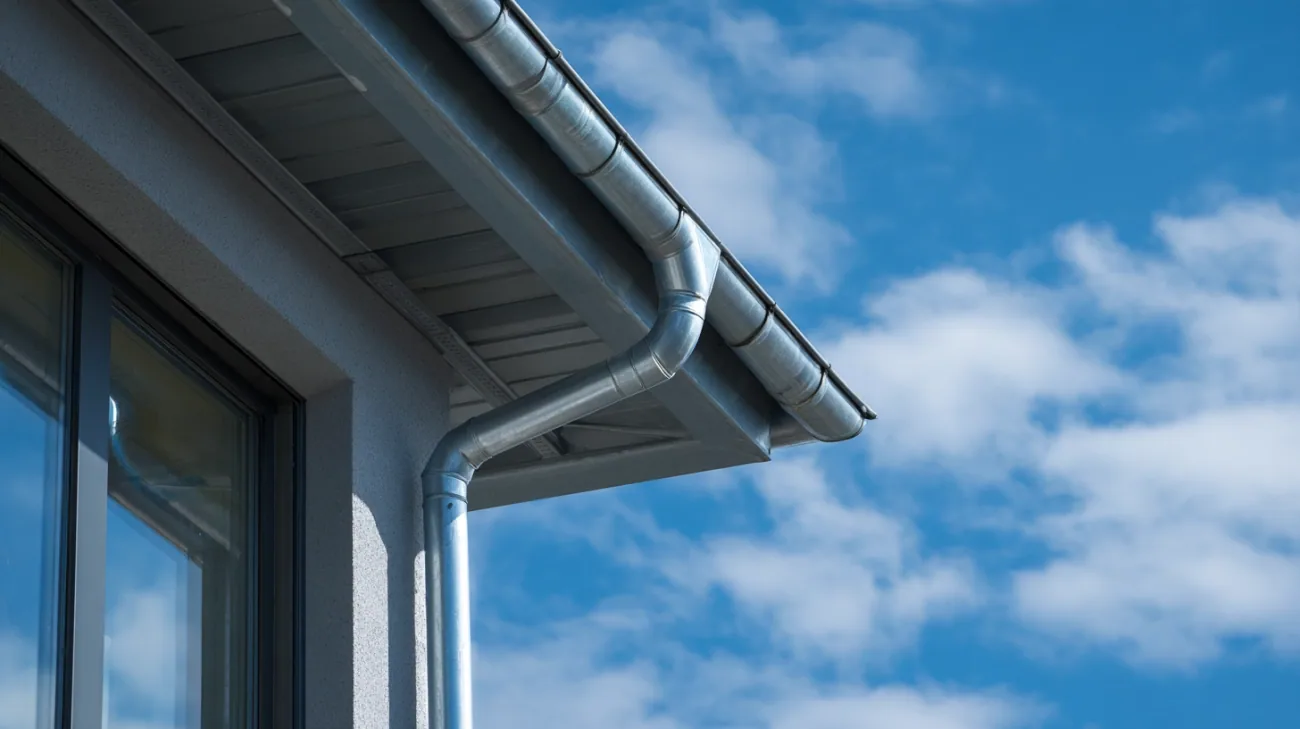
Dealerships use canopies over delivery lanes, service write-up lanes and customer drop-off, and a canopy is a roof with the walls removed. Wind pushes under it as well as over it, which raises uplift on the edge, and runoff drops straight onto the lane where vehicles and customers stand. Offshore gusts can exceed 40 mph in a Santa Ana event, and forecasters called for more than 65 mph when the November 2024 Mountain Fire broke out, so an edge that is marginal in a calm year becomes the failure in an extreme one. We check fasteners and attachment at canopy edges, the sealant at fascia joints, and the gutters and downspouts that must carry water away from the lane.
After a fire year, ash on the canopy and in the gutters is a separate matter. It clogs drains and holds moisture, and when the first rain washes it off it stains the vehicles below. Cleaning before rain belongs in the post-fire visit, together with a review of any items found along the way that call for wind damage roof repair.
Inventory: why a dealership leak becomes a claim
A dealership holds a large amount of value under or beside its roof, and the claim structure reflects it. A leak that reaches a vehicle on the showroom floor, or a ceiling tile that drops into a service bay, produces an insurance claim as well as a repair, and the better the owner's roof record, the faster the claim moves. We keep dated photographs of the roof surface, drains and penetrations, so a later event can be compared with a documented before, which is the foundation of any roof insurance claim.
The record also helps a general manager weigh repair against replacement. A sound roof with a documented leak history justifies targeted repairs, while repeating failures across the showroom and the service drive justify a capital request. The same record protects an owner at a sale or a change of tenant, as it does on a big-box retail roof.
Frontage: US 101, Camarillo and a wetter coast
Dealerships cluster where traffic is, and in this valley the commercial building stock concentrates along the US 101 corridor and Thousand Oaks Boulevard. A building on a freeway frontage is seen by thousands of drivers, so rust streaks, patched seams and loose edge metal are visible, and a showroom roof is part of the dealership's appearance. The corridor also ties together stores in different climates. Camarillo grew industrially along the Ventura Freeway, and the Oxnard plain, which averages about 15.6 inches of precipitation a year, is wetter than Newbury Park at about ten.
A dealer group with stores on both sides of that gradient should not run one maintenance cycle for all of them. On the coastal side, which includes Port Hueneme and its port that handles automobiles, we survey with the wetter exposure in mind: more attention to drains and sealants, and shorter intervals between visits during the winter months.
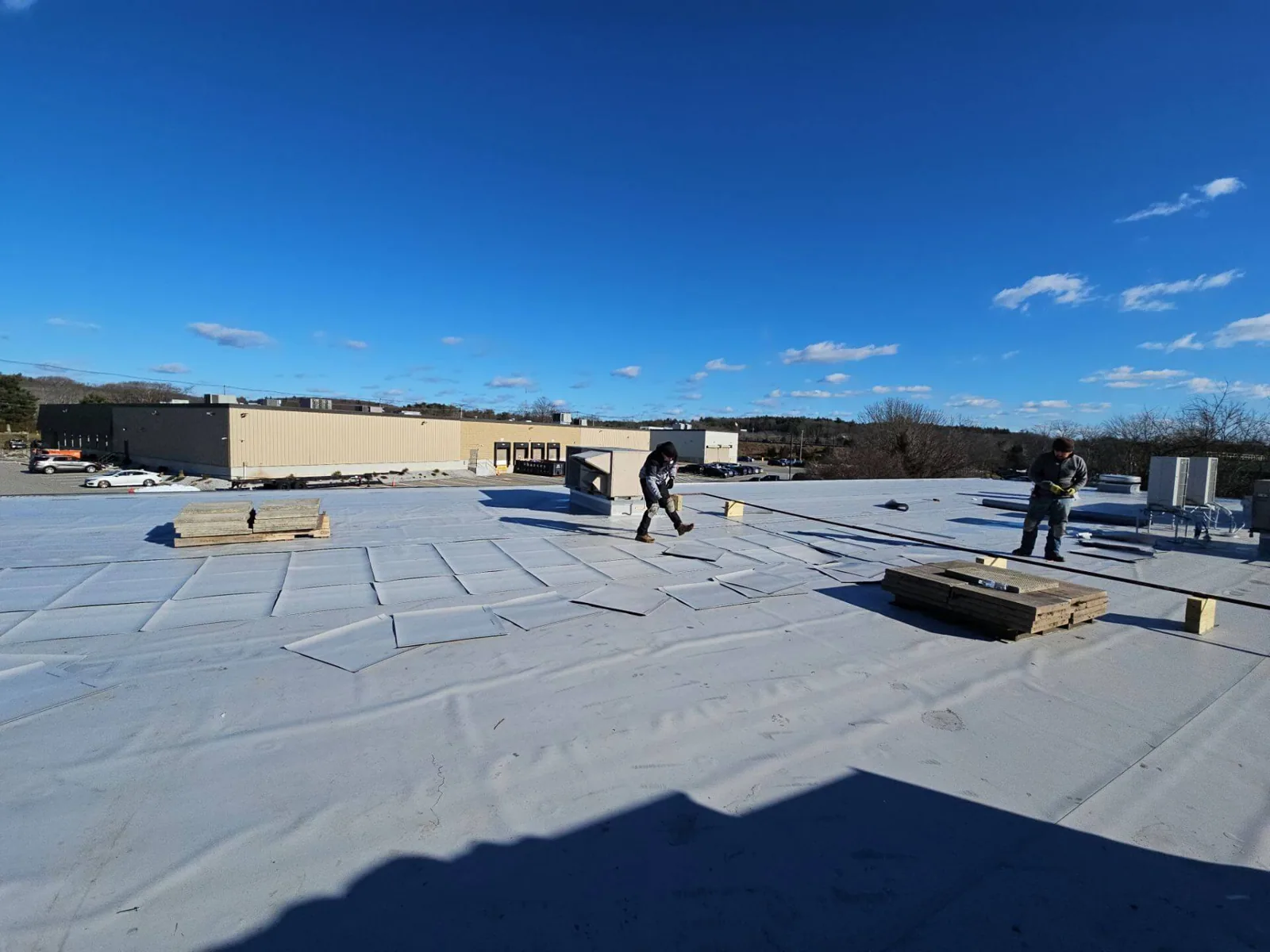
The survey should map sales, service, parts and customer areas to the roof above, then note which operations need vehicle access throughout construction. Service bays may depend on exhaust and ventilation equipment that cannot be shut down without coordination, while a showroom leak can affect inventory and customer experience. Mark rooftop units, skylights, signs and canopy transitions, and verify which trade controls each connection. A replacement estimate should separate roof work from mechanical reconnection and identify where a same-day dry-in is required. At closeout, record the repaired section, equipment status and any remaining maintenance item so the facilities manager can return the building to normal use with a clear record.
Commercial Roofing Questions
What membrane works best near service-bay exhaust?
PVC or KEE, since both resist oils and grease. EPDM is a poor match where petroleum products collect on the surface.
Can a dealership keep selling during a showroom reroof?
In most cases, yes. Work moves in sections, loud operations avoid peak sales hours, and interior protection goes in before any cut.
Who pays if a leak damages a vehicle?
That sits with the dealership's insurance policy and any contract terms. Photographs and a dated roof record help the claim move, and we document the roof's side of it.
When should canopy edges be checked after a wind event?
Right after it. Fasteners, edge metal and gutters take the load first, and a loose edge fails faster in the next gust.
Is a coating worth considering on a showroom roof?
Sometimes. A reflective coating can restore a sound membrane and cut surface heat, but only where the insulation is dry and the laps are tight.