Apartment Roofing in Thousand Oaks, CA
Property Types We Roof · Thousand Oaks, CA
Unit report, third floor, stack C: a bedroom ceiling stain reported twice in one winter, a roof drain two stories above that holds water after rain, and a low-slope section behind the stair tower that shares a wall with a pitched roof over the next wing. On a multifamily building the resident files the complaint and the property manager inherits the diagnosis, so the roof file has to be able to answer which unit sits beneath which section of membrane. We survey apartment and multifamily roofs in Thousand Oaks, CA with that map in hand. The findings tie each defect to the units below, rank sections by consequence and give an owner or association a replacement horizon that can be placed in a reserve study.
Apartment Roofing
Property Types We Roof
Call our team
Written findings and options
Thousand Oaks, CA
Ventura and Los Angeles counties
Residents: notice, noise and a roof over bedrooms
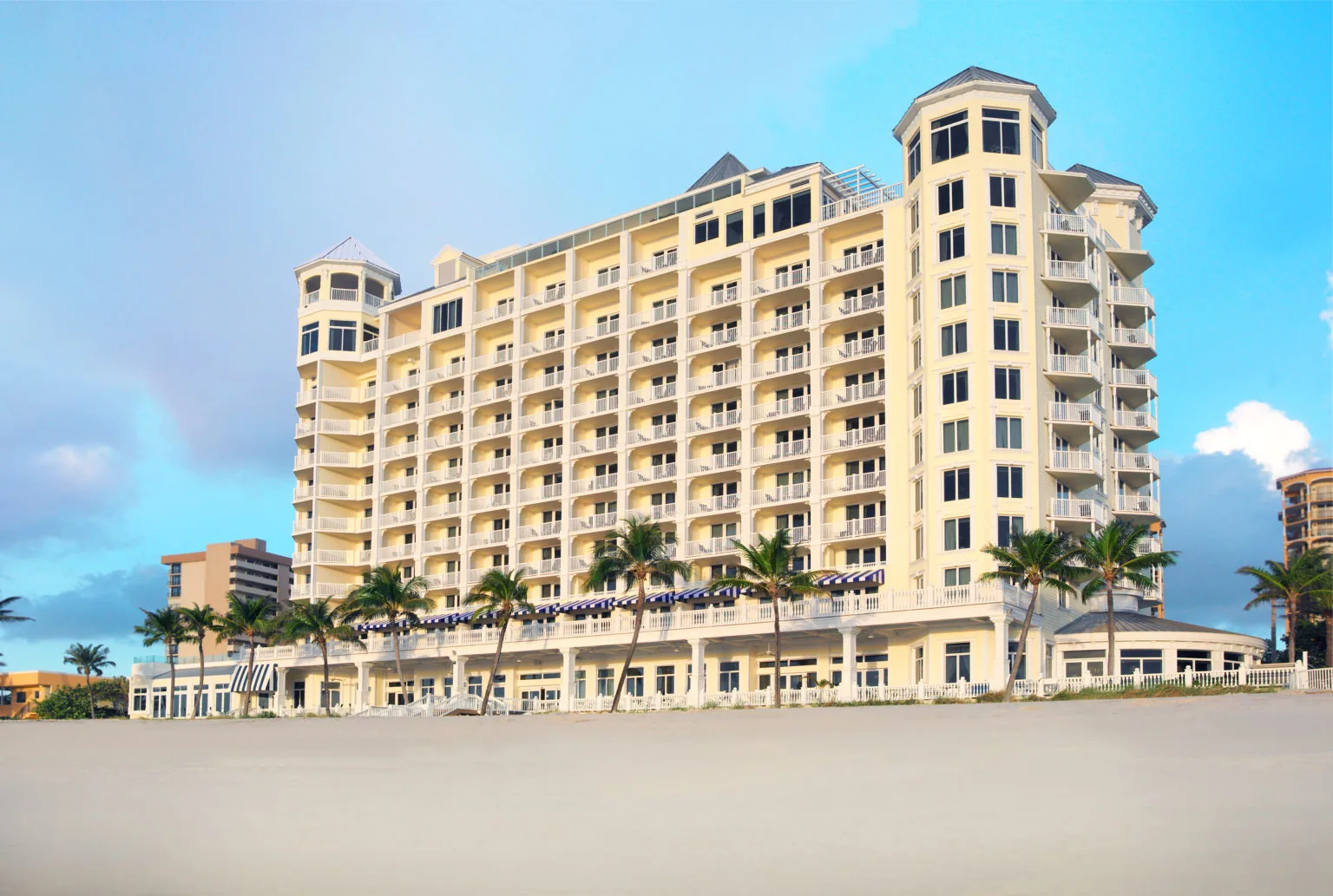
Residents live under an apartment roof around the clock, which makes noise, odor and access the first things a manager hears about. A job on a building that is fully occupied depends on notice: a written schedule to every unit beneath the active section, a named contact, and a plan for early work and nap-time quiet. Balconies and stair landings are protected, parking is kept clear for the crew's access, and adhesive and primer fumes are kept away from open windows and vents. Our occupied building reroofing sequence applies directly: only the area that can be closed that day is opened, and the interior is protected if the weather changes. The best compliment a reroof earns is that most residents never realized one was under way. The same notice discipline serves a hotel, where the residents change every night.
Leaks: tracing water to a unit and to a cause
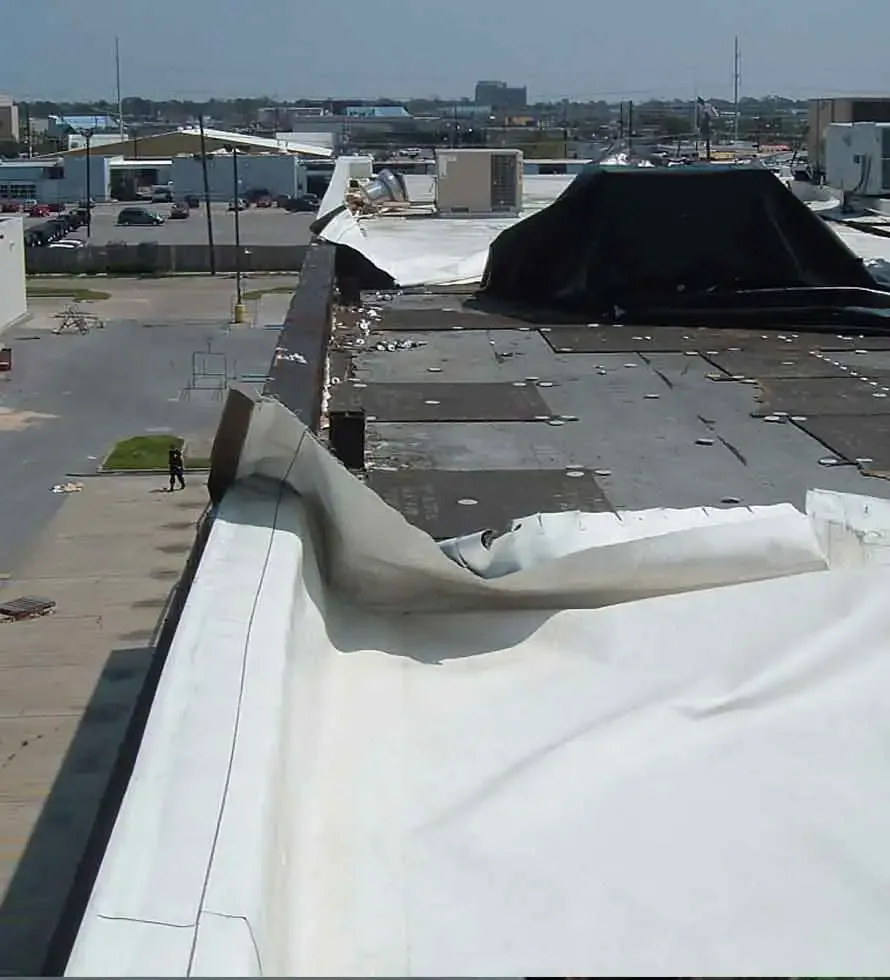
A multifamily leak crosses more boundaries than a commercial one. Water enters at a roof detail, runs along framing or a deck, and shows up in a unit that may belong to a different owner from the one managing the roof. A reliable record resolves who pays, because it shows where the water entered and when. We map each report against the roof plan, probe the section above, test drains and check flashing at walls, stair towers and the transitions between roofs of different pitch. A pattern of repeat reports from the same stack points to a corrected detail, not another patch, and the resulting commercial roof leak repair can be priced and scheduled once instead of by the call.
Code: which book governs a larger residential building
Thousand Oaks adopted the 2025 California Residential Code effective January 1, 2026, through Ordinance 1741-NS, as part of a broader update of Title 8. That code addresses smaller dwellings, while larger apartment buildings generally fall under the California Building Code, whose 2025 edition took effect on the same date and rests on the 2024 International Building Code. The city also adopted the Wildland-Urban Interface and Existing Building codes in the same update, and it has formally found that its location and climate justify local amendments. A roof replacement on an apartment building therefore needs a permit review that looks at fire classification, edge details and the way new work meets existing construction. We prepare the scope with those reviews in mind, and it helps the owner to know them before bids are requested.
Fire years: Oak Park and the ember record
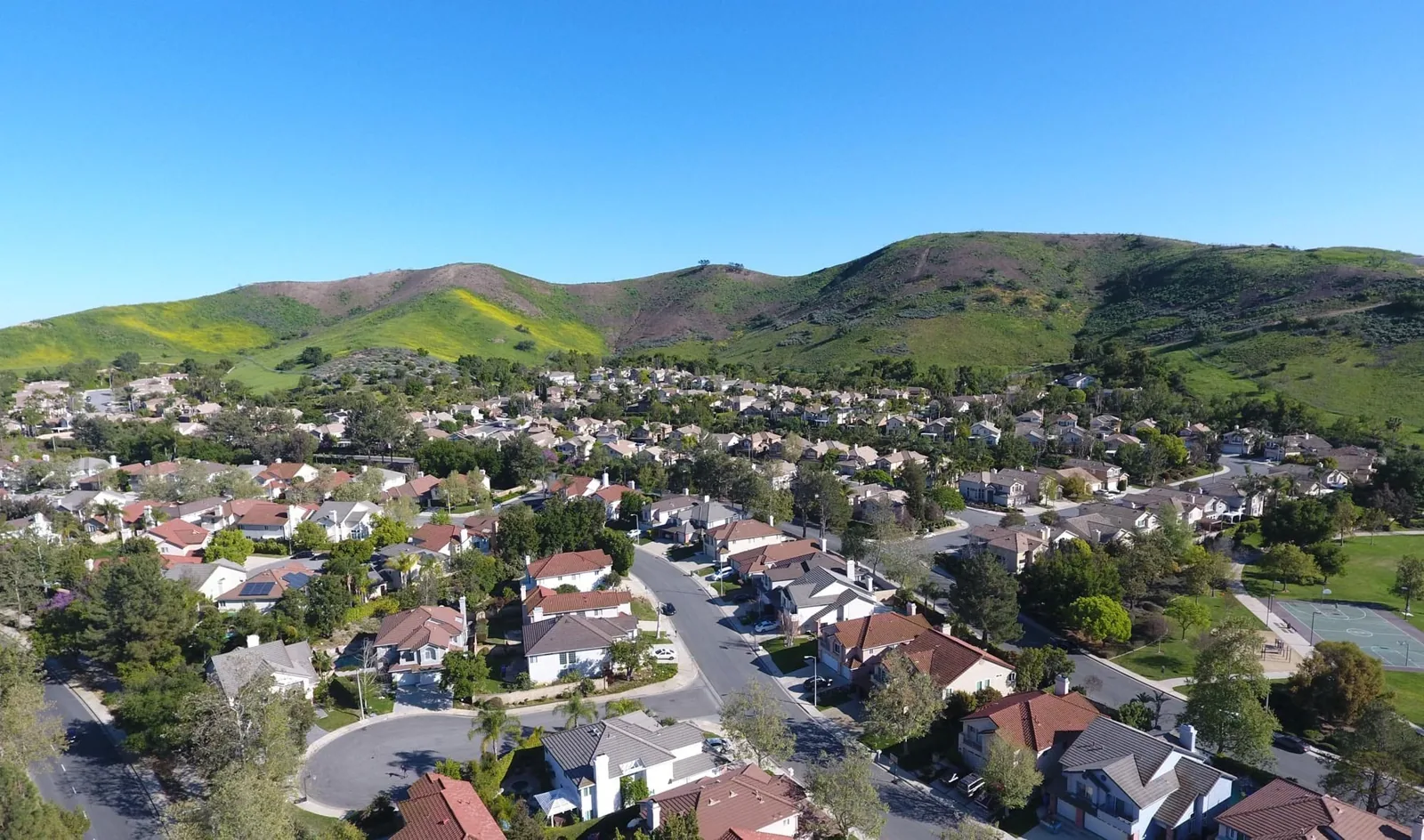
The Woolsey Fire burned through Oak Park, a community of about 13,898 residents in the Simi Hills, on November 8 and 9, 2018, and the January 2025 Kenneth Fire again brought evacuation warnings to Oak Park and Agoura Hills. Apartment owners in a community like that face a double question. The first is the roof itself: whether the cover has the fire rating the code expects and whether its penetrations, vents and gutters can admit embers. The second is the record, because a file with dated photographs from before the event makes a claim far simpler. We check both after a regional fire, clear ash from low-slope sections and drains, and note any scorch or melt. When damage is found, fire damage roof repair starts from that baseline.
Mixed roofs: flat sections beside pitched ones
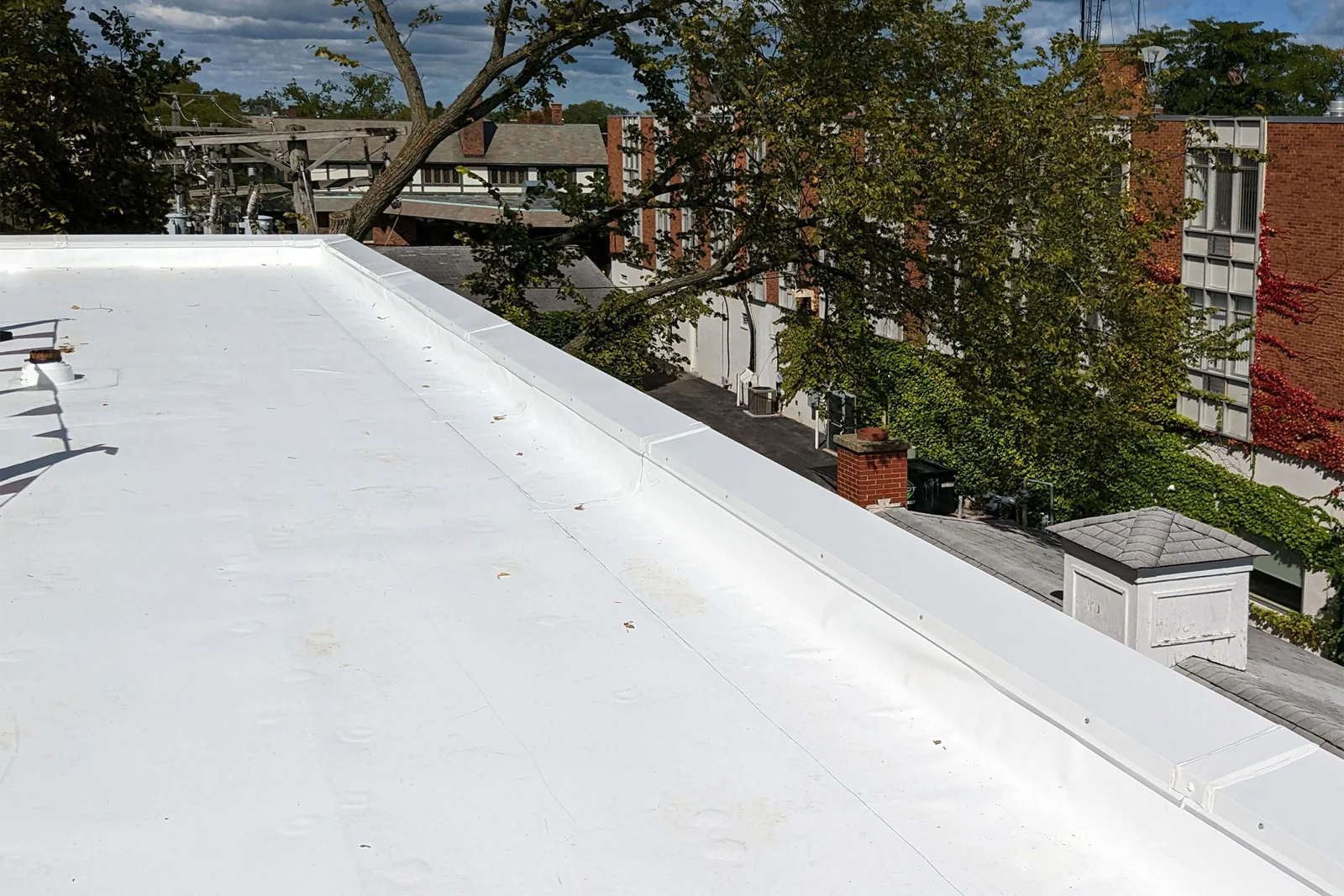
Many apartment buildings combine a pitched roof over most of the building with flat sections over entries, stair towers, garages and podiums. Those flat sections are small but they leak out of proportion to their size, because they collect water from the pitched roofs next to them and carry the most wall flashing. Where a flat roof sits below a taller wall, the base of that wall is a recurring problem, as is the transition where a pitched roof drains onto a flat one. We treat such sections as part of the same system, with continuous flashing, crickets and drains that handle the combined flow. Where a low-slope section is small and dry, a TPO roofing or similar single-ply system is installed with far less disruption than a tear-off to the deck.
Reserves: putting the roof into a study
An owner or association funds a roof out of reserves, and a reserve study is only as good as the data under it. We supply the condition index, the remaining service life of each section and a prioritized scope that separates repair now from restoration within a few years and replacement by a stated horizon. That is the format property management companies need when they manage a number of buildings and answer to boards. It also supports roof capital planning for owners deciding between a coating and a reroof, and it carries over to senior living roofing, where resident sensitivity raises the stakes. A roof that has a plan costs less over time than one managed by emergency, and the plan also gives a lender or a buyer a number they can verify against the building.
A building-by-building roof plan also helps maintenance staff respond when a resident reports a ceiling stain. Record the unit or common area, the time of the report and any recent plumbing or HVAC work, then compare that information with the roof plan before opening ceilings or applying a surface patch. Water can travel laterally, so the visible mark is a clue rather than proof of the entry point. During a larger project, the manager can group work by building and stair access, keep resident notices aligned with actual work windows and make sure each open section is closed before crews leave. The final file should identify repairs, replaced insulation and any limits on the inspection. That gives the next maintenance cycle a clear baseline without assuming every building shares one roof history.
Commercial Roofing Questions
How much notice should residents get before roof work?
Give written notice to every unit below the active section, with dates, hours and a contact number, well before the first day. Update it if weather moves the schedule.
A resident reports a ceiling stain. What happens first?
We log the unit, check the roof section above it and trace the entry point. A temporary measure follows if water is active, and the permanent repair is scoped once the cause is clear.
Do apartment buildings need the same roof as warehouses?
Not usually. Pitched sections follow residential practice, while flat sections use commercial single-ply or modified bitumen systems, and the transitions between them are detailed carefully.
Can a reserve study include a coating instead of a reroof?
Yes, for a roof with dry insulation and a sound membrane. The study should show the coating as a way to move the replacement date, not as a permanent substitute.
What should a board ask before approving a reroof?
Ask for core results, the remaining life of the existing roof, the permit path and the phasing plan for residents. Those four items separate a considered scope from a hurried one.