Military Barracks Roofing in Thousand Oaks, CA
Property Types We Roof · Thousand Oaks, CA
Corridor log, top floor, barracks wing: a ceiling tile stained brown in the stairwell landing, a second stain two rooms down that has dried and returned twice, and a bathroom exhaust vent whose roof boot has split along the collar. The residents have reported nothing because the stains have not dripped on a bunk yet. A finding like that carries a planning consequence, since water above sleeping rooms is the leak that turns a roof item into a housing and readiness problem, and the cost of waiting rises with every storm that finds the same boot.
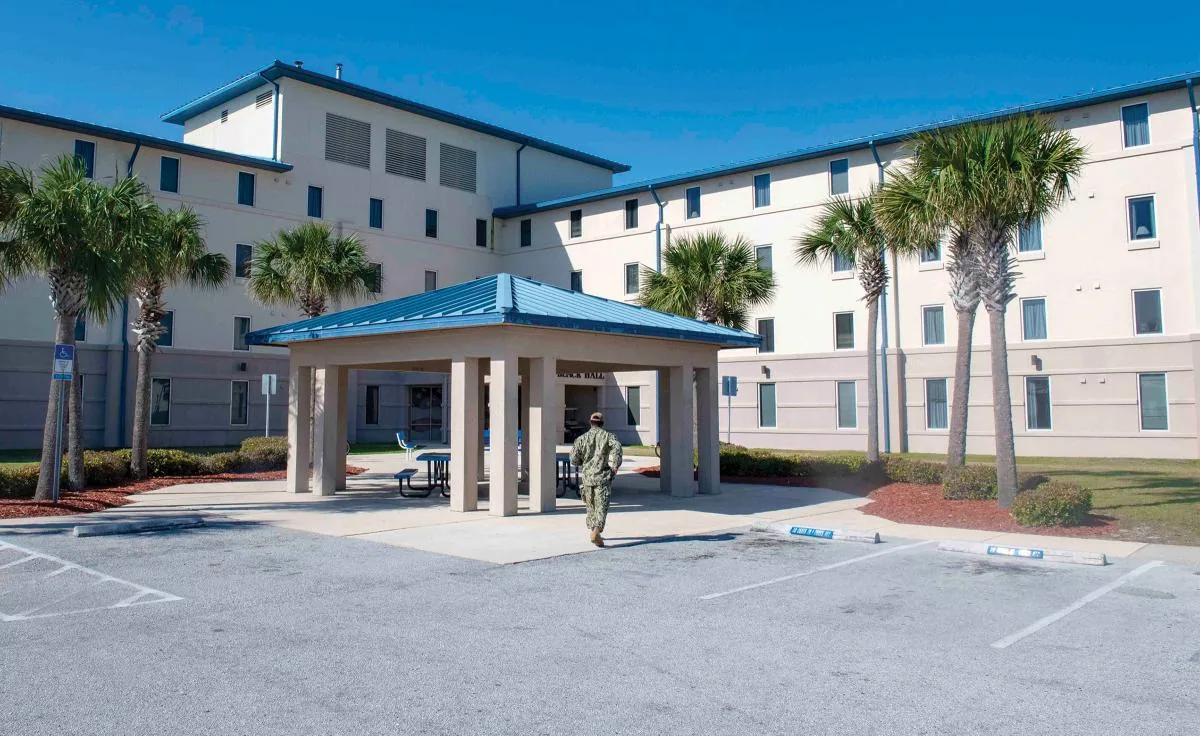
The unaccompanied barracks closest to Thousand Oaks, CA are at Naval Base Ventura County, on the Point Mugu and Port Hueneme sides of the base. Roofing a barracks follows the same engineering as any commercial roof, with an unusual set of occupants who sleep on shifts and cannot easily move out for a week. On military installation roofing projects the survey takes in the whole building group first, and each phase is then fitted to the people living under it.
Military Barracks Roofing
Property Types We Roof
Call our team
Written findings and options
Thousand Oaks, CA
Ventura and Los Angeles counties
Residents: sleep cycles, shift work and a noise window
A barracks does not empty out at nine in the morning. Residents work day shifts, night shifts and watch rotations, which means someone is asleep during most of the hours a crew would normally use. We agree on a noise window with the barracks manager before the first panel is lifted, and we ask which wings house shift workers so the loudest operations, tear-off and fastener driving, fall when the fewest people are trying to rest.
Access is shaped by the installation. Worker lists, pass office processing and escort rules apply, and a crew's presence on a residential building is reviewed the way any other contractor presence would be. Foot traffic across a roof is also traffic past stairwells and entries, so we post barriers, keep material staging away from egress paths, and keep the fire lanes clear. The same staging discipline governs occupied building reroofing in civilian settings.
Moisture: water above bunks and the clock it starts
Leak tracing in a multi-story residential building follows the same logic as any commercial roof: the stain sits downstream of the entry point, and water travels along deck, insulation and wall cavities before it shows on a ceiling. What changes in a barracks is the cost of a wrong guess. Wet insulation above a sleeping room invites mold, damages bedding and equipment, and can force residents out of a room for remediation that no one budgeted. For that reason a commercial roof leak repair in a barracks starts with proving the entry point, not with a bead of sealant at the stain.
Penetrations carry most of the risk. Bathroom exhaust, plumbing vents, rooftop air handlers and antennas each pierce the membrane, and a split boot or a failed curb seal is the most likely source of a repeat stain. We inventory every penetration on the roof plan and grade each one, so the repairs that protect the most rooms come first.
Bases: Point Mugu and Port Hueneme
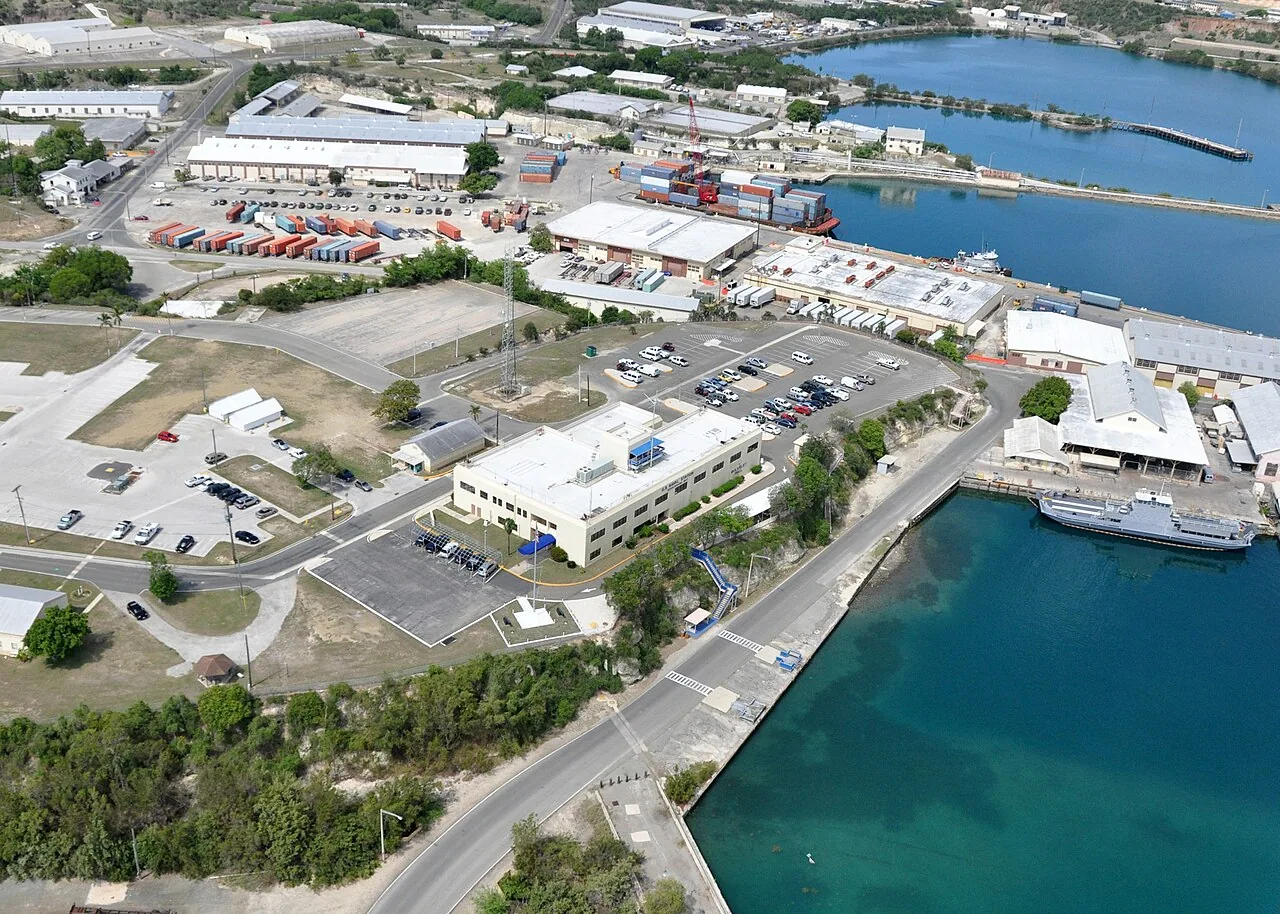
At Point Mugu, where the airfield squadrons fly, there are unaccompanied barracks and a privatized housing area called Mugu Family Housing. At Port Hueneme, the Seabee installation, there are unaccompanied barracks and privatized family housing as well. Together they make up a base with more than 100 tenant commands and more than 19,000 people, whose hangars and laboratories raise their own naval facility roofing questions. For crews, the useful distinction is between the barracks, which are installation facilities, and the privatized family housing, which typically follows its housing owner's own reserve and repair cycle.
Oxnard, a good proxy for this wetter coastal side of the service area, receives about 15.6 inches of precipitation a year, mostly in a mild winter. That is a short rainy season with a few heavy storms, and drains on a low-slope barracks roof need to be clear before they arrive. For roofs at Point Mugu and Port Hueneme, clearing drains ahead of that season sets the maintenance calendar.
Phasing: one wing at a time, closed every evening
A barracks roof is replaced section by section. We open only the area that can be dried in and tied off the same day, because tomorrow's weather is not ours to assume and the rooms below are occupied tonight. Temporary protection is installed over the section being worked, debris is lowered by chute or crane rather than dropped, and the tie-in to the existing membrane is sealed before the crew leaves. If an overnight rain is forecast, the day's last task is a water test at the edge of the open section.
Multi-story residential roofs share much with apartment roofs in the way water travels and the way residents react to it. Where residents have to move, the plan says so early. That could mean a wing of rooms emptied for a week of tear-off, or it could mean none, if a roof coating restoration or a recover can fit the condition of the existing roof. The decision belongs in the survey, with moisture readings and core samples behind it, before anyone issues a notice to residents.
Horizon: wind, heat and a replacement list with years on it
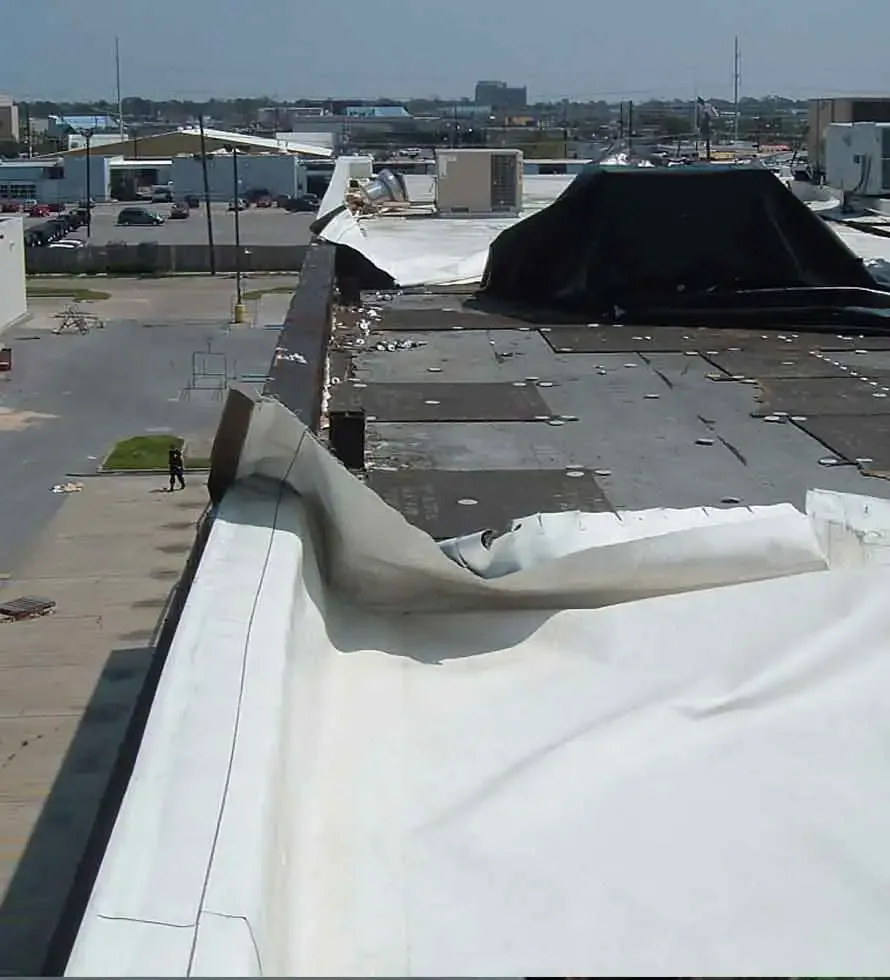
Offshore Santa Ana winds can pass 40 mph, and forecasters expected gusts above 65 mph as the Mountain Fire of November 2024 spread across land near Somis and Camarillo. On a long building the edges and parapets are the details that wind lifts first, which is why wind damage roof repair often begins at edge metal and coping. Summer heat adds UV degradation to the membrane surface, visible as chalking and crazing long before it leaks.
The survey result is a ranked list: which barracks wings have the least remaining service life, which can be restored, and which should be planned for replacement in a named budget cycle. That ranking is the input to roof capital planning for the housing office, so a replacement does not arrive as a surprise line in a year when the money is committed elsewhere.
Occupied quarters require the facility contact to define resident notice, access hours, privacy boundaries and emergency egress before staging begins. The roof survey should separate sleeping areas, common rooms and mechanical zones, then map each work phase to the space directly beneath it. If a roof opening cannot be closed that day, the scope must include a contingency that protects the building and a clear stop-work trigger. Daily closeout verifies the temporary tie-in and removes loose materials from paths residents use. The final package records the completed roof sections, repairs still pending and the inspection access that was not available. These controls keep the work sequence tied to the facility’s operating rules without assuming a single barracks layout.
Commercial Roofing Questions
Can residents stay in a barracks during reroofing?
Often, with phasing that opens only one section at a time. The survey shows whether any rooms need to be vacated, and we set that out before the work begins.
What is the most common source of a repeat stain in a barracks?
A split pipe or exhaust boot, or a failed curb seal. Small penetrations fail more often than the membrane field does.
Where are the nearest barracks to Thousand Oaks?
Naval Base Ventura County has unaccompanied barracks at Point Mugu and at Port Hueneme, about 17 and 21 miles away in a straight line.
How is noisy work scheduled around sleeping residents?
We agree on a noise window with the barracks manager, and we keep tear-off and fastening for the hours when the fewest people are resting.
Does family housing on a base follow the same roof plan?
Typically not. Privatized family housing runs on its owner's own repair and reserve schedule, so the roof work is scoped separately from the barracks.