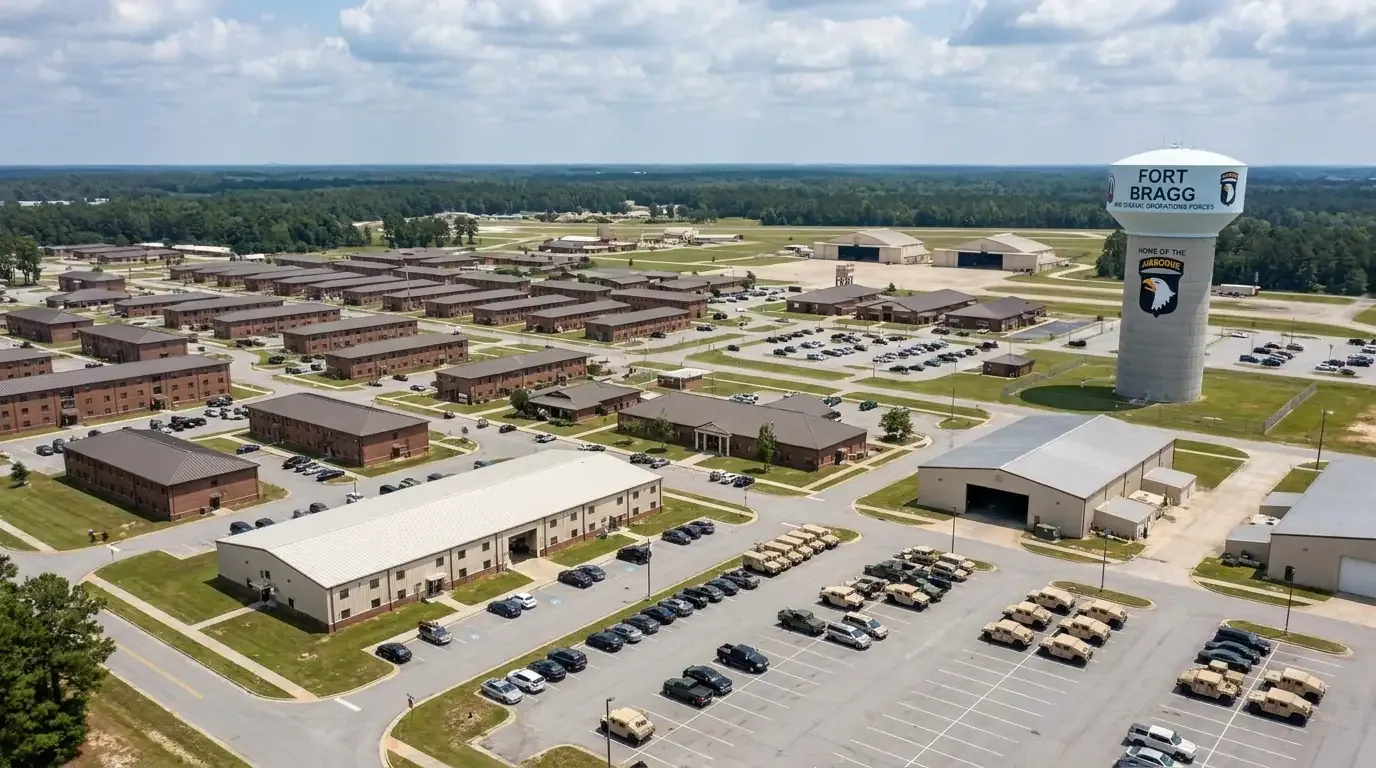
Military Installation Roofing near Thousand Oaks, CA
Commercial Roofing Services · Thousand Oaks, CA
Schedule finding: a hangar roof that cannot be worked while aircraft are moving, a badge office that processes visitors on fixed hours, and an escort requirement for every person who sets foot on the membrane. None of those limits appear in a roofing textbook, and every one of them changes the plan. On an installation, the roof is not the first constraint. The gate is, followed by the flight line, the security office and the mission calendar, and a crew that arrives without an approved list of workers does not start the day at all.
Military installation roofing near Thousand Oaks, CA reaches Naval Base Ventura County and the Channel Islands Air National Guard Station to the southwest, and federal clinics such as the VA outpatient clinic in Ventura. The roofing itself is familiar low-slope and metal work. What differs is the process around it, and an owner or contracting officer should expect a contractor to describe that process before describing the membrane.
Military Installation Roofing
Commercial Roofing Services
Call our team
Written findings and options
Thousand Oaks, CA
Ventura and Los Angeles counties
Access: badging, escorts and the gate
Entry to an installation is controlled, and roofing crews enter through the same procedures as any other contractor. Workers are listed in advance, checked through the base pass office, issued credentials, and admitted through a designated gate. Vehicles are inspected. Some areas require an escort at all times, which means a government representative or an authorized escort has to be present whenever workers are on the roof, and that person's availability becomes part of the schedule.
Planning for access starts weeks before mobilization. Names, vehicle details and equipment lists go in early. Delivery windows are agreed with the gate so that trucks carrying membrane rolls, insulation and adhesives are not turned away on the first morning. We treat the access plan as a deliverable of its own, written down and reviewed with the project officer, because a delay at the gate costs the same crew hours as a delay on the roof.
Criteria: building to the Unified Facilities Criteria
Roofing for Department of Defense facilities is designed and specified under the Unified Facilities Criteria for roofing, together with the project's own contract specification. The criteria set expectations for the roof assembly: the types of systems that are acceptable, the insulation and drainage requirements, the wind and fire performance of the assembly, and the quality control and submittals that accompany the work. A project may adopt them in full or reference them in a government specification, and the contract documents say.
For a roofer the practical consequence is paperwork and sequence. Material submittals are approved before products are ordered. Mock-ups and inspections happen at stated points. Daily reports, photographs and test results go into the file. A commercial roof replacement on a base follows the same technical logic as any other, with the added discipline of a record that a government inspector can audit at closeout.
Buildings: hangars, barracks, depots and clinics
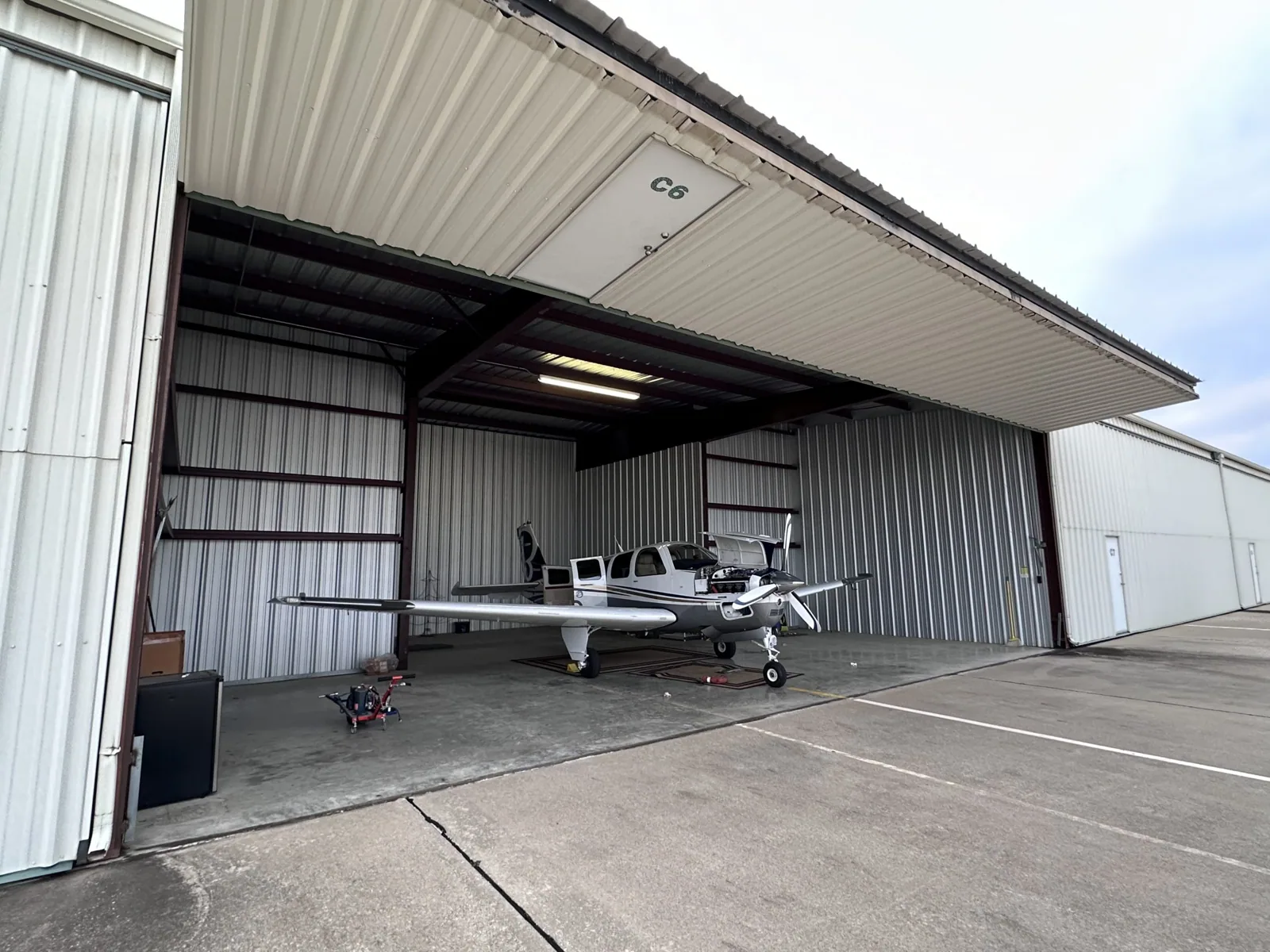
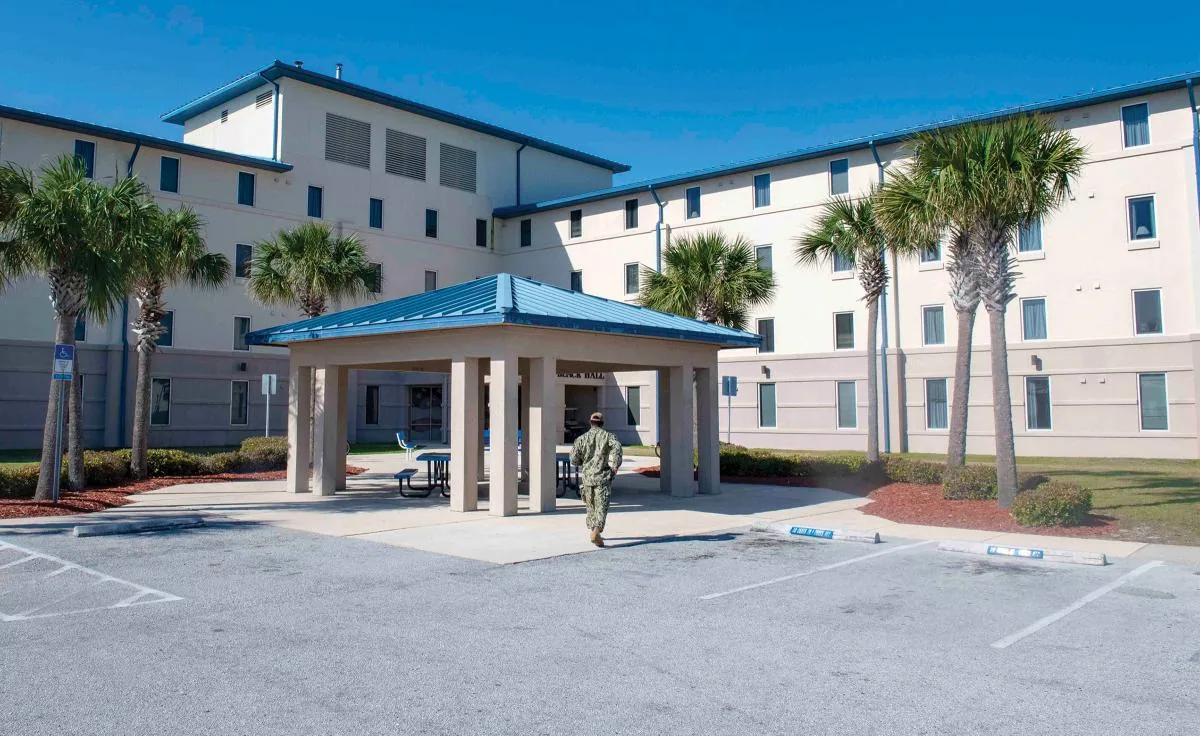
The nearby installations contain a range of roof types. Point Mugu, the aviation side of Naval Base Ventura County, has E-2 Hawkeye squadrons and a test and evaluation squadron, and the Naval Air Warfare Center Weapons Division is a major tenant whose operations call for hangars, laboratories and range-support buildings. Those hangar and maintenance facility roofs bring long clear spans. Both Point Mugu and Port Hueneme have unaccompanied barracks, which are occupied and need roof work that respects residents' hours, as barracks roofing does anywhere.
Port Hueneme, home of the Seabees, works as a mobilization site with a deep water port, a railhead and an airfield, the kind of site where warehouse and depot roofs are part of the mix. The Channel Islands Air National Guard Station next to Point Mugu houses the 146th Airlift Wing and its C-130J aircraft, and in 2021 added a permanent fire-retardant reload facility. The Ventura VA clinic on Ralston Street is a 50,000 square foot outpatient building, and a VA clinic roof is closer in kind to a medical office than to a hangar.
Schedule: mission operations and the flight line
On a flight line the roof schedule bends around operations. Crews cannot work on certain buildings during flying hours, access roads close during exercises, and a security change can pause work with no notice. Foreign object debris is a real hazard on an airfield, so loose fasteners, offcuts and packaging are controlled on the roof and in the staging area, and tools are counted in and out.
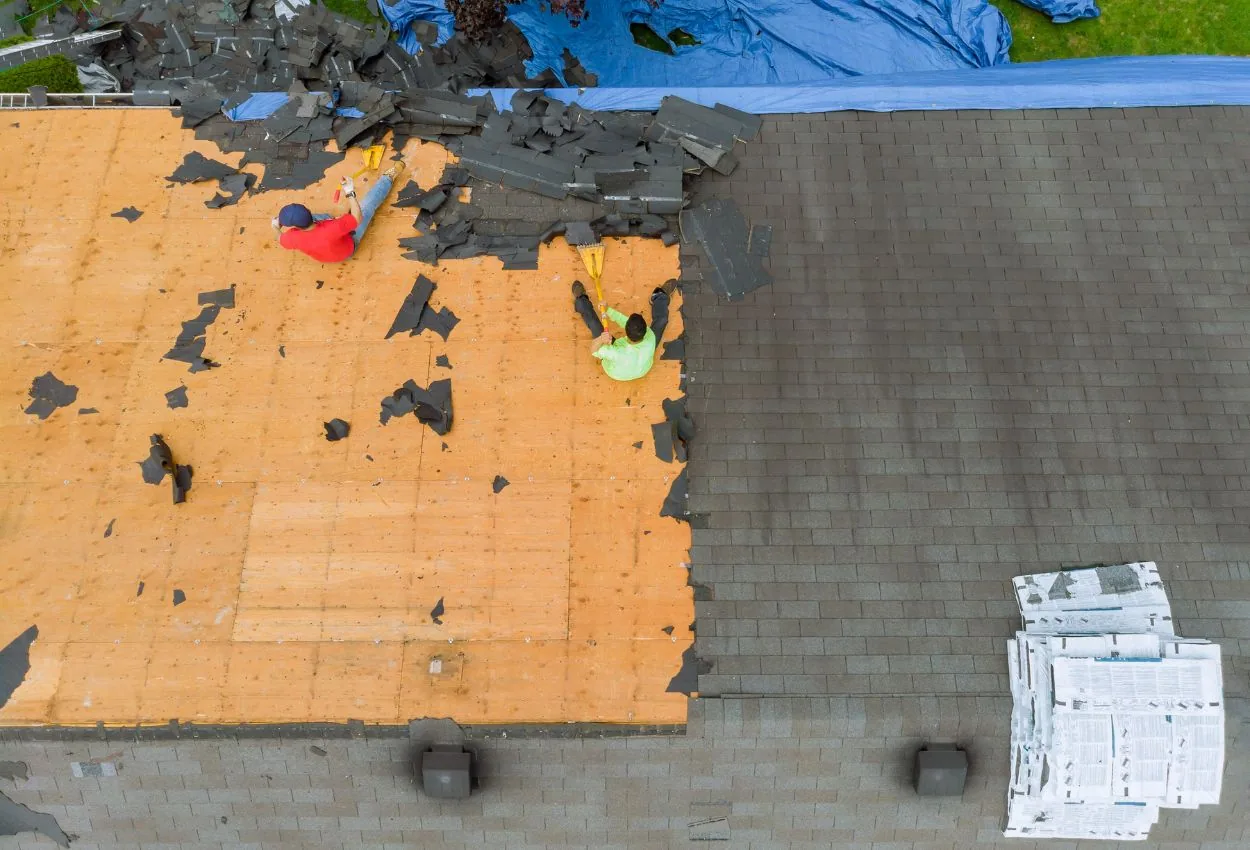
Because the roof opening has to be closed at the end of each shift, work near mission-critical spaces is divided into small sections and tied in daily. The same discipline used for occupied building reroofing applies, with the occupants being squadrons, laboratories and barracks rather than tenants. The schedule shows what stops work, who can authorize a restart, and how much time the plan allows for operational stops.
Exposure: wind and fire on the Oxnard plain
Point Mugu sits about seventeen miles southwest of Thousand Oaks on the Oxnard plain, and Oxnard averages about 15.6 inches of precipitation a year, with mild wet winters and warm dry summers. Santa Ana winds can exceed forty miles an hour, and wind uplift at edges and rooftop equipment on large hangar and warehouse roofs is a design question, not an afterthought. The Mountain Fire of November 2024 burned near Somis and Camarillo during an exceptionally strong Santa Ana event, a reminder that ember exposure is real across Ventura County.
We look at the details that wind and fire punish first: edge metal, coping, perimeter attachment, penetrations and any equipment curbs. The findings go into a condition record with photographs, which supports both the immediate repair scope and the longer replacement horizon the installation's facilities staff keep for each building. Where a roof is nearing the end of its useful life, the record shows it long before the failure.
Before pricing work inside an installation, confirm the facility’s approved plans, access rules, escort and badging requirements, submittal list and limits on photography. Identify the specification and the contract acceptance criteria before selecting a system or repair detail. If escorts restrict survey access, record which zones were not inspected and request an approved return rather than estimating from adjacent roofs. Each work package should state staging, daily tie-in, debris control and the person authorized to accept the completed section. The closeout file follows the contract and includes inspection notes, approved submittals and any change record. These steps help the owner compare bids on the same scope and keep roofing decisions aligned with the installation’s operational controls.
Commercial Roofing Questions
How far ahead do worker names and vehicles have to be submitted?
Lead time varies by installation, but weeks are normal. We send the roster, vehicle details and equipment list as soon as the award is confirmed, and we ask the project officer which office processes them.
Do base projects follow different roofing standards?
The Unified Facilities Criteria for roofing govern how Department of Defense roofs are designed, and the contract specification can add to them. The physical work is the same as elsewhere, but submittals, mock-ups and inspections are more formal.
How do flight operations change the work schedule?
Work near the airfield pauses during flying hours or exercises, and crews are held at the gate or on the ground until it is safe to proceed. We plan with fewer open roof sections at any one time so a stop does not leave the building exposed.
Where is material stored during the project?
Only in areas the installation assigns. Staging areas on a base are limited and often fenced, and loads are scheduled through the gate to arrive close to when they are needed instead of piling up on site.
Are tools and fasteners controlled on a flight-line roof?
Tools are counted in and out each shift, and fasteners, offcuts and packaging are collected before the crew leaves. A stray piece of hardware can damage an aircraft, so the cleanup checklist is as important as the roofing.