Military Warehouse and Depot Roofing in Thousand Oaks, CA
Property Types We Roof · Thousand Oaks, CA
Receiving bay, depot warehouse: a shallow basin of standing water behind the north parapet two days after the last rain, scuppers half-blocked with windblown grit, and a line of mechanical fasteners backing out of a lap seam over the dock doors. The racking inside is dry for now. Together, the entries show a wide roof whose drainage has been left to chance, and in a building that stores supplies, equipment and records, the cost of that choice lands inside the building long before it appears on a budget line.
For an owner or contracting officer working from Thousand Oaks, CA, the military storage buildings in range belong mainly to Naval Base Ventura County, where Port Hueneme was founded as a depot and now works as a mobilization site. The low-slope and metal roofs over warehouses, depots and motor pools are the same kinds of assemblies found on the industrial parks of Newbury Park. What differs is the gate, the delivery schedule and the paperwork, all of which belong in the first conversation. Military installation roofing starts in that sequence.
Military Warehouse and Depot Roofing
Property Types We Roof
Call our team
Written findings and options
Thousand Oaks, CA
Ventura and Los Angeles counties
Mission: an installation that began as an Advance Base Depot
The base at Port Hueneme was established in 1942 as an Advance Base Depot and renamed a Naval Construction Battalion Center in 1945, becoming the West Coast home of the Seabees. It has 16 miles of rail with dedicated access, a deep water port and an airfield. Among the units there are the 30th Naval Construction Regiment and the Naval Facilities Expeditionary Logistics Center, and the base commissary is on site. A logistics command and a commissary mean supplies being handled and stored, and the facilities office that tracks those functions should be tracking the roofs over them just as closely.
Where buildings serve supply and mobilization functions, a leak can matter more than its size suggests. A wet pallet is a supply line interruption. We therefore grade depot roofs with contents in mind, not just membrane condition, and we put the sections over the most sensitive storage at the top of the scope. Port Hueneme works as a mobilization site with its own railhead, port and airfield, which is why grading by contents makes sense there.
Fields: wide roofs and the drainage they depend on
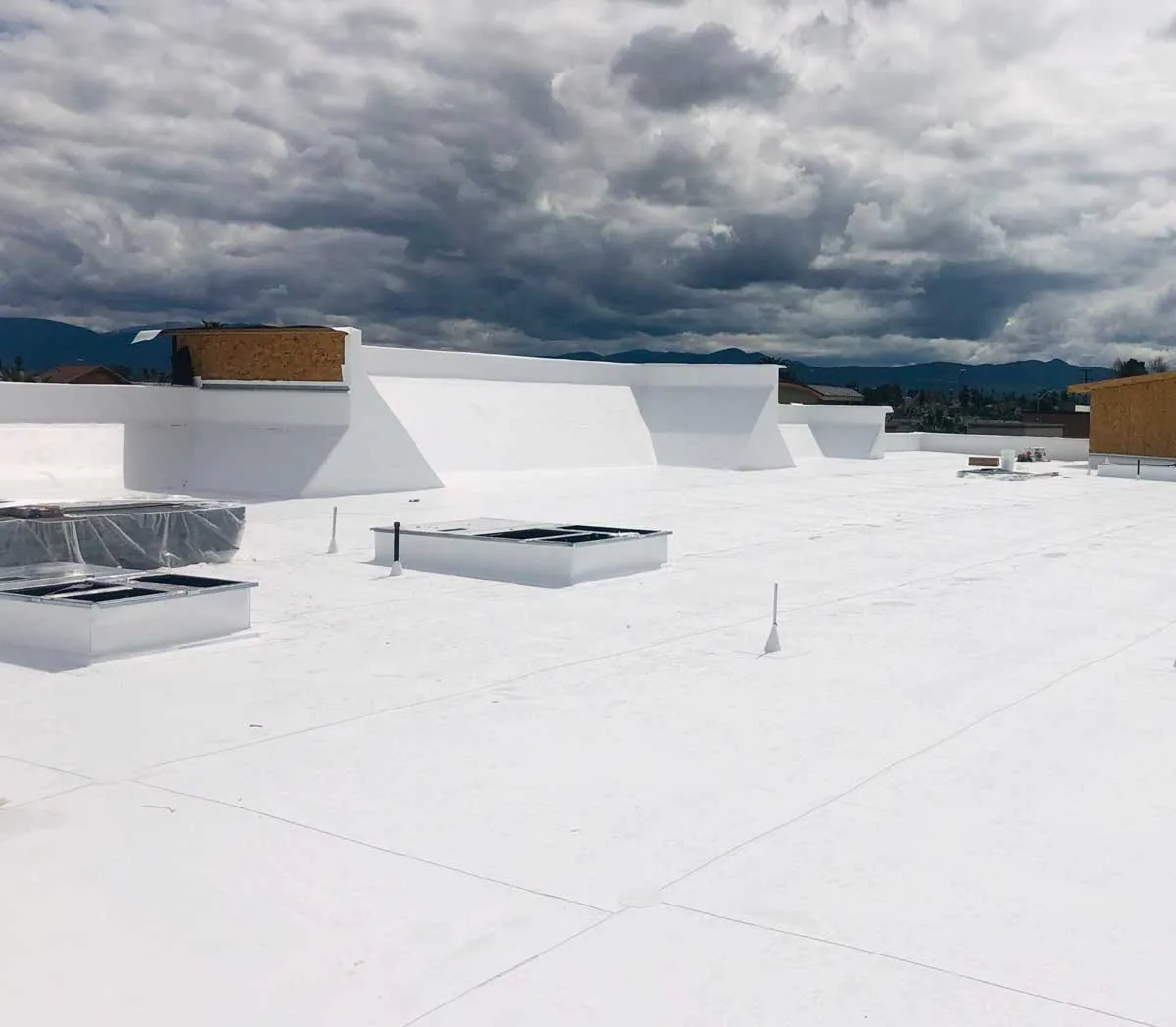
The long roofs over warehouses and depots are mostly open field. A TPO roofing or similar single-ply system across a wide field is cheap to inspect and expensive to ignore, because small defects repeat across the whole surface. The things to find are ponding at low points, seam failures at laps, mechanical fasteners that have backed out and punctures from maintenance traffic. A survey walks the field in a grid and records each defect by location, so the repair crew goes to a numbered spot rather than a general area.
Drainage deserves most of the attention. Most rain falls in a short winter season, so drains, sumps and scuppers carry the load in a few heavy storms. Oxnard collects about 15.6 inches of precipitation in a year, mostly in mild, wet winters. Work on roof drains and scuppers starts with a simple question: where does the water go when the primary drain is blocked?
Motor pools: vehicle bays, exhaust and rooftop equipment
Motor pool and vehicle maintenance buildings combine a wide-bay roof with a lot of rooftop equipment. Exhaust fans, makeup air units, ventilation hoods and sometimes fuel or lubricant storage vents share the roof with the membrane. Exhaust can deposit residue on the surface, and some single-ply membranes resist that residue better than others, which is a consideration when the membrane is chosen. Overhead door heads are exposed to wind-driven rain, and the flashings above them carry the same detail load as those on any warehouse roof with large openings.
Foot traffic is the other hazard. Mechanics and technicians who step onto the roof to service equipment wear a path in the membrane, and a path wears through. Walkway pads, a clear route to each unit and a log of who accesses the roof keep the damage from being a surprise. Each wear path is photographed at the survey and again at the next one, so the owner can see whether the membrane is thinning and plan the repair before the scrim shows.
Rail and dock: edges, parapets and a delivery schedule
A depot lives by deliveries. Trucks and rail cars arrive on a schedule, and the dock side of the building concentrates wear: parapet caps knocked by vehicles, scuppers that serve a loading canopy, coping joints that open under repeated vibration. On the roof, we inspect those edges first. Santa Ana winds can easily exceed 40 mph, and the November 2024 Mountain Fire burned 19,904 acres near Somis and Camarillo during an especially strong Santa Ana wind event, with gusts forecast above 65 mph. Edge metal, coping and perimeter attachment are where wind finds a weakness.
A roof plan for a depot should connect each defect to the space below it. We mark drains, equipment, access lanes and storage zones, then rank repairs by both water risk and operational consequence. A small leak above a low-value staging bay may wait behind a loose edge over protected records or critical supplies. The ranking does not replace the condition survey; it helps the facilities office put its findings into a work order the installation can schedule. Photographs, quantities and daily dry-in points make the scope easier to review before materials enter the gate.
Work on the roof has to fit around the deliveries and the escort rules. We schedule material drop-offs through the gate, keep lifts and staging away from dock approaches, and phase the roof so one bay at a time is open. A routine of scheduled preventive roof maintenance visits keeps drains clear, edges tight and the file current between larger projects.
Neighbors: the commercial port and the industrial parks
The commercial Port of Hueneme moves automobiles, pineapples, agricultural exports and about 3.3 billion bananas a year, and it is the one deep-water commercial port between the Los Angeles area and San Francisco. That cargo mix makes refrigerated warehouses and cold storage a major local building type. The commercial port is separate from the base, but the two share a city and a weather pattern, and a cold storage roof has its own moisture and insulation concerns.
Inland, the Rancho Conejo Industrial Park, on the northern side of Newbury Park, holds most of the city's industrial businesses across more than 120 properties as of 2017, and an Amazon warehouse opened there in 2018. A tilt-up at Rancho Conejo Industrial Park and a depot warehouse share the problems of a wide low-slope roof. The survey method, condition index and prioritized scope are the same, and a base facilities office can compare its buildings against civilian practice without losing the specifics of its own contract.
Commercial Roofing Questions
Why do depot roofs get graded by contents as well as condition?
Because a wet pallet interrupts supply. Sections over sensitive storage go first on the scope, whatever their membrane grade.
What failure shows up first on a wide warehouse roof?
Ponding at low points, then seam laps and fasteners. Drainage problems repeat across the field if nobody corrects them.
Can delivery traffic continue during roof work?
Mostly. We phase the roof one bay at a time and keep lifts and staging away from the dock approaches and rail spurs.
Does exhaust from a motor pool affect the membrane?
It can leave residue on the surface, and some membranes tolerate that better. The chemistry is worth weighing at selection time.
How should work be sequenced around depot operations?
Start with the bays that protect the most sensitive supplies, then phase adjacent roof areas so receiving and dispatch can continue. We coordinate escorts, material deliveries, staging and daily dry-in points with the facilities office before a section is opened.