Fitness Center Roofing in Thousand Oaks, CA
Property Types We Roof · Thousand Oaks, CA
Core sample, natatorium annex: the top layer of insulation is wet from below and not from above, the underside of the metal deck is beaded with condensation, and the membrane is intact across every foot of it. In a fitness building the water that damages the roof often starts inside. Pools, showers, steam rooms and a crowd breathing hard on cardio equipment put vapor into the air all day, and that vapor climbs toward the coldest surface it can find. We survey gyms, recreation centers and fitness facilities in Thousand Oaks, CA with that path in mind, and we write the findings so an operator can see which sections are failing from outside, which from inside, and how each decision changes the hours the facility is open.
Fitness Center Roofing
Property Types We Roof
Call our team
Written findings and options
Thousand Oaks, CA
Ventura and Los Angeles counties
Vapor: when the water comes from inside
Pool halls, locker-room showers, steam rooms and group-exercise rooms all load the air with moisture, and warm humid air rises and pushes toward the cold side of the roof assembly. When it reaches a cool deck or a membrane underside with no effective vapor retarder, it condenses, wets the insulation and, over a few seasons, turns a dry assembly into a saturated one that never shows a leak. The signs are staining on the underside of a deck, beaded water on steel, corroded fasteners and a roof that looks perfect from above.
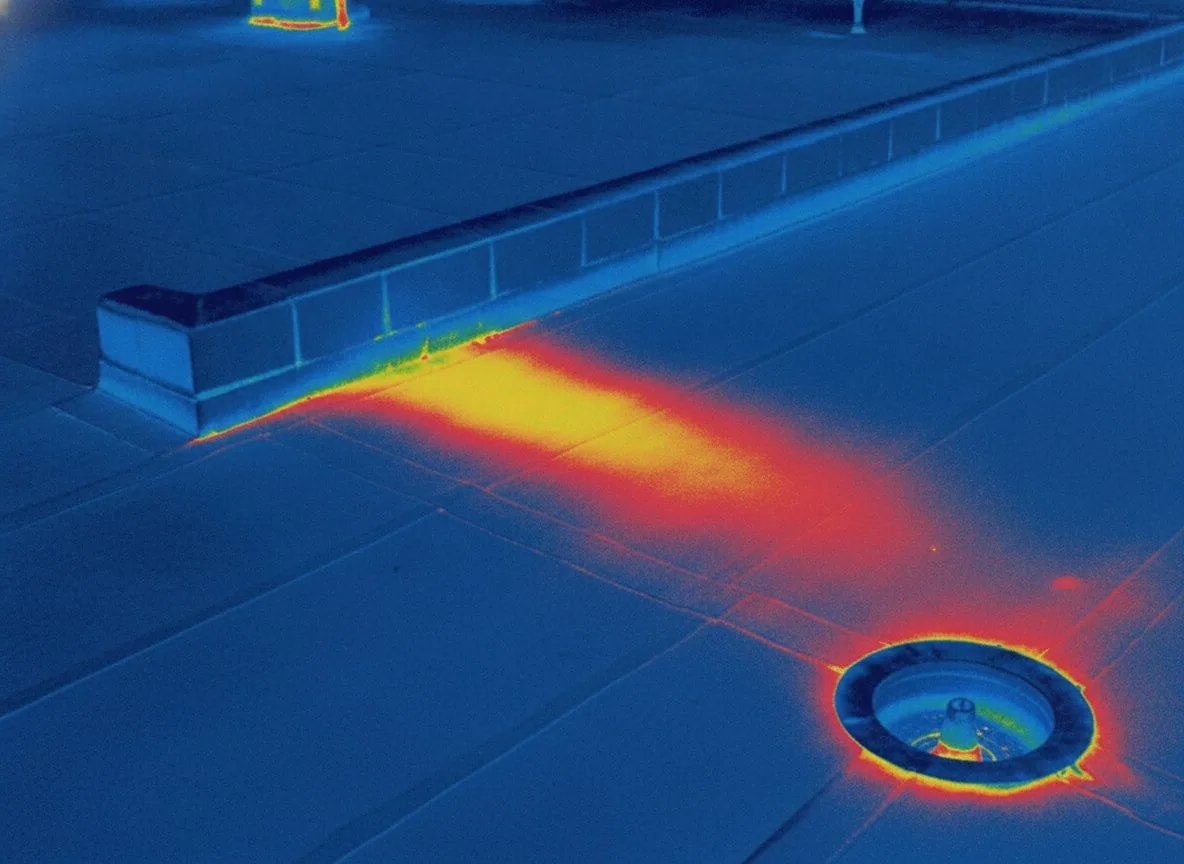
We confirm the diagnosis with an infrared moisture survey and cores, and we judge whether the assembly needs a new vapor retarder and drier insulation and cover board at the time of reroofing. Replacing a membrane over wet insulation moves the problem and does not remove it, which is why the moisture findings come before any scope or price. A section with a dry core and a sound field membrane can be restored, and a section with a saturated core cannot, and the cost difference between the two outcomes is large enough to justify the extra day of testing.
Floors: a hardwood court under a leak
A leak in a gym costs more than the wet spot. Water on a maple court lifts boards and clouds the finish, water on rubber flooring seeps under the seams, and a stained ceiling over a cardio floor puts a section of the building off limits until it is dry. The Gilbert Sports and Fitness Center at California Lutheran University is a 96,000 square foot building on a 290-acre campus of 41 buildings that also includes William Rolland Stadium, opened in 2011. A facility of that size schedules its floors, classes and teams, and a closure ripples through all three.
We tie each roof section to the areas beneath it, rank sections by what a leak would put out of service, and give a facilities director an order of work that protects the highest-value floors first. On any campus the athletic building sits in a roof inventory with classrooms and housing, which is why a college and university roofing program ranks buildings by use before it ranks them by age.
Hours: early openings, late classes and the front desk
Fitness buildings keep long hours. Members arrive before dawn, classes run through the evening and some facilities never fully close, so a roof crew cannot count on an empty building. We plan around the member flow: the loudest operations start after the early rush and finish before evening classes, material staging stays off the main parking and the entry path, and the interior beneath the active section is protected and, where possible, closed to equipment use that day.
Childcare rooms, yoga and cycling studios and group-exercise rooms tolerate noise least, so they get the longest notice and are scheduled last in the phase plan. Phasing follows the same logic as any occupied building reroofing job, with a daily bulletin for the front desk so staff can answer members before anyone asks.
Equipment: air handlers, dehumidification and the heat event
A fitness building asks a lot of its rooftop equipment. Large air handlers move fresh air for a crowd, dehumidification units fight the moisture from pools and showers, and exhaust fans run through the day. That equipment is heavy, it vibrates, and it drips condensate on the membrane. Sustained heat adds to the load: the Los Angeles/Oxnard forecast office has issued Extreme Heat Warnings for valleys and coast in both counties, and a facility running near capacity during such a spell works every unit hard.
Cooling load varies by location. Westlake Village catches coastal breezes that hold summer temperatures as much as ten degrees under those of neighboring inland areas, so a gym there carries a different load from one in the inland valley, and its membrane sees less heat stress than a comparable roof inland. We inspect equipment curbs and supports, vibration isolation and condensate routes, and we recommend walk pads along the paths technicians use daily.
Corrosion: pool air, steel decks and fasteners
Pool air is aggressive. Chloramines and chlorine vapor corrode steel decks, fasteners and the metal in exhaust ducts and curbs, and a roof over a natatorium shows the damage first at penetrations and on the underside of the deck. Sealed penetrations, stainless or coated fasteners, a durable deck finish and a vapor retarder that survives the pool environment belong on such a roof, and a reroof that skips any of them reproduces the old failure under a new membrane. The same issues arise on the pool deck of a hotel, where the amenity sits above guest rooms.
Where a fitness facility has a pool hall beside a gym floor, we treat them as separate assemblies with separate details, and we record the corrosion at fasteners and deck edges to set the replacement scope for the hall. In Newbury Park, where about ten inches of rain a year falls in a short winter season, drainage on a pool hall roof is tested in a few heavy storms, and a clogged drain turns one of them into a leak.
The operator's schedule should be part of the roof plan before a noisy or odorous task is assigned. Map workout floors, locker areas, pool spaces and childcare or studio zones to the roof sections above, then identify the areas where temporary closure would have the greatest effect. Rooftop exhaust and make-up air need coordination with the mechanical team before flashing is disturbed. When work can be divided into small sections, close only the space below the active area and give staff a daily reopening check. Document the roof detail and the interior zone together so a future leak report can be compared with the repair history. This gives the owner a practical choice between a contained maintenance visit and a larger phase that needs member communication.
Commercial Roofing Questions
Why is the insulation wet when the membrane has no holes?
The moisture came from inside. Humid air from pools and showers condenses in the assembly when no effective vapor retarder stops it.
Which spaces in a fitness building tolerate roof noise least?
Childcare, yoga and cycling studios and group-exercise rooms. They get the longest notice and are scheduled last in the phase plan.
Do pool halls need a different roof assembly?
They do. A pool hall calls for corrosion-resistant fasteners, sealed penetrations and a vapor retarder built for sustained humidity.
How is a hardwood court protected during roof work?
Interior protection goes up over the court before any work starts above it, and moisture readings on the roof show where water is traveling. A walk after each rain confirms the floor stayed dry.
Is a coating a sensible choice for a gym roof?
Sometimes, once a moisture survey shows dry insulation. If vapor from inside is wetting the assembly, a coating only hides the problem, and the vapor path needs correcting first.