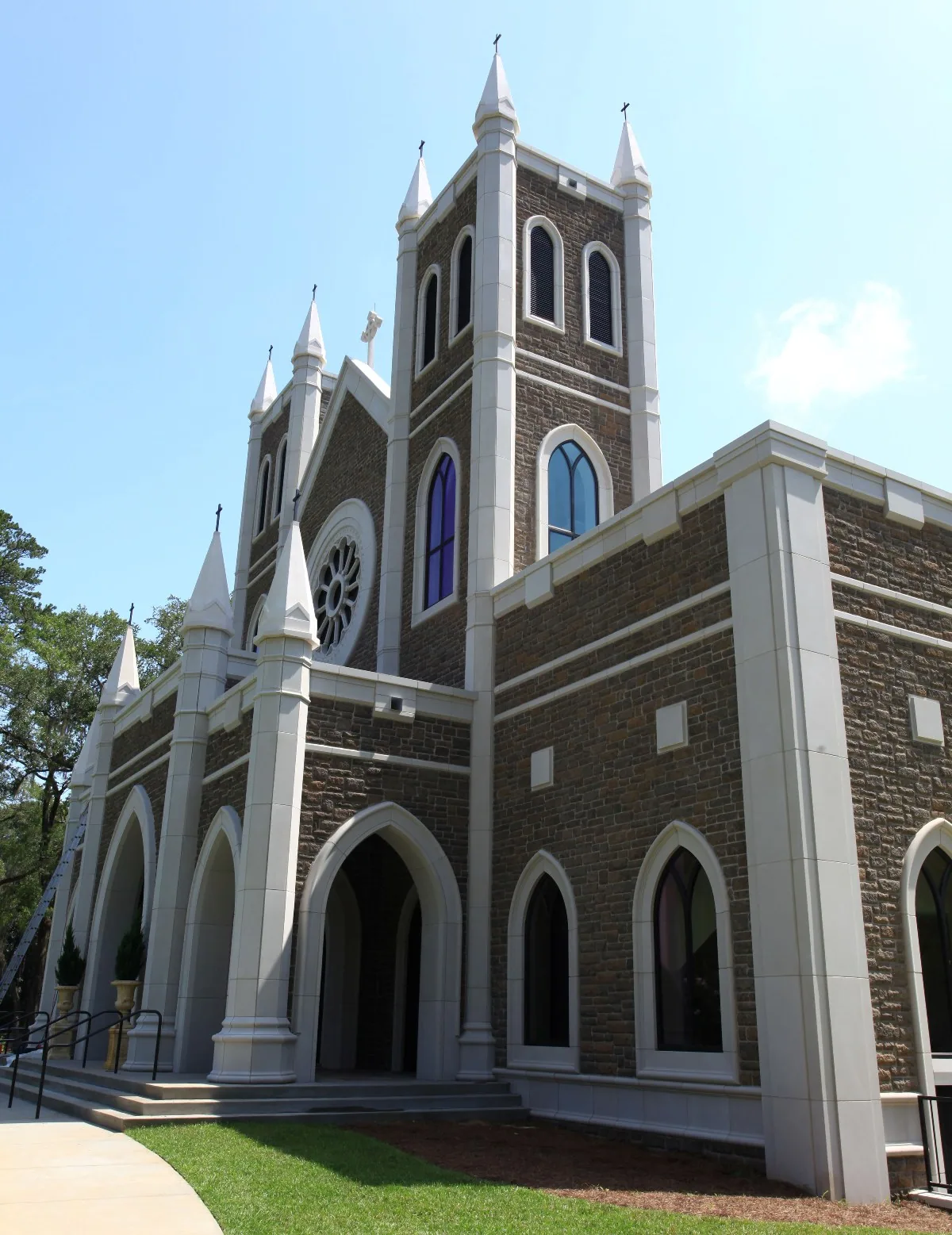
Church Roofing in Thousand Oaks, CA
Property Types We Roof · Thousand Oaks, CA
Observation, sanctuary roof: a long low-slope section beside the raised nave, its base flashing split where the wall rises, and a ceiling stain in the narthex that appears every winter and dries by April. In a house of worship that pattern is easy to live with for years, because the congregation sees a small mark and the budget has a dozen louder claims on it. It is also the kind of record that tells an owner exactly how much service life is left. We survey church roofs in Thousand Oaks, CA with that in mind, and we write findings that a volunteer facilities committee can carry into a board or council meeting: what is failing, what it will do to the building if it waits, and which repairs fit between services and holidays.
Church Roofing
Property Types We Roof
Call our team
Written findings and options
Thousand Oaks, CA
Ventura and Los Angeles counties
Sanctuary: tall walls, low roofs and the joint between them
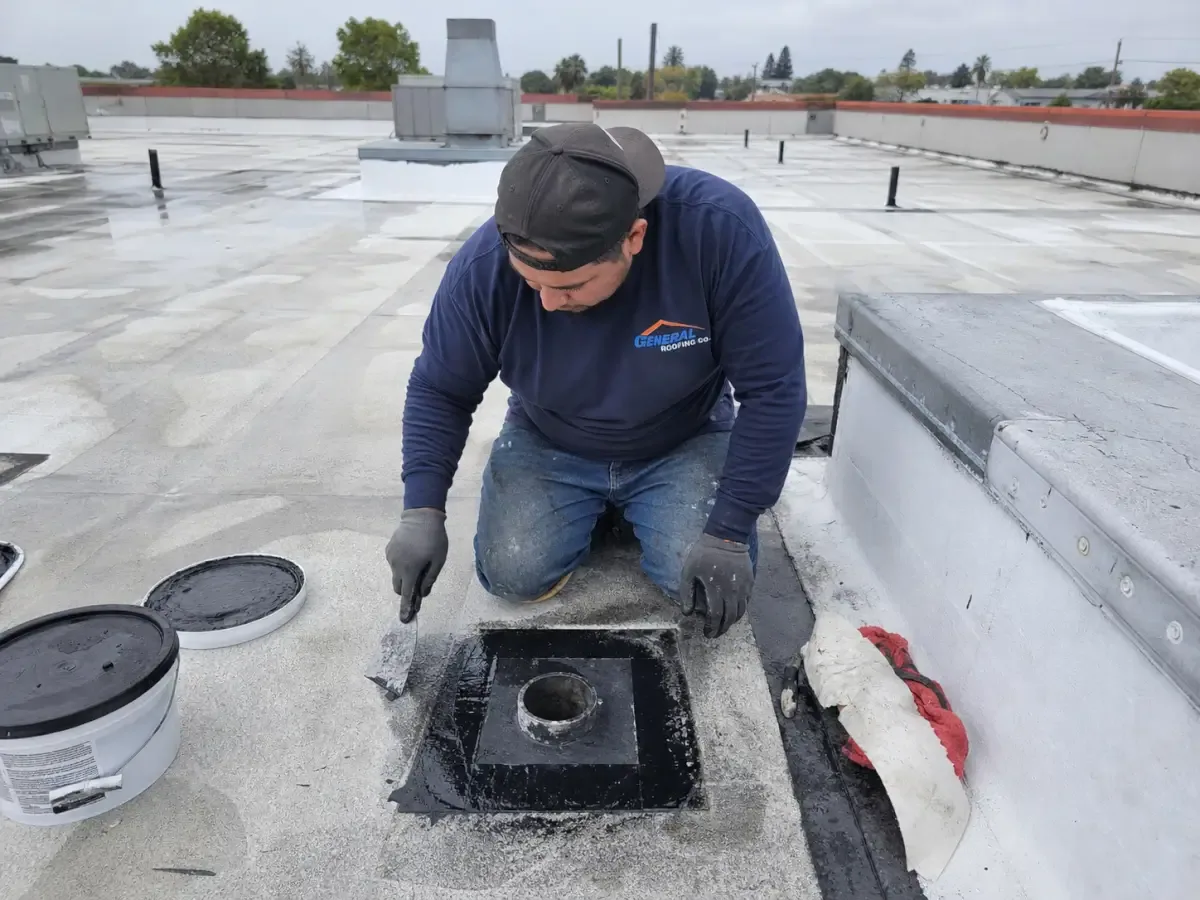
Most houses of worship pair a tall sanctuary with lower buildings attached to its sides: a fellowship hall, classrooms, offices, a narthex and sometimes a kitchen. The roofs of those lower buildings are usually low-slope, and the tall walls above them are where trouble starts. Rain that runs off the nave lands on the roof below, so the lower membrane takes the discharge of a much larger surface, and the wall base flashing takes a constant wash. We look at the wear on the membrane under every downspout and at the counterflashing along every wall, and we recommend splash protection and added drain capacity where runoff is concentrated.
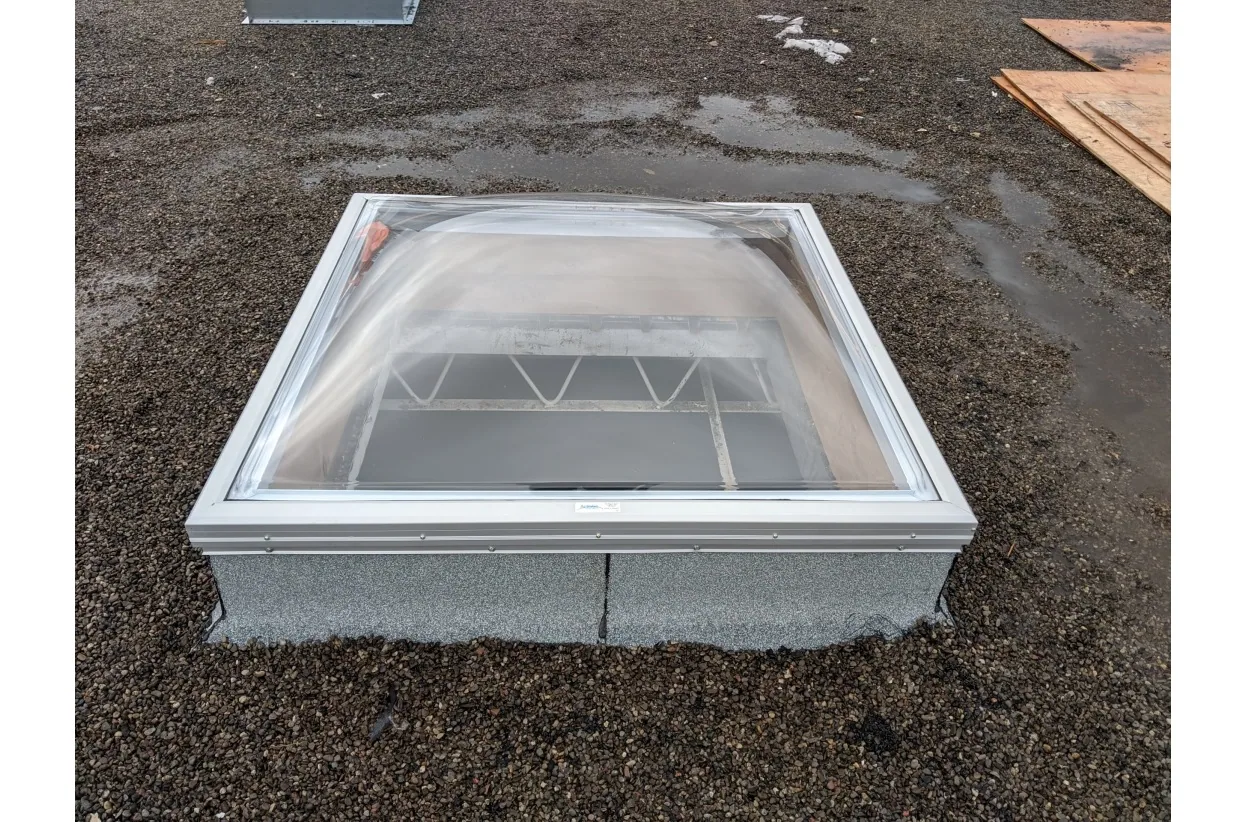
Inside, a sanctuary leak lands on pews, an organ, a sound system or stained glass, and tracing it from below means a lift and a long reach to the ceiling. That is a reason to find the cause on the roof first. Clerestories, skylights, lanterns and steeple bases add penetrations that collect old sealant, so we document skylight and penetration flashing section by section and confirm that water leaving the tall roofs reaches working roof drains and scuppers without crossing a seam on the way.
Calendar: worship sets the schedule before the weather does
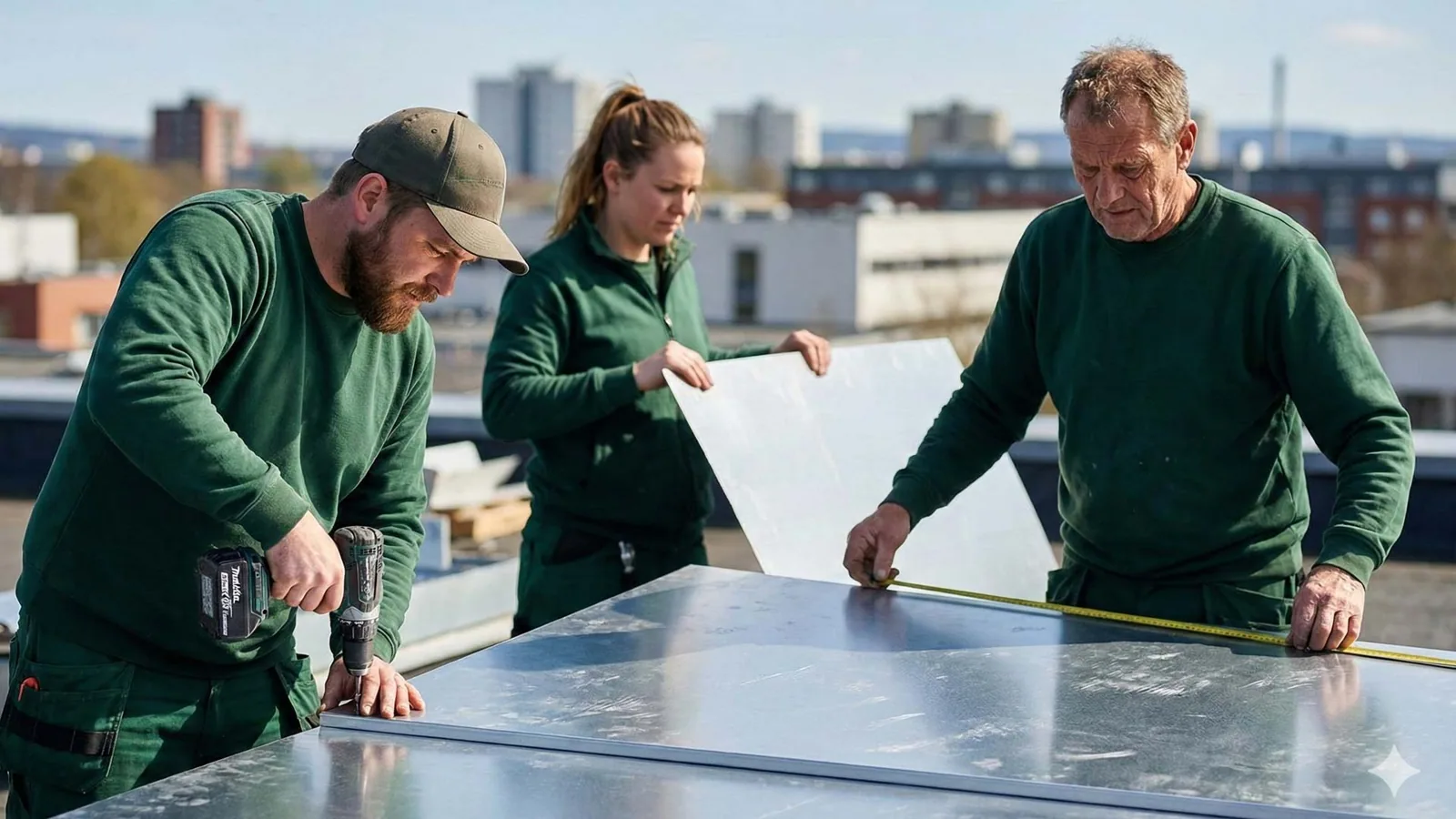
Sunday services, weekday programs, a preschool in the education wing, weddings and funerals each claim hours, and the major holidays fill every room at once. Funerals arrive without notice, so a roof schedule has to leave room for them. We plan the work for weekdays, keep loud operations such as tear-off, drilling and hoisting away from any service or rehearsal in progress, and release the lot and the entry to the congregation by Friday afternoon. The sequence follows the discipline of occupied building reroofing: open only what can be sealed that day, protect the interior, and tell the office manager where the crew will be.
The season matters as much as the week. Newbury Park sees about ten inches of rain a year, falling mostly in a short winter season that takes in December, so a repair put off until then lands in the busiest weeks of the church year. Surveying in spring and working in summer puts the roof in good order before the first storm and the first holiday service.
Committee: how a volunteer board approves a roof
A roof decision in a congregation passes through a property committee, a treasurer, a pastor or board and sometimes a denominational body, and each reader wants something different from the same page. The treasurer wants the number of years the roof has left, the pastor wants to know whether Sunday is affected, and a committee of volunteers, few of them in the building trades, wants plain statements of what is wrong. Our report is written for that table. It ranks the sections, shows a photograph of each defect, sets repair, restoration and replacement side by side with the consequence of each, and says what happens if the board waits another year.
Documentation also supports giving. A congregation raising funds for a roof makes a stronger case with a roof condition report that shows the findings than with a general appeal, and a ranked scope turns one large project into phases that match what the congregation can raise in a year. Insurers and lenders read the same file, and so does the next committee, which inherits a clear record in place of a drawer of invoices.
Weather: Santa Ana gusts, fire years and tall structures
Tall, narrow structures take wind differently from low ones. A steeple, a bell tower or a tall nave wall catches Santa Ana gusts, and the roof edges below it see turbulence and uplift. Offshore Santa Ana gusts can easily pass 40 mph, and gusts above 65 mph were forecast when the Mountain Fire started north of Somis in November 2024. After a night like that we check edge metal, copings, loose fasteners and any membrane lifted at a wall, because a wind-damaged roof that is secured before the next event costs less to repair.
Fire raises a second set of questions. The Woolsey Fire of 2018 affected Newbury Park, Oak Park, Agoura Hills and Westlake Village as well as Thousand Oaks itself, so ember exposure is not a worry limited to one neighborhood. Open vents near eaves, louvers in a bell tower, and debris in valleys and gutters are where embers collect, and one maintenance visit closes most of those openings.
Campus: a chapel's age and the questions it raises
California Lutheran University has a 290-acre campus in Thousand Oaks with 41 buildings, and Samuelson Chapel there was completed in 1990. A chapel of that age has been through many Conejo Valley summers, and the first question a survey asks is which roof sections are original and which have been redone. The answer sorts the building into parts with a known service life and parts that are a mystery, and the mystery parts get cores, moisture readings and a closer look before a committee budgets for them. The same logic applies to a congregation's own building, whatever its age: the date on the cornerstone says little about the date on the roof.
A campus chapel brings the summer window and phased capital plans of a college campus into the work, and a church that runs a preschool has the same concern for children near the work as any school roof, so both shape the schedule.
Before a project is scheduled, identify service times, school or childcare hours, food preparation and community events that share the building. The roof plan can then set work zones above the least sensitive spaces first, protect entrances and confirm how the congregation will receive daily updates. Inspect steeple transitions, parapets, gutters and any roof-mounted equipment as separate details, since a tower can create access and wind conditions that differ from the nave. The estimate should state when temporary closures are required and how the contractor will leave the roof at the end of each shift. A simple closeout package with photographs and product details helps a volunteer committee preserve the maintenance history as board membership changes.
Commercial Roofing Questions
Will roof work interrupt Sunday services?
Not when it is planned for weekdays. The crew clears the lot and entry by Friday afternoon, and any open area is sealed before it leaves.
Who should sign off on a roof project in a congregation?
The property committee reviews the report first, then the board or council approves the funding. We can attend that meeting to answer questions on the findings.
A funeral is scheduled while the crew is on site. What happens?
The crew stands down on the affected side and keeps noise and equipment away from the entry. The schedule carries a buffer for exactly this.
Can a steeple or bell tower leak be repaired from the ground?
Rarely. Base flashing and louvers at height need a lift or rope access to inspect, and the repair is done where the water enters.
Should a congregation patch the narthex leak or wait for a full reroof?
Repair it if the surrounding membrane is sound enough to hold the work, and plan the reroof for the next budget cycle. A repair on failing material only moves the leak.