Roofing for Manufacturers in Thousand Oaks, CA
Industries We Serve · Thousand Oaks, CA
Engineering walk-down, receiving dock and tool crib: two leaks logged eight months apart as separate incidents, each assigned to a different work order, and both traced to the same cracked pitch pocket around a conduit that serves the two rooms. Plants record water by room because that is where the damage is felt, and a roof survey records it by location on the membrane because that is where the cause sits. The difference matters to a plant manager in Thousand Oaks, CA who answers for output, scrap and insurance deductibles. We map every leak back to a roof section, grade that section on the same scale as the rest of the plant, and set the repair or replacement against the production calendar so the roof is worked on when the line can spare it, not when the ceiling gives out.
Manufacturers
Industries We Serve
Call our team
Written findings and options
Thousand Oaks, CA
Ventura and Los Angeles counties
Campuses: laboratory, production and office under separate roofs
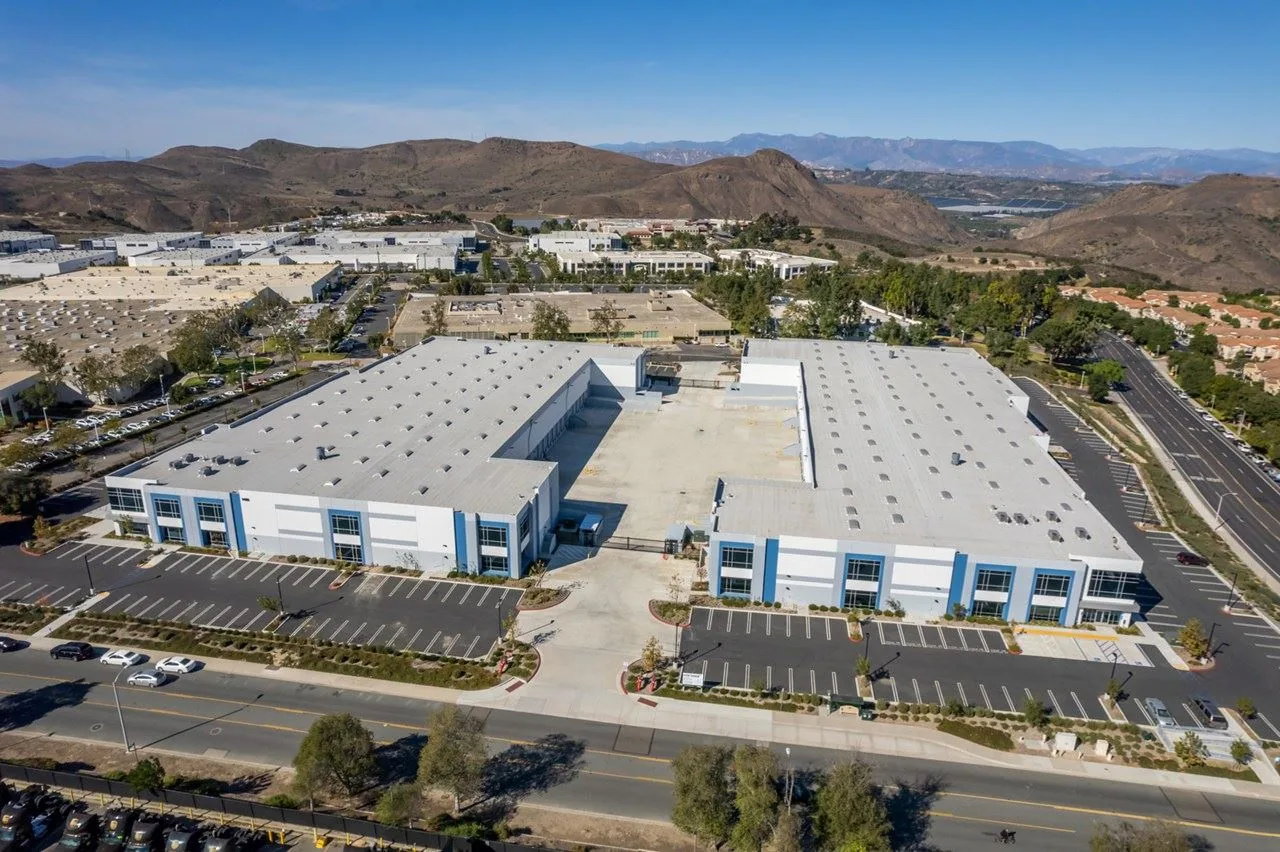
The large manufacturers in the Conejo Valley rarely occupy a single building. Amgen has its headquarters here, with about 7,000 employees across Newbury Park and the wider valley, on campuses made up of several laboratory, production and office buildings, and Teledyne Scientific works from what was the Rockwell Science Center, a campus Teledyne bought in 2006 and now a mix of research and light-industrial space. A campus like that can hold roofs of different ages carrying very different loads: a laboratory wing with exhaust stacks, a production hall with process vents, an office block with ordinary rooftop units. We survey each building on one scale but record its use, because the same membrane fails in different ways under a fume hood than over a corridor. The result lets a facilities group see the whole campus and still plan wing by wing. Business parks like Rancho Conejo Industrial Park hold clusters of such buildings.
Protection: keeping debris, odor and dust off the product
Roof work on a plant that makes pharmaceuticals, food, plastics or electronics is a contamination question as much as a weather one. Tear-off creates debris, dust and fumes, and a hot-applied system sends odor toward the air intakes. We locate every intake and exhaust before the schedule is set, choose a method that limits fumes near sensitive areas, and plan debris chutes and staging so nothing travels over an open dock or a clean entrance. Hot work requires a fire watch and a permit, and we coordinate those with the plant's safety lead. Where a quality group needs to approve the plan, we provide the sequence, the materials and the daily closure procedure in writing, and the same plan answers the shutdown and odor questions that come up on any manufacturing plant roofing project.
Contents: what sits below each roof section
A leak is expensive in proportion to what it lands on. Simi Valley's manufacturing base shows the range: its largest industrial group is machinery and tools at 69 firms, ahead of metal manufacturing at 51, with food processing and plastics making up more of the base. Water over a machine tool means corrosion on ground surfaces and a recalibration, while water over a food packaging line means a hold and possibly a recall. We therefore tag each roof section with what lies beneath it, rank sections by the consequence of a leak and use that rank to decide what is repaired this quarter and what waits for the capital cycle. The tagging is simple to maintain and reads like the risk register the plant already keeps. Chemically exposed roofs may call for KEE roofing, which resists oils and greases that attack other membranes.
Decks: corrosion that starts where nobody looks
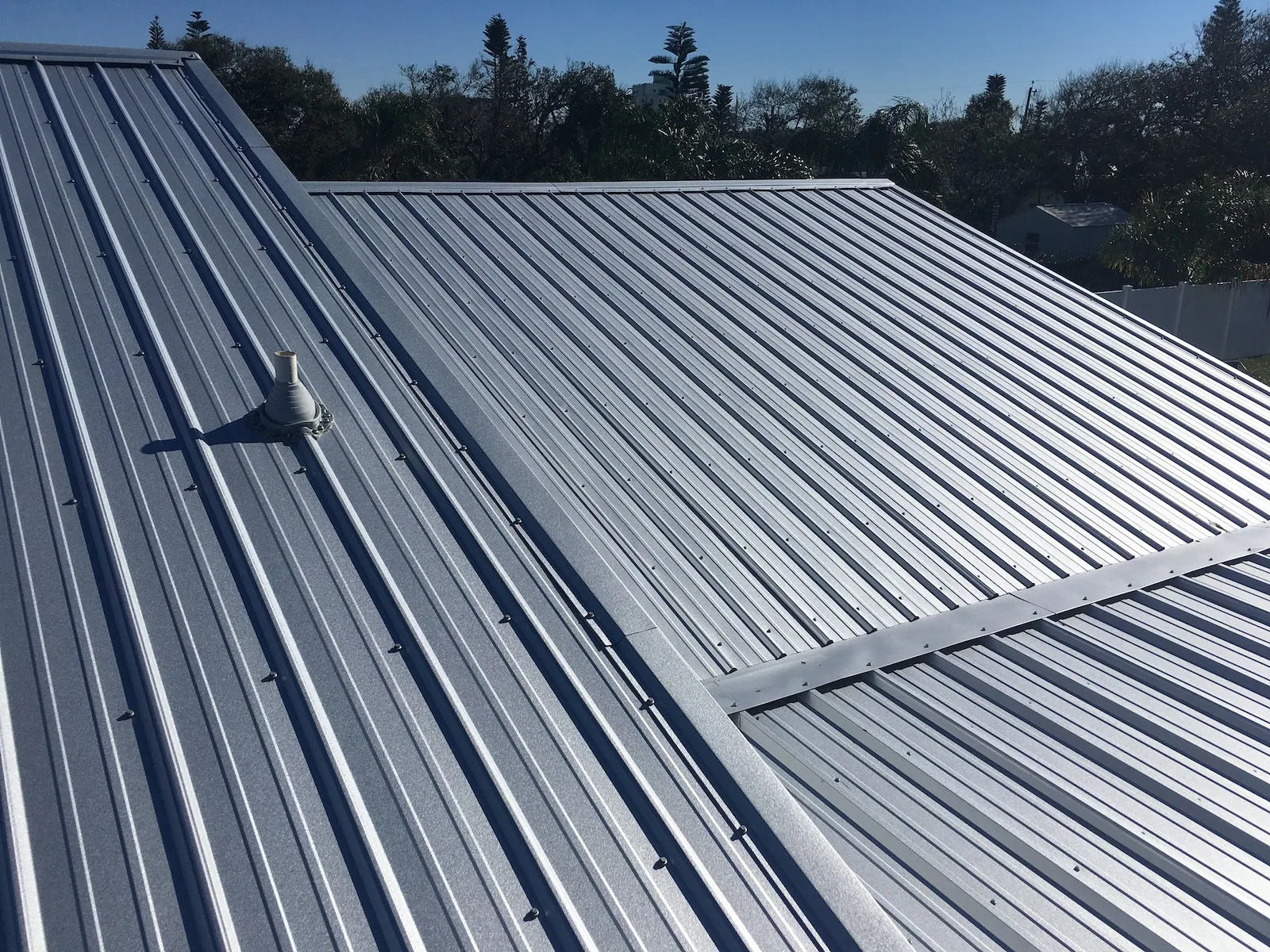
Metal-deck buildings fill industrial parks such as those in Simi Valley, and the deck is where a slow leak does lasting harm. Moisture that gets past the membrane travels through the insulation to the steel, where it corrodes the top surface of the flutes and loosens fasteners before any stain appears below. By the time ceiling damage shows, the deck may need partial replacement. Our infrared work locates the wet insulation, core cuts confirm it, and a deck inspection checks for section loss before the new system is specified. Where the existing metal roof is sound but leaking at fasteners and laps, a metal roof retrofit can carry a new assembly over the old panels without a tear-off. The decision rests on measured steel and not on the age of the building, which is why an early survey protects the structure as well as the sheet.
Exposure: embers at the fence line, heat in the hall
Santa Ana wind is the exposure that reaches a plant roof first, and it has arrived with fire. The Woolsey Fire in November 2018 burned under gusts of 50 to 60 mph that carried it into Thousand Oaks, Newbury Park and Agoura Hills, and the Mountain Fire of 2024, near Somis and Camarillo, came with gusts forecast above 65 mph. We check roofs for gravel, open gutters and debris that hold embers, and for the edge metal and equipment that wind lifts first. Heat is the other constant. Extreme Heat Warnings have covered the valleys of Ventura and Los Angeles Counties, and a production hall that already runs warm sends that load into the membrane. Reflective surfaces and good drainage help, and heat and UV damage repair restores a surface that summers have worn out.
Capital: setting the roof beside the equipment budget
Roofs lose capital fights because they are presented late and without a number. We present a plant's roofs alongside its equipment plan: which roof sections will be disturbed by a planned line expansion, which need to be replaced before new rooftop equipment arrives and which can wait without risk. A survey with a remaining service life per section lets a controller put a figure in the right year, and our roof capital planning keeps that figure honest as conditions change. Manufacturers that ship through the same corridors as logistics and 3PL operators share a concern about downtime, and those who build or expand through general contractors can have the roof scope written into the project from the start.
Commercial Roofing Questions
Can the roof be replaced while the line is running?
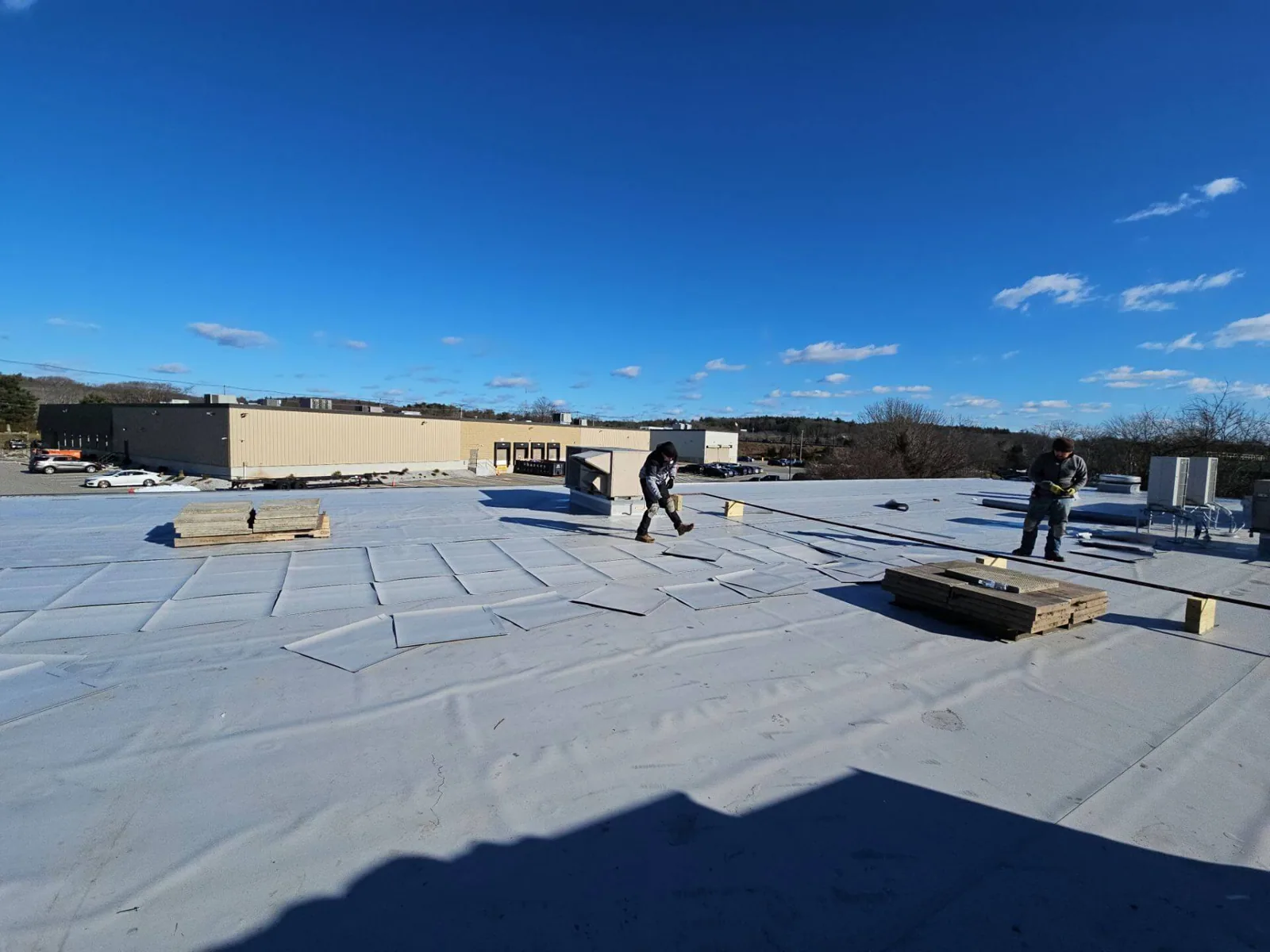
In most plants, yes, with phasing. We open only the area that can be closed within the day, protect intakes below and schedule noisy or odorous steps for the hours your quality group approves. Process sections that cannot tolerate disturbance are done at a planned shutdown.
How do we protect finished goods during a repair?
Cover or move them before work begins, and keep the work zone away from storage racks. We mark the roof section above each aisle on a plan so your team knows which areas to clear and when.
What happens when exhaust equipment has damaged the membrane?
Chemical attack shows as softening, staining or blistering near vents. Sample the surface, replace the damaged area with a compatible sheet and add a protective pad or splash guard so the discharge no longer lands on bare membrane.
Why does a plant need infrared work if the ceiling is dry?
A dry ceiling means water has not yet reached the interior, not that the insulation is dry. Wet insulation can sit above a clean ceiling for a long time, and mapping it lets you repair before the deck is harmed.
Who signs off on roof work in a regulated facility?
Your quality and safety leads, as with any change near the process. We supply a written plan covering methods, materials, access and daily closure, and revise it until the people accountable for the product are satisfied.